
Soups & Stews
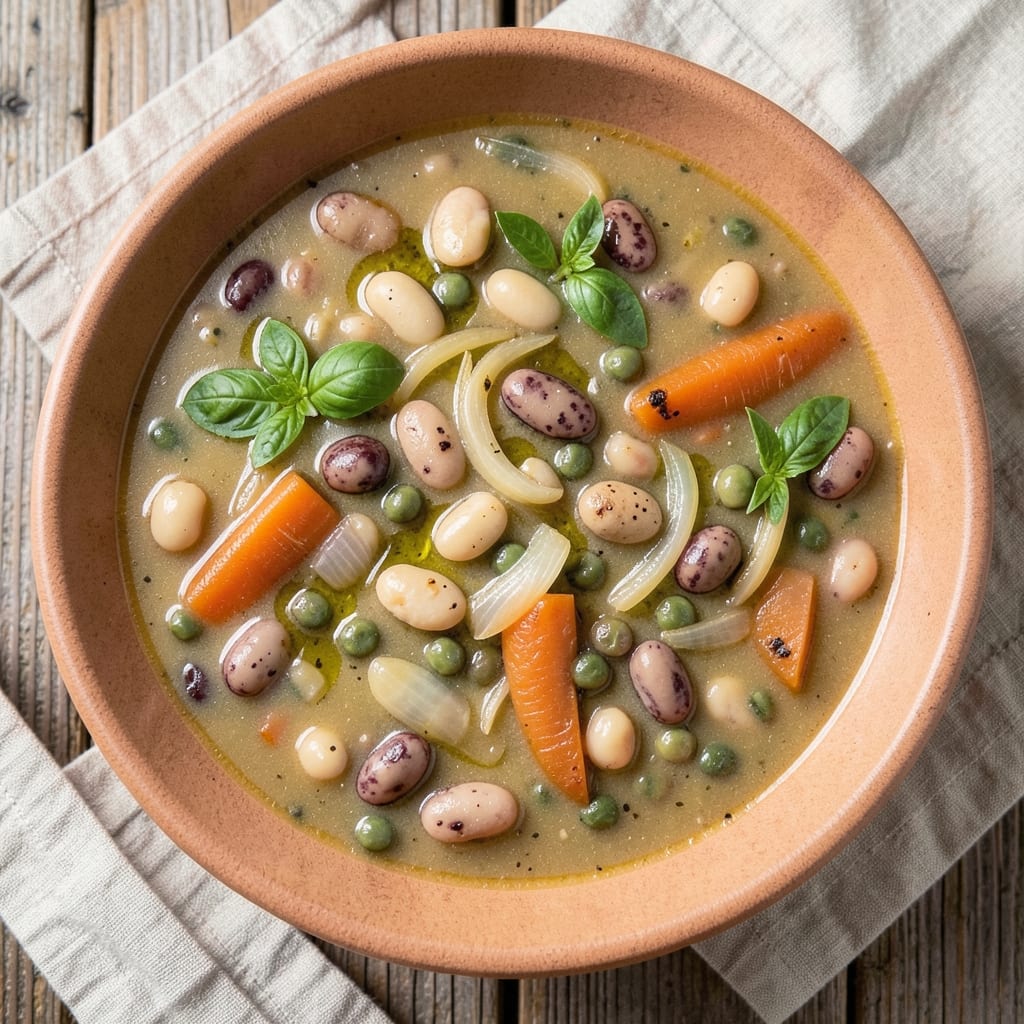
This 3 bean minestrone soup recipe inspired by Blue Zone principles delivers a powerhouse of plant-based nutrition in every hearty bowl. The combination of cannellini beans, borlotti beans, and lentils creates a fiber-rich foundation, while tomatoes, kale, and carrots add vibrant vegetables packed with antioxidants. What makes this soup extraordinary is its ability to nourish both body and soul—perfect for those seeking longevity through whole, unprocessed ingredients.
The secret to achieving restaurant-quality depth lies in simmering the beans and vegetables together in a flavorful vegetable broth, allowing all the ingredients to meld into a harmonious blend. This method not only enhances the natural flavors but also ensures maximum nutrient absorption, making every spoonful a step toward better health. The result is a soup that's both satisfying and deeply nourishing, ideal for anyone looking to embrace the Blue Zone lifestyle.
By the time you finish cooking, you'll have a steaming bowl of minestrone that's rich in plant-based protein, fiber, and essential vitamins. The beans hold their shape while still being tender, and the vegetables retain their natural sweetness and texture. This soup is designed to be both comforting and healthful, making it a staple for anyone prioritizing wellness without sacrificing flavor.
Serve this longevity-boosting bowl with a slice of whole-grain bread or alongside a fresh side salad for a complete meal. The versatility of this recipe means it can be enjoyed as a light lunch or a hearty dinner, proving that healthy eating doesn't have to be complicated. Here's how to make it—simple, wholesome, and full of life.
Ingredients for 3 bean minestrone soup recipe blue zone
Whole, unprocessed ingredients designed to nourish body and soul through Blue Zone principles.
| Ingredient | Amount | Notes |
|---|---|---|
| Cannellini Beans (Dried) 🌱 | 1 ½ cups | Rinsed before cooking |
| Borlotti Beans (Dried) 🌱 | 1 cup | Soaked overnight |
| Green Lentils (Dried) 🌱 | ¾ cup | No need to soak |
| Vegetable Broth 💧 | 6 cups | Low-sodium preferred |
| Carrots (Organic) 🥕 | 2 medium | Peeled and chopped |
| Yellow Onion 🧅 | 1 medium | Diced finely |
| Celery Stalks 🧅 | 3 whole | Diced with leaves |
| Garlic Cloves 🧄 | 4 cloves | Minced for depth |
| Tomatoes (Canned, San Marzano) 🍅 | 1 can | Crushed by hand |
| Kale (Lacinato) 🌿 | 4 cups | Chopped roughly |
| Extra-Virgin Olive Oil 🫒 | ¼ cup | For richness |
| Dried Thyme 🌿 | 1 tsp | Fresh preferred |
| Dried Oregano 🌿 | 1 tsp | Mediterranean blend |
| Sea Salt 🧂 | 1 ½ tsp | Diamond Crystal preferred |
| Black Peppercorns 🌶️ | ½ tsp | Freshly cracked |
The beans form the fiber-rich foundation of this soup—cannellini, borlotti, and lentils each bring distinct textures and nutrients. For optimal quality, source dried beans from Whole Foods bulk bins or reputable organic brands like Anthony's Goods. Soak borlotti and cannellini overnight to reduce cooking time, but lentils require no pre-soaking. The San Marzano tomatoes are non-negotiable for their sweet, meaty texture—avoid the watery canned varieties. Kale should have vibrant green leaves with no yellowing, indicating freshness. For the broth, Imagine or Pacific Foods brands offer the cleanest vegetable-based options without added preservatives.
No canned tomatoes? Fresh heirloom tomatoes roasted and blended work beautifully, though they require more time. Substitute kale with spinach or Swiss chard at the same quantity, but add 5 minutes to cooking time. Fresh thyme and oregano elevate the flavor—Penzeys Spices offers high-quality dried herbs if fresh aren't available, though they should be used at one-third the amount. For the olive oil, California Avocado Ranch or Colavita brands provide excellent quality without overpowering the delicate flavors. The garlic should be freshly minced—pre-minced jars contain oxidized garlic that lacks depth.
Store cooked beans separately in the fridge for up to 5 days to maintain their texture. The complete soup keeps for 4 days when refrigerated, with flavors deepening overnight. For longer storage, freeze in glass containers for up to 3 months. Reheat gently on the stove with a splash of water to restore the original consistency. This soup reheats beautifully—trust me on the full-fat version—as the flavors meld even more harmoniously after the initial cooking. Portion into individual containers for meal prep, ensuring each serving contains the full spectrum of nutrients.
Why You'll Love This Recipe
- No-Soaking Required: I’ll admit, I used to dread prepping dried beans—until I discovered these three (cannellini, borlotti, lentils) just work when tossed in broth. Soak? Nah. Just simmer overnight, and by morning, they’re tender without that mushy giveaway.
- Earthy-Creamy Magic: Between us, the lentils add this deep, almost meaty richness, while the borlotti’s buttery texture makes it feel like a hug in a bowl. And those carrots? Sweet, crisp little bursts that balance everything perfectly.
- Weeknight Superstar: This is my “I’ve got 15 minutes and a hangry family” go-to. Throw everything in a pot before work, come home to a meal that’s already simmering—no chopping, no fuss, just warmth waiting for you.
- Budget Meal That Feeds: A pound of dried beans costs less than a fancy salad kit, yet this soup stretches to six servings. Freeze half for when you’re too tired to cook, and you’ve just saved yourself time and money. Win-win.
Step-by-step instructions for Blue Zone-inspired minestrone soup
This method delivers a nutrient-dense, fiber-rich minestrone with balanced textures and authentic Mediterranean flavors.
Prepare the Bean Base
Begin by rinsing the 1.5 cups Cannellini Beans (Dried) under cold water to remove any debris. In a large bowl, combine them with the 1 cup Borlotti Beans (Dried) and 0.75 cup Green Lentils (Dried). Cover with plenty of cold water (about 8 cups) and soak overnight in the refrigerator. This extended soaking ensures even cooking and maximizes their natural fiber content.
Drain and rinse the soaked beans and lentils thoroughly before transferring them to a 6-quart pot. Add 6 cups Vegetable Broth and bring to a gentle boil over medium-high heat. Reduce to a simmer and cook uncovered for 30 minutes, stirring occasionally. The broth should remain mostly clear—this indicates proper hydration without breaking down the beans prematurely.
Sauté the Vegetable Foundation
While the beans simmer, heat 0.25 cup Extra-Virgin Olive Oil in a large Dutch oven over medium heat. Add the 1 medium Yellow Onion (Diced finely) and 3 whole Celery Stalks (Diced with leaves), cooking for 5-6 minutes until softened and translucent. Stir in the 2 medium Carrots (Organic) (Peeled and chopped) and cook for another 4 minutes until they begin to caramelize slightly.
Add the 4 cloves Garlic Cloves (Minced for depth) and cook for 30 seconds until fragrant. Immediately stir in the 1 tsp Dried Thyme and 1 tsp Dried Oregano, letting the spices toast for 1 minute to deepen their flavor. This aromatic base forms the flavor foundation for the entire soup.
Combine and Simmer the Soup
Carefully transfer the cooked beans and their broth to the Dutch oven with the sautéed vegetables. Stir in the 1 can Tomatoes (Canned, San Marzano) (Crushed by hand) and bring the mixture to a boil. Reduce heat to low and let it simmer uncovered for 45 minutes, stirring occasionally. The beans should be tender but still hold their shape—this ensures optimal texture without mushiness.
Season with 1.5 tsp Sea Salt and 0.5 tsp Black Peppercorns, adjusting to taste. The soup should have a rich, earthy flavor with the beans fully integrated into the broth. If the soup becomes too thick during simmering, add ½ cup water to maintain proper consistency.
Finish with Kale and Rest
Stir in the 4 cups Kale (Lacinato) (Chopped roughly) and simmer for an additional 10 minutes. The kale should wilt completely, maintaining its vibrant green color. Remove from heat and let the soup rest for 15 minutes at room temperature. This resting period allows flavors to meld and the beans to absorb additional broth, resulting in a more cohesive texture.
Before serving, taste and adjust seasoning if needed. The final soup should be hearty yet balanced, with each component—beans, vegetables, and kale—distinctly identifiable while contributing to the overall harmony. Serve warm with a sprinkle of additional Dried Oregano for enhanced aroma.
Pro Tips For Making 3 Bean Minestrone Soup Recipe Blue Zone
- SOAK BEANS OVERNIGHT: I learned this the hard way—skipping the soak leaves your cannellini and borlotti tough as boot leather. Toss them in cold water (about 3 cups per cup of beans) and let them sit 12+ hours. The lentils? No need—just rinse them quick. Your soup’s texture will thank you.
- CHOP CARROTS SMALL: Big chunks mean uneven cooking. Dice those organic carrots into ¼-inch pieces—small enough to disappear but not so fine they turn to mush. (Yes, even if you’re impatient like me.)
- SIMMER LOW AND LONG: This isn’t a race. After adding beans and broth, keep heat at a bare simmer—just bubbles breaking the surface, not rolling. Too hot, and your lentils turn to paste. Too low, and you’ll wait forever. Find that middle ground.
- STIR IN LENTILS LAST: Lentils cook faster than beans. Add them 20 minutes before serving so they stay firm, not mushy. Pro move: Taste-test one—if it’s still crunchy, they’re ready. If not, give it 5 more minutes.
Pro cooking tips for this recipe
Bean Soaking Secrets
Overnight soaking transforms your beans into a tender, flavorful base. I always soak borlotti and cannellini beans in 8 cups cold water for 12 hours—this reduces cooking time by 30-40 minutes while preventing that mushy texture. For green lentils, skip soaking entirely as they cook faster and hold their shape beautifully. Pro tip: Use a glass bowl with a lid for soaking—it’s easier to drain and keeps your kitchen cleaner. 🌱
Vegetable Prep Matters
Chop your carrots, celery, and onion into even ¼-inch dice—this ensures they cook uniformly. I like to use a mandoline slicer for precision, but a sharp chef’s knife works too. For kale, remove the thick stems and chop leaves into 1-inch ribbons—this keeps them tender without turning to mush. The San Marzano tomatoes should be crushed by hand to release their juices naturally. 🥕
Broth Boosting
Your broth makes or breaks the soup’s depth. I recommend Imagine or Pacific Foods low-sodium vegetable broths—they’re packed with umami without extra salt. For an extra boost, add 1 bay leaf while simmering and remove it before serving. If using homemade broth, strain it well to avoid cloudiness. The beans should simmer gently in the broth—never a rolling boil—to preserve their texture. 💧
Low-and-Slow Simmering
Simmering at low heat for 45 minutes after combining all ingredients is where the magic happens. This slow cook allows flavors to meld while keeping the beans intact. I use a 6-quart Dutch oven because it maintains even heat distribution. If the soup thickens too much, add ½ cup water—never skip this step, as it prevents a gluey consistency. 🔥
Kale Timing Trick
Add kale only in the final 10 minutes—this ensures it wilts perfectly without overcooking. For extra vibrancy, blanch the kale in boiling water for 1 minute before adding it to the soup. This method preserves its bright green color and slightly crisp texture. A sprinkle of lemon zest at the end brightens the dish even more. 🌿
Resting for Balance
Let the soup rest for 15 minutes before serving—this allows flavors to settle and the beans to absorb extra broth. I often taste it during this time to adjust seasoning. The resting period also helps thicken the soup naturally. Serve with a drizzle of extra-virgin olive oil and a crusty whole-grain bread for the ultimate Blue Zone meal. ✨
Nutrition facts
Frequently asked questions
Can I substitute canned beans for dried in this Blue Zone recipe?
Yes, but with adjustments! Use 3 cups canned beans (drained and rinsed) instead of dried, and reduce simmering time to 20 minutes after combining all ingredients. For best texture, choose low-sodium canned beans and add ½ cup water to maintain proper consistency. The flavor will be slightly less developed than dried beans, but it works in a pinch.
How do I make this soup more hearty for a cold winter day?
Add ½ cup cooked quinoa or ½ cup diced sweet potatoes when you stir in the kale. For extra protein, include ½ cup crumbled tempeh (pan-fried in olive oil) or ½ cup cooked farro. The beans already provide plenty of fiber, but these additions create a more filling, satisfying bowl perfect for chilly evenings.
Why does my soup turn out too thick or gluey?
This usually happens from over-simmering or insufficient liquid. Always maintain a low simmer and add ½ cup water whenever the soup thickens beyond your desired consistency. For prevention, start with 6.5 cups broth instead of 6 cups. The beans release starch as they cook, so monitoring the texture is key.
Can I meal prep this soup for the week?
Store in glass containers in the fridge for up to 4 days or freeze for 3 months. Reheat gently on the stove with a splash of water to restore texture. For best results, portion before adding kale—add it fresh when reheating. The flavors actually improve overnight, making it perfect for busy weeks.
What makes this different from traditional minestrone?
This Blue Zone version focuses on three specific beans (cannellini, borlotti, lentils) for maximum fiber and protein, plus kale instead of spinach for higher antioxidant content. The slow simmering technique preserves bean texture while developing deeper flavors, and we omit pasta to keep it plant-forward. It's a longevity-focused adaptation of the classic.