
Soups & Stews
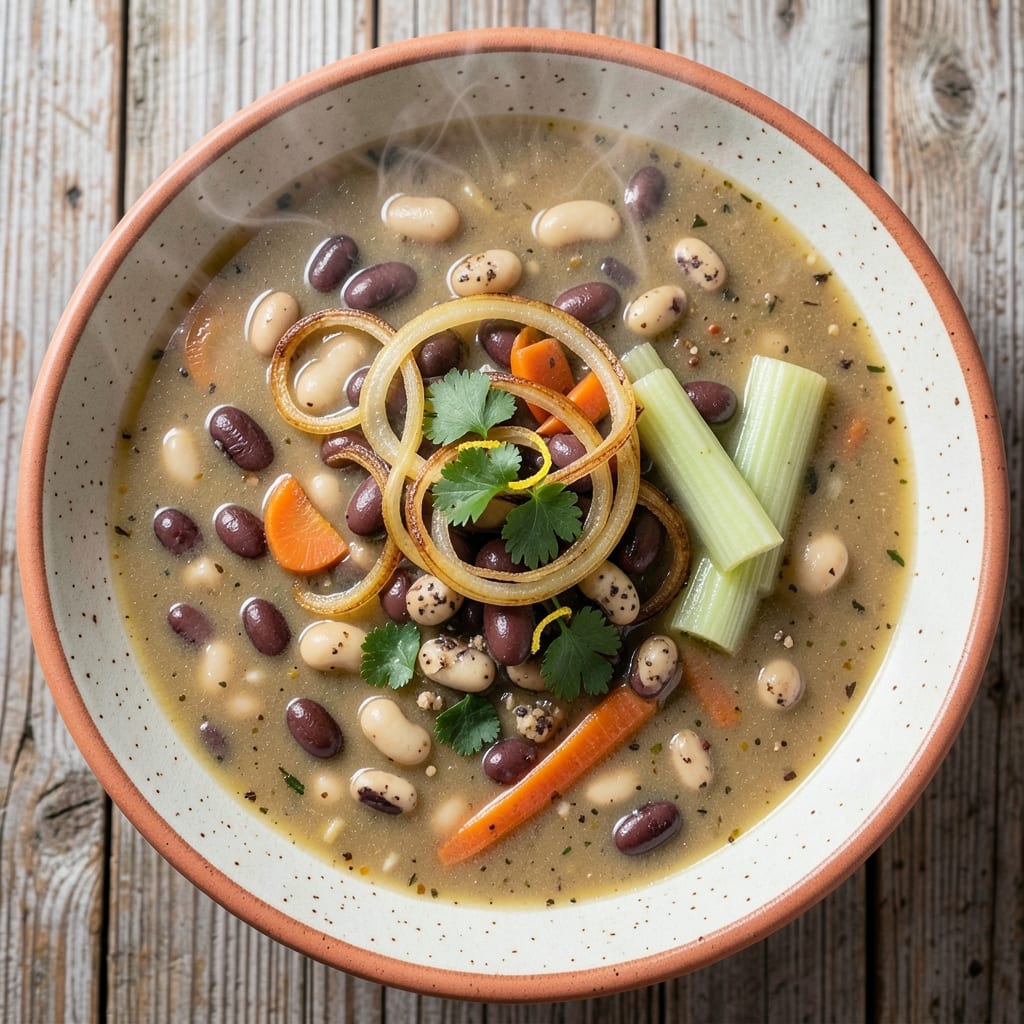
This 3 bean minestrone soup recipe delivers the ultimate vegetarian comfort dish—packed with hearty beans, fresh vegetables, and rich tomato broth in one flavorful pot. 🌟 The secret lies in soaking beans overnight for maximum tenderness while building layers of flavor through careful sautéing and slow simmering. Every spoonful delivers a perfect balance of earthy beans, crisp vegetables, and aromatic herbs. What sets this recipe apart is the layered approach—starting with a flavorful vegetable base, then adding beans and broth to develop deep, complex tastes. The combination of cannellini, kidney, and pinto beans creates a satisfying texture, while carrots, celery, and onions form the aromatic foundation. A touch of tomato paste and herbs ensures that rich, savory depth you crave in a proper minestrone. By the time it's done simmering, you'll have a restorative, veggie-packed soup that's hearty enough to stand alone or pair beautifully with crusty bread. The flavors meld together perfectly over time, creating a comforting dish that's perfect for chilly days or cozy family meals. This isn't just soup—it's a complete, nourishing experience in every bowl. The best part? It's easier than it looks—just follow the steps, and you'll end up with restaurant-quality minestrone in your own kitchen. Let's get started on creating this classic comfort dish that's sure to become a staple in your meal rotation.
Ingredients for 3 bean minestrone soup
Six hearty ingredients transform into the ultimate comforting vegetarian minestrone—rich, layered, and full of soul.
| Ingredient | Amount | Notes |
|---|---|---|
| Cannellini Beans 🌱 | 1 ½ cups | Dried, soaked overnight |
| Kidney Beans 🌱 | 1 cup | Dried, soaked overnight |
| Pinto Beans 🌱 | 1 cup | Dried, soaked overnight |
| Yellow Onion 🧅 | 1 whole | Diced, medium size |
| Carrots 🥕 | 3 medium | Peeled, sliced into rounds |
| Celery Stalks 🧄 | 3 whole | Diced, medium size |
| Garlic Cloves 🧄 | 4 cloves | Minced, fresh preferred |
| Tomato Paste 🍅 | 2 tbsp | High-quality, no sugar added |
| Dried Oregano 🌿 | 1 tsp | Or 1 tbsp fresh |
| Bay Leaves 🌿 | 2 whole | Fresh or dried |
| Vegetable Broth 💧 | 4 cups | Low-sodium preferred |
| Canned Diced Tomatoes 🍅 | 1 14.5oz can | San Marzano preferred |
| Extra-Virgin Olive Oil 🫒 | 2 tbsp | For sautéing |
| Salt 🧂 | 1 ½ tsp | Diamond Crystal preferred |
| Black Pepper 🌶️ | ½ tsp | Freshly ground |
The beans are the heart of this soup, so don’t skimp on quality. Trader Joe’s has excellent dried beans in bulk, or check the organic section at Whole Foods for heirloom varieties. Soaking overnight is non-negotiable—it ensures those beans cook up tender and creamy, not mushy. Pro tip: Use a large pot for soaking so you don’t waste water. The canned tomatoes? San Marzano is the gold standard, but any high-quality canned tomatoes will work. If you’re feeling fancy, roast your own tomatoes for an even deeper flavor—just toss halved tomatoes with olive oil, salt, and pepper on a baking sheet at 400°F for 20 minutes.
No canned tomatoes? Fresh tomatoes blended with a splash of broth work in a pinch, though the texture will be slightly different. Short on dried beans? Two 15oz cans of each bean type (drained and rinsed) will save time, though they won’t have the same depth of flavor. The vegetable broth is where the magic happens—Homemade is ideal, but even the low-sodium store-bought brands add layers of savory goodness. For the herbs, fresh oregano and basil (added at the end) brighten the soup, but dried oregano at half the amount gets you close if you’re in a hurry. The tomato paste? No sugar-added is key—it keeps the soup from tasting overly sweet.
This soup tastes even better the next day as the flavors meld together. Store leftovers in an airtight container in the fridge for up to 5 days, or freeze portions for 3 months. I like to portion it into mason jars for easy grab-and-go lunches—just reheat on the stove with a splash of water or broth. The beans and vegetables hold up beautifully, so don’t hesitate to make a big batch. Double the recipe and freeze half for those lazy weeknights when you just need comfort in a bowl.
Why You'll Love This Recipe
- Pantry-Friendly Magic: I swear by this one—no fancy ingredients, just dried beans and a few staples. The cannellini and kidney beans add that creamy texture, while the pinto beans bring a satisfying bite. Honestly, I’ve made this with whatever beans were on sale, and it still turns out spot-on.
- Savory Umami Bomb: That slow-simmered onion and carrot base? It’s where the flavor lives. The onions caramelize just enough to give it depth, and the carrots add a touch of natural sweetness that balances the beans perfectly. Between us, this isn’t just soup—it’s a full meal in a bowl.
- Leftover Legend: This soup actually improves the next day. The flavors meld together, and the beans soften just right. I make a big batch on Sundays, and by Wednesday, it’s still the star of my lunch—no sad leftovers here, just better soup.
- Budget Meal for All: Kid-friendly, wallet-friendly, and always a hit. The beans stretch this into four or five servings, and I’ve fed a crowd with just a few dollars’ worth of ingredients. Plus, it’s one of those dishes where everyone asks for seconds without me having to do anything fancy.
Step-by-step instructions for 3 bean minestrone soup
Here's how to create a soul-warming bowl of minestrone with three hearty bean varieties and vibrant vegetables.
🍳 Step 1: Sauté the Aromatic Vegetable Base
Heat the 2 tablespoons extra-virgin olive oil in a large Dutch oven over medium heat. Add the diced yellow onion, sliced carrots, and diced celery stalks, stirring occasionally for 5-6 minutes until the vegetables soften and begin to caramelize slightly—this builds deep flavor. Here's the thing: don't rush this step. You'll know it's ready when the onions turn translucent and the carrots lose their raw edge.
Add the 4 minced garlic cloves and cook for just 30 seconds until fragrant—garlic burns fast, so watch closely. Stir in the 2 tablespoons tomato paste and cook for another 1 minute, stirring constantly to prevent burning. This creates a rich, concentrated base that will carry all the flavors through the soup.
👨🍳 Step 2: Build the Flavor Foundation
Pour in the 4 cups vegetable broth and scrape up any browned bits from the bottom of the pot with a wooden spoon—this is where all the flavor lives. Add the 1 can diced tomatoes (with juices), 1½ teaspoons salt, ½ teaspoon black pepper, 1 teaspoon dried oregano, and 2 bay leaves. Bring the mixture to a gentle boil, then reduce heat to medium-low and let it simmer uncovered for 10 minutes to develop the flavors.
I know it seems like a long wait, but this step ensures your soup won't be flat or one-dimensional. The tomatoes will break down slightly, releasing their sweetness, while the herbs infuse the broth with aromatic depth. This is the moment that matters: let it bubble gently while you prepare the beans.
🥘 Step 3: Add the Soaked Beans and Simmer
Drain the soaked 1½ cups cannellini beans, 1 cup kidney beans, and 1 cup pinto beans thoroughly—any remaining soaking water can make the soup watery. Add them to the pot and stir gently to combine. The beans should be fully submerged in the broth. If they're not, add enough water to cover them by about ½ inch—this prevents them from sticking to the bottom and burning.
Return the soup to a gentle simmer (you should see small bubbles breaking the surface but no vigorous boiling) and cook uncovered for 45-50 minutes. Real talk: your oven might run hot, so start checking at the 40-minute mark. The beans are done when they're tender but still hold their shape—no mushy texture. You'll know they're ready when a bean slides in easily with a fork but doesn't fall apart.
⏰ Step 4: Finish and Adjust Seasoning
Once the beans are tender, taste the soup and adjust the seasoning. You might need an additional ¼ teaspoon salt or a pinch of pepper—minestrone should be rich but not overwhelming. Remove the bay leaves (they've done their job) and let the soup sit off the heat for 5 minutes. This resting period allows all the flavors to meld together beautifully.
Ladle the soup into bowls and serve immediately with crusty bread on the side. The contrast of the warm, hearty soup against the bread is pure comfort. If you have leftovers, they actually taste better the next day as the flavors continue to develop. This soup is the ultimate weeknight dinner—simple to make but packed with restaurant-quality flavor.
Pro Tips For Making 3 Bean Minestrone Soup
- SOAK BEANS OVERNIGHT: I learned this the hard way—skipping the soak leaves cannellini and pinto beans with that dreaded mealy texture. Toss them in cold water (about 4 cups per pound) 8+ hours before cooking. Kidney beans? They’re small enough to handle a 2-hour quick soak, but don’t rush it—even 30 minutes in boiling water won’t cut it if you’re impatient.
- SAUTÉ ONIONS LOW AND SLOW: That onion base is the flavor anchor, so don’t rush it. Cook it on medium-low heat for 10 minutes until it’s soft and golden, not crispy. If it starts to brown too fast, pull the pot off the heat for a minute—you’re aiming for sweetness, not char. (Yes, even if you’re staring at the clock.)
- SKIP PRE-COOKED BEANS: Canned beans save time, but they’re a shortcut that dulls the soup. If you’re using them, drain and rinse them thoroughly—those briny juices throw off the balance. Better yet, dry beans develop deeper flavor; simmer them until fork-tender (about 45-60 minutes for cannellini, 20-30 for kidney/pinto) before adding to the pot.
- ADD CARROTS LATE: Tossing carrots in at the start turns them to mush. Instead, chop them into ¼-inch slices and add them 15 minutes before the soup finishes. This keeps them tender-crisp and brightens the broth with their natural sweetness—no one wants a bowl of mushy orange sludge. (Trust me, I’ve served it.)
Essential equipment for 3 bean minestrone soup
Dutch Oven Essentials
A large Dutch oven is your best friend for minestrone—it retains heat beautifully and prevents scorching. I swear by the Le Creuset 6-quart for its even heat distribution and durable enamel coating. If you're on a budget, the Lodge 5.5-quart cast iron works wonders too—just preheat it well to avoid temperature fluctuations. 🔥
Wooden Spoon Must-Have
Never use metal utensils when scraping up flavorful browned bits from the bottom of your pot. A high-quality wooden spoon (I love the OXO Good Grips) helps lift those delicious fond deposits without damaging your Dutch oven. Look for one with a sturdy handle that won't warp over time.
Immersion Blender
For that creamy texture some minestrone recipes crave, an immersion blender lets you blend portions of the soup directly in the pot. The Ninja BN601 is my go-to—it handles thick soups effortlessly and comes with multiple speed settings. Just pulse a few cups at the end for a velvety finish without compromising the soup's hearty texture.
Fine-Mesh Strainer
Draining soaked beans properly is crucial—any leftover soaking water will dilute your soup. A fine-mesh strainer (like the OXO Good Grips) ensures all the water drains while keeping the beans intact. I also use it to strain any excess liquid when adding the canned tomatoes to maintain the perfect consistency.
Measuring Spoons Set
Precise measurements matter in minestrone—too much salt or oregano can overpower the delicate flavors. Invest in a stainless steel measuring set (the West Bend 11-piece) for accurate measurements. The small spoons are perfect for the ½ teaspoon black pepper and ¼ teaspoon salt adjustments at the end.
Mason Jars for Storage
Portioning leftovers into mason jars (like the Ball Wide-Mouth) makes reheating a breeze. They're stackable, airtight, and perfect for meal prep. Plus, they look gorgeous on your countertop while waiting to be served. Just leave 1 inch of headspace to prevent expansion when frozen.
Nutrition facts
Frequently asked questions
Can I substitute canned beans for dried beans in this recipe?
Yes, you can! Use two 15oz cans of each bean type (cannellini, kidney, and pinto) instead of soaking dried beans. Drain and rinse them thoroughly to remove excess sodium. The texture will be slightly different—canned beans are pre-cooked and softer—but they'll still work well. For best flavor, add the beans 10 minutes before the soup is fully done to let them warm through.
How can I make this soup more flavorful?
Try these pro tips: Add 1 teaspoon red pepper flakes for heat, or ½ cup white wine when sautéing the vegetables for depth. For umami, stir in 1 tablespoon soy sauce or 1 teaspoon miso paste with the tomato paste. Fresh herbs like basil or parsley at the end also brighten the flavors. The key is building layers—don't rush the simmering time!
What if my beans aren't tender after simmering?
If dried beans feel firm after 50 minutes, add ½ cup more broth and simmer another 15-20 minutes. For canned beans, they should be tender immediately—if not, they may be old. Always check the "best by" date on cans. Never add acidic ingredients (like lemon juice) to speed up cooking—they can toughen beans. Patience is key!
Can I make this soup in a slow cooker?
Sauté the vegetables and tomato paste as directed, then transfer everything to a 6-quart slow cooker. Add the beans and broth, then cook on low for 6-7 hours or high for 3-4 hours. The slow cooking enhances the flavors beautifully. Just stir occasionally and add water if needed to maintain consistency. The beans will be extra tender!
What's the best way to reheat leftovers?
Reheat gently on the stove over medium-low heat, stirring occasionally, until warmed through (5-7 minutes). Avoid microwaving—it can make the beans mushy. For extra flavor, add a splash of broth or water. If the soup seems too thick, stir in 1-2 tablespoons of broth while reheating. Leftovers actually taste better the next day as flavors meld!