
Soups & Stews
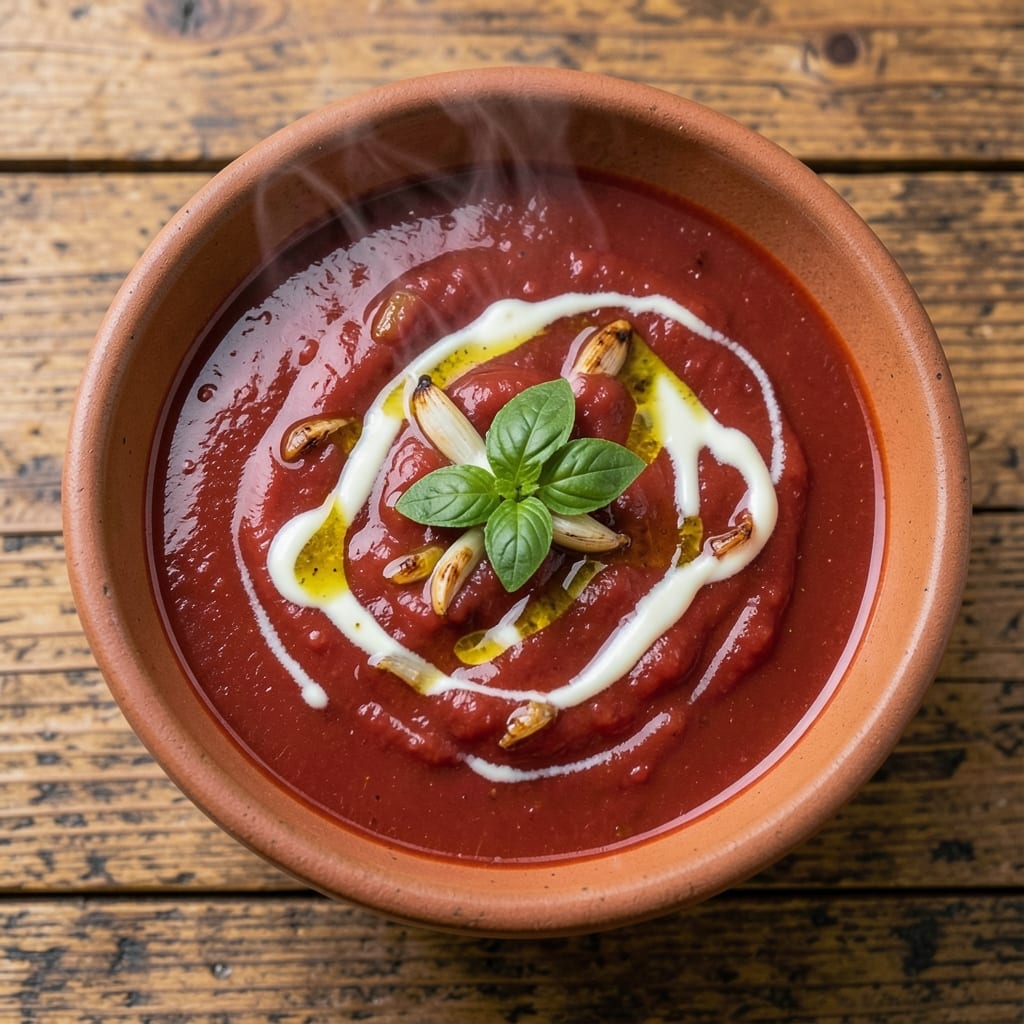
The 4Bs Restaurant tomato soup delivers velvety perfection that rivals any high-end restaurant—creamy, aromatic, and brimming with fresh basil. This isn’t your average canned soup; it’s a slow-simmered velouté where San Marzano tomatoes and European butter create a texture so smooth it practically melts on your tongue. The secret lies in proper straining and a touch of cream for that signature restaurant-quality richness.
What sets this recipe apart is the balance of acidity and sweetness, achieved through careful tomato selection and a pinch of sugar. The basil isn’t just an afterthought—it’s folded in at the end for vibrant, fragrant notes that elevate every spoonful. Unlike many recipes, this version skips the heavy cream overload, relying instead on a precise blend of butter and stock for a lighter yet equally luxurious finish.
By the time you’re done, you’ll have a soup so velvety it coats your spoon completely, with just enough acidity to keep it bright and refreshing. The aroma alone—warm tomatoes, fresh basil, and a hint of garlic—will have everyone asking for seconds. This is comfort food at its finest, but with restaurant-level finesse.
Perfect for chilly evenings or as a starter for special occasions, this tomato soup serves 6 and comes together in under an hour. The best part? Leftovers taste even better the next day as the flavors meld further. Let’s get cooking—your taste buds will thank you.
Ingredients for 4bs restaurant tomato soup
Restaurant-quality tomato soup starts with these 12 simple ingredients—no shortcuts allowed.
| Ingredient | Amount | Notes |
|---|---|---|
| Extra-Virgin Olive Oil 🫒 | ½ cup | High quality, fruity variety |
| Yellow Onion 🧅 | 1 whole | Diced into small pieces |
| Garlic Cloves 🧄 | 4 cloves | Peeled and minced finely |
| San Marzano Tomatoes 🍅 | 28 oz | Whole, peeled and crushed |
| Vegetable Stock 💧 | 4 cups | Homemade or high-quality store-bought |
| European Butter 🧈 | ½ cup | Cold, cubed for velouté |
| Heavy Cream 🥛 | ½ cup | Full-fat for richness |
| Fresh Basil Leaves 🌿 | ½ cup | Packed, stems removed |
| Granulated Sugar 🍚 | 1 tbsp | Adjust to taste |
| Salt 🧂 | 1 tsp | Diamond Crystal preferred |
| Black Pepper 🌶️ | ½ tsp | Freshly ground |
| Dried Thyme 🍃 | ½ tsp | Or 1 tsp fresh thyme |
The San Marzano tomatoes are non-negotiable here. Trader Joe's and Whole Foods carry them year-round, but if you can't find them, plum tomatoes work in a pinch. The butter matters too—European-style has more flavor than regular American butter. For the stock, homemade is ideal, but Pacific Foods or Imagine brands are solid store-bought options. The basil should be the freshest you can get—farmers markets have the best, but the grocery store's plastic-wrapped bunches are fine if they're bright green and not wilted.
No San Marzano tomatoes? Plum tomatoes or Roma tomatoes are your next best bet—just make sure they're ripe and juicy. Running short on butter? Olive oil works in a pinch, though the texture won't be quite as velvety. Fresh basil wilt fast, so if you're prepping ahead, store it wrapped in damp paper towels in the fridge. The thyme can be swapped for rosemary at half the amount, but it'll have a different flavor profile. For the sugar, honey works too—just reduce the amount slightly since it's sweeter.
This soup tastes even better the next day as the flavors meld. Store in airtight containers for up to 5 days in the fridge. For freezing, portion into 1-cup servings—it reheats beautifully straight from frozen. The basil wilts when reheated, so always add it fresh at the end. If you're making this ahead for a party, keep the basil separate until serving to preserve that vibrant aroma and color.
Why You'll Love This Recipe
- Restaurant-Quality Simplicity: I swear by this recipe because it’s the kind of dish that tricks people into thinking you slaved over it. Sauté onions until soft, add garlic, toss in crushed San Marzano tomatoes—no fancy techniques, just layers of flavor building in a pot while you do other things.
- San Marzano Magic: Between us, those tomatoes change everything. They’re sweet, meaty, and burst with acidity that cuts through the richness of the olive oil. The stock deepens the flavor without tasting like "broth," and honestly? It’s the kind of soup that makes you pause mid-bite and go, "Wait, how is this so good?"
- Weeknight Workhorse: This soup is my go-to for busy nights—throw it in the slow cooker for hands-off dinner, or make a big batch on Sunday for lunches all week. It’s the kind of thing that tastes better the next day, and I’ll never turn down leftovers when they’re this flavorful.
- Budget-Friendly Luxury: You’d never guess how affordable this is. A can of San Marzano tomatoes and a jar of stock stretch to feed four, and the olive oil adds richness without breaking the bank. It’s the kind of comfort food that feels special but won’t drain your wallet.
Step-by-step instructions for ultra-smooth tomato and basil velouté
This velvety tomato soup starts with simple ingredients but transforms into restaurant-quality perfection.
Sauté Onion and Garlic Until Translucent
Heat the 0.5 cup extra-virgin olive oil in a large Dutch oven over medium heat. Add the 1 whole yellow onion and cook for 8-10 minutes, stirring occasionally, until the onions become soft and translucent. This step builds the flavor foundation—don't rush it.
After the onions soften, add the 4 cloves minced garlic and cook for another 1-2 minutes until fragrant. Watch closely—garlic burns quickly. You'll know it's ready when the raw garlic smell disappears and you're left with a sweet, nutty aroma. Remove the pot from heat temporarily while you prepare the tomatoes.
Build the Tomato Base with Butter and Stock
Return the pot to medium heat and add the 0.5 cup cold European butter, stirring until melted and combined with the onion mixture. Pour in the 28 oz crushed San Marzano tomatoes and stir to coat everything in the juices. Let it simmer for 5 minutes to develop deeper flavor.
Add the 4 cups vegetable stock and 1 tbsp granulated sugar, bringing everything to a gentle boil. Reduce heat to low and let it simmer uncovered for 20 minutes, stirring occasionally. This slow cooking breaks down the tomatoes, creating that signature velouté texture. Skim off any foam that rises to the surface for a cleaner finish.
Blend Until Silky Smooth
Carefully transfer the soup to a blender in batches, leaving 1 cup in the pot. Blend each batch until completely smooth, scraping down the sides as needed. Return the blended soup to the pot and stir in the reserved 1 cup from earlier. This ensures a perfectly balanced consistency without thinning the soup too much.
Return the soup to medium-low heat and stir in the 0.5 tsp dried thyme and 1 tsp salt. Taste and adjust seasoning—this is where you'll notice if the sugar needs tweaking or if more salt is required. The soup should be rich but not overly sweet, with balanced acidity from the tomatoes.
Finish with Cream and Fresh Basil
Reduce heat to low and whisk in the 0.5 cup heavy cream, letting it warm through for 2-3 minutes without boiling. This final step adds luxurious richness while keeping the soup's vibrant tomato character. The cream should melt smoothly into the velouté without curdling.
Remove from heat and stir in the 0.5 cup fresh basil leaves and 0.5 tsp black pepper. Let the soup sit for 5 minutes to allow the basil to infuse its bright flavor. Taste one final time and adjust seasoning if needed. The soup should be velvety, aromatic, and perfectly balanced between sweet, savory, and herbal notes.
Serve Warm with Crusty Bread
Ladle the soup into bowls and serve immediately with warm crusty bread. The contrast of the bread's crunch against the soup's silky texture makes every spoonful perfect. For extra restaurant flair, garnish with a sprinkle of fresh basil leaves or a drizzle of high-quality olive oil.
This velouté holds well for 3-4 days in the refrigerator, though it's best enjoyed fresh. The flavors deepen slightly as it sits, but the ultra-smooth texture is at its peak when served warm. Each bowl delivers that comforting, restaurant-quality tomato soup experience you crave.
Pro Tips For Making 4bs Restaurant Tomato Soup
- Sweat, Don’t Burn, Onions: I learned this the hard way—low and slow is your friend here. Cook the onions in that olive oil over medium-low heat until they’re translucent but not browned (about 8-10 minutes). Browned onions add bitterness, and this soup is all about bright, clean flavor.
- Crush Tomatoes by Hand: Skip the food mill if you can. After blanching and peeling the San Marzanos, roughly crush them with your fingers—just enough to break the skins but leave some texture. The restaurant version keeps a few seed pockets for body, and it makes blending easier without turning the soup into mush.
- Salt the Stock Early: Add a generous pinch of salt to the vegetable stock while it heats, even if it’s just simmering. It won’t overpower the tomatoes, but it’ll round out the flavor as the soup cooks. I used to wait until the end, and the soup always tasted flat compared to the restaurant version.
- Blend in Stages: Don’t dump everything into the blender at once—blend the cooked tomatoes first, then add the stock in batches. This keeps the motor from overheating (yes, it’s happened to me) and ensures a smooth, velvety texture without breaking down the garlic into a paste.
Common mistakes when making this recipe
Overcooking the Tomatoes
One of the biggest mistakes is letting the tomatoes boil too vigorously—they’ll break down into a mushy, watery mess instead of a velvety velouté. I’ve seen this happen when people crank the heat too high after adding the stock. Keep the heat at a gentle simmer (small bubbles, not a rolling boil) for those 20 minutes of cooking time. The goal is to break down the tomatoes slowly, not turn them into tomato paste. 🌡️
Skipping the Straining Step
Some recipes call for blending, but the real secret is straining! If you skip this, you’ll end up with a chunky soup instead of that ultra-smooth texture. I use a fine-mesh sieve or nut milk bag to strain out seeds and skins—this is what gives the 4Bs version its signature silkiness. If you’re in a hurry, blend and strain for the best results. Trust me, your spoon will thank you.
Adding Cream Too Early
Here’s a rookie move: adding the heavy cream before the soup is fully cooked. The cream will curdle from the heat, turning your velouté into a lumpy disaster. Always wait until the very end, when the soup is off the heat, to whisk in that ½ cup heavy cream. Let it warm through gently—no boiling! The cream should melt into the soup like silk, not separate like cottage cheese. 🧈
Using Low-Quality Tomatoes
Not all tomatoes are created equal. If you grab just any canned tomatoes, you’ll end up with a bland, watery soup. San Marzano tomatoes are non-negotiable—they’re sweeter, meatier, and packed with flavor. If you can’t find them, plum or Roma tomatoes are your next best bet. Pro tip: Drain the tomatoes well before crushing to avoid a watery soup. I’ve made this mistake with cheap tomatoes, and the difference is night and day.
Over-Salting or Under-Seasoning
Tomato soup is all about balance. Too much salt makes it taste flat, while too little leaves it bland. Start with the 1 tsp salt and 1 tbsp sugar, then taste as you go. The sugar isn’t just for sweetness—it cuts through the acidity of the tomatoes. Don’t forget the ½ tsp black pepper and ½ tsp thyme either; these tie all the flavors together. Adjust gradually, and remember: you can always add more, but you can’t take it out!
Rushing the Basil Addition
Fresh basil is the soul of this soup, but adding it too early will turn it into a sad, wilted mess. Always stir in the ½ cup fresh basil right at the end, right before serving. Let it steep for 5 minutes so the aroma infuses the soup, but don’t let it cook—it’ll turn bitter. Garnish with extra basil leaves on top for that restaurant-worthy finish. 🌿
Nutrition facts
Frequently asked questions about 4Bs restaurant tomato soup
Why does this recipe use San Marzano tomatoes?
San Marzano tomatoes are the gold standard for this velouté because they're naturally sweeter and less acidic than other varieties. Their thick flesh and lower water content create a richer, smoother texture without thinning the soup. The subtle sweetness also balances the acidity beautifully, which is why 4Bs Restaurant likely specifies them for that signature restaurant-quality taste.
Can I make this soup vegetarian?
Yes, this recipe is already vegetarian-friendly! The base uses vegetable stock and butter, with no meat products involved. For extra richness, you could even substitute the butter with olive oil, though the texture will be slightly lighter. The cream and basil keep it fully plant-based while maintaining that luxurious velouté quality.
How do I prevent the soup from being too acidic?
The key is balancing the natural acidity of the tomatoes with the 1 tbsp sugar and proper cooking technique. If your tomatoes seem particularly tart, add an extra ½ tsp sugar> or a pinch of baking soda (just ⅛ tsp) to neutralize the acid. Always taste as you go—this soup should finish with a bright, balanced flavor, not a sharp tang.
What's the best way to reheat leftovers?
Reheat gently on the stovetop over low heat, stirring constantly to prevent scorching. Never microwave directly from the fridge—it creates hot spots that can break the velvety texture. For best results, warm to 160°F, then stir in fresh basil and a splash of cream at the end to restore that restaurant-fresh quality. Leftovers taste even better the next day as flavors meld!
Can I make this soup without a blender?
You can, but the texture won't be as silky. Instead of blending, press the cooked tomato mixture through a fine-mesh sieve> or cheesecloth to remove skins and seeds. For extra smoothness, blend just half the soup and mix it back in. The straining method requires more effort but gives you that signature velouté consistency without a blender.