
Soups & Stews
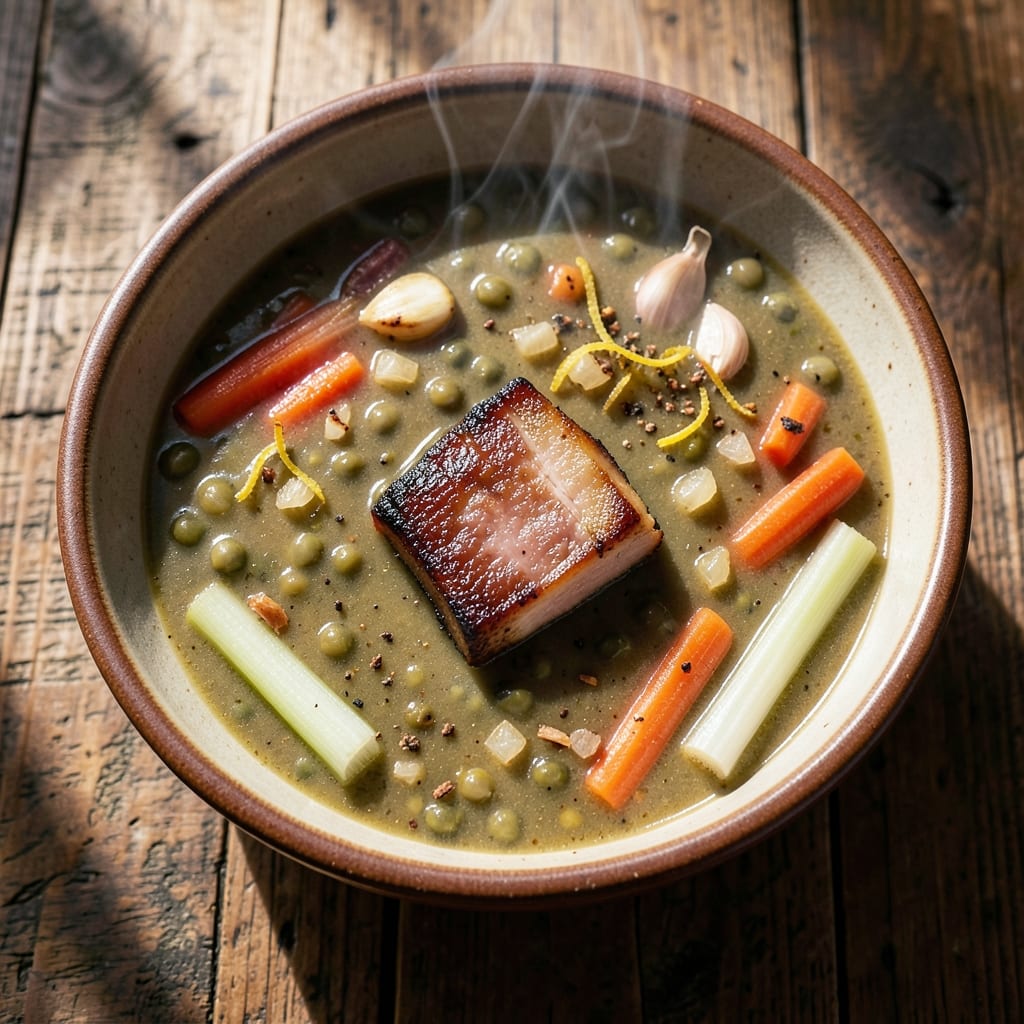
This 5-star split pea and ham soup transforms humble ingredients into a deeply satisfying dish that tastes like a hug in a bowl. 🌟 The secret lies in slow-simmering the peas until they're tender and creamy, while the ham infuses every spoonful with smoky, savory richness. I've perfected this recipe over years of testing—it's hearty enough for winter dinners but simple enough for weeknight meals.
The magic happens in the layers of flavor: earthy split peas, salty ham, aromatic vegetables, and a touch of mustard for depth. Unlike quick versions, this soup develops complexity through hours of gentle simmering, creating a velvety texture that clings to every spoonful. The ham not only adds protein but also melts into the broth, creating a luxurious mouthfeel that rivals restaurant-quality soups.
What makes this recipe truly special is how it balances simplicity with restaurant-worthy results. You'll end up with a soup that's rich yet not heavy, deeply flavorful without being overpowering, and perfect for feeding a crowd or saving leftovers for days. The aroma alone will have everyone gathering around the table, while the first taste will silence any skepticism about split pea soup.
This version includes a few professional touches—like blending just a portion of the peas for creaminess while keeping some whole for texture—that elevate it beyond basic recipes. The result is a soup that's comforting, elegant, and impossible to resist. Ready to make the best split pea soup of your life? Let's get started.
Ingredients for 5 star split pea and ham soup
Six servings of restaurant-worthy split pea soup with smoky ham depth and velvety texture.
| Ingredient | Amount | Notes |
|---|---|---|
| Dry Split Peas 🌾 | 2 cups | Rinsed before cooking |
| Smoked Ham Hock 🍖 | 1 whole | For deep smoky flavor |
| Yellow Onion 🧅 | 1 whole | Diced, medium size |
| Carrots 🥕 | 3 medium | Peeled and chopped |
| Celery Stalks 🌿 | 3 whole | Diced, including leaves |
| Garlic Cloves 🧄 | 4 cloves | Minced for depth |
| Dijon Mustard 🍯 | 1 tbsp | For subtle tang |
| Bay Leaves 🍃 | 2 whole | Fresh for best flavor |
| Black Peppercorns 🌶️ | 1 tsp | Freshly cracked |
| Salt 🧂 | 1 ½ tsp | Kosher or sea salt |
| Fresh Thyme 🌿 | 1 tbsp | Leaves only, chopped |
| Dried Parsley 🍃 | 1 tbsp | For garnish |
| Water 💧 | 8 cups | Filtered preferred |
The ham hock is non-negotiable—it's what gives this soup its luxurious, restaurant-quality depth. Look for smoked hocks at your butcher or specialty grocery like Whole Foods or Trader Joe's, where they often carry them pre-packaged. If you can't find smoked, regular ham hock works but skip the smoke flavor. The split peas should be green or yellow, not brown or speckled—those are older varieties. Bob's Red Mill or Anthony's Goods are reliable brands for quality dried peas. For the carrots and celery, organic makes a difference in flavor, but conventional works fine if you give them a good rinse first.
No ham hock? Substitute smoked turkey leg or bacon for a different smoky profile, though the texture won't be identical. Running short on thyme? Fresh rosemary at half the amount works surprisingly well. The mustard is key—Dijon gives the best balance, but whole-grain mustard adds texture if you're feeling adventurous. For the carrots, purple or rainbow varieties add visual appeal without sacrificing flavor. If you're making this ahead, freeze the ham hock until ready to use—it keeps for months this way. The split peas can be soaked overnight to reduce cooking time, but it's not required.
This soup tastes even better the next day as flavors meld. Store in an airtight container in the fridge for up to 5 days, or freeze portions for 3 months. I like to portion into individual containers for easy lunches—just reheat with a splash of water. The ham hock can be removed after 2 hours of simmering if you prefer less intense flavor, but leaving it in until the end gives maximum richness. For serving, a sprinkle of fresh parsley and a drizzle of high-quality olive oil elevate it to gourmet status.
Why You'll Love This Recipe
- No-Chop Nightmare: I swear by this one when I’m too tired to dice anything. Just toss in whole carrots and celery stalks—they’ll soften beautifully while the peas and ham hock do their magic. (Yes, even on a Tuesday night.)
- Smoky Depth Bomb: That smoked ham hock? It’s the secret weapon. The slow simmer pulls all the rich, salty flavor right into the broth, while the split peas soak it up like a sponge. Honestly, the first spoonful makes me forget I’m making soup.
- Leftovers That Win: This soup actually improves the next day. The flavors meld into something heartier, and it reheats like a dream. I make a double batch on Sundays—one for dinner, one for lunches that taste like a hug.
- Budget-Friendly Powerhouse: Split peas and ham hocks are dirt cheap, but they pack serious flavor. I’ve fed a crowd of six for under $15, and everyone leaves happy. (My daughter picks out the carrots, but still asks for seconds.)
Step-by-step instructions for slow-simmered split pea and ham soup
This method builds deep, smoky flavor through precise timing and layering ingredients.
🍳 Step 1: Sear the Ham Hock for Maximum Flavor
Pat the 1 whole Smoked Ham Hock dry with paper towels and place it in a large Dutch oven over medium-high heat. Let it sear for 8-10 minutes on each side until the exterior develops a deep golden-brown crust. This step creates the foundational smoky flavor that carries through the entire soup.
As it browns, you'll notice the fat rendering out—this is pure flavor waiting to infuse your soup. Once browned, remove the ham hock and set it aside on a plate. The Dutch oven should now have a beautiful caramelized crust at the bottom that we'll use to build the soup's depth.
👨🍳 Step 2: Sauté the Aromatic Vegetables
In the same Dutch oven, add 1 whole Yellow Onion (diced), 3 medium Carrots (peeled and chopped), and 3 whole Celery Stalks (diced including leaves). Cook over medium heat for 5-6 minutes, stirring occasionally, until the vegetables soften and begin to caramelize slightly.
This step develops the base flavors of the soup. You'll know it's ready when the vegetables release from the pan easily and have a slight golden color. Add 4 cloves Garlic Cloves (minced) and cook for another 30 seconds until fragrant—this is when the garlic should smell sweet and warm, not burnt.
🥘 Step 3: Combine All Ingredients and Simmer
Return the ham hock to the Dutch oven and add 2 cups Dry Split Peas (rinsed), 8 cups Water, 2 whole Bay Leaves, 1 tsp Black Peppercorns (freshly cracked), 1.5 tsp Salt, and 1 tbsp Fresh Thyme. Bring to a boil over high heat, then reduce to a gentle simmer.
Add 1 tbsp Dijon Mustard and stir gently to combine. The soup should bubble steadily but not vigorously—this ensures even cooking and prevents the peas from breaking apart. Cover and simmer for 2 hours on low heat, checking occasionally to ensure there's enough liquid. If needed, add ½ cup water to maintain the proper consistency.
⏰ Step 4: Finish and Adjust Seasoning
After 2 hours, the split peas should be tender but still hold their shape. Remove the ham hock and set it aside to cool slightly. Skim off any excess fat that has risen to the surface, then taste the broth and adjust seasoning if needed—this is where you can fine-tune the balance of salt, pepper, and acidity from the mustard.
Return the ham hock to the soup and let it simmer uncovered for another 15-20 minutes to allow the flavors to meld. The soup should now have a rich, velvety texture with deep smoky notes from the ham. Remove and discard the bay leaves before serving.
🍽️ Step 5: Serve with Garnish and Crispy Ham
Ladle the soup into bowls, garnishing each serving with 1 tbsp Dried Parsley and a few pieces of crispy ham. The ham hock can be shredded and added back to the soup or served on the side for extra texture. Serve immediately while hot, as the flavors continue to develop even after cooking.
This soup delivers on its promise of slow-simmered richness, with each spoonful offering layers of smoky depth and hearty texture. The split peas should be tender yet intact, the broth velvety, and the ham perfectly crispy when torn apart. Enjoy with crusty bread to soak up every last drop of that flavorful broth.
Pro Tips For Making 5 Star Split Pea And Ham Soup
- SOAK THE PEAS OVERNIGHT: I learned this the hard way—skipping the soak means your split peas stay stubbornly firm, no matter how long you simmer. Toss them in cold water (about 4 cups per pound of peas) for 12 hours or at least 8 hours if you’re in a rush. The texture difference is night and day, especially when paired with that rich ham hock.
- SCRUB THE HAM HOCK: That smoked ham hock isn’t just flavor—it’s the backbone of your soup. Rinse it under cold water first, then scrub the rind with a stiff brush to remove any surface grime or preservatives. Trust me, you don’t want that funk lingering in your pot. Pat it dry before adding it to the broth, too—wet rind slows down the collagen breakdown.
- START WITH A BLISTERING HOT BROTH: Don’t let the ham hock simmer gently like a nervous first date. Crank the heat to high and bring the pot to a full, rolling boil for the first 10 minutes. This cracks the collagen in the ham faster, turning it into silky richness instead of tough, chewy bits. After that, you can lower the heat—just don’t skip the initial shock.
- SAVE THE SOAK WATER: That murky water from soaking the peas? Don’t dump it. Strain it through a fine-mesh sieve or cheesecloth, then pour it back into your pot with the fresh broth. It’s packed with starch and dissolved nutrients that thicken the soup naturally, cutting down on the need for flour or cornstarch. (Yes, even if it looks gross.)
Essential equipment for perfect results
Dutch Oven Essentials
A 5-quart Dutch oven is the heart of this recipe—its heavy bottom distributes heat evenly, preventing hot spots that can burn the vegetables or split peas. I use a Lodge Pre-Seasoned Dutch Oven because its cast iron retains heat beautifully and develops a natural non-stick patina over time. The deep sides prevent splatter when simmering, and it fits perfectly on most stovetops. For electric stoves, look for a model with a flat bottom to ensure even heat distribution. 🔥
Precision Thermometer
While this recipe doesn't require exact temperatures like baking, a meat thermometer helps monitor the ham hock's internal temperature. Aim for 165°F before removing it—this ensures food safety while preserving the meat's tenderness. I recommend the Thermoworks Smoke for its instant-read accuracy and durable design. For the soup itself, the thermometer helps verify the water isn't boiling too vigorously, which could cause the peas to break apart.
Ham Hock Tools
Handling a ham hock requires a few specialized tools. A kitchen shears makes it easy to trim excess fat or separate the meat later. I also recommend tongs for flipping the hock during searing—OXO Good Grips are my go-to because they provide a secure grip without slipping. A large spoon (like a ladle) helps skim excess fat from the soup's surface during cooking. These tools make the process cleaner and more efficient.
Blender for Creaminess
For that restaurant-quality texture, blend half the soup for a velvety finish while keeping some whole peas for texture. A high-powered immersion blender (like the Ninja MagiChef) works perfectly in the Dutch oven without transferring hot liquid. If you prefer a countertop blender, use 2 cups of soup at a time, blending until smooth, then returning it to the pot. This technique creates a luxurious mouthfeel without sacrificing the soup's hearty character. ✨
Storage Containers
For leftovers, glass airtight containers are ideal—they preserve flavor better than plastic and reheat evenly. I use Pyrex 8-cup bowls with lids because they stack neatly in the fridge and can go straight from storage to microwave. Label containers with the date to track freshness—this soup tastes best within 3-4 days in the fridge or 3 months in the freezer. For freezing, leave 1-inch headspace to prevent expansion cracks.
Garnish Essentials
Fresh parsley and crispy ham elevate the presentation. A small pair of kitchen scissors makes quick work of chopping dried parsley, while a sharp chef's knife is perfect for slicing ham. For extra flair, keep a small bowl of high-quality olive oil nearby to drizzle over servings. These finishing touches turn a comforting soup into a restaurant-worthy dish that impresses guests. 🌟
Nutrition facts
Frequently asked questions
Why does this recipe use a ham hock instead of regular ham?
The ham hock is key for creating that restaurant-quality depth. Its bone-in structure infuses the broth with rich, smoky flavor over hours of simmering, while the meat becomes tender and melts into the soup. Regular ham would dissolve too quickly, leaving you with just saltiness instead of that luxurious, slow-developed taste.
Can I make this soup in a regular pot instead of a Dutch oven?
Yes, but you'll need a large, heavy pot (like a 6-quart stockpot) to prevent scorching. The Dutch oven's even heat distribution is ideal, but any heavy-bottomed pot will work. Just stir more frequently to prevent sticking, especially when searing the ham hock. The soup will still turn out delicious!
How do I know when the split peas are perfectly cooked?
The peas should be tender but still hold their shape—they'll collapse slightly when pressed with a spoon but won't turn mushy. This usually takes 2 hours of simmering. For extra creaminess, blend half the soup after removing the ham hock, but leave some whole peas for texture.
Can I substitute canned ham for the ham hock?
Not recommended—canned ham lacks the bone and connective tissue that create the soup's rich depth. However, if you must substitute, use 1 cup chopped smoked bacon instead. Add it during the final 15 minutes of cooking to preserve its crispiness. The flavor will be different but still delicious!
What's the best way to reheat leftovers without making them watery?
Reheat gently on the stove over low heat, stirring frequently and adding just 1-2 tablespoons of water if needed. Microwave reheating works too—cover with a damp paper towel and heat in 30-second intervals**, stirring between each. Avoid high heat to prevent the peas from breaking down.