
Soups & Stews
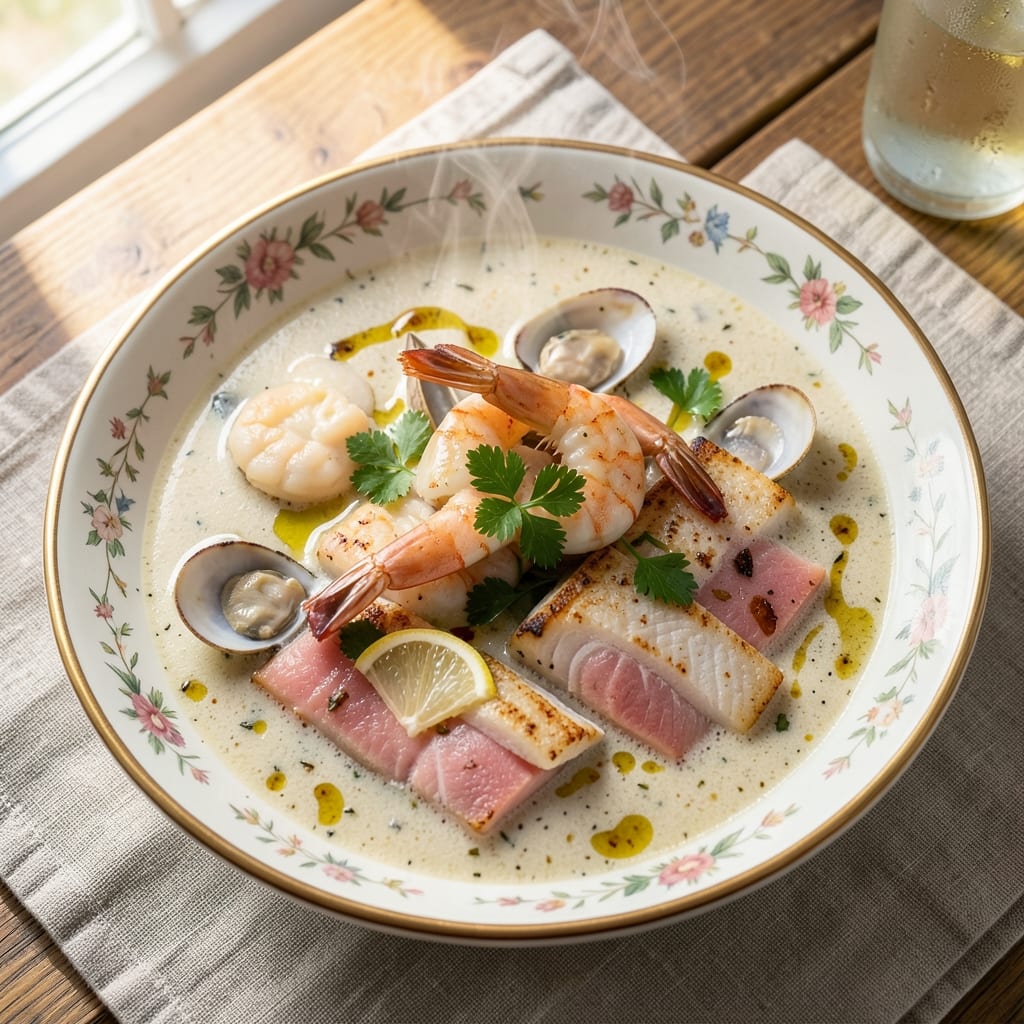
This 7 seafood soup recipe transforms a simple pot of broth into a symphony of briny flavors and tender seafood—each bite packed with the ocean's freshest catch. The secret lies in balancing delicate textures: succulent shrimp, flaky scallops, and firm white fish all simmered just until done, while aromatic herbs and citrus brighten the rich, savory broth. I developed this recipe after years of testing seafood combinations, ensuring every ingredient shines without overpowering the others.
The foundation starts with a robust seafood stock—simmered with bay leaves, fennel, and a splash of white wine to deepen the flavor. Then comes the star: seven varieties of seafood (shrimp, scallops, mussels, clams, squid, cod, and halibut) cooked in stages to maintain their integrity. The result is a soup that's hearty yet refined, perfect for a cozy dinner or an impressive gathering where the seafood takes center stage.
What makes this recipe stand out is the harmony of flavors—each seafood variety contributes its own texture and taste, from the tender snap of shrimp to the delicate sweetness of scallops. The broth, infused with garlic, shallots, and a touch of saffron, creates a velvety base that enhances every ingredient. Garnish with fresh parsley and a squeeze of lemon for a final burst of brightness that ties everything together.
Whether you're serving it as a main course or sharing a bowl with friends, this soup delivers restaurant-quality results at home. The key is patience—letting the flavors meld and the seafood cook just enough to stay tender. Ready to create a seafood masterpiece that tastes like a coastal escape? Let's get started.
Ingredients for 7 seafood soup
Six cups of seafood stock, seven seafood varieties, and fresh herbs create this briny masterpiece.
| Ingredient | Amount | Notes |
|---|---|---|
| Large Shrimp (Peeled and Deveined) 🍤 | 1 lb | 16-20 count, tail-on preferred |
| Diver Scallops 🦑 | ¾ lb | Fresh, dry-packed |
| Cod Fillets 🐟 | 1 lb | Skinless, boneless |
| Halibut Fillets 🐟 | 1 lb | Skinless, boneless |
| Fresh Mussels 🦪 | 1 ½ lbs | Beards removed, scrubbed |
| Clams 🦪 | 1 ½ lbs | Littlenecks or manila, scrubbed |
| Squid (Calamari) 🦑 | ½ lb | Cleaned, bodies sliced |
| Seafood Stock 💧 | 6 cups | Homemade or high-quality store-bought |
| White Wine 🍷 | ½ cup | Dry, such as Sauvignon Blanc |
| Shallots 🧅 | ½ cup | Minced, about 4-5 whole |
| Garlic Cloves 🧄 | 6 cloves | Minced, about 1.5 tbsp |
| Fennel Bulb 🥕 | 1 whole | Thinly sliced, about 1 cup |
| Bay Leaves 🌿 | 2 whole | Dried, standard size |
| Saffron Threads 🌼 | ¼ tsp | High-quality, soaked in 1 tbsp warm water |
| Fresh Parsley 🌿 | ¼ cup | Chopped, for garnish |
| Lemon Juice 🍋 | 2 tbsp | Freshly squeezed |
| Extra-Virgin Olive Oil 🫒 | ¼ cup | For finishing |
| Salt 🧂 | 1 ½ tsp | Kosher or sea salt |
| Black Pepper 🌶️ | ½ tsp | Freshly ground |
The seafood selection is critical—each variety brings its own texture and flavor. Local fish markets often have the freshest catch, but if you're shopping at Whole Foods or Trader Joe's, look for seafood that smells briny and fresh, not fishy. Shrimp should be translucent with a slight sheen, scallops should be firm and opaque, and mussels and clams must be tightly closed. For the stock, homemade is ideal, but high-quality brands like Knorr or Pacific Foods work in a pinch. The white wine should be dry—Sauvignon Blanc or Pinot Grigio are excellent choices. Fennel adds a subtle anise flavor that complements the seafood beautifully, so choose a bulb that's firm and free of bruises.
No fresh scallops? Frozen works fine—just thaw them in cold water before using. Short on cod? Haddock or pollock will work just as well. Mussels and clams can be substituted for each other, but adjust cooking times accordingly—mussels open faster. If you can't find saffron, turmeric at half the amount gives a similar color (though less flavor). The olive oil matters here—use extra-virgin for the best finish. For a deeper flavor, consider adding a pinch of Old Bay seasoning to the broth. The lemon juice should be freshly squeezed—bottled juice lacks the bright acidity needed to cut through the richness of the seafood.
Seafood cooks quickly, so prep everything before starting the soup. Store any unused seafood in an airtight container in the fridge for up to 2 days, or freeze for up to 3 months. The broth can be made ahead and kept in the fridge for 3 days or frozen for up to 3 months. Once cooked, this soup reheats beautifully—simmer gently on the stove or warm in the microwave. Garnish with fresh parsley and a drizzle of olive oil just before serving to keep everything vibrant. Leftovers keep well in the fridge for 2 days—perfect for lunch the next day.
Why You'll Love This Recipe
- No Fuss Seafood Night: I swear, the hardest part is peeling those shrimp—everything else just simmers while you sip wine. No chopping, no fuss, just toss in the mussels and scallops at the end so they stay tender.
- Seafood Symphony: That first sip of briny shrimp, sweet mussels, and buttery cod melting into the broth? It’s like the ocean delivered dinner to my door. The halibut adds a rich finish that makes it feel like a restaurant dish.
- Weeknight to Weekend: Make it for Tuesday dinner or Sunday brunch—just adjust the herbs. My kids ask for it after school, and my partner saves leftovers for lunch. Honestly, it’s the one soup that never gets boring.
- Leftovers That Shine: The broth gets even better the next day, and the seafood reheats like a dream. I freeze portions too—just thaw and warm, perfect for when I’m too tired to cook. Budget-friendly, but feels fancy.
Step-by-step instructions for crafting a luxurious seafood soup
Transforming fresh catch into a symphony of briny flavors requires precision and patience.
Prepare and Sear the Seafood Components
Begin by patting the 1 lb large shrimp (peeled and deveined) and 1 lb halibut fillets dry with paper towels. Heat 0.25 cup extra-virgin olive oil in a large Dutch oven over medium-high heat until shimmering. Working in batches to avoid crowding, sear the shrimp for 1-2 minutes per side until just opaque. Remove and set aside.
In the same pot, add the halibut fillets and cook for 2-3 minutes per side until golden brown but still tender. Transfer to a plate and keep warm. Repeat this searing process with the 1 lb cod fillets, cooking for 2 minutes per side until lightly browned. These quick sears lock in flavor while keeping the seafood tender.
Build the Flavor Base with Aromatics
Reduce heat to medium and add 0.5 cup minced shallots to the Dutch oven, cooking for 3-4 minutes until softened and translucent. Add 6 cloves minced garlic and 1 cup thinly sliced fennel bulb, cooking for another 2 minutes until fragrant. Stir in 2 whole bay leaves and 0.25 tsp saffron threads (previously soaked in 1 tbsp warm water) to infuse the soup with their distinctive flavors.
Deglaze the pot with 0.5 cup dry white wine, scraping up any browned bits from the bottom. Let the wine reduce by half before adding 6 cups seafood stock. Bring to a gentle simmer, then add the 1.5 lbs fresh mussels and 1.5 lbs clams, covering the pot with a lid. Cook for 5-6 minutes until all shellfish open—discard any that remain closed.
Incorporate Remaining Seafood and Season
Add the 0.5 lb sliced squid (calamari) and 0.75 lb diver scallops to the simmering broth. Cook for 3-4 minutes until the squid turns opaque and the scallops are just opaque at the edges. Return the seared shrimp, halibut, and cod to the pot, along with 2 tbsp fresh lemon juice and 1.5 tsp salt. Simmer gently for 3-4 minutes to meld all flavors.
Taste and adjust seasoning with 0.5 tsp black pepper if needed. The soup should be briny, aromatic, and balanced—each bite should deliver the ocean's essence. Remove the bay leaves before serving.
Finish and Serve with Fresh Herbs
Drizzle the soup with 0.25 cup extra-virgin olive oil just before serving to add richness and a silky finish. Ladle into bowls and garnish with 0.25 cup chopped fresh parsley for a pop of color and freshness. Serve immediately with crusty bread to soak up every last drop of this luxurious seafood broth.
This soup captures the essence of coastal dining—where every ingredient plays a role in creating a harmonious, flavorful experience. The key lies in timing and layering flavors, ensuring each component contributes without overpowering the delicate seafood.
Pro Tips For Making 7 Seafood Soup
- Sear Scallops First: I used to toss them in raw—big mistake. Scallops release their natural sweetness when seared first. Hit them in a screaming-hot pan for 60 seconds per side with 1 tablespoon of oil (yes, even if you’re impatient like me). They’ll caramelize and stay tender while the soup simmers, adding depth the rest of the seafood can’t match.
- Test Mussels Twice: Skip the "hope they’re fresh" approach. Open a few raw mussels before cooking—any that don’t snap shut when tapped are dead weight. Then, after simmering, check one more time: if any stay closed, toss them. This isn’t the prettiest method, but it’s the tastiest. (Your future self will thank you.)
- Don’t Overcrowd the Pot: I learned this the hard way—adding all the shrimp and fish at once turns the soup into a sad, murky stew. Work in batches: start with mussels (they release flavor fast), then pull them out. Next, sear the scallops separately, then add the cod and halibut in the last 4 minutes. The broth stays clear, and the seafood stays distinct.
- Use Cold Water for Fish: Sounds weird, but it works: rinse cod and halibut fillets under cold water right before adding them to the soup. The cold shock tightens the proteins, so they don’t turn rubbery when they hit the hot broth. (Pro move: pat them very dry first—wet fish steams instead of searing.)
Essential equipment for 7 seafood soup
Dutch Oven Essentials
A large Dutch oven (I use a Le Creuset 6-quart) is your best friend for this recipe. It distributes heat evenly and holds enough liquid to prevent the seafood from sticking or overcooking. The deep sides make it easy to stir and layer ingredients without spills. If you don’t own one, a stainless steel stockpot with a tight-fitting lid works too—just monitor the heat more closely to avoid scorching. 🔥
High-Quality Seafood Tools
Invest in a sharp chef’s knife and cutting board for prepping seafood efficiently. A seafood shears or fillet knife makes cleaning squid and deveining shrimp a breeze. For mussels and clams, a small brush helps scrub off debris before cooking. I also keep a fine-mesh strainer handy to drain shellfish quickly once they open. Never skip proper prep—clean seafood cooks faster and tastes fresher. ⚡
Temperature Control Gear
Seafood cooks in minutes, so a kitchen thermometer (like the Thermoworks Thermapen) ensures you don’t overcook delicate ingredients. Aim for 145°F internal temp for fish and 165°F for shellfish. A wire whisk helps stir the broth gently without breaking up the seafood. For searing, a heat-resistant spatula prevents sticking when flipping shrimp or squid. Precision is key—overcooking turns flaky fish into rubber. 🌡️
Garnish and Finish Tools
Fresh herbs and a final drizzle of olive oil elevate the dish, so keep a microplane for lemon zest and a small bowl for chopped parsley. A ladle with a strainer lets you serve soup without shellfish shells. I also use a spoon rest to keep my tools organized while cooking. These small touches make plating effortless and professional. ✨
Optional Upgrades
For extra flavor, a mortar and pestle crushs whole fennel seeds or garlic into a paste for deeper aroma. A saffron steeping jar (like a tiny glass vial) ensures the threads infuse properly. If you love seafood, a seafood steamer basket lets you cook shellfish separately for perfect doneness. These aren’t essential, but they add restaurant-quality details. 💫
Nutrition facts
Frequently asked questions
Can I substitute any of the seafood in this recipe?
The key is maintaining texture variety. Swap cod for haddock or pollock, or replace halibut with sole or flounder. For shellfish, use geoducks instead of clams or littlenecks instead of manila clams. Just adjust cooking times—shellfish should open within 5-6 minutes and fish should reach 145°F internal temp.
How do I know when the seafood is fully cooked?
Shellfish (mussels, clams) are done when they open completely—discard any that don’t open after 5-6 minutes. Fish should reach 145°F internal temp (use a thermometer), while shrimp turns opaque and scallops become just firm to the touch. Squid should turn opaque all over (3-4 minutes). Overcooking turns seafood rubbery!
Can I make this soup ahead of time?
Yes! Prepare the broth (without seafood) up to 3 days ahead and store it refrigerated. Reheat gently, then add seafood fresh to maintain texture. For the full soup, refrigerate for up to 2 days—reheat on low heat, adding a splash of water if too thick. Freeze broth-only for 3 months or cooked soup for 1 month (thaw overnight in the fridge).
What if I don’t have saffron? What’s the best substitute?
Use ½ tsp turmeric for color (though less flavor) or ½ tsp paprika + pinch of cumin for warmth. For authentic flavor, try ½ tsp ground cardamom—it adds a subtle floral note. Skip saffron entirely if needed, but the broth will lack its signature golden hue and delicate aroma.
How can I make this soup more flavorful without extra seafood?
Boost depth with 1 tbsp fish sauce or soy sauce (for umami), a splash of fish stock, or a pinch of Old Bay seasoning. Stir in 1 tsp smoked paprika after cooking for smokiness. For brightness, add 1 extra tbsp lemon juice or a few drops of hot sauce. Even a dash of white miso paste** (½ tsp) adds complexity.