
Soups & Stews
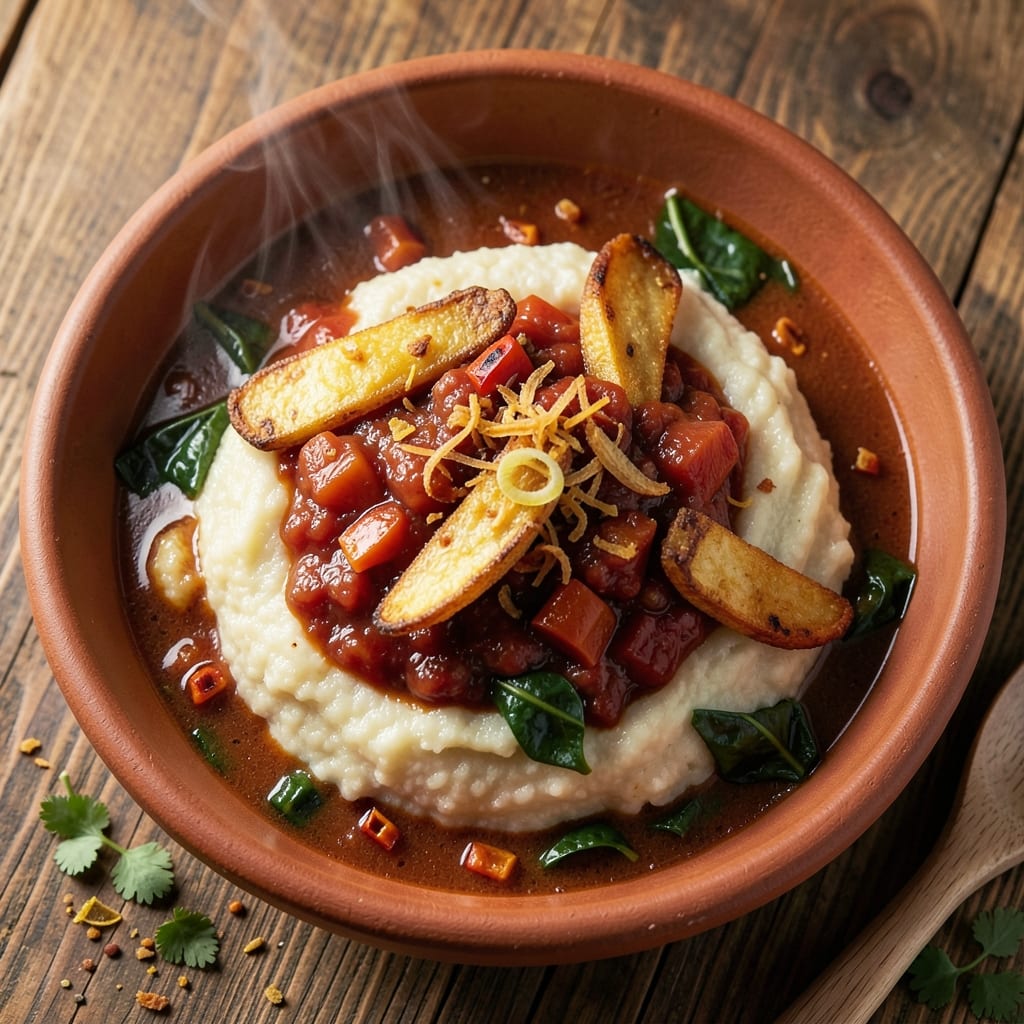
This African fufu and soup recipe brings the heart of West African cuisine to your kitchen with its signature smooth, stretchy dough paired with rich, spiced tomato broth. The traditional dish requires patience—boiling cassava or yam until perfectly tender, then pounding it into a silky consistency—but the result is worth every effort. The soup, simmered with onions, tomatoes, peppers, and protein of choice, creates a fragrant, hearty base that complements the fufu beautifully.
The key to authentic fufu lies in the texture: it should be smooth, elastic, and slightly sticky, almost like playdough. While some recipes call for cassava, yam works just as well, offering a slightly sweeter flavor. The soup, on the other hand, is where bold spices and slow simmering transform simple ingredients into a deeply flavorful broth. This dish is more than a meal—it’s a cultural experience, often served at gatherings and celebrations across Africa.
What makes this recipe special is its balance of simplicity and tradition. You’ll need a mortar and pestle (or a food processor) for the fufu, and a large pot for the soup, but no fancy equipment beyond that. The process of boiling, pounding, and simmering connects you to generations of cooks who’ve perfected this dish. The result? A comforting, filling meal that’s as satisfying to make as it is to eat.
Serve the fufu with the soup using your hands—traditionally, it’s eaten by rolling small balls and dipping them into the broth. This recipe yields enough for four to six servings, making it ideal for sharing. Whether you’re introducing African flavors to your table or recreating a family favorite, this dish delivers authenticity and warmth in every bite.
Ingredients for african fufu soup
Six servings of smooth, stretchy fufu paired with rich tomato broth—just these ingredients transform your kitchen into West Africa.
| Ingredient | Amount | Notes |
|---|---|---|
| Yams 🍠 | 2 lbs | Large, peeled, boiled until tender |
| Onions 🧅 | 2 large | Yellow or red, chopped |
| Tomatoes 🍅 | 4 medium | Ripe, chopped or blended |
| Bell Peppers 🌶️ | 2 whole | Mixed colors, chopped |
| Scotch Bonnet Peppers 🌶️ | 2 whole | Seeds removed for mild heat |
| Garlic Cloves 🧄 | 6 cloves | Minced or finely chopped |
| Fresh Ginger 🌿 | 1 inch | Peeled, grated |
| Vegetable Oil 🫒 | ½ cup | For sautéing |
| Chicken or Beef 🍗 | 1 ½ lbs | Boneless, cut into chunks |
| Salt 🧂 | 1 ½ tbsp | Adjust to taste |
| Black Pepper 🌶️ | 1 tsp | Freshly ground |
| Thyme Leaves 🌿 | 1 tbsp | Fresh or dried |
| Bay Leaves 🍃 | 2 whole | For simmering |
| Water 💧 | 6 cups | For boiling yams |
| Stock 🍲 | 4 cups | Chicken or vegetable |
The yams are non-negotiable—purple or white yams work best, but regular yams in a pinch. African markets or specialty stores often carry them, but most grocery stores stock them too if you ask. Look for firm, unblemished tubers—they should feel heavy for their size. Boil them whole until fork-tender (about 45 minutes), then peel while still warm. For the soup base, San Marzano tomatoes add the best flavor, but any ripe tomatoes will do. If you can't find Scotch bonnet peppers, jalapenos or habaneros work, but reduce the amount for milder heat. The key is balancing sweetness (tomatoes), heat (peppers), and earthiness (onions/garlic).
No Scotch bonnet? Red pepper flakes at half the amount gets you close. Fresh thyme out of season? Dried thyme at one-third the quantity works fine. Short on stock? Water plus a bouillon cube is better than nothing. The chicken or beef can be swapped for smoked fish or tofu for a vegetarian version. For extra richness, stir in a spoon of peanut butter at the end—trust me, it works. And if your yams turn out too dry after boiling, just add a splash of water back to the pot and cover while peeling—they’ll stay moist longer.
Yams reheat beautifully—just pop them in a steamer for 5 minutes. The soup tastes even better the next day as flavors meld. Store both in airtight containers for 3-4 days. For the fufu, wrap the boiled yams in damp paper towels before pounding to keep them from drying out. Freeze portions of the soup for up to 3 months—it’s perfect for quick weeknight meals. Pro tip: Use a mortar and pestle for authentic texture, but a food processor works in a pinch (just add a splash of water to keep it from sticking).
Why You'll Love This Recipe
- Boil-And-Mash Magic: I swear, the fufu part takes less effort than making mashed potatoes. Peel and boil yams, then pound them—no fancy gadgets needed. My hands get tired, but the result? Silky perfection every time.
- Heat That Stops You: That Scotch bonnet and bell pepper combo? Chef’s kiss. The soup starts mild but builds into a slow-burning warmth that lingers. Honestly, I’ve seen people take their first bite, pause, then say, “Wait, is this supposed to taste this good?”
- Pot Luck Hero: Make a big batch on Sunday, and you’ve got lunch, dinner, and leftovers covered. The soup thickens beautifully over time—better tomorrow, even—and the fufu reheats like a dream. (Yes, even on a Tuesday night.)
- Pocket-Friendly Powerhouse: Yams and onions stretch this recipe into a full meal without breaking the bank. I’ve fed six people for under $10, and they all left happy. Budget win? Absolutely. Flavor win? Even bigger.
Step-by-step instructions for African fufu and soup
Here's how to create the perfect smooth fufu with rich, aromatic tomato broth—every step matters.
Prepare the Yams for Pounding
Start by boiling the 2 lbs yams in 6 cups water until they're fork-tender, about 20-25 minutes. You'll know they're done when a knife slides in easily and the edges pull away from the center. Drain the yams completely and let them cool for 5 minutes—this makes them easier to handle.
Once cool enough to touch, peel the yams and cut them into 1-inch chunks. The key here is to work in batches—don't overload your pounding surface. I like to use a wooden mortar and pestle for authentic texture, but a clean kitchen counter with a rolling pin works too. Pound the yams until they form a smooth, stretchy dough that doesn't stick to your fingers. If it feels too dry, add a splash of water. This should take about 10-15 minutes of consistent pounding.
Build the Flavorful Base for the Soup
Heat the 0.5 cup vegetable oil in a large pot over medium heat. Add the 2 large chopped onions and cook for 5 minutes until they soften and begin to caramelize. Here's where the magic happens—add the 6 cloves minced garlic and 1-inch grated ginger, cooking for 1 minute until fragrant. Don't let the garlic burn, or you'll get a bitter taste.
Stir in the 2 whole chopped bell peppers and 4 medium chopped tomatoes, cooking for 5 minutes until the tomatoes break down. Add the 2 whole Scotch bonnet peppers (seeds removed for milder heat) and cook for another 3 minutes. This step develops the soup's deep, complex flavor. I like to taste the mixture at this point—it should be slightly sweet and tangy, with a hint of heat building.
Simmer the Protein and Vegetables
Add the 1.5 lbs chicken or beef chunks to the pot, along with the 4 cups stock, 1.5 tbsp salt, 1 tbsp thyme leaves, 1 tsp black pepper, and 2 whole bay leaves. Bring to a boil, then reduce heat to low and let it simmer uncovered for 45-50 minutes. You want the liquid to reduce slightly, concentrating the flavors. Stir occasionally, but don't overdo it—this can make the meat tough.
After 30 minutes, check the meat for tenderness. If it's still firm, let it cook another 10-15 minutes. The soup should have a rich, thick consistency with the meat falling apart easily. Remove the bay leaves before serving—you don't want the leaves in your final dish, but their flavor will infuse the broth beautifully.
Combine Fufu and Soup for Serving
Bring a small pot of water to a gentle simmer. Wet your hands and tear off a small piece of the pounded yam dough, rolling it into a ball. Drop it into the simmering water—it should float to the surface and form a smooth, glossy ball. This is your fufu test piece. If it doesn't hold together, pound the yam dough a bit more until it reaches the right consistency.
Once your fufu is perfect, serve it alongside the soup. The traditional way is to tear off a piece of fufu with your right hand and dip it into the soup with your left. The contrast between the smooth, stretchy fufu and the rich, spiced broth is what makes this dish truly special. Each bite should deliver tender meat, aromatic vegetables, and that perfect balance of heat and earthiness.
Pro Tips For Making African Fufu Soup
- BOIL YAMS UNTIL TENDER: I learned this the hard way—undercooked yams turn fufu into a gummy mess. Cut yams into even chunks (about 2-inch pieces) and boil them in salted water until they pierce easily with a knife. No need to overcrowd the pot, or they’ll steam instead of cook.
- PEEL SCOTCH BONNET CAREFULLY: That pepper’s heat hides in its membranes, not just the flesh. Wear gloves, slit the pepper lengthwise, and scrape out the seeds and the thin white lining inside—it’s where the worst burn lives. If you’re nervous, halve it and keep the other half aside for later; you can always add more heat later.
- SAUTÉ ONIONS LOW AND SLOW: High heat caramelizes onions too fast, and you’ll end up with burnt bits before the soup’s base develops. Cook them over medium-low, stirring often, until they’re translucent and just starting to soften—about 8-10 minutes. This is the flavor foundation, so don’t rush it.
- STIR IN TOMATOES LAST: Adding tomatoes too early turns your rich soup into a watery stew. Wait until the onions and peppers have released their oils and flavors, then toss in the chopped tomatoes. Let them cook down for 5 minutes before adding any liquids—this builds depth instead of diluting it.
Creative variations of this african fufu soup
West African Cassava Fufu
Swap yams for 2 lbs cassava (peeled and boiled whole until tender) to create a lighter, slightly sweeter fufu. Cassava requires 30-40 minutes of boiling to soften completely—test with a fork. Pound it just like yam, but expect a slightly drier texture that needs 1-2 tbsp water to achieve that perfect stretch. This variation is popular in Ghana and Nigeria, where cassava is a staple. 🌱
Ghanaian Peanut Stew Soup
Transform the tomato base into a creamy peanut stew by blending ½ cup roasted peanuts with 1 cup coconut milk after simmering the meat. Stir this mixture back into the pot and cook for 10 minutes to thicken. Add 1 tsp ground nutmeg and 1 tbsp honey for depth. Serve with fufu for a rich, nutty twist on the classic. 🥜
Nigerian Egusi Soup
For a heartier soup, replace the tomato base with 1 cup ground egusi seeds (melon seeds). Sauté the seeds in oil for 2 minutes until fragrant, then add to the pot with the onions and garlic. Simmer for 20 minutes to release their nutty flavor. This version is common in Southern Nigeria and pairs beautifully with fufu. 🌶️
Spicy Goat Meat Option
Swap chicken or beef for 1.5 lbs goat meat (cut into chunks). Brown the meat first in a separate pan with 1 tbsp smoked paprika and 1 tsp cayenne pepper before adding to the soup. Goat adds a distinct, gamey flavor that complements the spicy tomato broth perfectly. This variation is popular in Cameroon and Ivory Coast. 🐐
Vegetarian Leafy Greens
Boost nutrition by adding 2 cups chopped spinach or bitter leaf (like jute or pumpkin leaves) to the soup during the last 5 minutes of simmering. These greens are staples in West African vegetarian dishes and add a vibrant color. For extra protein, stir in ½ cup cooked black-eyed peas. 🌿
Sweet Plantain Fufu
For a dessert-like twist, mix 1 cup mashed ripe plantains (cooked and peeled) into the pounded yam dough. This creates a sweeter, fruitier fufu that pairs wonderfully with a lightly spiced tomato soup. The plantains add natural sweetness and a fun texture contrast. 🍌
Nutrition facts
Frequently asked questions
Can I make fufu without a mortar and pestle?
Use a food processor with a splash of water to keep it from sticking, or pound the yams on a clean kitchen counter with a rolling pin. For best results, work in small batches and add water gradually to achieve that authentic stretchy texture.
How do I adjust the heat level in the soup?
Remove seeds from Scotch bonnet peppers for milder heat, or use less of the pepper. For extra spice, add ½ tsp cayenne pepper or a pinch of red pepper flakes to the soup at the end. Always taste as you go—West African soups balance heat with sweetness from tomatoes and onions.
What's the best way to reheat fufu?
Steam reheating works best—place fufu in a heatproof bowl over simmering water for 5-7 minutes. Cover with a damp towel to keep it moist. Never microwave it dry, or it'll turn rubbery. For soup, gently reheat on the stove with a splash of water or stock.
Can I substitute yams with potatoes?
Not ideal—potatoes lack the natural starch needed for that signature stretchy texture. If you must, try sweet potatoes (peeled and boiled until very tender), but expect a slightly denser result. For authentic fufu, stick with yams or cassava—they're the traditional staples.
How long can I store leftovers?
Fufu keeps for 3-4 days in an airtight container in the fridge, while soup lasts 5 days. Freeze soup portions for up to 3 months—just thaw overnight in the fridge. Reheat soup gently on low heat, stirring occasionally to prevent sticking.