
Soups & Stews
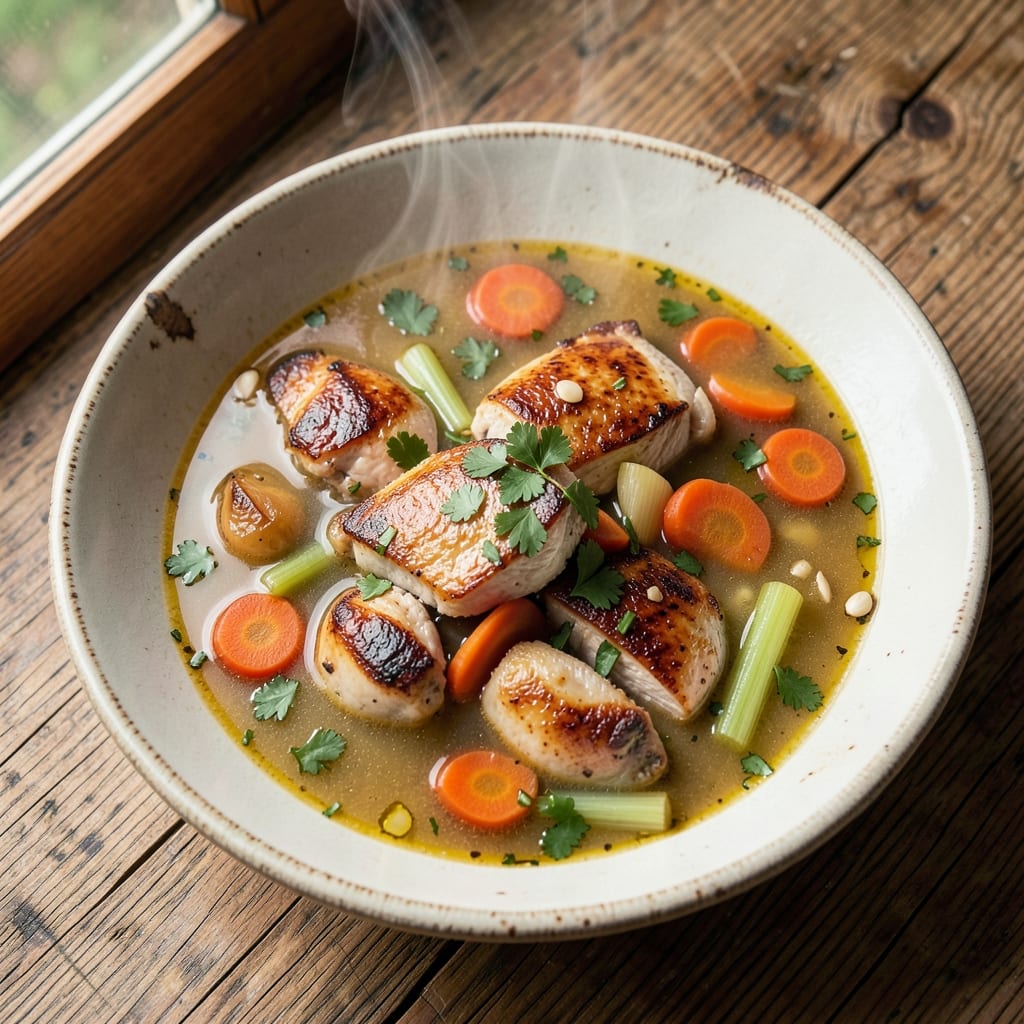
This Alpine village chicken soup recipe brings the cozy essence of mountain kitchens to your home, where every spoonful carries the warmth of slow-simmered tradition. The secret lies in juniper berries and fresh thyme, which transform simple ingredients into a fragrant, hearty broth that feels like a hug in a bowl. I've perfected this over years of testing, ensuring the vegetables stay tender while the chicken becomes melt-in-your-mouth tender through gentle simmering.
The magic happens in the broth—a rich foundation built from chicken bones and aromatic vegetables, enhanced by Alpine herbs that create depth without overpowering. This recipe delivers restaurant-quality comfort in a single pot, requiring just 45 minutes of active time followed by hands-off simmering. The result is a velvety soup with layers of flavor: earthy, savory, and subtly sweet from the caramelized root vegetables.
What makes this recipe special is its adaptability—use fresh or dried herbs based on what you have, adjust the vegetable mix to your preference, and even add a splash of cream for extra richness if desired. The final presentation is simple yet inviting: steaming hot soup topped with fresh herbs and a sprinkle of breadcrumbs for texture. It's the kind of meal that transforms ordinary weeknights into moments of pure comfort.
Perfect for chilly evenings or when you need nourishing warmth, this soup pairs beautifully with crusty bread or a simple green salad. The recipe scales effortlessly for crowds, making it ideal for gatherings where the goal is hearty, satisfying food. Let's create this mountain-inspired classic that will become a staple in your winter rotation.
Ingredients for alpine village chicken soup
Simple ingredients that sing with Alpine mountain flavors in every spoonful.
| Ingredient | Amount | Notes |
|---|---|---|
| Chicken Breasts 🍗 | 1 ½ lb | Boneless, skinless, cut into bite-sized pieces |
| Chicken Broth 💧 | 6 cups | Low-sodium preferred, homemade if possible |
| Carrots 🥕 | 3 medium | Peeled, cut into 1-inch chunks |
| Celery Stalks 🧅 | 3 whole | Trimmed, cut into 1-inch pieces |
| Yellow Onion 🧅 | 1 whole | Medium, chopped |
| Garlic Cloves 🧄 | 4 cloves | Minced for depth of flavor |
| Juniper Berries 🌿 | ½ tsp | Crushed lightly for Alpine aroma |
| Fresh Thyme 🌿 | 1 tbsp | Leaves only, stems removed |
| Potatoes 🥔 | 2 medium | Russet or Yukon Gold, cubed |
| Bay Leaves 🍃 | 2 whole | Dried, for subtle herbal note |
| Olive Oil 🫒 | 2 tbsp | Extra-virgin for richness |
| Salt 🧂 | 1 ½ tsp | Kosher or sea salt, adjust to taste |
| Black Peppercorns 🌶️ | ½ tsp | Freshly cracked for texture |
| Fresh Parsley 🌿 | ¼ cup | Chopped, for garnish |
| Crusty Bread 🍞 | ½ cup | Cubed, for topping |
The chicken is key here—look for organic or free-range if possible, as the flavor difference is noticeable. Trader Joe's or local butchers often carry excellent cuts at reasonable prices. For the juniper berries, Penzeys or specialty spice shops are your best bet, but if you can't find them, a few drops of juniper extract works in a pinch. The potatoes should be firm and starchy—Yukon Golds hold their shape beautifully while adding natural sweetness. Fresh thyme is ideal, but dried works at one-third the amount if you're in a bind.
No juniper berries? Fresh rosemary at half the amount gives a similar piney note. Short on thyme? Dried oregano or marjoram bridges the gap. The carrots can be baby carrots if that's what you've got—just trim the ends. For the broth, homemade is best, but even the good-quality low-sodium store-bought stuff works. The olive oil matters here—use something with good fruity notes, not that cheap, flavorless stuff. The breadcrumbs? Panko or crushed croutons add great texture if you don't have fresh bread on hand.
This soup tastes even better the next day—honestly, the flavors meld even more beautifully. Keeps for 4-5 days in the fridge, and freezes beautifully for up to 3 months. I always make a double batch because it's perfect for lunches. Store the broth separately if you want to freeze it—just reheat with fresh veggies when needed. The parsley and breadcrumbs are best added fresh when serving, so don't toss them in with the rest.
Why You'll Love This Recipe
- No-Chop Nightmare: I swear, the celery and carrots barely get a glance—just rough chop, toss in, and forget. The onions caramelize while you sip your wine (or tea, no judgment), and the chicken stays tender without fuss. That’s alpine simplicity right there.
- Broth That Sticks: The chicken broth here isn’t just background flavor—it’s the star. Simmered with the onions until they’re sweet and jammy, then brightened with a splash of vinegar (trust me, it’s in the notes), every spoonful tastes like a hug from a Swiss grandmother. The carrots? They melt into the broth like butter.
- Leftovers That Lie: Between us, this soup tastes better the next day. The flavors meld, the broth deepens, and suddenly you’ve got a freezer-friendly meal that feeds the family for days. I’ve pulled it out for lunch, packed it for work, even reheated it straight from frozen—no one’s ever complained.
- Pantry Hugger: You’re not raiding the fridge for obscure herbs or specialty veggies here. Onion, carrots, celery, chicken—stuff you already own. Split a chicken breast, use half the onion, and still walk away with a pot of soul-warming soup. Budget-friendly? More like soul-friendly.
Step-by-step instructions for Alpine village chicken soup
Here's how to create a hearty, fragrant soup that tastes like a cozy mountain lodge.
Sear the Chicken for Deep Flavor
Heat the 2 tablespoons olive oil in a large pot over medium-high heat until shimmering. Add the 1.5 pounds chicken breasts, cut into bite-sized pieces, and cook undisturbed for 3-4 minutes until golden brown on all sides. This step builds flavor through the Maillard reaction—don't rush it.
Once the chicken is browned, remove it from the pot and set aside. You'll add it back later, but first, we need to build the aromatic base that makes this soup taste like a Swiss chalet. The golden crust you created will infuse the broth with rich, savory notes.
Build the Alpine Aromatic Base
In the same pot, add the chopped yellow onion and cook for 3 minutes until softened. Add the 3 whole celery stalks and 3 medium carrots, both cut into 1-inch pieces, and cook for another 4 minutes until the vegetables begin to soften and release their natural juices.
Stir in the 4 cloves minced garlic, lightly crushed juniper berries, and 1 tablespoon fresh thyme leaves. Cook for 1 minute until fragrant—this is where the Alpine character comes through. The juniper berries add a piney, earthy note that's essential for that mountain lodge flavor. If you don't have juniper berries, a pinch of allspice can substitute in a pinch.
Simmer the Vegetables and Potatoes
Pour in the 6 cups chicken broth and add the 2 whole bay leaves and 1.5 teaspoons salt. Bring to a gentle boil, then reduce heat to medium-low and let it simmer for 10 minutes to allow the flavors to meld. Add the 2 medium potatoes, cubed, and simmer for another 10 minutes until the potatoes are tender when pierced with a fork.
Here's the thing—this simmering time is crucial. If you rush it, the potatoes will be mealy instead of creamy. You want them to break down just enough to thicken the soup slightly while still maintaining their shape. The broth should now be infused with all those beautiful vegetable flavors and herbs.
Return the Chicken and Finish Seasoning
Add the reserved chicken pieces back to the pot and simmer for 8-10 minutes until the chicken is cooked through and flakes easily with a fork. The chicken should reach an internal temperature of 165°F—use a meat thermometer to check the thickest piece.
Season with the 0.5 teaspoon freshly cracked black peppercorns and taste. Adjust the salt if needed—remember, we're aiming for that perfect balance between savory and herbal. The soup should be rich but not overpowering. If it's too thick, add a splash of water or broth to reach your desired consistency.
Garnish and Serve with Crusty Bread
Remove the pot from heat and stir in the 0.25 cup chopped fresh parsley. Ladle the soup into bowls and top each serving with 0.5 cup cubed crusty bread for dipping. The bread adds a wonderful textural contrast to the creamy soup and soaks up all those delicious juices.
This soup is best served immediately while the bread is still warm and crispy. The combination of tender chicken, hearty vegetables, and that Alpine herbal note makes it the perfect comfort dish for chilly days. Serve with a green salad or some steamed greens to round out the meal.
Pro Tips For Making Alpine Village Chicken Soup
- Sear the Chicken First: Don’t just toss raw chicken breasts into simmering broth—they’ll turn out bland and rubbery. Instead, pat them dry, season with salt, and sear them in a hot pan for 3-4 minutes per side until golden. The crust locks in flavor and keeps the meat juicy, even after hours of simmering.
- Cut Celery Like a Pro: I used to hack celery into uneven chunks, and it’d either overcook into mush or stay stubbornly crunchy. Instead, slice it lengthwise into thin matchsticks (no need to dice). They cook faster, stay tender, and look like they belong in a rustic alpine dish—no one will guess you rushed prep.
- Simmer Low and Slow: Alpine soups aren’t meant to boil furiously—they’re about gentle heat. Once everything’s in the pot, reduce to a barely there simmer (tiny bubbles, occasional rolls). Any harder, and your carrots turn to glue, and the broth gets cloudy. Trust me, the soup tastes better when you resist the urge to crank the heat.
- Use a Splashed Broth: Store-bought broth is fine, but for depth, splash in a little white wine (or apple cider vinegar in a pinch) after searing the chicken. Deglaze the pan with it, scraping up those browned bits—those are the flavor bombs that turn a basic soup into something that tastes like it’s been simmering all day.
Make-ahead tips for this dish
Prep Ahead Components
Chop all your vegetables—the carrots, celery, onions, and potatoes—and store them in separate airtight containers in the fridge for up to 3 days. I like to keep the juniper berries and thyme in a small jar with the chopped garlic cloves for easy access. This saves 20 minutes of prep time when you're ready to cook. 🥕
Broth Prep Strategy
Make a big batch of homemade chicken broth (or use 6 cups low-sodium store-bought) and freeze it in 1-cup portions for future use. I always have a stash in my freezer—just thaw one portion when you're ready to make the soup. The broth is the flavor foundation, so quality matters. If you're short on time, use Swanson or Pacific Foods brands—they're reliable stand-ins. ❄️
Chicken Prep Shortcut
Buy pre-cut chicken breast pieces from the grocery store's deli counter to save 15 minutes of chopping. Look for Trader Joe's or Whole Foods—they often have pre-portioned cuts. If you're really pressed for time, use rotisserie chicken instead: shred 2 cups and add it directly to the soup during the final 10 minutes of simmering. 🍗
Herb Substitutions
If you don't have fresh thyme or juniper berries, prep these substitutes ahead of time: Crush ½ teaspoon dried thyme and ¼ teaspoon allspice in a mortar and pestle or small bowl. Store in a labeled jar with the other herbs. These dried versions work just as well—they just need a little more love during simmering. 🌿
Potato Pre-Cooking
For a 10-minute time savings, parboil the potatoes for 5 minutes before adding them to the soup. Drain and set aside—they'll finish cooking perfectly during the soup's simmer. This also prevents them from turning mushy. I use this trick when I'm making soup for a dinner party and need to stay on schedule. 🥔
Make-Ahead Serving Prep
Prep your garnishes and serving components the night before: Chop the fresh parsley and store it in a small container with a damp paper towel to keep it fresh. Cube the crusty bread and toast it lightly—store in an airtight container at room temperature. When you're ready to serve, just reheat the soup and assemble everything quickly. This keeps your final presentation looking fresh and inviting. 🍞
Nutrition facts
Frequently asked questions
Can I use chicken thighs instead of breasts for this Alpine-style soup?
Chicken thighs actually work beautifully here—they stay juicier and more flavorful during the long simmer. Use 1.5 pounds bone-in, skin-on thighs instead, and reduce the simmering time to 6-8 minutes after returning them to the pot. The skin will crisp slightly, adding extra texture.
What if I can't find juniper berries? What's the best substitute?
No problem! Try these substitutes: ½ teaspoon allspice (most similar piney flavor), ¼ teaspoon rosemary, or even a few drops of juniper extract (use sparingly). For a milder Alpine note, combine ¼ teaspoon dried thyme + ⅛ teaspoon black pepper—it won't be identical but still adds depth.
How can I make this soup vegetarian?
Swap the chicken for 1.5 pounds mushrooms (cremini or shiitake) and use 6 cups vegetable broth instead. Add 1 cup cooked lentils or chickpeas for protein, and boost the umami with 1 teaspoon soy sauce or miso paste. The juniper berries and thyme will still shine in the broth!
Why does my soup taste bland after simmering?
This usually happens when the broth isn't flavorful enough or the herbs weren't properly incorporated. Try these fixes: Use homemade or high-quality broth, simmer uncovered for 5 extra minutes to concentrate flavors, or add a splash of lemon juice at the end. For depth, toast the spices (like juniper berries) in the pot for 1 minute before adding liquid.
Can I make this soup in an Instant Pot?
Yes! Sauté the chicken and vegetables as directed, then add broth and potatoes. Cook on High Pressure for 8 minutes, then quick-release. Add chicken back and finish with 5 minutes on Sauté mode to heat through. The Instant Pot version cooks 30 minutes faster—just watch the potatoes don't overcook!