
Soups & Stews
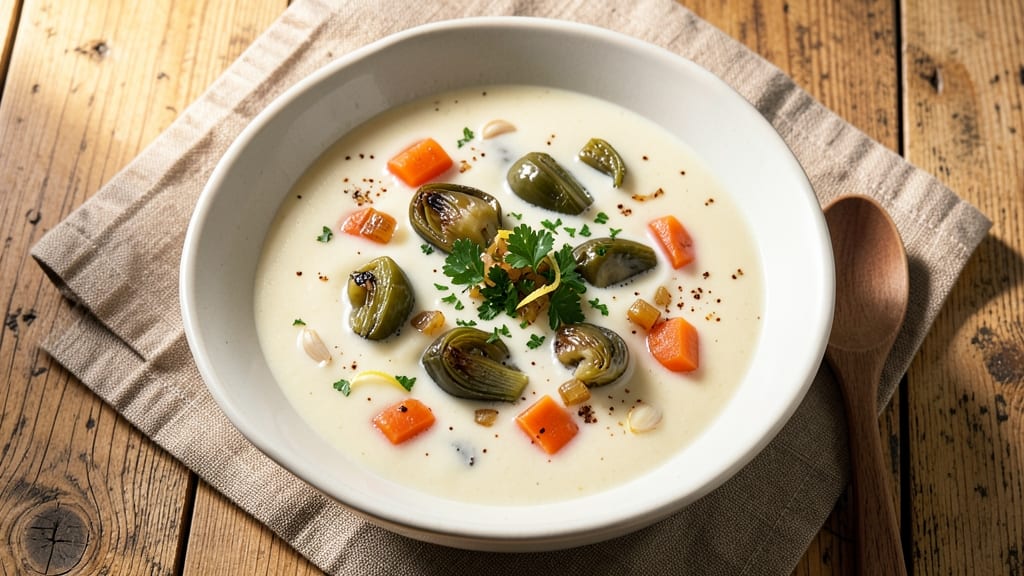
This artichoke soup recipe with canned artichokes transforms pantry staples into velvety, restaurant-worthy comfort in just 20 minutes. The secret lies in blending canned artichokes with garlic, broth, and a touch of cream until impossibly smooth, creating a soup that's both elegant and effortless.
What makes this version special is how it captures that signature artichoke flavor—bright, herby, and slightly tangy—without requiring fresh artichokes or complicated techniques.
You'll start with a simple one-pot method that minimizes cleanup while maximizing flavor. The artichokes break down beautifully when simmered with aromatic vegetables and herbs, then blend into a creamy texture that coats every spoonful.
A splash of cream adds richness without overpowering the artichoke's natural taste, while lemon juice brightens the finish. This approach delivers the same luxurious results as gourmet versions, but with ingredients you likely already have on hand.
The result is a soup that's perfectly balanced—smooth yet textured, rich yet light, and packed with that distinctive artichoke character. Each spoonful delivers tender artichoke heart flavors, subtle garlic warmth, and a velvety mouthfeel that makes it ideal for chilly evenings.
The best part? It comes together faster than takeout, with no chopping or special equipment required beyond a blender or immersion stick.
Serve it as-is for a clean, elegant presentation, or top with crispy bread croutons, fresh parsley, or a drizzle of olive oil for added texture and color. This soup keeps well in the refrigerator for up to 3 days, making it perfect for meal prep or feeding a crowd.
Let's get cooking—your taste buds will thank you.
Ingredients for artichoke soup recipe with canned artichokes
Pantry staples plus a few fresh touches—this soup comes together faster than takeout.
| Ingredient | Amount | Notes |
|---|---|---|
| Canned Artichoke Hearts 🍃 | 14 oz | Drained, quartered artichokes |
| Vegetable Broth 💧 | 4 cups | Low-sodium preferred |
| Heavy Cream 🥛 | ½ cup | Full-fat for richness |
| Garlic Cloves 🧄 | 3 cloves | Freshly minced |
| Yellow Onion 🧅 | 1 whole | Diced, medium size |
| Carrot 🥕 | 1 whole | Peeled, diced |
| Celery Stalks 🌿 | 2 whole | Diced, trimmed |
| Fresh Lemon Juice 🍋 | 1 tbsp | Brightens flavor |
| Dried Thyme 🌿 | 1 tsp | Or 1 tbsp fresh |
| Salt 🧂 | 1 tsp | Diamond Crystal preferred |
| Black Pepper 🌶️ | ½ tsp | Freshly ground |
| Olive Oil 🫒 | 2 tbsp | Extra-virgin preferred |
| Fresh Parsley 🌿 | ¼ cup | Chopped, for garnish |
| Crusty Bread 🍞 | ½ cup | Cubed, for croutons |
Canned artichokes are the star here, so look for high-quality brands like Goya or La Rosa—they've got the best texture and flavor. The 14-ounce can gives you plenty for four servings, with no need to peel or trim. Fresh garlic and herbs make all the difference, but dried thyme works in a pinch if that's what you've got. For the broth, Swanson or Pacific Foods low-sodium options are my go-tos—they're consistent and don't overpower the artichoke's natural taste. If you're using fresh thyme, double the amount and make sure it's vibrant green, not wilted.
No fresh parsley? Dried parsley at half the amount works, though it won't be as bright. Short on cream? Coconut milk or cashew cream adds richness without dairy—just reduce the broth by 2 cups first. The carrots and celery can be swapped for frozen veggies (no need to thaw) if you're in a hurry. For extra depth, add a pinch of nutmeg or a splash of white wine—both pair beautifully with artichokes. And if you're feeling fancy, toasted bread croutons add the perfect crunch without overcomplicating things.
This soup tastes even better the next day—flavors meld beautifully when refrigerated. Store in an airtight container for up to 3 days, or freeze portions for 3 months. I always make a double batch because it reheats perfectly and is perfect for lunches. For serving, drizzle with olive oil and extra black pepper—that simple touch makes it feel restaurant-quality. The croutons can be toasted ahead and kept in a jar for up to 1 week if you're prepping for a crowd.
Why You'll Love This Recipe
- No Chopping Nightmare: I swear by canned artichokes here—no messy thorns or stubborn stems to wrestle with. Just drain, chop (two minutes max with a knife), and toss into the pot. My lazy Sundays thank me.
- Creamy-Garlicky Magic: That first spoonful? Chef’s kiss. The heavy cream smooths out the artichokes while the garlic—sautéed until golden—adds this bright, almost buttery punch. Honestly, it’s the kind of flavor that makes you pause mid-sip.
- Weeknight to Dinner Party: Same soup, different vibes. Serve it rough with crusty bread for a Tuesday night, or add a sprinkle of Parmesan and fresh parsley for guests. I’ve even turned it into a dip—just thicken it more and boom, instant crowd-pleaser.
- Budget-Friendly Leftovers: A single can of artichokes stretches into three meals if you portion it right. Freeze extras in jars, and you’ve got a 10-minute lunch ready when you’re too tired to think. (Yes, even on a Tuesday night.)
Step-by-step instructions for artichoke soup with canned artichokes
This one-pot method delivers velvety, restaurant-quality soup in record time.
Sauté the Aromatic Vegetable Base
Heat the 2 tablespoons olive oil in a large pot over medium-high heat. Add the 1 whole yellow onion, 1 whole carrot (diced), and 2 whole celery stalks (diced), stirring occasionally for 5-6 minutes until the vegetables soften and the onion becomes translucent. You're building flavor here—don't rush this step.
Add the 3 cloves garlic cloves (minced) and 1 teaspoon dried thyme, cooking for another 30 seconds until fragrant. The garlic should just begin to color—this prevents bitterness. Keep the heat steady; if it burns, you'll taste it later. This aromatic base forms the soul of your soup, so take your time getting it right.
Simmer the Broth and Artichokes
Pour in the 4 cups vegetable broth and bring to a gentle boil. Add the 14 ounces canned artichoke hearts (drained and quartered) and 1 teaspoon salt, then reduce heat to medium-low. Let the mixture simmer uncovered for 10 minutes until the vegetables are tender and the flavors meld together.
Here's where the magic happens: the artichokes release their natural sweetness while absorbing the savory broth. You'll notice the soup thicken slightly as it reduces—this is normal. Stir occasionally to prevent sticking, but don't over-mix. The gentle simmer ensures the artichokes stay intact rather than turning mushy.
Finish with Cream and Bright Acid
Reduce heat to low and stir in the 0.5 cup heavy cream. Let it warm through for 2-3 minutes—just until it's heated but not boiling. The cream should become silky and fully incorporated. Add the 1 tablespoon fresh lemon juice and 0.5 teaspoon black pepper, stirring well to brighten the flavors.
This is the moment that matters: the lemon juice cuts through the richness of the cream while enhancing the artichokes' natural sweetness. Taste and adjust seasoning—you might need a pinch more salt or lemon to balance the flavors. The soup should be rich but not heavy, with a perfect harmony of creamy and tangy notes.
Toast the Croutons and Garnish
While the soup finishes, heat 1 tablespoon olive oil in a small skillet over medium heat. Add the 0.5 cup crusty bread (cubed) and toast for 3-4 minutes until golden brown, stirring occasionally. Transfer to a paper towel to drain excess oil.
Ladle the soup into bowls and top each serving with 0.25 cup fresh parsley (chopped) and the toasted croutons. The parsley adds freshness while the croutons provide satisfying texture contrast. Serve immediately while the soup is hot and the croutons are crisp—this dish doesn't wait well, and every element should be at its peak when enjoyed.
Pro Tips For Making Artichoke Soup Recipe With Canned Artichokes
- Sauté Onions Low and Slow: Canned artichokes taste bland if you rush the base. Cook the onions over medium-low heat for 8-10 minutes until deeply softened and golden—no need to caramelize, just break down the fibers so they melt into the broth instead of sitting as chunks.
- Drain Artichokes Thoroughly: The brine in canned artichokes makes soup watery. Rinse them well, then drain in a colander for 5 minutes before adding—this removes enough liquid to keep your soup rich, not thin. (Yes, it’s tedious, but trust me.)
- Simmer, Don’t Boil: Heavy cream curdles fast when it hits high heat. Keep the soup at a gentle simmer (tiny bubbles, not rolling) once you add it, and remove from heat as soon as it’s thickened. Overcooking turns creamy soup into a sad, lumpy mess.
- Toast Garlic Until Fragrant: Raw garlic tastes harsh in soup. Sauté the minced cloves in the onion oil until they smell intensely aromatic—about 2 minutes past golden. This deepens the flavor without bitterness, and the soup won’t taste like you forgot to cook the garlic.
Flavor customization for this artichoke soup recipe with canned artichokes
Creamy vs. Broth-Based
This recipe delivers a luxurious creamy texture, but you can easily adapt it to a lighter broth-based version. Simply omit the 0.5 cup heavy cream and replace it with an extra 0.5 cup vegetable broth.
For added richness without dairy, stir in 2 tablespoons coconut milk or 1 tablespoon cashew cream at the end. The result is still velvety but with a brighter, more refreshing profile. 🥄
Herb Variations
Swap out the dried thyme for other herbs to change the flavor profile entirely. Fresh rosemary (1 sprig) adds piney depth, while basil (1 tbsp) brings Italian brightness.
For a Mediterranean twist, use oregano (1 tsp) and a pinch of red pepper flakes. Always adjust seasoning after adding fresh herbs—they pack more flavor intensity.
Spicy Kick Options
Add heat with 1 tsp Calabrian chili paste or ½ tsp smoked paprika for a slow-building warmth. For immediate zing, stir in 1 tsp hot sauce (like Cholula) or a pinch of cayenne pepper.
Finish with crispy chorizo bits (½ cup) for a Spanish-inspired twist. The artichokes' natural sweetness balances the heat beautifully. 🌶️
Umami Boosters
Deepening the umami profile transforms this soup into something restaurant-worthy. Add 1 tbsp soy sauce or 1 tsp fish sauce (for vegetarian, use mushroom powder). For extra richness, stir in 1 oz melted white miso paste or 1 tbsp nutritional yeast.
These additions make each spoonful more complex without overpowering the artichokes' delicate flavor.
Texture Contrasts
Beyond croutons, consider these textural upgrades. Top with crispy fried shallots (¼ cup) for a crunchy contrast. Add toasted pine nuts (2 tbsp) for nutty crunch. For a heartier option, fold in crumbled feta cheese (¼ cup) or crispy prosciutto (2 oz).
Each addition should complement rather than compete with the soup's creamy base.
Seasonal Brighteners
Adjust the finishing touches based on what's fresh. In summer, add 1 tbsp fresh basil and a squeeze of lemon for brightness. In winter, swap lemon for 1 tsp apple cider vinegar and top with toasted walnuts.
For spring, incorporate peas (½ cup) or asparagus tips (½ cup) into the simmering broth—they cook quickly and add freshness. 🌸
Nutrition facts
Frequently asked questions
Can I make this soup without cream for a lighter version?
Replace the 0.5 cup heavy cream with 0.5 cup extra vegetable broth and add 2 tablespoons coconut milk at the end for a dairy-free, velvety texture. The soup will still be rich but much lighter.
How do I prevent the artichokes from turning mushy in the soup?
Simmer the soup at medium-low heat for only 10 minutes after adding the artichokes. Avoid overcooking—they should remain tender but still hold their shape. For extra insurance, use freshly canned artichokes (check the "best by" date) and don't over-blend the final soup.
What's the best way to store leftovers?
Let the soup cool completely, then transfer to an airtight container. It keeps well in the refrigerator for up to 3 days. For longer storage, freeze portions for 3 months. Reheat gently on the stove over low heat, stirring occasionally, until warmed through. The flavors actually improve after the first day!
Can I use jarred artichoke hearts instead of canned?
Yes, but with one key adjustment: jarred artichokes often contain marinade or oil. Drain them thoroughly and rinse under cold water to remove excess brine or seasoning. You may need to add a splash more broth to maintain the right consistency. The texture will be slightly different but still delicious.
Why does my soup taste bitter?
Bitterness usually comes from overcooked garlic or artichokes. For next time, add garlic just before the broth (not during sautéing) and reduce simmering time to 8 minutes. A splash of lemon juice or apple cider vinegar can also help balance bitter flavors. Taste as you go—this soup is very forgiving!