
Soups & Stews
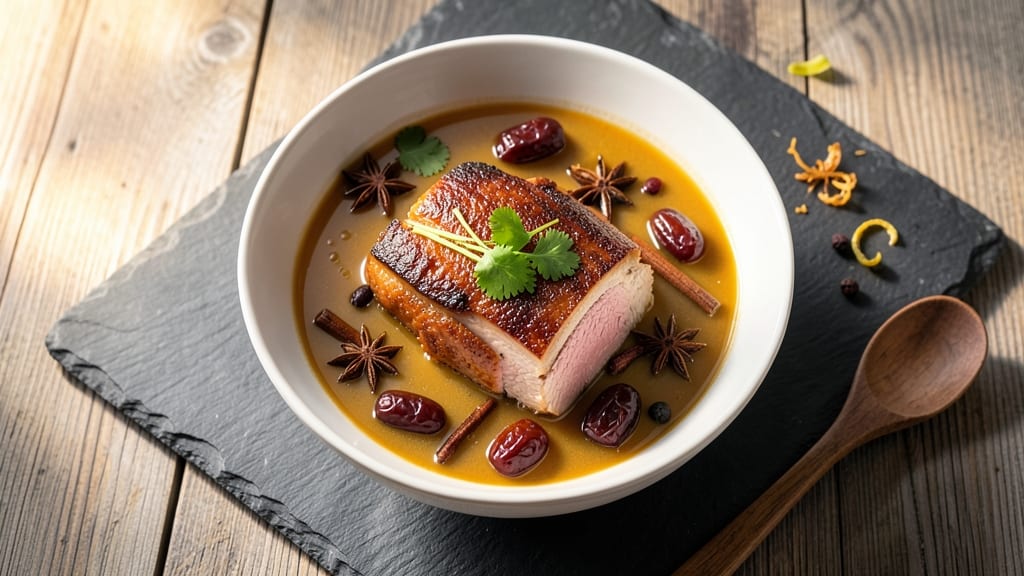
This Asian duck soup recipe transforms humble ingredients into a fragrant, five-spice-infused broth that wraps tender duck meat and delicate noodles in every spoonful. The secret lies in slow-simmering the duck bones with aromatic spices—star anise, cinnamon, and cloves—to create a deep, savory base that feels like a warm embrace on cold days. I first made this version after discovering how a proper broth build (not just water) elevates even the simplest duck pieces into something luxurious.
What sets this recipe apart is the balance of textures: silky rice noodles that soften just enough to soak up the broth, tender duck that falls apart with the first bite, and fresh herbs that add a bright contrast.
The five-spice blend isn't just for flavor—it creates that signature warmth that makes this soup feel like comfort in a bowl. Most recipes skip the proper duck preparation, but browning the meat first and simmering it low and slow transforms ordinary duck into something restaurant-worthy.
By the time you're done, you'll have a steaming bowl of soup where every element works together: the duck rich and tender, the noodles perfectly al dente, and the broth so aromatic it makes your kitchen smell like a bustling Asian market.
The beauty of this recipe is its versatility—it works as a hearty main dish or a light lunch, depending on how you serve it. Garnish with fresh cilantro and lime for brightness, or keep it simple with a sprinkle of black pepper.
The best part? Leftovers taste even better the next day as the flavors meld even deeper. This isn't just another duck soup—it's a fragrant, five-spice-infused experience that delivers restaurant-quality results at home. Ready to make it? Let's get started with the ingredients.
Ingredients for asian duck soup
These aromatic spices and tender duck create a restaurant-worthy five-spice broth.
| Ingredient | Amount | Notes |
|---|---|---|
| Duck Breast 🦆 | 1 ½ lb | Bone-in, skin-on preferred |
| Duck Fat 🫒 | ½ cup | From rendering duck skin |
| Star Anise 🌿 | 2 whole | Crushed lightly for aroma |
| Cinnamon Sticks 🌿 | 2 whole | 2-inch pieces for infusion |
| Cloves 🌿 | 4 whole | Lightly crushed for depth |
| Sichuan Peppercorns 🌶️ | 1 tsp | Lightly toasted for aroma |
| Fennel Seeds 🌿 | 1 tsp | Toasted for warmth |
| Dried Ginger 🧅 | 1 tsp | Fresh if available |
| Garlic Cloves 🧄 | 6 cloves | Smashed for intense flavor |
| Fresh Ginger 🧅 | 2 tbsp | Grated, peeled |
| Rice Noodles 🍜 | 8 oz | Flat rice noodles, medium width |
| Green Onions 🧅 | 4 whole | Sliced for garnish |
| Fresh Cilantro 🌿 | ¼ cup | Chopped for brightness |
| Lime 🍋 | 1 whole | Juiced for acidity |
| Low-Sodium Soy Sauce 🍶 | 2 tbsp | For umami depth |
| Fish Sauce 🍶 | 1 tbsp | For savory balance |
| Water 💧 | 6 cups | For broth base |
The duck is the heart of this soup—bone-in, skin-on pieces render the richest fat for the broth. Ask your butcher for duck legs or breasts with skin—the fat is pure gold here. If you can't find fresh duck, frozen duck from an Asian market works perfectly, just thaw it overnight. The five-spice blend (star anise, cinnamon, cloves) is non-negotiable for that signature warmth. Penzeys or local spice shops carry high-quality whole spices, but the grocery store versions work fine if they're fresh. Toast your whole spices lightly in a dry pan before adding to the broth—this releases their oils and deepens the flavor profile dramatically.
No Sichuan peppercorns? Substitute with a pinch of black pepper plus a dash of cayenne for heat. Fresh ginger is ideal, but dried works at half the amount. The fish sauce adds depth—if you're avoiding it, extra soy sauce plus a splash of oyster sauce gets you close. For the noodles, flat rice noodles are traditional, but egg noodles work in a pinch. The broth can be made ahead and reheated—it actually tastes better the next day as the flavors meld. If you're serving this as a light lunch, reduce the noodles to 4 oz per serving and add a side of steamed greens.
Store the broth in an airtight container for up to 5 days in the fridge, or freeze for 3 months. The noodles cook in minutes, so keep them in a sealed bag with a damp paper towel to prevent drying. For a quick assembly, prep all ingredients ahead: render the duck fat, toast the spices, and make the broth in one go. The soup reheats beautifully—just add hot water to adjust consistency. Garnish with fresh cilantro and lime right before serving to keep the herbs vibrant. This recipe makes enough for leftovers, which is perfect since the flavors only get better with time.
Why You'll Love This Recipe
- One-Pot Magic: I swear by this—just toss everything into a pot, simmer, and walk away. No chopping, no fussing, and that rich duck fat renders right into the broth while you stir in the spices. Honestly, it’s the kind of soup where you can set it and forget it until the aroma wakes you up.
- Spice Bomb Depth: That star anise and cinnamon? They don’t just hint at warmth—they build layers. The cloves add a tiny, bright punch, while the duck fat turns the broth into liquid gold, thick and velvety. Between us, it’s the kind of flavor that makes you slow down and savor every spoonful.
- Weeknight to Dinner Party: Make it for Tuesday nights when you’re exhausted, or pull it out for guests when you want to impress without stressing. The leftovers? Even better the next day—just reheat and serve. My in-laws think I slaved over it; I just simmered for 45 minutes.
- Duck Fat Hack: Use every last bit of that rendered duck fat—it’s the star. Save the leftover fat in the fridge, and next time you need a quick pan sear or roast, you’ve got the good stuff. And since duck breast is often cheaper than chicken, this soup stretches your budget without sacrificing richness. (Yes, even on a Tuesday night.)
Step-by-step instructions for Asian duck soup
Here's my method for crafting a rich, aromatic duck broth with perfectly balanced flavors.
Render Duck Fat and Roast Aromatics
Begin by placing the 1.5 lb duck breast skin-side down in a cold skillet over low heat. Let it render slowly for 20-25 minutes until the skin is deep golden brown and crispy. This process yields the 0.5 cup duck fat we'll use later. Transfer the duck to a cutting board and let it rest.
While the fat renders, toast the spices in a dry skillet over medium heat for 1-2 minutes until fragrant: 2 whole star anise, 2 whole cinnamon sticks, 4 whole cloves, 1 tsp Sichuan peppercorns, and 1 tsp fennel seeds. Immediately transfer these to a mortar and lightly crush them—just enough to release their oils without turning to powder. This preserves their aromatic qualities in the broth.
Build the Five-Spice Broth
In a large pot, combine the rendered duck fat with 6 cups water. Add the crushed spices, 6 cloves smashed garlic, 2 tbsp grated fresh ginger, and the roasted duck breast. Bring to a boil over high heat, then reduce to a simmer. Skim off any foam that rises to the surface during the first 5 minutes of simmering—this ensures a clear, clean broth.
Simmer uncovered for 1.5 hours, maintaining a gentle bubble. The broth should reduce slightly, deepening in color and developing a rich, complex aroma. You'll notice the duck meat will fall apart easily at this stage, releasing its gelatinous collagen into the broth. This is what creates that luxurious, silky texture we're after.
Season and Prepare Noodles
Strain the broth through a fine-mesh sieve into a clean pot, discarding the solids. Return the broth to medium heat and add 2 tbsp low-sodium soy sauce, 1 tbsp fish sauce, and 1 tsp dried ginger. Taste and adjust seasoning—you're aiming for a balance of salty, umami, and aromatic depth. The broth should coat your spoon lightly when chilled.
While the broth heats, prepare the 8 oz rice noodles by soaking them in hot water for 8-10 minutes until pliable but still slightly firm. Drain and rinse briefly with cold water to stop the cooking process. This prevents them from becoming mushy in the hot broth later.
Assemble and Garnish
Return the broth to a simmer, then add the prepared noodles. Cook for 2-3 minutes until they're heated through and tender. The noodles should be al dente with a slight bite—this ensures they hold their shape in the rich broth. Divide the noodles among 4 bowls, reserving some broth for each serving.
Finish each bowl with 1 whole sliced green onion, 1 tbsp chopped fresh cilantro, and a squeeze of lime juice. The acidity from the lime brightens the rich duck flavors, while the fresh herbs add a vital touch of freshness. Serve immediately while the noodles are hot and the broth is steaming.
Pro Tips For Making Asian Duck Soup
- Render Duck Fat First: Heat the pot empty on medium-high until the duck fat shimmers—about 5 minutes. Cold fat burns easily, and you want that golden aroma before adding anything else. I learned this the hard way when my first batch smelled like burnt oil instead of rich, nutty duck fat.
- Toast Spices Lightly: Dry-toast star anise, cinnamon, and cloves in the duck fat for 30 seconds until fragrant—just until you catch a whiff of warmth. Over-toasting turns them bitter, and you’ll taste it in every sip. (Yes, even if you’re impatient like me.)
- Don’t Overcrowd the Pot: Let the duck breast sear in batches if needed—two at a time max. Piling them in will steam instead of brown, and you’ll end up with gray, sad meat instead of crispy edges. Trust me, the extra minute waiting makes all the difference.
- Use Leftover Duck Skin: Save any crispy duck skin from roasting the breast—chop it up and toss it in at the end. It adds texture and depth without extra effort. (Your future self will thank you for not tossing it.)
Storing and reheating your asian duck soup
Broth Storage Secrets
The duck broth is where all the magic happens, and it keeps beautifully. Store it in an airtight container (I use glass Pyrex with snap-on lids) in the fridge for up to 5 days.
The flavors actually deepen overnight as the spices meld—this is why homemade broth always tastes better than store-bought! For longer storage, freeze the broth in quart-sized freezer bags with 1 inch of headspace to prevent ice crystals. Thaw overnight in the fridge before reheating. 💧
Noodle Prep Ahead
Rice noodles are finicky—store them in a sealed plastic bag with a damp paper towel to prevent drying out. They'll keep for 3 days in the fridge this way. For make-ahead convenience, pre-soak the noodles (just don't rinse them yet) and store them in the fridge submerged in water.
When ready to cook, drain and rinse briefly before adding to the hot broth. This shortcut saves 10 minutes of prep day-of. ✨
Reheating Like a Pro
Never microwave the broth—it ruins the delicate texture. Instead, reheat on the stovetop over medium-low heat until steaming, then add a splash of hot water if needed to adjust consistency. For the noodles, add them to the reheated broth and cook for just 2-3 minutes—they'll absorb heat quickly.
If the soup seems too thick after reheating, thin it with 1-2 tbsp hot water at a time. The key is gentle heat to preserve the silky texture. 🔥
Leftovers Strategy
This soup tastes even better the next day, but handle leftovers carefully. Store in individual portions with broth and noodles separated—this prevents soggy noodles. Reheat broth separately, then add noodles just before serving. For extra richness, stir in 1 tsp duck fat when reheating.
Garnish with fresh herbs right before eating to keep them vibrant. Leftovers keep for 3 days in the fridge or 1 month in the freezer. 💪
Freezer-Friendly Tips
If freezing the full soup, assemble it completely (including noodles) and freeze in single-serving portions in mason jars. Leave 1 inch of headspace to prevent cracking. When ready to eat, thaw overnight in the fridge, then reheat gently on the stovetop.
The texture holds up surprisingly well—just add a splash of water if needed. For best results, freeze the broth and noodles separately and assemble fresh when reheating. ❄️
Nutrition facts
Frequently asked questions
Can I substitute chicken for duck in this recipe?
The duck fat and collagen are key to this soup's rich, silky texture. Chicken won't render the same depth of flavor, but you can use chicken thighs (skin-on, bone-in) for a lighter version. For best results, add 1 tbsp duck fat or goose fat to mimic the richness. The five-spice blend will still shine, but the broth won't be as luxurious.
What makes this broth different from regular duck soup?
The magic lies in the five-spice blend (star anise, cinnamon, cloves) and proper low-and-slow simmering for 1.5 hours. This creates a complex, aromatic base that's deeper than simple stock. The duck fat renders first to build flavor, while the spices infuse gradually. Most recipes skip this step, but it transforms ordinary duck into something restaurant-worthy.
How do I adjust the spice level for sensitive eaters?
Remove the Sichuan peppercorns (they add tingling heat) and reduce the fish sauce to 1 tsp. For extra mildness, strain the broth through a fine-mesh sieve to remove any lingering spice particles. The five-spice blend itself is aromatic, not spicy—just the warm cinnamon, star anise, and clove notes remain.
Can I make this vegetarian?
This recipe relies on duck fat and collagen for its signature texture, but you can adapt it with shiitake mushrooms (for umami) and tofu skin (for richness). Replace the duck with vegetable broth and add 1 tbsp sesame oil at the end. The five-spice blend still works beautifully—just omit the fish sauce and use soy sauce instead.
Why does my broth taste bitter?
Bitterness usually comes from over-simmering or using old spices. Simmer uncovered for exactly 1.5 hours—longer reduces too much liquid. For freshness, toast your whole spices right before using. If bitterness persists, strain the broth again through a coffee filter to remove any lingering spice particles. A splash of lime juice can also brighten the flavor.