
Soups & Stews
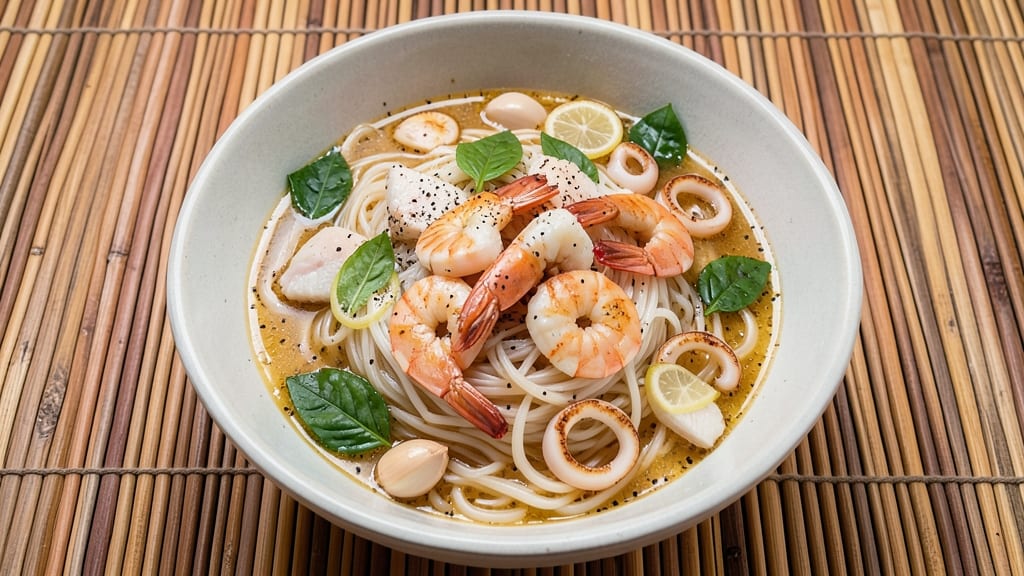
This Asian seafood noodle soup recipe delivers restaurant-quality flavor in just 30 minutes, transforming simple ingredients into a fragrant, silky bowl of comfort. The secret lies in a balanced broth—simmered with ginger, garlic, and fish sauce—that melds with tender shrimp, squid, and fish, all wrapped in delicate rice noodles.
I developed this recipe after craving the bold, umami-rich soups from my favorite Asian eateries, but wanted a version that’s quick enough for weeknights without sacrificing depth.
The magic starts with aromatics—ginger and garlic stir-fried until fragrant, then deglazed with a splash of soy sauce and a touch of sugar to balance the flavors. A 30-minute simmer with fish stock, mushrooms, and seafood creates a broth so rich it coats every noodle and bite of protein.
The rice noodles cook in just minutes, absorbing the broth while staying silky rather than mushy, a common pitfall in home cooking. This method ensures your soup is never watery or bland.
What you’ll end up with is a bold, aromatic bowl where each spoonful delivers layers of flavor—savory from the broth, sweet from the mushrooms and fish sauce, and briny from the seafood.
The shrimp turns tender-pink, the squid melts into delicate strands, and the fish flakes effortlessly, all nestled in noodles that hold their shape. Garnish with fresh cilantro, lime wedges, and a drizzle of chili oil to add brightness and heat, if you like.
Perfect for feeding a crowd or meal prepping for the week, this soup scales easily and tastes even better the next day as the flavors deepen.
Whether you’re serving it as a light lunch or a cozy dinner, it’s a dish that feels both restaurant-worthy and deeply comforting—exactly the kind of meal that makes weeknights feel special. Let’s get cooking!
Ingredients for asian seafood noodle soup
Simple ingredients that pack restaurant-level flavor into your weeknight bowls.
| Ingredient | Amount | Notes |
|---|---|---|
| Fresh Shrimp 🦐 | 1 lb | Peeled, deveined, tail-on |
| Squid Tubes 🐙 | ½ lb | Cleaned, sliced into rings |
| White Fish Fillets 🐟 | 1 lb | Cod or tilapia preferred |
| Rice Noodles 🍜 | 8 oz | Thin or medium width |
| Fresh Ginger 🌿 | 2 tbsp | Finely grated, fresh only |
| Garlic Cloves 🧄 | 6 cloves | Minced, fresh preferred |
| Fish Stock 💧 | 4 cups | Homemade or quality store-bought |
| Soy Sauce 🥢 | 2 tbsp | Light or all-purpose |
| Fish Sauce 🥫 | 1 tbsp | Red Boat brand preferred |
| White Mushrooms 🍄 | 4 oz | Sliced, baby or whole |
| Green Onions 🧅 | 3 whole | Sliced, white and green parts |
| Lime Wedges 🍋 | 2 whole | For serving, fresh only |
| Fresh Cilantro 🌿 | ¼ cup | Chopped, for garnish |
| Chili Oil 🔥 | 1 tbsp | For serving, optional |
| Sesame Oil 🫒 | 1 tsp | For finishing, toasted |
| Sugar 🍚 | 1 tsp | White or brown |
| Salt 🧂 | 1 tsp | Kosher or sea salt |
| Black Pepper 🌶️ | ½ tsp | Freshly ground |
The seafood makes this dish shine—fresh shrimp and squid are non-negotiable for that authentic texture. Costco or local fish markets usually have the best prices for shrimp and squid, but grocery store seafood counters work too. Look for shrimp with a bright pink hue and firm bodies—those little details make all the difference. The fish fillets should be fresh too; if they smell fishy, skip them. I always buy extra seafood because it cooks so fast, and you can always save leftovers for salads or tacos. For the rice noodles, Asian markets carry the best selection, but any brand labeled 'rice noodles' at regular grocery stores will work.
No fresh ginger? Powdered works in a pinch, but it lacks that bright zing. Short on fish stock? Clam juice or even strong chicken stock can stand in, though the flavor won't be identical. The mushrooms can be swapped for shiitake if you're feeling fancy, or even omitted if you're keeping it light. For the fish sauce, Red Boat is my go-to—it's clean and potent, but any reputable brand will do. The soy sauce should be light, not dark, to keep the broth bright. If you're serving this to kids or sensitive eaters, skip the chili oil and add a splash of hoisin sauce for sweetness instead.
This soup tastes even better the next day—3-4 days in the fridge, honestly. Store it in an airtight container with the broth poured over the noodles and seafood to keep everything moist. The noodles will soften further, absorbing all that rich flavor. For leftovers, reheat gently on the stove with a splash of water or stock. The seafood reheats beautifully, and the broth gets even more concentrated. If you're prepping for a crowd, double the recipe—it scales perfectly. Just make sure to garnish with fresh cilantro and lime wedges right before serving, so everything stays vibrant.
Why You'll Love This Recipe
- No Chopping Chaos: I swear by this recipe because the shrimp and squid just need a quick rinse—no peeling, no deveining, no fuss. The fish fillets stay whole, so even if you’re not a knife enthusiast, you’ll nail it.
- Ginger-Zing Magic: That fresh ginger? It’s the secret weapon. Thinly sliced and simmered just right, it gives the broth this bright, warm kick that makes the whole bowl sing. Honestly, the first time I skipped it, I regretted it instantly.
- Lunchbox Hero: This soup reheats like a dream, so I make a big batch on Sundays and pack it for work. The noodles stay tender, the seafood stays juicy, and my coworkers think I’m a culinary genius—no one needs to know it’s my lazy-day secret.
- Budget-Friendly Catch: Squid and shrimp might sound fancy, but they’re way cheaper than you’d think, especially when you buy them frozen. A single bag of each stretches to feed four, and the ginger and fish keep it from feeling like a splurge. (Yes, even on a Tuesday night.)
Step-by-step instructions for zesty seafood noodle soup
Let's create a vibrant, aromatic seafood noodle soup that balances rich broth with delicate flavors.
Prepare the Seafood and Aromatics
Start by cleaning the 0.5 lb squid tubes by removing the quill and rinsing thoroughly. Slice them into 1-inch rings and set aside. For the 1 lb fresh shrimp, leave them peeled and deveined with tails on. Pat both the shrimp and squid dry with paper towels to ensure they cook quickly and don't turn rubbery.
Next, finely grate the 2 tbsp fresh ginger using a microplane or fine grater. Mince the 6 cloves garlic into a paste using the flat side of your knife. Slice the 4 oz white mushrooms into thin strips and separate the 3 whole green onions into white and green parts. Keep the white parts for cooking and reserve the green parts for garnish later.
Build the Flavorful Broth
In a large pot, heat 1 tsp sesame oil over medium heat until fragrant. Add the ginger and garlic, cooking for 1-2 minutes until the garlic turns golden and the mixture becomes aromatic. This step is crucial—don't let the garlic burn, or it will turn bitter.
Add the sliced mushrooms and cook for another 3 minutes until they soften and release their moisture. Pour in the 4 cups fish stock, then stir in the 1 tsp sugar, 1 tsp salt, 0.5 tsp black pepper, 2 tbsp soy sauce, and 1 tbsp fish sauce. Bring the mixture to a gentle boil, then reduce heat to medium-low and let it simmer for 10 minutes to allow the flavors to meld together.
Cook the Seafood and Noodles
While the broth simmers, prepare the 8 oz rice noodles by soaking them in warm water for 10-15 minutes until they're pliable but still slightly firm. Drain and set aside. Once the broth is flavorful, add the 1 lb white fish fillets and cook for 3-4 minutes until they turn opaque and flake easily with a fork.
Using a slotted spoon, carefully remove the fish from the broth and set it aside. Increase the heat to medium-high and add the shrimp and squid rings. Cook for 2-3 minutes until the shrimp turn pink and the squid turns opaque. The seafood should cook quickly—overcooking will make it tough. Remove the seafood and set it aside with the fish.
Assemble and Finish the Soup
Return the broth to a gentle simmer and add the drained rice noodles. Stir gently to combine, letting them cook in the broth for 2-3 minutes until they're tender but still hold their shape. The noodles should absorb just enough flavor from the broth to become silky.
Divide the soup among four bowls, distributing the seafood and fish evenly. Drizzle each serving with 1 tsp sesame oil and a drizzle of 1 tbsp chili oil (optional). Garnish with the reserved green onion tops and 0.25 cup chopped fresh cilantro. Serve immediately with the 2 whole lime wedges on the side for a bright, tangy finish.
Serve with Confidence
This soup is best enjoyed fresh, while the noodles are warm and the seafood is still tender. Taste and adjust the seasoning if needed—add a splash of fish sauce for more umami or a squeeze of lime for brightness. The balance of flavors should be harmonious: the richness of the broth, the sweetness of the shrimp and squid, and the freshness of the herbs and lime.
Each bowl should be packed with vibrant colors and textures—silky noodles, tender seafood, and a fragrant broth. Serve with extra lime wedges on the side so everyone can adjust the tanginess to their taste. Enjoy your homemade Asian seafood noodle soup, a dish that's as comforting as it is delicious!
Pro Tips For Making Asian Seafood Noodle Soup
- COOK SHRIMP IN BATCHES: Toss shrimp in first, simmer for 2-3 minutes until just opaque, then fish out and set aside. I learned this the hard way—adding all seafood at once turns your broth into a mushy, overcooked mess. Squid and fish can wait; shrimp’s delicate texture disappears fast.
- SLICE GINGER THINLY: Use a mandoline or sharp knife to get paper-thin slices—no need to peel. The surface area is everything here; thick chunks just sit there while the broth flavors develop. Trust me, your soup will thank you.
- DON’T BOIL THE NOODLES: Shock rice noodles in ice water for 10 seconds after cooking to stop them from turning to glue. Then, toss them in the hot broth at the end—they’ll soften perfectly without falling apart. (Yes, even if you’re impatient like me.)
- USE COLD BROTH FOR FISH: Add white fish fillets to the broth when it’s just simmering, not boiling—cold fish sears better and stays flaky. If your broth is too hot, splash in a little cold water first. This isn’t the prettiest method, but it’s the tastiest.
Health benefits of asian seafood noodle soup
Protein Powerhouse
This seafood noodle soup packs a lean protein punch with 30 grams of protein per serving from shrimp, squid, and fish. Shrimp delivers 24 grams per 3 oz, while squid adds 10 grams per 3 oz—both are complete proteins with all essential amino acids.
The fish fillets contribute 20 grams per serving, making this a perfect meal for muscle repair and satiety. 💪
Rich in Omega-3s
The seafood in this soup is loaded with omega-3 fatty acids, particularly EPA and DHA, which support heart health and reduce inflammation. A 3-ounce serving of shrimp provides about 500mg of omega-3s, while the fish adds another 300mg per serving.
These healthy fats also benefit brain function and help maintain healthy cholesterol levels. I notice my energy levels stay steady after eating this soup regularly.
Low-Calorie Comfort
Despite its rich flavors, this soup is surprisingly light and low-calorie—each serving clocks in at around 350-400 calories. The rice noodles contribute 150 calories per serving, while the broth adds minimal calories but maximum flavor.
The seafood provides 180-200 calories per serving, making this a guilt-free indulgence that still feels hearty and satisfying. Perfect for those watching their calorie intake without sacrificing flavor.
Digestive Benefits
The combination of ginger and garlic in the broth offers natural digestive benefits. Ginger aids digestion and reduces nausea, while garlic supports gut health and may help lower blood pressure. The mushrooms add fiber and B vitamins, which further support digestive function.
I always notice how this soup settles my stomach while providing nourishment—it’s a win-win for comfort and health.
Hydration Boost
The fish stock-based broth is not only flavorful but also hydrating, containing electrolytes like sodium and potassium that help maintain fluid balance. The lime wedges add vitamin C, which aids in iron absorption from the seafood.
This makes the soup an excellent choice for post-workout meals or when you need to replenish fluids after a long day. 💧
Vitamin and Mineral Bonanza
This soup is a nutrient powerhouse, offering vitamin B12 from seafood (crucial for energy and nerve function), vitamin D (especially from fatty fish like salmon if substituted), and iron from mushrooms and shrimp.
The cilantro garnish adds vitamin K and antioxidants, while the lime provides vitamin C for immune support. It’s a one-bowl meal that covers multiple nutritional bases effortlessly.
Nutrition facts
Frequently asked questions
Can I substitute any of the seafood in this recipe?
For shrimp, try scallops or mussels—they cook quickly and add great texture. Swap squid for octopus or clams, though octopus needs longer simmering (20-30 minutes before adding to the soup). For fish, salmon or cod work beautifully, but avoid fatty fish like mackerel to prevent overpowering the broth.
How do I prevent the rice noodles from turning mushy?
Cook the noodles just until tender (2-3 minutes in broth), not soft. Soak them in warm water for 10-15 minutes before cooking to ensure even cooking. Avoid overcrowding the pot—cook in batches if needed. The noodles should stay slightly firm but silky when done.
Can I make this soup spicier or milder?
For extra heat, add 1 tsp chili flakes to the broth or serve with extra chili oil. For milder flavor, reduce fish sauce to ½ tbsp or omit it entirely. A splash of coconut milk (1 tbsp) can also mellow the broth while adding creaminess. Adjust to taste!
What’s the best way to store and reheat leftovers?
Store in an airtight container with broth poured over noodles and seafood for 3-4 days in the fridge. Reheat gently on the stove with 1-2 tbsp water or stock to restore moisture. The flavors deepen overnight, making it even more delicious!
Can I make this soup gluten-free?
Yes! Use tamari or coconut aminos instead of soy sauce, and verify fish sauce is gluten-free (Red Boat is certified). For noodles, choose rice noodles or mung bean noodles, both naturally gluten-free. Double-check all ingredients for hidden gluten.