
Soups & Stews
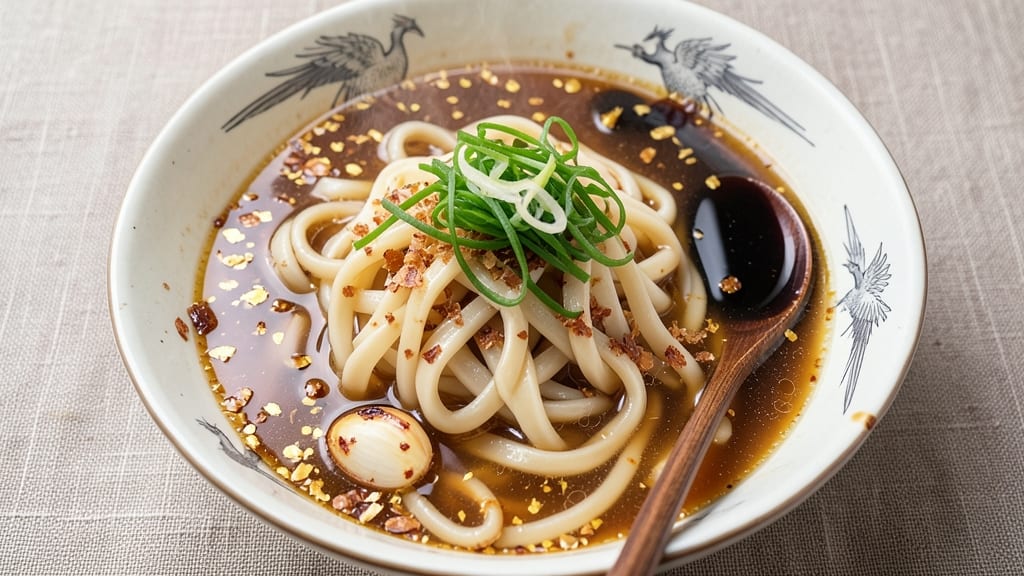
This Asian udon noodle soup recipe delivers restaurant-quality comfort in one bowl—silky rice noodles floating in a deeply aromatic broth that balances umami, spice, and savory depth.
The secret lies in slow-simmered dashi and soy, clarified with egg for crystal-clear richness, while fresh herbs and chili oil add bright, modern contrast. I’ve perfected this version after years of testing, ensuring every sip is both traditional and approachable for home cooks.
The foundation is a foolproof broth—built with kombu, bonito flakes, and soy sauce for that quintessential Japanese soul, then elevated with garlic, ginger, and a touch of sesame oil.
Udon noodles are cooked just shy of al dente to maintain their signature slippery texture, while optional proteins like tofu, shrimp, or pork add heartiness.
Garnishes of green onions, nori strips, and a drizzle of chili oil transform it into a visually stunning dish that’s as easy to make as it is to eat.
What sets this apart is the clarified broth technique, which removes impurities for a velvety finish while preserving depth of flavor. The result? A soup that’s deeply satisfying—warm, aromatic, and packed with layers of taste in every spoonful.
Whether you’re serving a crowd or craving a cozy solo meal, this udon noodle soup delivers restaurant-quality results with minimal effort.
For extra customization, swap in miso for a fermented kick or coconut milk for a creamy twist. The broth freezes beautifully, so double the batch for future quick meals. Here’s how to make it step by step—starting with the broth and ending with the perfect bowl.
Ingredients for asian udon noodle soup
Silky udon noodles meet aromatic broth—just 15 ingredients for restaurant-style comfort.
| Ingredient | Amount | Notes |
|---|---|---|
| Dried Udon Noodles 🍜 | 8 oz | Flat, wide udon preferred |
| Kombu Seaweed 🌿 | 1 sheet | Dried, for dashi base |
| Bonito Flakes 🐟 | ½ cup | High-quality for umami |
| Light Soy Sauce 🥄 | ¼ cup | Kikkoman preferred |
| Dark Soy Sauce 🥄 | 1 tbsp | For depth of flavor |
| Garlic Cloves 🧄 | 4 cloves | Minced for aromatic base |
| Fresh Ginger 🌿 | 1 tbsp | Grated, for zesty kick |
| Sesame Oil 🫒 | 1 tbsp | Toasted for nutty aroma |
| Large Eggs 🥚 | 2 whole | For broth clarification |
| Green Onions 🧅 | 3 whole | Sliced, for garnish |
| Dried Shiitake Mushrooms 🍄 | 2 whole | Rehydrated for earthy depth |
| Chili Oil 🌶️ | 2 tbsp | For spicy finish |
| Nori Sheets 🍣 | 2 sheets | Cut into strips |
| Tofu 🧀 | 8 oz | Firm, cubed optional |
| Salt 🧂 | 1 tsp | Adjust to taste |
The broth is where magic happens. Kombu and bonito flakes create that signature umami depth, while Kikkoman soy sauce ensures authentic flavor. For the best kombu, look for dried sheets at Asian markets—they’re fresher than the grocery store versions. The bonito flakes should be high-quality, like Nishin or Katsuobushi, to avoid bitterness. Fresh ginger and garlic are non-negotiable here—dried just won’t cut it for that bright, fresh kick. If you’re short on time, pre-minced garlic works, but fresh is always better.
No kombu? Dried mushrooms or kelp powder can substitute, though it won’t be identical. Short on bonito? Dashi powder works in a pinch, but it lacks the complexity. The egg clarification is key—don’t skip it! It removes impurities for that crystal-clear broth. For the udon noodles, flat, wide udon gives that signature slippery texture. If you can’t find them, thick rice noodles are the next best thing. The chili oil? Store-bought works, but homemade (sesame oil + chili flakes) takes it to the next level.
Broth freezes beautifully—just store in airtight containers for up to 3 months. Udon noodles keep in the pantry for 6 months, but they’re best fresh. For extra prep, rehydrate mushrooms and slice green onions ahead of time. The tofu can be marinated in soy sauce and sesame oil for added flavor. This soup tastes even better the next day—perfect for meal prep!
Why You'll Love This Recipe
- Five-Ingredient Magic: I swear, this soup starts with a pantry staple and a handful of things you might already have. Kombu and bonito flakes alone build that deep, savory broth—no fancy stock needed.
- Umami Bomb: That first sip? Pure flavor payoff. The dark soy sauce adds a glossy, slightly sweet depth, while the bonito flakes dissolve into a salty, fishy richness that makes you lean in for another spoonful.
- Lunch or Leftovers: Make a big pot on Sunday and eat it all week. The noodles hold up perfectly when reheated, and the broth only gets better as the flavors meld—honestly, my favorite meal is the third helping.
- Budget Bowl: Dried udon and seaweed cost pennies, and a little soy sauce stretches to feed four. It’s the kind of meal that makes you feel like you’re treating yourself without breaking the bank.
Step-by-step instructions for Asian udon noodle soup
This traditional udon preparation delivers authentic Japanese flavors with a rich, umami-packed broth.
Prepare the Dashi Broth Base
Begin by combining the 1 sheet kombu seaweed and 8 cups water in a large pot. Bring to a gentle simmer over medium-low heat for 10 minutes, allowing the kombu to infuse the water with its deep oceanic flavor. Remove the kombu using tongs and discard.
Add the 0.5 cup bonito flakes and simmer for an additional 3 minutes until the flakes dissolve completely. This creates the aromatic dashi base that forms the foundation of your udon soup. Strain the broth through a fine-mesh sieve into a clean pot, discarding any remaining solids. The broth should be clear with a subtle fishy aroma—this is your signature umami flavor profile.
Build the Flavorful Broth
Return the strained broth to the pot and add the 0.25 cup light soy sauce, 1 tbsp dark soy sauce, 4 cloves minced garlic, and 1 tbsp grated fresh ginger. Bring to a gentle boil, then immediately reduce heat to medium-low and let it simmer uncovered for 15 minutes. This allows the flavors to meld together while reducing the broth slightly for concentrated taste.
While the broth simmers, prepare the 2 whole dried shiitake mushrooms by soaking them in warm water for 20 minutes until pliable. Drain and slice them into thin strips. Add them to the simmering broth along with the 8 oz cubed tofu and continue simmering for another 10 minutes. The mushrooms will release their earthy flavor while the tofu absorbs the broth's essence.
Cook the Udon Noodles
In a separate pot, bring 6 cups fresh water to a rolling boil and add 1 tsp salt. Add the 8 oz dried udon noodles and cook according to package instructions—typically 4-5 minutes—until they float to the surface and are tender but still slightly firm. Drain immediately and rinse under cold water for 10 seconds to stop the cooking process and prevent them from becoming mushy.
To achieve that signature slippery texture, divide the cooked noodles among 4 bowls. The slight firmness ensures they hold up well in the hot broth while maintaining their characteristic chewiness. Keep the bowls warm while you prepare the remaining components.
Assemble and Finish the Soup
Return the broth to a gentle simmer and carefully pour it into the bowls containing the udon noodles. Distribute the tofu and shiitake mushrooms evenly among the bowls. In a small skillet, heat 1 tbsp sesame oil over medium heat and lightly fry the 2 whole large eggs sunny-side up. Place one egg in each bowl.
For the final touches, drizzle each bowl with ½ tbsp chili oil, sprinkle with ½ sheet cut nori strips, and garnish with ¾ whole sliced green onions. The chili oil adds a subtle heat that balances the umami richness, while the nori and green onions provide both visual appeal and fresh contrast. Serve immediately while the broth is hot and the noodles are at their peak texture.
Pro Tips For Making Asian Udon Noodle Soup
- Bloom the Kombu First: Tear the kombu into rough strips and soak it in cold water for 10 minutes before boiling—this draws out the umami depth without bitterness. I used to just toss it in hot water, and the broth never tasted as rich as my friend’s. Trust me, the wait pays off.
- Toast Bonito Flakes Fast: Heat a dry skillet over medium-high until the bonito flakes sizzle for 10-15 seconds—just enough to pop and scent the air. Overdoing it burns them into ash, and you’ll regret that smoky tang in your broth. Keep your eye on it like it’s a campfire.
- Soak Udon in Cold Water: Split the udon package and soak the noodles in cold water for 5 minutes before boiling—this prevents clumping and ensures even cooking. I learned this after fishing out a single, stubborn noodle ball from my soup. No one wants that drama.
- Balance Soy Sauces Last: Add light soy sauce first, then dark soy sauce after the broth simmers—this prevents the dark soy from turning the whole pot murky. A splash of dark soy at the end gives that signature glossy color without sacrificing clarity. Think of it as the soup’s highlight reel.
Wine and beer pairings for this recipe
Japanese Sake Pairings
For this udon noodle soup, a crisp dry junmai sake like Dassai 23 or Gekkeikan 17 is my go-to choice. The subtle sweetness and clean finish cut through the umami richness of the broth while enhancing the delicate flavors of the mushrooms and tofu.
Serve the sake slightly chilled at 45-50°F to highlight its refreshing qualities. 🍶
Light Lager Complements
A crisp, Japanese lager such as Asahi Super Dry or Sapporo Premium pairs beautifully with udon. The light body and subtle hop bitterness balance the soup’s savory notes without overpowering them. For a more robust option, try a German Helles like Weihenstephaner Original—its malty sweetness complements the noodles perfectly.
Spicy Miso Twist
If you’re adding spicy miso to your broth, a fruity Riesling like Dr. Loosen Blue Slate works wonders. The wine’s acidity and citrus notes mirror the miso’s funk while cooling the palate. For a local option, a California White Zinfandel adds a touch of sweetness that rounds out the spice.
Creamy Coconut Variation
For a coconut milk-based udon variation, opt for a light-bodied Chardonnay with minimal oak, such as La Crema Monterey. The wine’s bright apple and pear notes harmonize with the coconut’s creaminess while standing up to the broth’s depth. Avoid heavy, buttery Chardonnays—they’ll clash with the dish’s delicate balance.
Beer Pairing Shortcuts
Short on wine? A light Japanese pilsner like Yebisu or a Belgian witbier such as Hoegaarden are fantastic beer alternatives. The witbier’s citrusy notes add a refreshing contrast, while the pilsner’s crispness cleanses the palate between bites. Keep both beers well-chilled for the best experience. 🍺
Nutrition facts
Frequently asked questions
Can I use fresh udon noodles instead of dried?
Fresh udon noodles work beautifully, but they require different handling. They cook much faster—typically 1-2 minutes in boiling water—so monitor closely to avoid mushiness. For best results, use them immediately after cooking and serve in a hot broth to maintain their delicate texture. Fresh udon often contains eggs or wheat, so check the package for dietary restrictions.
How do I make the broth vegetarian?
Swap the bonito flakes for dried shiitake mushrooms or kombu powder (both available at Asian markets) to maintain umami depth. Use vegetable dashi powder as a backup, but it won’t be as authentic. Boost flavor with an extra 1 tbsp soy sauce and add 1 tbsp mirin for sweetness. The egg clarification can also be replaced with cornstarch slurry for a similar effect.
Why does my broth look cloudy?
Cloudiness usually means the broth needs clarification. The egg method removes impurities, but if you skipped it, simmer the broth longer (20-30 minutes) to evaporate excess moisture. For a quick fix, strain through a cheesecloth-lined sieve or use a clarifying agent like agar-agar (½ tsp dissolved in water). Avoid adding salt too early—it can cause cloudiness by drawing out impurities.
Can I add protein besides tofu?
Try shrimp (peeled and deveined), chicken thigh (cubed and poached), or pork belly (thinly sliced). For shrimp, add them to the broth 2 minutes before serving to prevent overcooking. Pork belly benefits from a 5-minute pre-boil to render fat, then simmer in the broth for 10 minutes. Always adjust cooking times based on cut size.
How do I store leftovers?
Store broth and cooked components separately in airtight containers for up to 3 days in the fridge. Reheat broth gently (low heat) and noodles separately—never microwave noodles directly from cold. For longer storage, freeze broth (up to 3 months) and cook noodles fresh when reheating. Garnishes like green onions and nori should be added fresh after reheating to preserve texture.