
Soups & Stews
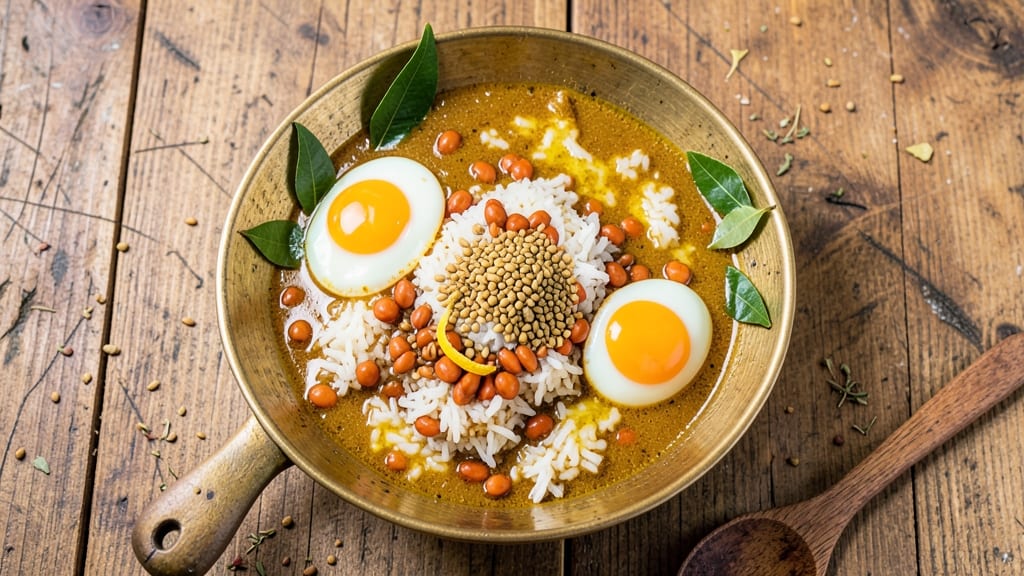
This Attukal soup recipe brings the sacred flavors of Kerala's Attukal Pongal tradition to your kitchen, where tender egg ribbons float in a fragrant turmeric-infused broth. 🌟 The dish's origins trace back to the famous Attukal Bhagavathy Temple festival, where devotees prepare this nourishing soup as a communal offering.
What sets this recipe apart is the delicate balance of spices and the unique technique of slicing hard-boiled eggs into delicate ribbons—a method that transforms simple ingredients into something profoundly comforting.
The foundation of this dish lies in its vegetarian and gluten-free nature, making it suitable for a wide range of dietary needs while staying true to its traditional roots. The recipe begins with a flavorful tempering of mustard seeds, curry leaves, and coconut, which infuses the broth with aromatic depth.
The rice and lentil mixture simmers until perfectly tender, creating a hearty base that absorbs the rich spice flavors.
By the time you finish cooking, you'll have a bowl of soup that's both visually stunning and deeply satisfying—golden egg ribbons swirling in a vibrant turmeric broth, topped with fresh coconut and green chilies.
The dish carries with it a sense of cultural heritage, offering more than just a meal but a taste of Kerala's culinary traditions. Serve it with banana chips or a side of coconut chutney for an authentic experience.
Perfect for special occasions or as a comforting weeknight meal, this recipe delivers restaurant-quality results with minimal effort. The step-by-step instructions ensure you'll achieve the right balance of flavors and textures, making it accessible even for those new to Kerala cuisine.
Let's get started on creating this traditional dish in your own kitchen.
Ingredients for attukal soup
Traditional flavors meet modern convenience in this sacred Keralan dish.
| Ingredient | Amount | Notes |
|---|---|---|
| Large Eggs 🥚 | 8 whole | Hard-boiled, sliced into ribbons |
| Medium-Grain White Rice 🍚 | ½ cup | Rinsed thoroughly before cooking |
| Red Lentils 🌾 | ½ cup | Picked over for impurities |
| Yellow Turmeric Powder 🌿 | 1 tbsp | Freshly ground preferred |
| Mustard Seeds 🌶️ | 1 tbsp | Whole, light brown preferred |
| Curry Leaves 🌿 | 10 whole | Fresh, dried if unavailable |
| Fresh Coconut 🥥 | ¼ cup | Shredded, unsweetened |
| Green Chilies 🌶️ | 2 whole | Slit lengthwise, seeds removed |
| Coconut Oil 🫒 | ¼ cup | Unrefined for authentic flavor |
| Ginger 🧅 | 1 inch | Fresh, peeled and sliced |
| Garlic Cloves 🧄 | 4 cloves | Peeled and minced |
| Cumin Seeds 🌶️ | ½ tsp | Toasted lightly for aroma |
| Asafoetida Powder 🌿 | ¼ tsp | Pure, high-quality |
| Salt 🧂 | 1 tsp | Adjust to taste |
| Water 💧 | 6 cups | Filtered preferred |
The heart of this soup lies in its spices. Mustard seeds and curry leaves should be fresh—Whole Foods or Indian grocery stores carry the best quality. For authentic flavor, use unrefined coconut oil instead of refined versions. The turmeric powder should be bright yellow, not dull. Red lentils are key here—they break down beautifully into a creamy texture. If you can't find fresh curry leaves, dried works in a pinch but use half the amount. The asafoetida powder adds that unmistakable umami depth—don't skip it even if you're new to Kerala cuisine.
No fresh ginger? Powdered ginger works at half the amount. Want more heat? Add an extra green chili. For the egg ribbons, boil eggs until fully set—10-12 minutes is ideal. The broth can be made ahead and reheated gently. If you're serving this for a festival, double the batch—the communal aspect is part of the tradition. Banana chips are traditional, but any crispy fried plantain works. The coconut should be freshly grated—pre-shredded loses its texture and flavor quickly. For a richer soup, add a splash of coconut milk at the end.
Store the broth base for up to 3 days in the fridge—it only gets better as flavors meld. The egg ribbons should be made fresh before serving for that delicate texture. This soup reheats beautifully—just warm gently on low heat. Freeze portions of the broth without eggs for up to 3 months. The spices keep their potency for 6 months if stored in airtight containers away from light. For a quick weeknight version, use canned coconut milk instead of fresh—just reduce the water slightly to balance the richness.
Why You'll Love This Recipe
- One-Pot Magic: I swear by this recipe when I’m too tired to wash a million bowls. The rice, lentils, and eggs all cook together—just simmer, stir, and let the turmeric work its golden spell. No separate pots, no fuss, and the mustard seeds pop like tiny fireworks right in the same pot.
- Turmeric Glow-Up: That bright yellow turmeric isn’t just for show—it’s the secret weapon. The soup has this warm, earthy depth that lingers, and the eggs? Perfectly soft-boiled, just breaking apart when you lift a spoonful. Honestly, the first time I tasted it, I immediately texted my mom to ask if she ever made this.
- Lunchbox Hero: Between us, this is my go-to for meal prep. The rice keeps it hearty, the lentils add protein, and the eggs make it feel like a full meal—even cold the next day. Pack it in a jar, and it’s lunch sorted for three days. (Yes, even on a Tuesday night when you’re still in pajamas.)
- Pocketbook Pleaser: Red lentils and rice are dirt cheap, and eggs stretch further than you’d think when simmered in this spiced broth. I’ve made this for six people on a budget, and no one ever complains. Plus, leftovers taste just as good reheated—proof that simple ingredients can still feel special.
Step-by-step instructions for Attukal soup
This traditional Keralan dish delivers vibrant turmeric broth with delicate egg ribbons and aromatic spices.
🍳 Step 1: Prepare the Hard-Boiled Egg Ribbons
Place the 8 whole large eggs in a saucepan and cover them with cold water by about 1 inch. Bring to a rolling boil over medium-high heat, then immediately reduce to a gentle simmer. Cook for exactly 9 minutes—set a timer, as overcooking makes the eggs rubbery. Drain in an ice bath for 5 minutes to stop cooking completely.
Peel the eggs carefully and slice them lengthwise into ¼-inch thick ribbons using a sharp chef's knife. Arrange them on a plate and set aside. The ribbons should be uniform in thickness for even cooking in the broth later. If they curl, gently press them flat with your fingers before adding to the soup.
🔥 Step 2: Toast the Spice Base
Heat 2 tablespoons of the coconut oil in a heavy-bottomed pot over medium heat. Add the 0.5 teaspoon cumin seeds and 1 tablespoon mustard seeds—they should sizzle and pop within 30 seconds. Immediately add the 10 whole curry leaves and 2 slit green chilies, stirring constantly for 1 minute until the curry leaves darken slightly and the chilies soften.
Add the 1-inch sliced ginger and 4 minced garlic cloves, cooking for another 1-2 minutes until the raw aroma disappears and the garlic turns golden. Sprinkle in the 0.25 teaspoon asafoetida powder—this releases an instant onion-like aroma that's essential to the flavor. Stir for 10 seconds to distribute evenly.
🥘 Step 3: Build the Turmeric Broth
Reduce the heat to medium-low and add the remaining 2 tablespoons coconut oil, 0.5 cup red lentils, 0.5 cup rinsed medium-grain white rice, and 1 tablespoon yellow turmeric powder. Stir for 1 minute to coat the grains and lentils with the spices, allowing the turmeric to bloom and deepen in color.
Pour in the 6 cups water and bring to a gentle boil. Immediately reduce heat to low and let it simmer uncovered for 15 minutes, stirring occasionally. You'll see the broth develop a vibrant golden hue from the turmeric. The rice and lentils should begin to soften but shouldn't break down completely—this creates the perfect textural contrast in the final soup.
🍳 Step 4: Finish with Coconut and Egg Ribbons
Add the 0.25 cup shredded fresh coconut and 1 teaspoon salt to the simmering broth. Stir gently for 2 minutes to allow the coconut to infuse its creamy texture into the broth. Taste and adjust the salt if needed—Keralan cuisine balances rich flavors with subtle seasoning.
Gently add the egg ribbons to the broth and simmer for exactly 3-4 minutes. The broth should remain hot but not boiling—this prevents the eggs from becoming rubbery. The ribbons will absorb just enough of the turmeric broth to develop flavor while maintaining their delicate texture. Remove from heat immediately after cooking.
🍽️ Step 5: Serve Warm with Fresh Garnish
Ladle the attukal soup into bowls, ensuring each serving contains several egg ribbons. Garnish with additional curry leaves and a sprinkle of shredded coconut for both visual appeal and extra flavor. Serve immediately while the broth is steaming hot—this dish is best enjoyed fresh from the pot.
The perfect attukal soup should have a vibrant golden broth with visible turmeric threads, delicate egg ribbons that hold their shape, and a balance of spicy, earthy, and creamy flavors. Each spoonful should deliver the complex aroma of toasted spices, fresh coconut, and the subtle heat of green chilies.
Pro Tips For Making Attukal Soup
- SOAK LENTILS 15 MINUTES: I learned this the hard way—skipping the soak makes the lentils turn to mush and turn your soup into glue. Just cover them in warm water for 15 minutes, drain, and rinse before cooking. The texture stays perfect.
- CRACK EGGS IN HOT WATER: The eggs in attukal soup need to be just set—not rubbery. Crack them into a bowl of boiling water for 30 seconds first, then transfer to the soup. This guarantees a creamy, not-fried yolk every time.
- TEMPER MUSTARD SEEDS LOW: High heat burns mustard seeds before they pop. Start with a low flame, then slowly raise it once they begin to sizzle. Burnt seeds taste bitter—no one wants that in their soup.
- USE RICE TO THICKEN: The soup can get watery if you overcook the lentils. Keep a handful of raw rice aside—add it at the end and simmer for 2 minutes. It absorbs excess liquid like a sponge while keeping the texture rich.
Best sauces and condiments for this recipe
Coconut Chutney
This creamy, tangy chutney is the perfect accompaniment to Attukal soup. Blend ½ cup fresh coconut, 2 green chilies, 1 tbsp tamarind paste, 1 tsp salt, and ¼ cup water until smooth.
The tamarind adds a bright acidity that cuts through the richness of the soup while enhancing the coconut's natural sweetness. Serve chilled for the best texture and flavor contrast. 🥥
Banana Chips
Crispy banana chips are a traditional pairing that adds a delightful crunch to each spoonful. Slice 2 ripe bananas lengthwise into thin strips, then fry in ½ cup coconut oil over medium heat until golden brown (about 3-4 minutes).
Drain on paper towels and sprinkle with a pinch of salt. The natural sweetness of the bananas complements the savory soup beautifully. 🍌
Spicy Tomato Onion Sauce
For those who enjoy a sharper contrast, this sauce adds depth to the soup. Sauté 1 chopped onion and 2 minced garlic cloves in 1 tbsp coconut oil until soft.
Add 1 cup diced tomatoes, 1 tsp red chili powder, and ½ tsp cumin seeds, cooking until the tomatoes break down into a chunky sauce. The acidity and heat balance the creamy coconut and turmeric in the soup. 🌶️
Yogurt-Based Cilantro Sauce
A cooling yogurt sauce tempers the heat and adds freshness. Mix ½ cup plain yogurt with ¼ cup chopped cilantro, 1 tsp roasted cumin powder, ½ tsp salt, and 1 tbsp lemon juice.
The probiotics in yogurt aid digestion, making this an excellent pairing for a hearty meal. Drizzle lightly over the soup or serve on the side. 🥛
Pickled Green Chilies
For an extra kick, prepare pickled green chilies by boiling 4 green chilies, 1 cup vinegar, 1 tsp mustard seeds, and 1 tsp salt for 10 minutes.
Let them cool in the liquid, then store in an airtight container. These tangy, spicy bites add a burst of flavor that elevates every spoonful of soup. 🌶️
Sweet Coconut Milk Drizzle
For a touch of sweetness, heat ¼ cup coconut milk with 1 tsp jaggery or sugar until dissolved. Drizzle lightly over the soup just before serving to create a harmonious blend of savory and sweet flavors.
This subtle addition mirrors the traditional Kerala practice of balancing rich dishes with a hint of sweetness. 🥥
Nutrition facts
Frequently asked questions
Can I make Attukal soup without eggs?
Traditionally, this dish features egg ribbons as its signature element, but you can adapt it! Replace the eggs with 1 cup sliced tofu or ½ cup thinly sliced potatoes for a vegetarian version. The key is maintaining the same delicate texture—slice ingredients uniformly and cook them gently in the broth for 3-4 minutes to avoid mushiness.
Why does my broth turn out too thick?
This usually happens when rice/lentils overcook or when water evaporates too quickly. For the perfect consistency, use 6 cups water and simmer uncovered at low heat for exactly 15 minutes. If needed, add ¼ cup warm water at the end. The broth should coat a spoon lightly but still be pourable. Stir occasionally to prevent sticking.
How do I store leftovers?
Store the soup (without egg ribbons) in an airtight container in the fridge for up to 3 days. Reheat gently on low heat with a splash of water to restore consistency. For the egg ribbons, cook them fresh before serving—they lose their delicate texture when reheated. Freeze the broth base (without eggs) for up to 3 months for future use.
What's the secret to perfect egg ribbons?
Uniform thickness is key! Slice eggs lengthwise into ¼-inch thick ribbons using a sharp knife. Boil eggs for exactly 9 minutes (no longer!) and cool in ice water. Press any curled ribbons flat before adding to the broth. Simmer them for just 3-4 minutes—overcooking makes them rubbery.
Can I make this soup in a pressure cooker?
For the broth, use 4 cups water and cook on medium heat for 3 whistles, then let pressure release naturally. The rice/lentils will cook faster—check at 12 minutes for doneness. For egg ribbons, follow the same stovetop method as they need gentle reheating. The pressure cooker reduces simmering time by about half.