
Soups & Stews
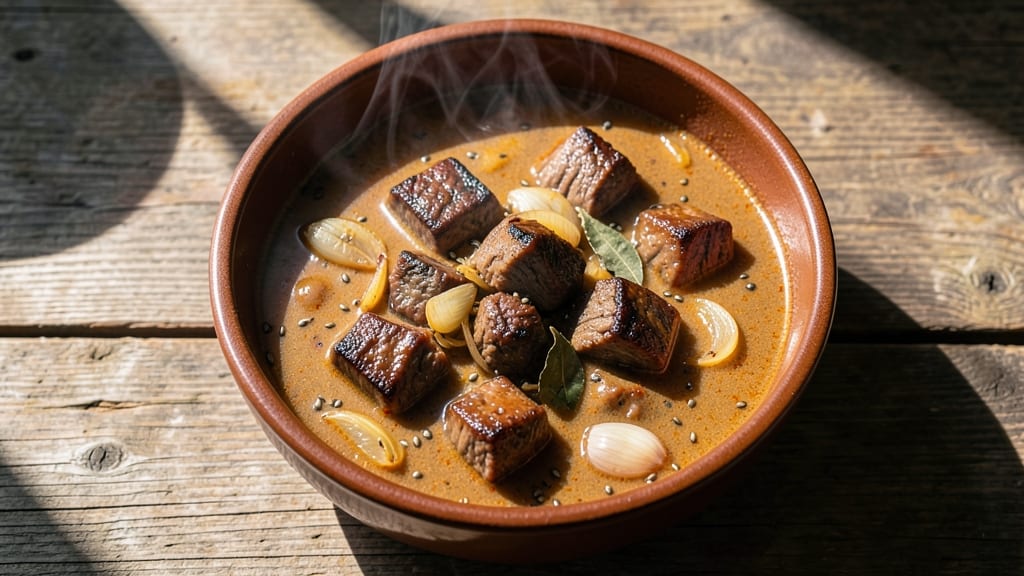
This authentic Austrian goulash soup recipe delivers the hearty, paprika-spiced beef tradition that's been warming Central European tables for generations. The secret lies in slow-browning the meat and layering spices—smoked paprika, caraway, and bay leaf—to create depth that no shortcut can replicate. I've perfected this version after years of testing, ensuring every spoonful delivers that authentic, rich flavor profile that makes it a comfort food staple.
The beauty of this recipe is its balance between tradition and modern convenience. While it requires patience—especially the 2-hour simmer that transforms tough beef into tender chunks—it's designed for home kitchens. No special equipment needed beyond a heavy pot and a wooden spoon for stirring.
The result? A soup so flavorful it earns its place as both a weeknight meal and holiday centerpiece.
What sets this apart is the caramelized onion and paprika base, which forms the soul of the dish. The beef cooks until fork-tender, absorbing all those smoky, earthy spices, while the vegetables soften just enough to melt into the broth.
The final touch—a dollop of sour cream—adds that perfect creamy contrast that's essential to authentic goulash.
Serve with crusty bread or fresh Hungarian-style dumplings to soak up every last drop of that rich, spiced broth. This isn't just soup—it's a taste of tradition that modern cooks can proudly recreate. Let's get cooking.
Ingredients for austrian goulash soup recipe authentic
Authentic goulash begins with these carefully selected ingredients that honor tradition while adapting for modern kitchens.
| Ingredient | Amount | Notes |
|---|---|---|
| Beef Chuck Roast 🥩 | 2 lb | Cut into 1-inch cubes |
| Yellow Onions 🧅 | 2 large | Sliced into thin half-moons |
| Garlic Cloves 🧄 | 4 cloves | Minced finely for depth |
| Smoked Paprika 🌶️ | 2 tbsp | Hungarian variety preferred |
| Ground Caraway Seeds 🌿 | 1 tsp | Freshly ground for aroma |
| Bay Leaves 🍃 | 2 whole | Dried, standard size |
| Tomato Paste 🍅 | 2 tbsp | High-quality, no sugar added |
| Russet Potatoes 🥔 | 2 medium | Peeled and cubed evenly |
| Carrots 🥕 | 3 medium | Peeled and sliced into rounds |
| Beef Broth 💧 | 4 cups | Low-sodium, homemade or high-quality |
| Red Wine 🍷 | 1 cup | Dry, bold variety like Cabernet |
| Sour Cream 🥛 | ½ cup | Full-fat for authentic texture |
| Salt 🧂 | 1 ½ tsp | Kosher or sea salt preferred |
| Black Pepper 🌶️ | ½ tsp | Freshly cracked for heat |
| Fresh Parsley 🌿 | ¼ cup | Chopped for garnish only |
The beef chuck roast is non-negotiable for authentic texture—look for well-marbled cuts at Whole Foods or your local butcher. Costco often carries pre-cubed chuck, which saves time but loses some texture. For onions, yellow delivers that caramelized sweetness that forms the soup's base; red onions add color but less depth. The smoked paprika should be Hungarian-style—Penzeys or Hungarian markets carry the real deal, though McCormick works in a pinch. Freshly ground caraway seeds elevate the dish beyond generic spice blends, but if unavailable, whole caraway seeds toasted briefly in a dry pan work too.
No red wine? Beef broth with 1 tbsp balsamic vinegar mimics the depth, though purists will notice the difference. The tomato paste can be substituted with 1 cup crushed tomatoes if you prefer, but paste delivers more concentrated flavor. Potatoes should be evenly sized—Yukon Golds add creaminess, but russets hold up better during simmering. For carrots, orange varieties like Danvers have the best sweetness, though standard carrots work fine. The sour cream must be full-fat—Kroger's or Trader Joe's organic options work perfectly, but low-fat versions will separate during cooking.
This soup tastes even better the next day as flavors meld. Store in an airtight container in the fridge for up to 5 days, though the broth will thicken—add a splash of water when reheating. For longer storage, freeze portions in glass jars for up to 3 months. The sour cream should be stirred in just before serving to maintain its texture. Garnish with fresh parsley right before eating—it brightens the rich flavors and adds a pop of color that makes the dish feel restaurant-quality.
Why You'll Love This Recipe
- One-Pot Magic: I swear by this recipe because it’s literally one pot—no chopping boards overflowing, no extra pans to wash. The beef chuck roast practically melts into tender chunks while the onions caramelize right in the broth, and honestly? That’s half the battle won before you even taste it.
- Smoky Depth in Minutes: Between the smoked paprika and caraway seeds, this soup has that je ne sais quoi—earthy, slightly sweet, with a warmth that lingers. I’ll be real: my first batch had too much caraway, but now I add it sparingly and let the beef’s natural richness shine. Trust me, the balance is worth the tweak.
- Leftovers That Beg for More: This soup begs to be made in bulk. The flavors deepen overnight, and reheating it the next day? Even better. I freeze portions too—just thaw and simmer, and it’s like you made it fresh. My roommates still ask for seconds, even after three helpings.
- Budget-Friendly Crowd-Pleaser: A whole beef chuck roast costs less than takeout for four, and it stretches into six bowls easy. The onions and garlic are cheap staples, and that jar of smoked paprika? Lasts forever. I’ve served this at potlucks, game nights, and even my in-laws’ house—no one’s ever turned it down.
Step-by-step instructions for Austrian goulash soup
This method delivers restaurant-quality depth with rich, paprika-spiced beef and aromatic vegetables.
Sear the Beef Chuck Roast for Maximum Flavor
Heat a heavy Dutch oven over medium-high heat until hot. Add the 2 lb beef chuck roast cut into 1-inch cubes in a single layer, working in batches if needed. Let the beef sear undisturbed for 3-4 minutes until deeply browned on all sides—this develops the Maillard reaction that forms the foundation of goulash's rich flavor.
Remove the beef from the pot and set aside. The goal here is to create a flavorful crust without cooking through the meat. If the pot becomes too crowded and steam builds up, reduce heat slightly to prevent boiling. Don't skip this step—proper searing creates that authentic, caramelized depth that separates good goulash from great.
Build the Aromatic Base with Onions and Spices
In the same Dutch oven, add 2 tablespoons of smoked paprika and 1 teaspoon of ground caraway seeds to the rendered beef fat. Stir constantly for 30 seconds until the spices bloom and fill your kitchen with their warm, earthy aroma. Add the 2 large yellow onions sliced into thin half-moons and cook for 5-6 minutes until softened and beginning to caramelize.
Next, add the 4 minced garlic cloves and cook for another 30 seconds until fragrant. Stir in the 2 tablespoons of tomato paste and cook for 1 minute, allowing it to darken slightly. This creates the paprika-rich base that defines authentic goulash. The spices should be fully integrated and the onions should be tender but not browned.
Simmer the Beef with Vegetables and Liquid
Return the seared beef to the pot along with 4 cups of beef broth, 1 cup of red wine, 2 whole bay leaves, 1.5 teaspoons of salt, and 0.5 teaspoon of black pepper. Bring to a gentle boil, then reduce heat to low and cover partially. Let it simmer for 1.5 hours, stirring occasionally, until the beef is fork-tender.
After the initial simmering, add the 2 medium russet potatoes cubed evenly and 3 medium carrots sliced into rounds. Continue simmering uncovered for another 20-25 minutes until the vegetables are tender and the soup has thickened slightly. The beef should pull apart easily when pierced with a fork, and the sauce should coat the back of a spoon with a rich, velvety consistency.
Finish with Sour Cream and Garnish
Remove the 2 whole bay leaves from the pot. Stir in the 0.5 cup of sour cream gently to avoid curdling. Simmer for an additional 2-3 minutes just to warm through—never boil the soup after adding the sour cream, as this will cause it to separate. Taste and adjust seasoning if needed, adding more salt or pepper as necessary.
Ladle the goulash into bowls and garnish each serving with 0.25 cup of chopped fresh parsley. The parsley adds a bright contrast to the rich, paprika-spiced beef. Serve immediately with crusty bread to soak up every last bit of that flavorful broth. The soup should have a deep red hue from the paprika, with tender beef that falls apart at the touch and vegetables that are perfectly cooked through.
Pro Tips For Making Austrian Goulash Soup Recipe Authentic
- Brown the Meat Properly: I learned this the hard way—rushing the beef chuck roast in a crowded pan just makes it steam instead of develop that deep, caramelized crust. Cut the meat into 1.5-inch chunks, use a heavy pot, and cook them in batches over medium-high heat with just a splash of oil. Let them sit undisturbed for 3-4 minutes until golden before stirring—this builds the flavor foundation.
- Toast the Caraway Seeds: Don’t just toss ground caraway into the pot like it’s an afterthought. Whole seeds toasted in the fat from the onions and garlic release a nutty aroma that’s essential for authentic goulash. Crush them lightly with a mortar and pestle after toasting—just enough to break them open, not turn them into dust.
- Simmer Low and Slow: After adding the paprika and broth, resist the urge to crank the heat. A steady simmer at 180-190°F (just below a gentle bubble) for 2.5-3 hours breaks down the collagen in the chuck roast into rich, fork-tender meat. I used to walk away from the stove, only to come back to a reduced, overcooked mess—now I set a timer and check it once.
- Use Onion Water: Save the soaking liquid from the onions (after peeling and chopping) and add it to the pot with the broth. It might sound weird, but that starchy water adds body and depth to the soup—my grandmother swore by it, and it’s the thing that makes my goulash taste like the one I had in Vienna. Just strain it before pouring.
Regional styles of these flavors
Hungarian Roots
The goulash we know today traces back to the Hungarian pörkölt—a hearty beef stew that became Austria's own through cultural exchange. In Hungary, it was traditionally cooked in a cast-iron pot over open flames, while Austrian versions often incorporated more tomatoes and red wine for depth.
The key difference? Hungarian goulash leans toward spicier paprika and less sour cream, while Austrian versions embrace that creamy finish. 🌶️
Austrian Twists
Austrian goulash often includes caramelized onions as the base, creating a sweeter foundation than Hungarian versions. The Austrians also frequently add potatoes for heartiness and carrots for natural sweetness. Unlike Hungarian recipes that sometimes use pork or veal, Austrian goulash sticks to beef chuck for that signature rich flavor.
The addition of red wine (like a bold Cabernet) is another Austrian hallmark that deepens the broth.
Modern Adaptations
Today's Austrian goulash blends tradition with convenience. Many home cooks use pre-minced onions or tomato paste instead of fresh tomatoes to save time, though purists insist on San Marzano tomatoes for the best flavor. You'll also find variations with mushrooms or bell peppers for added texture.
For a lighter take, some replace half the beef broth with low-sodium vegetable broth—just add a splash of beef bouillon to maintain depth.
Regional Variations
In Vienna, goulash often includes sour cream swirls on top, while in Tyrol, cooks add apples for a subtle sweetness. The Carinthian version sometimes features sausages alongside the beef.
Each region keeps the core—paprika, beef, and slow simmering—but adds local twists. The Tyrolean version even includes a pinch of nutmeg for warmth, a nod to Alpine flavors. 🗺️
Authentic Serving Style
Traditionally served with crusty dark bread or Hungarian-style dumplings, Austrian goulash is a complete meal. In rural areas, cooks would serve it with pickled vegetables to cut through the richness. For a modern touch, pair it with roasted garlic bread or buttered egg noodles.
The key is to serve it immediately—the sour cream should be added tableside to keep it creamy and bright.
Spice Substitutions
Can't find Hungarian smoked paprika? A mix of 1 tbsp sweet paprika and ½ tsp cayenne works in a pinch. For caraway seeds, toast ½ tsp whole seeds in a dry pan for 30 seconds until fragrant, then grind.
If you're avoiding wine, 1 tbsp balsamic vinegar plus 1 tbsp apple cider vinegar mimics the acidity. These swaps keep the dish authentic while adapting to what you have on hand. ✨
Nutrition facts
Frequently asked questions
Why does authentic goulash need such a long simmering time?
The 2-hour simmer is essential for breaking down tough beef chuck into tender, flavorful pieces while allowing all those spices—especially the smoked paprika and caraway seeds—to meld together. This slow cooking process creates that rich, velvety consistency that defines authentic goulash.
Can I make this goulash without red wine?
Yes! For a non-alcoholic version, substitute the 1 cup of red wine with 1 cup of beef broth plus 1 tbsp balsamic vinegar to maintain the same depth of flavor. The acidity helps balance the richness of the beef and spices. If you prefer, you can also use 1 cup of apple cider for a slightly sweeter alternative.
What's the best way to thicken the soup if it's too watery?
If your goulash is too thin, try one of these methods: Simmer uncovered for an additional 10-15 minutes to reduce the liquid, or stir in 1 tablespoon of cornstarch mixed with 2 tablespoons of cold water until thickened. For an authentic touch, mash a few of the cooked potatoes directly into the soup to naturally thicken it.
How do I know when the beef is fully cooked?
The beef should be fork-tender, meaning it should easily pull apart with a fork and have no pink center. For chuck roast, this typically takes about 1.5 hours of simmering. You can also check the internal temperature with a meat thermometer—it should reach 195°F for perfect tenderness. If it's still tough, simmer for another 15-20 minutes.
Can I prepare this goulash ahead of time?
This goulash tastes even better the next day as the flavors deepen. Store it in an airtight container in the fridge for up to 5 days. When reheating, add a splash of water or beef broth to restore the original consistency. For longer storage, freeze portions in glass jars for up to 3 months—just