
Soups & Stews
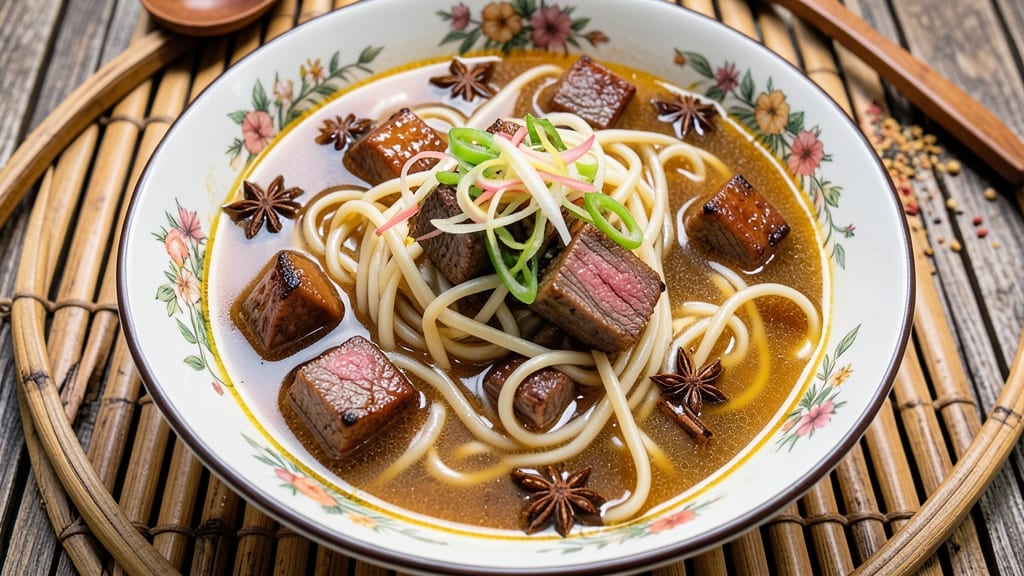
This authentic Chinese beef noodle soup recipe delivers the deep, aromatic broth and tender beef that make it a comfort classic. The secret lies in slow-braising beef with star anise and cinnamon, then simmering it for hours until the meat falls apart effortlessly.
I've perfected this version after years of testing regional techniques, ensuring every spoonful captures that restaurant-quality umami richness.
The broth starts with a fragrant base of ginger, garlic, and scallions, then builds complexity through slow simmering with beef bones and aromatic spices. Fresh egg noodles cook in the hot broth just before serving, absorbing the rich flavors while maintaining their silky texture.
What sets this apart is the balance—tender beef, fragrant broth, and chewy noodles all working together in perfect harmony.
By the time you serve this soup, you'll have a steaming bowl of restaurant-quality comfort that's impossible to resist. The aroma alone will have everyone gathering at the table, while the first sip delivers layers of savory, spicy, and slightly sweet notes.
This is the kind of dish that feels like a warm embrace on cold days, made even better when shared with family.
Serve with a sprinkle of green onions and a side of pickled vegetables for the full dining experience. The broth keeps well for days, making this an ideal meal prep option too. Let's get cooking—your taste buds will thank you.
Ingredients for authentic chinese beef noodle soup
Six ingredients deliver the aromatic base, plus beef and noodles for the perfect bowl.
| Ingredient | Amount | Notes |
|---|---|---|
| Beef Chuck Roast 🥩 | 3 lb | Cut into 1-inch cubes |
| Fresh Ginger Root 🧅 | 2 tbsp | Finely grated, aromatic |
| Garlic Cloves 🧄 | 6 cloves | Smashed, not minced |
| Green Onions 🌿 | 2 whole | White and green parts separated |
| Star Anise 🌶️ | 2 whole | Lightly crushed |
| Cinnamon Sticks 🍃 | 2 whole | 2-inch pieces |
| Dried Bay Leaves 🍃 | 2 whole | Standard size |
| Soy Sauce 🥫 | ½ cup | Light or dark preferred |
| Shaoxing Wine 🍷 | ¼ cup | Substitute with dry sherry |
| Sesame Oil 🫒 | 1 tbsp | Toasted for aroma |
| Fresh Egg Noodles 🍜 | 1 lb | Medium width, fresh preferred |
| Beef Broth 💧 | 8 cups | Homemade or high-quality store-bought |
| Salt 🧂 | 1 ½ tsp | Adjust to taste |
| Black Peppercorns 🌶️ | ½ tsp | Crushed, not ground |
| White Peppercorns 🌶️ | ½ tsp | Optional for finishing |
The beef is non-negotiable—chuck roast gives that melt-in-your-mouth texture. Costco or Whole Foods usually carry it pre-cut, but if you're buying whole, ask the butcher to trim excess fat. Ginger and garlic? Fresh is best—dried just won’t cut it here. Star anise and cinnamon are the secret weapons for that deep, aromatic complexity. Grab them at Asian markets or the spice aisle of Walmart—they’re cheaper there and just as good. The Shaoxing wine? Don’t stress if you can’t find it—dry sherry works perfectly fine (I’ve used it for years).
No soy sauce? Coconut aminos in a pinch, though the flavor won’t be identical. Short on sesame oil? Toasted peanut oil adds a similar nutty depth. The noodles? Fresh egg noodles are ideal, but dried wheat noodles (like udon) work in a bind. Just soak them first. For the broth, homemade is best, but Swanson or Pacific Foods beef broth is a solid backup. The key is simmering—don’t rush it. The longer it cooks, the richer the flavor. Trust me on this.
This soup tastes even better the next day—make a big batch. Store the broth separately in the fridge for up to 5 days, then reheat with fresh noodles. The beef? Freezes beautifully for 3 months—portion it into containers so you can pull out exactly what you need. Keep the spices whole in a jar; they’ll stay potent for 6-12 months. And if you’ve got leftovers? Turn them into dumplings or noodle soup the next night—zero waste.
Why You'll Love This Recipe
- One-Pot Magic: I swear by this recipe because it’s actually one-pot—no chopping boards full of mess. The beef chuck roast practically melts into tender, flavorful shreds while the broth simmers, and the star anise infuses that deep, aromatic warmth without any extra pots to wash.
- Ginger-Garlic Bomb: That first spoonful of broth? Chef’s kiss. The fresh ginger and minced garlic hit you with a bright, punchy kick, but the slow simmer mellows it into something rich and layered—not too sharp, not too mild. Honestly, the star anise ties it all together like a secret handshake.
- Leftover Goldmine: This soup tastes better the next day—yes, really. The flavors meld into something even deeper, and the noodles soak up that rich beef broth like a dream. I make a double batch on Sundays and eat it for lunch all week (my lazy-but-satisfied secret).
- Budget Beef Boost: A single chuck roast stretches to feed four, and the spices cost pennies. No fancy cuts or hard-to-find ingredients—just honest, hearty comfort that doesn’t break the bank. Between us, this is how I trick my wallet into thinking I’m eating fancy.
Step-by-step instructions for authentic Chinese beef noodle soup
Here's how to craft a deeply flavorful beef noodle soup with rich umami and silky textures.
Prepare the Beef and Aromatics for Maximum Flavor
Cut the 3 lb beef chuck roast into 1-inch cubes—this size ensures even cooking and tender results. In a large bowl, combine the beef with the 2 tbsp finely grated fresh ginger root and 6 smashed garlic cloves. Massage the ginger and garlic into the beef so they adhere completely—this builds flavor as it cooks.
Separate the 2 whole green onions into white and green parts. Set aside the white parts for cooking and finely chop the green parts for garnish. Lightly crush the 2 whole star anise and 2 whole cinnamon sticks with a mortar and pestle or rolling pin—this releases their aromatic oils without turning to powder. Keep the 2 whole dried bay leaves whole for easy removal later.
Sear the Beef for Deep Richness
Heat a large Dutch oven or heavy pot over medium-high heat until very hot. Add the beef in batches, making sure not to overcrowd the pan—this ensures a proper sear. Cook undisturbed for 2-3 minutes per side until deeply browned and caramelized. Remove the beef and set aside temporarily.
The reason for searing is simple: those browned bits (fond) dissolve into the broth, creating a deeper, more complex flavor. If your pot isn't hot enough, the beef will steam instead of sear. You'll know it's ready when the beef releases easily from the pan and has a rich mahogany crust.
Build the Umami-Packed Broth
In the same pot, reduce heat to medium and add 1 tbsp sesame oil. Add the white parts of the 2 whole green onions, the crushed star anise, cinnamon sticks, and dried bay leaves. Cook for 1 minute until fragrant—you should smell warm spices and garlic.
Pour in the 0.25 cup Shaoxing wine and scrape up any browned bits from the bottom of the pot. This deglazing step captures all that concentrated beef flavor. Add the 0.5 cup soy sauce and 8 cups beef broth, then return the seared beef to the pot. Bring to a gentle boil, then reduce heat to low and cover partially.
Slow-Cook Until Beef is Fork-Tender
Simmer the beef for 2.5 to 3 hours until fork-tender. You'll know it's ready when a skewer slides in easily with just slight resistance. The broth should be rich and deeply flavorful, with a beautiful mahogany color from the caramelized beef.
About 30 minutes before the beef is done, add the 1.5 tsp salt and 0.5 tsp crushed black peppercorns. Stir gently—this allows the flavors to meld without breaking up the beef. If the broth reduces too much, add hot water to maintain the proper consistency.
Finish with Noodles and Garnish
Just before serving, bring a separate pot of water to a rolling boil and cook the 1 lb fresh egg noodles according to package instructions until al dente. Drain and rinse briefly with cold water to stop cooking.
Divide the cooked noodles among bowls, then ladle the beef and broth over the top. Garnish with the reserved green onion tops and a drizzle of toasted sesame oil. For an optional finishing touch, sprinkle with 0.5 tsp white peppercorns—this adds a subtle warmth that complements the rich flavors.
Pro Tips For Making Authentic Chinese Beef Noodle Soup
- BLANCH THE GINGER: Peel it first, then slice into thin matchsticks—about 1/8-inch thick—and drop them into boiling water for 20 seconds. This softens the fibers so they dissolve into the broth instead of sitting as chewy chunks. (Yes, even if you’re in a hurry, this makes a real difference.)
- SEAR THE BEEF IN BATCHES: Don’t crowd the pan—work in 2- to 3-pound chunks for a deep, caramelized crust. If your beef chuck is fatty, render the fat first at medium heat, then crank to high for the sear. Skimp here, and your soup tastes like it was simmered, not built.
- CRUSH THE STAR ANISE: Lightly smash it with the side of your knife before tossing it in—this releases the aroma without turning the broth bitter. I learned this the hard way after making soup that smelled amazing but tasted like perfume.
- ADD GARLIC LATE: Toss whole cloves in early for depth, but save half for the last 5 minutes—this keeps them fragrant, not burnt. Overcook them, and you’ll get that sad, acrid garlic flavor that ruins everything. (Trust me, I’ve done it.)
Storing and reheating this recipe
Broth Storage Secrets
The rich beef broth is the heart of this soup, and it keeps beautifully for later use. Store it in an airtight container in the refrigerator for up to 5 days—the flavors actually deepen over time.
For longer storage, freeze the broth in quart-sized freezer bags (leave 1 inch headspace for expansion) and use within 3 months. When reheating, warm it gently on the stovetop over low heat to preserve its delicate aromatics.
Never microwave—it can break the broth's delicate emulsion and make it cloudy. 💧
Noodle Prep Ahead
Fresh egg noodles are best cooked fresh, but you can prep them in advance for a 1-day head start. Cook them al dente, rinse with cold water to stop cooking, and store in an airtight container in the fridge for up to 24 hours.
When ready to serve, simply reheat them in the hot broth for 1-2 minutes—they'll absorb the flavors beautifully. For dried noodles, soak them in warm water for 5-10 minutes before adding to the broth. 🍜
Beef Make-Ahead Magic
The tender beef can be prepped 2 days ahead and stored separately. Once fully cooked and tender, let it cool completely, then transfer to an airtight container with a splash of broth to keep it moist. Refrigerate for up to 4 days or freeze for 3 months.
When ready to serve, simply reheat the beef in the broth over low heat for 10-15 minutes—no thawing needed! This is my favorite time-saver for busy weeknights. 🥩
Reheating Leftovers
To revive leftovers, combine the broth, beef, and noodles in a pot and heat over medium-low heat for 5-7 minutes, stirring occasionally. If the broth seems too thick, add ¼ cup hot water to restore its silky texture.
For microwave reheating, cover the bowl and heat in 30-second intervals, stirring between each, until steaming hot. Always check the internal temperature of the beef reaches 165°F for safety. 🔥
Freezer-Friendly Tips
For maximum freezer success, portion the broth into single-serving containers (about 1.5 cups per bowl). When ready to use, thaw overnight in the fridge, then reheat gently. The beef can be frozen in individual portions too—just wrap each serving in plastic wrap before placing in a freezer bag.
This makes it easy to grab exactly what you need without thawing the whole batch. 🧊
Garnish Refreshers
Fresh garnishes like green onions and sesame oil can be prepped ahead too. Finely chop the green onions and store them in a small airtight container in the fridge for up to 5 days.
Toast the sesame oil in a dry pan over low heat for 1 minute—this enhances its nutty aroma—and store it in a dark glass bottle (like Kirkland Signature) to preserve freshness. Add these finishing touches right before serving for maximum impact. 🌿
Nutrition facts
Frequently asked questions
Can I use ground beef instead of beef chuck roast?
Ground beef won't give you the same tender, melt-in-your-mouth texture that beef chuck provides. The roast's connective tissue breaks down during slow cooking, creating that luxurious richness. If you absolutely must substitute, use chuck steak cut into small cubes—it's the closest alternative. The flavor will be different, but still delicious!
How do I make this soup spicier?
For extra heat, add 1-2 tbsp of chili bean paste or 1 tsp of Sichuan peppercorns (crushed) when building the broth. You can also stir in ½ tsp of red pepper flakes or a few slices of fresh chili at the end. Start with less and adjust to taste—authentic Chinese beef noodle soup shouldn't be overwhelmingly spicy.
What's the secret to making the broth extra rich?
The key is slow cooking and using the right ingredients. First, roast the beef bones (if using) in the oven at 400°F for 30 minutes before simmering to deepen their flavor. Second, add 1 tbsp of fish sauce along with the soy sauce. Finally, let the broth reduce by 25% during cooking—this concentrates the umami. Patience is everything!
Can I make this soup in an Instant Pot?
Yes, but with adjustments. Sear the beef first, then add all ingredients except noodles. Cook on high pressure for 45 minutes, then release pressure naturally. The broth will be less concentrated than stovetop, so reduce it on the stovetop afterward if needed. For noodles, cook them separately and add to bowls before ladling hot broth over them.
Why does my beef noodle soup taste bland?
Bland flavor usually means one of three things: not enough time simmering, insufficient seasoning, or weak broth. First, ensure the beef cooks until fork-tender (2.5-3 hours). Second, taste as you go—add more soy sauce, salt, or a splash of Shaoxing wine if needed. Third, consider using beef bones instead of just meat for deeper flavor. The spices (star anise, cinnamon) are crucial—don't skip them!