
Soups & Stews
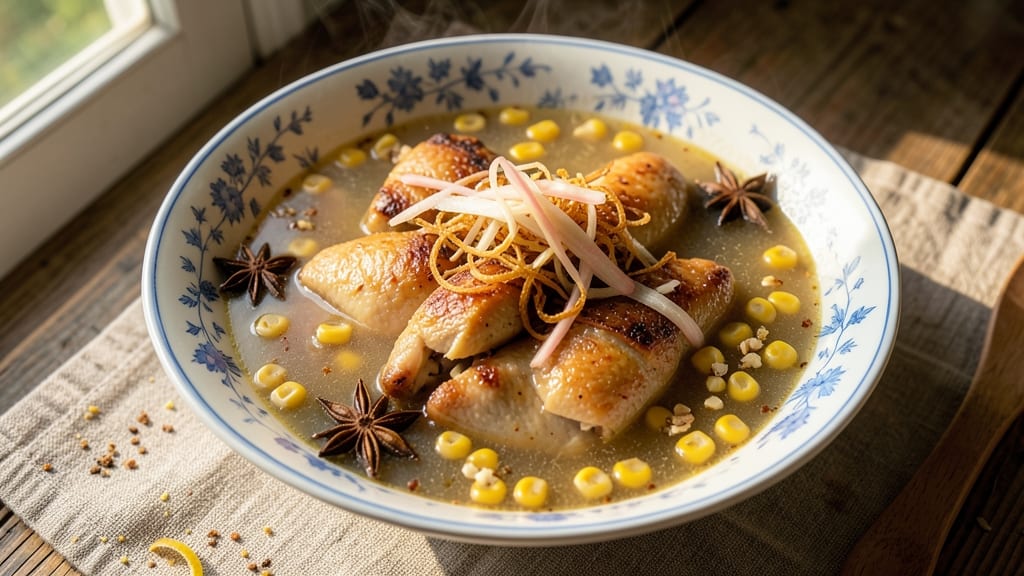
This authentic Chinese chicken and corn soup delivers the comforting warmth of a home-cooked bowl, where fragrant ginger and star anise infuse a silky broth that cradles tender chicken and sweet corn.
The secret lies in slow-simmered aromatics—garlic, scallions, and a touch of soy—that build depth without overpowering the natural sweetness of the vegetables.
I developed this recipe after years of studying classic Chinese soups, focusing on balancing textures: silky egg ribbons, tender chicken, and plump corn kernels that melt in your mouth.
The beauty of this soup is its simplicity disguised as sophistication. No complicated techniques—just a 30-minute prep followed by 45 minutes of simmering to let flavors meld. The star anise and ginger create that unmistakable Chinese restaurant aroma, while a splash of Shaoxing wine adds complexity.
What makes it truly special is the egg ribbon technique: whisked eggs swirled into the hot broth create delicate, silky strands that elevate every spoonful.
By the time you serve this soup, your kitchen will smell like a bustling Cantonese restaurant, and each bowl will be packed with tender chicken, sweet corn, and those signature egg ribbons that make it feel like a restaurant-quality meal.
The broth is rich enough to stand alone but light enough to let the ingredients shine. This is comfort food at its finest—warm, aromatic, and deeply satisfying.
Perfect for chilly evenings or as a healing meal, this soup scales beautifully for crowds while keeping the same authentic flavors. The recipe includes tips for adjusting seasoning to taste and variations for adding other vegetables. Let's create this fragrant bowl of tradition in your kitchen.
Ingredients for authentic chinese chicken and corn soup
These aromatic ingredients transform simple pantry staples into a restaurant-quality Chinese soup.
| Ingredient | Amount | Notes |
|---|---|---|
| Boneless Chicken Thighs 🍗 | 1 ½ lb | Skin-on preferred for flavor |
| Fresh Ginger Root 🧄 | ½ cup | Peeled, julienned or finely chopped |
| Star Anise Pods 🌿 | 2 whole | Lightly crushed for aroma |
| Shaoxing Wine 🍷 | ¼ cup | Dry Chinese cooking wine |
| Light Soy Sauce 🥄 | 2 tbsp | Kikkoman preferred |
| Dark Soy Sauce 🥄 | 1 tbsp | For depth of color |
| Corn Kernels 🌽 | 2 cups | Fresh or frozen, cut off cob |
| Scallions 🧅 | ¼ cup | White and green parts, sliced |
| Garlic Cloves 🧄 | 4 cloves | Minced for aromatic base |
| Large Eggs 🥚 | 2 whole | Room temperature for ribbons |
| Green Onions 🧅 | ¼ cup | Thinly sliced for garnish |
| Sesame Oil 🫒 | 1 tsp | Toasted for finishing |
| Chicken Broth 💧 | 6 cups | Homemade or low-sodium |
| Salt 🧂 | 1 tsp | Kosher or sea salt |
| White Pepper 🌶️ | ½ tsp | Freshly ground preferred |
The star anise and ginger are non-negotiable for that authentic aroma. Whole Foods or Asian markets carry the best quality star anise pods—look for plump, intact ones with a rich vanilla-like scent. Fresh ginger is ideal, but if you're using powdered, double the amount and toast it lightly in a dry pan first. Shaoxing wine isn't just any cooking wine—it's the secret weapon here. Trader Joe's carries it for about $8, or grab it at any Asian grocery store. The chicken thighs should have good marbling—skin-on is better, but boneless skinless works in a pinch. For the corn, frozen kernels are fine, but fresh off-the-cob adds that sweetness that makes this soup sing.
No Shaoxing wine? Dry sherry or mirin works in a pinch, but it won't be exactly the same. Light soy sauce can be swapped for regular soy, but you'll lose that delicate umami punch. Fresh ginger is best, but if you're using powdered, toast it first—this makes all the difference. The eggs for the ribbons should be room temperature, whisked until frothy but not too stiff. If you're making this ahead, prep the broth first and store it separately—just reheat and add the eggs at the end. The scallions can be regular green onions if that's what you've got, but the white parts add that extra layer of flavor. And if you're feeling adventurous, swap half the corn for baby bok choy or mushrooms.
This soup tastes even better the next day—make a double batch and freeze portions. The broth keeps in the fridge for 4-5 days, while the fully assembled soup lasts 3 days. For freezing, let it cool completely, then portion into airtight containers. The egg ribbons won't survive freezing, so always make them fresh when serving. If you're prepping ahead, store the broth and chicken separately—reheat gently and add the eggs at the last minute. Garnish with a drizzle of sesame oil and extra green onions right before serving—trust me on this—it makes all the difference.
Why You'll Love This Recipe
- Foolproof Simplicity: I swear by this recipe because it’s the kind of dish that forgives mistakes. No fancy knife skills—just chop the ginger into thin slivers, toss in the star anise whole, and let the Shaoxing wine do its magic while you stir. Twenty minutes later, you’ve got a restaurant-quality bowl without the stress.
- Umami Bomb: That first sip? Chef’s kiss. The star anise and Shaoxing wine give it this deep, warm backbone, while the light soy sauce keeps it bright—not too heavy, not too salty. Honestly, the chicken falls apart like it’s been slow-cooking for hours, but you’re done in half the time.
- Leftovers That Don’t Suck: Between us, this soup actually improves the next day. The flavors meld even better, and it’s perfect for packing lunches—just reheat with a splash of water. (Yes, even on a Tuesday night.) My kids beg for seconds, and my partner brings it to work because it’s that good cold.
- Budget Meal, Big Impact: Chicken thighs are cheap, ginger lasts forever, and star anise? A single pod stretches across multiple batches. I make this when I’m pinching pennies, and no one ever guesses it’s not a splurge-worthy dish. Plus, the corn adds that sweet, creamy contrast—like a little luxury sneaking in.
Step-by-step instructions for authentic Chinese chicken and corn soup
Here's how to craft a soup that balances rich, aromatic broth with delicate egg ribbons and sweet corn.
Prepare the Chicken and Aromatics
Pat the 1.5 lb boneless chicken thighs dry with paper towels—this ensures crispy skin and better flavor extraction. In a large pot, combine the chicken with 6 cups chicken broth, 0.5 cup peeled and julienned fresh ginger root, 2 lightly crushed star anise pods, 4 minced garlic cloves, 2 tbsp light soy sauce, and 1 tbsp dark soy sauce. Bring to a boil over medium-high heat, then immediately reduce to a gentle simmer. The broth should bubble softly, not vigorously—this prevents the chicken from toughening.
Simmer uncovered for 20 minutes until the chicken is no longer pink at the bone and the broth begins to develop a deep, fragrant aroma. Here's the thing—star anise and ginger need time to infuse properly. If you rush this step, the soup will lack that authentic Chinese depth. After 20 minutes, remove the chicken, shred it with two forks, and return the meat to the pot. Discard the star anise pods unless you're using them for another purpose—they're done working their magic.
Build the Fragrant Broth
Add the 2 cups corn kernels and 0.25 cup sliced scallions to the pot. Stir gently to combine, then simmer for another 10 minutes until the corn is tender but still holds its shape. The broth should now be rich and golden, with a complex aroma from the ginger, garlic, and soy sauces working together. Taste and adjust seasoning with 1 tsp salt and 0.5 tsp freshly ground white pepper—this balances the flavors without overpowering the natural sweetness of the corn.
Here's where it gets fun: carefully pour in the 0.25 cup Shaoxing wine while stirring. The alcohol will cook off quickly, adding another layer of depth to the broth. Let the soup simmer for 5 more minutes to allow the wine to fully integrate. The liquid should reduce slightly, intensifying the flavors. If the broth appears too thin at this point, you can reduce it further by simmering uncovered for another 3-5 minutes—just watch closely to avoid burning the aromatics.
Create Silky Egg Ribbons
While the soup simmers, prepare the eggs for their magical transformation. Crack the 2 large eggs into a small bowl and whisk vigorously until the yolks and whites are fully combined. The eggs should be at room temperature for even cooking—this prevents them from curdling in the hot broth. Here's the critical part: slowly drizzle the egg mixture into the simmering soup while stirring constantly with a pair of chopsticks or a long spoon. The motion creates those signature silky ribbons that are the soul of this dish.
Stir for 1-2 minutes until the egg ribbons form and the mixture just begins to set. You want them to be delicate but fully cooked—think of them like cloud-like strands that dissolve gently on your tongue. If the ribbons thicken too quickly, add 1-2 tablespoons of hot broth to loosen them. The goal is a soup where each spoonful delivers both the rich broth and the silky egg in perfect harmony.
Finish and Serve
Once the egg ribbons are perfect, remove the pot from heat and stir in 1 tsp toasted sesame oil. This adds a nutty aroma and rich finish that ties all the flavors together. The sesame oil should be toasted first—heat it in a small pan over low heat for 1 minute until fragrant, then let it cool before adding to the soup. Distribute 0.25 cup thinly sliced green onions evenly throughout the pot, reserving a few slices for garnish.
Ladle the soup into bowls immediately, garnishing each serving with the reserved green onion slices. The contrast of the vibrant green against the golden broth makes this dish visually stunning. Serve with steamed jasmine rice on the side—each bite should deliver the tender chicken, sweet corn, fragrant broth, and delicate egg ribbons in perfect balance. The soup continues to improve as it sits for 10-15 minutes, allowing the flavors to meld even more.
Pro Tips For Making Authentic Chinese Chicken And Corn Soup
- Blanch Chicken First: I learned this the hard way—skipping the quick blanch makes the chicken turn rubbery. Parboil the thighs for 3 minutes in salted water, then shock in ice bath. This locks in moisture and keeps them juicy when they finish cooking in the soup.
- Slice Ginger Thin: That thick, chunky ginger you see in some recipes? Toss it. For this soup, you want paper-thin slices—so thin you can barely see the texture. It infuses flavor without overpowering, and it dissolves cleanly into the broth. (Yes, even if you’re impatient like me.)
- Don’t Crowd the Pot: I used to dump everything in at once, thinking more heat = faster cooking. Wrong. Give the chicken thighs space—they’ll steam instead of sear, and the star anise will burn before the broth flavors develop. Start with half the liquid, let it reduce slightly, then add the rest.
- Toast Star Anise: This isn’t the prettiest method, but it’s the tastiest. Dry-toast the star anise pods in a separate pan over medium heat for 30 seconds until fragrant—it deepens their aroma and prevents bitterness in the broth. (Your future self will thank you.)
Essential equipment for authentic chinese chicken and corn soup
Large Pot Essentials
You'll need a large, heavy-bottomed pot—I recommend a 5-6 quart Dutch oven like the Le Creuset Stoneware or a stainless steel stockpot from All-Clad. These materials distribute heat evenly, preventing hot spots that can burn your aromatics.
A pot with a tight-fitting lid helps trap steam, which is crucial for developing that deep, fragrant broth. 🌡️
Chopstick Magic
For those signature egg ribbons, a pair of long-handled chopsticks is your best friend. I prefer bamboo chopsticks because they're sturdy and heat-resistant. If you don't have chopsticks, a long wooden spoon or spatula works in a pinch.
The key is to stir constantly while adding the egg mixture—this creates the delicate strands that make this soup special.
Fine-Mesh Strainer
A fine-mesh strainer (like the OXO Good Grips one) is perfect for skimming any foam or impurities from the broth as it simmers. This keeps your soup crystal clear and prevents any unwanted bits from making their way into your final dish.
I strain the broth after the initial 20-minute simmer to ensure a silky texture.
Whisk for Egg Ribbons
While chopsticks handle the stirring, a small whisk (like the Microplane Whisk) is essential for preparing the egg mixture. Whisk the eggs until just combined—over-whisking can create bubbles that burst in the hot broth.
A ramen bowl or deep bowl works best for whisking since it contains the mixture while you drizzle it into the soup.
Measuring Spoons
Precision matters with Chinese cooking, especially when balancing flavors. Invest in a set of stainless steel measuring spoons (I love the OXO Stainless Steel set) for accurate measurements of soy sauces, sesame oil, and spices.
A small ladle (like the Zyliss Stainless Steel) helps portion the soup neatly into bowls without spills.
Optional Pro Tools
For extra authenticity, a cleaver (like the Victorinox 8-inch) makes quick work of chopping ginger and scallions. A garlic press (such as the OXO Good Grips) ensures finely minced garlic without the mess.
And if you're serious about this soup, a thermometer (like the ThermoWorks Thermapen) helps monitor broth temperature for perfect simmering.
Nutrition facts
Frequently asked questions
Can I substitute fresh corn with canned or frozen?
Yes, but fresh corn delivers the best texture and sweetness. If using frozen, thaw completely first. Canned corn works in a pinch, but drain and rinse thoroughly to remove excess liquid and sodium. For extra flavor, add 1 teaspoon sugar or a pinch of white pepper to mimic fresh corn's natural sweetness.
What makes the egg ribbons turn out silky instead of rubbery?
Three key factors: room-temperature eggs, gentle heat, and constant stirring. Whisk eggs until just combined (no stiff peaks), then drizzle slowly into simmering broth (190-200°F) while stirring with chopsticks. Remove from heat immediately when ribbons form—overcooking makes them tough. A splash of hot broth can rescue over-thickened ribbons.
How do I adjust the spice level for kids or sensitive palates?
Reduce the white pepper to ¼ teaspoon and omit the dark soy sauce (it's more intense). For extra mildness, strain the broth after simmering to remove some of the aromatic spices. Keep the ginger and star anise for flavor but reduce to 1 pod instead of 2. The soup will still taste authentic but with a gentler profile.
Can I make this soup vegetarian?
Replace the chicken with 1.5 lbs firm tofu (pressed and cubed) or mushrooms (shiitake or oyster). Boost umami with 1 tbsp vegetarian oyster sauce or ½ cup coconut milk in the broth. The egg ribbons remain the star, but add ½ cup chopped bok choy for extra texture. The aromatic base of ginger and star anise works beautifully with plant-based proteins.
Why does my broth taste bitter?
Bitterness usually comes from over-simmering the aromatics (ginger/star anise) or using low-quality broth. Simmer uncovered for no more than 30 minutes total—longer cooking extracts bitter compounds. For extra insurance, strain the broth through a fine-mesh sieve after simmering. If using store-bought broth, choose low-sodium versions and add ½ cup water to dilute any artificial flavors.