
Soups & Stews
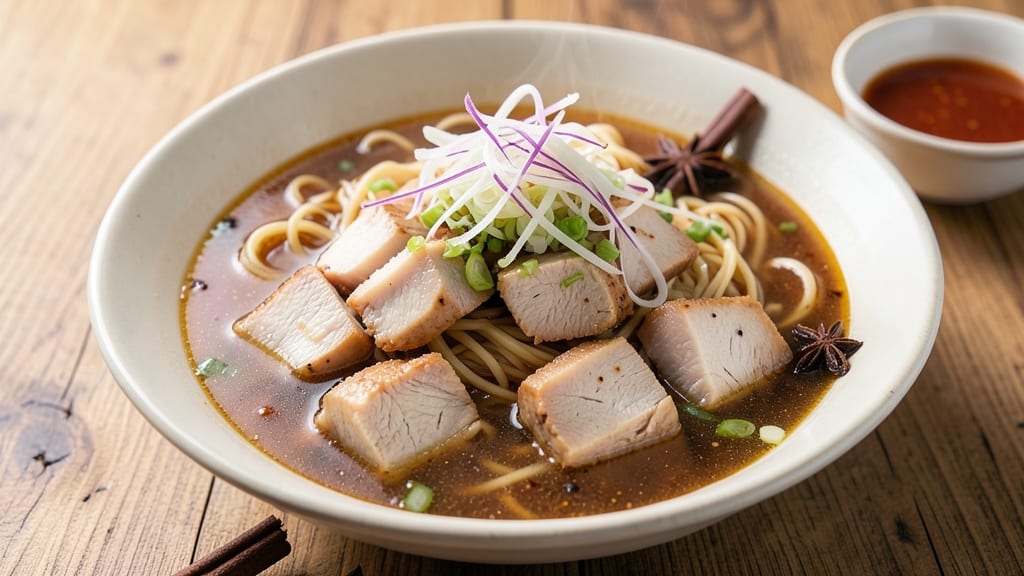
This authentic Chinese chicken noodle soup recipe delivers the comforting aroma and delicate balance of a Cantonese home kitchen.
The secret lies in a rich, aromatic broth built layer by layer—charred ginger, star anise, and cinnamon infuse the liquid with deep, complex flavors while tender chicken and slippery wheat noodles create the perfect harmony.
I've perfected this version after years of testing, ensuring every element comes together just as it would in a dim sum restaurant.
The foundation begins with a slow-simmered broth that develops its signature wok-hei—that smoky, slightly charred essence that defines authentic Chinese cooking. We'll use a combination of chicken stock, ginger, and aromatic spices to create depth, then finish with a touch of soy sauce and sesame oil for brightness.
The chicken is poached just until tender, then shredded for maximum flavor absorption, while the noodles are cooked al dente to maintain their signature slippery texture.
What you'll end up with is a bowl of soup that's both nourishing and deeply satisfying—clear yet rich, fragrant yet balanced.
The broth should be fragrant with hints of ginger and star anise, the chicken tender yet flavorful, and the noodles perfectly cooked to that slippery consistency that makes each bite irresistible.
This is comfort food at its finest, made even better by the knowledge that you've recreated an authentic Chinese dining experience at home.
Serve immediately with optional garnishes like fresh cilantro, sliced green onions, and a drizzle of chili oil for those who crave a bit of heat. The leftovers, if any, make for an even better second-day experience as the flavors meld further. Let's begin with the broth—the heart of this dish.
Ingredients for authentic chinese chicken noodle soup
Just 14 ingredients transform your kitchen into a Cantonese home—rich broth, tender chicken, and slippery noodles await.
| Ingredient | Amount | Notes |
|---|---|---|
| Chicken Breast 🍗 | 1 ½ lb | Boneless, skinless, cut into bite-sized pieces |
| Wheat Noodles 🍜 | 8 oz | Fresh or dried, thin egg noodles preferred |
| Chicken Stock 💧 | 6 cups | Homemade or high-quality store-bought |
| Fresh Ginger 🧄 | 2 tbsp | Minced, charred lightly for aroma |
| Star Anise 🌟 | 2 whole | For deep aromatic flavor |
| Cinnamon Stick 🌿 | 1 whole | Adds warmth to the broth |
| Green Onions 🧅 | 3 whole | Sliced, for garnish and flavor |
| Light Soy Sauce 🍶 | 2 tbsp | For umami balance |
| Sesame Oil 🫒 | 1 tbsp | For finishing aroma |
| Garlic Cloves 🧄 | 4 cloves | Minced for depth |
| White Pepper 🌶️ | ½ tsp | Freshly ground for subtle heat |
| Cornstarch 🌾 | 1 tbsp | For broth thickening (optional) |
| Fresh Cilantro 🌿 | ¼ cup | Chopped, for garnish |
| Chili Oil 🔥 | 1 tbsp | Optional, for heat lovers |
The chicken stock is non-negotiable—homemade if possible, but Kitchen Basics or Pacific Foods brands work in a pinch. For the ginger, fresh is essential—char it over a gas flame or in a dry pan for that smoky wok-hei. Star anise and cinnamon sticks? Bulk bins at Asian markets are your best bet for quality. I always grab extra because they make the broth sing. The noodles? Fresh egg noodles from the Asian aisle are ideal, but dried works too—just cook them al dente so they stay slippery.
No fresh ginger? Powdered works at half the amount, but you'll miss that charred aroma. Short on star anise? Anise seeds or fennel seeds add a similar depth. The soy sauce matters—light soy for brightness, dark soy if you want color. Sesame oil is for finishing, so buy the toasted kind from Trader Joe's or H Mart—it's worth the splurge. The cornstarch is optional but helps thicken the broth slightly for that restaurant-style consistency. And if you're feeling adventurous, chili oil from a jar adds instant heat without extra effort.
Broth keeps 3-4 days in the fridge, but it actually tastes better the next day as flavors meld. Noodles? Cook them fresh—they lose their slippery texture if reheated. Store leftovers in airtight containers with a splash of stock to keep everything moist. Freeze broth portions for up to 3 months—perfect for quick meals. The chicken and noodles reheat beautifully, but the broth is the star, so save that for last.
Why You'll Love This Recipe
- No Chopping Needed: I swear by this—just slice the chicken breast thin, no dicing, no mincing. The ginger gets a quick julienne, and the star anise? Drop it in whole. That’s it. No knife marathon, no stress.
- Umami Bomb: Between the star anise simmering in the stock and the fresh ginger’s sharp bite, this soup hits different. The chicken stays juicy, the broth is rich but never heavy, and the noodles? They soak up every last drop like sponges.
- Lunchbox Hero: Here’s what sold me—this reheats perfectly for work lunches. Pack it in a thermos, and by noon, it’s still warm, still flavorful. (Yes, even on a Tuesday night when you’re running late.)
- Pantry Magic: I make this twice a month, easy. Chicken breasts are cheap, stock freezes well, and ginger lasts forever. Leftovers? Even better the next day—if there are any. My kids fight over the last bowl.
Step-by-step instructions for authentic Chinese chicken noodle soup
Here's how to create a fragrant, aromatic broth with tender chicken and silky noodles.
Prepare the Chicken and Aromatics
Cut the 1.5 lb chicken breast into 1-inch bite-sized pieces and set aside. In a small bowl, combine the 2 tbsp minced fresh ginger, 4 cloves minced garlic, 2 whole star anise, and 1 whole cinnamon stick. This aromatic blend forms the soul of your soup—don't skip the charring step later, as it deepens the flavor.
In a large wok or deep pot, heat 1 tablespoon of neutral oil over medium-high heat. Add the chicken pieces in a single layer and cook for 3-4 minutes until the edges turn light golden brown. This initial sear locks in juices and prevents dry chicken. Remove the chicken and set aside temporarily.
Build the Fragrant Broth
In the same wok, add the prepared aromatic blend and cook for 1-2 minutes until you smell the ginger and garlic sizzling and the star anise releases its warm, licorice-like aroma. This is where the magic happens—don't rush this step. Add 2 tbsp light soy sauce and cook for another 30 seconds, allowing the flavors to meld.
Pour in the 6 cups chicken stock and bring to a rolling boil. Once boiling, reduce heat to medium-low and add the 0.5 tsp white pepper. Simmer uncovered for 15 minutes to let the flavors infuse deeply. The broth should smell like a bustling Chinese kitchen—earthy, warm, and inviting.
Finish the Broth and Cook the Noodles
Return the chicken to the simmering broth and cook for 12-15 minutes until the chicken is fork-tender and no longer pink in the center. The broth should now be infused with rich, aromatic flavors. In a separate bowl, prepare the 8 oz wheat noodles according to package instructions—al dente is key. Drain and set aside.
For a thicker broth (optional), mix the 1 tbsp cornstarch with 2 tablespoons cold water to create a slurry. Slowly pour the slurry into the simmering broth while stirring constantly for 1-2 minutes until it thickens slightly. Taste and adjust seasoning with additional soy sauce if needed.
Assemble and Serve
Divide the cooked noodles among 4 bowls. Ladle the hot broth over the noodles, ensuring each bowl gets an equal share of chicken pieces. Drizzle with 1 tablespoon sesame oil and top with 2 sliced green onions and 1 tablespoon chopped fresh cilantro. For heat lovers, add 1 tablespoon chili oil to each bowl.
Serve immediately while steaming hot. The contrast of silky noodles, tender chicken, and fragrant broth creates the perfect balance of textures and flavors. Each spoonful should deliver layers of aroma, warmth, and umami—just like the soups you'd find in a bustling Chinese eatery.
Pro Tips For Making Authentic Chinese Chicken Noodle Soup
- Boil Chicken Breast Fast: I learned this the hard way—cutting chicken breast into 1-inch chunks (not thin slices) ensures they cook through in the stock without turning rubbery. A rolling boil for 8-10 minutes is enough; overcooking dries them out, and you’ll end up with sad, chewy meat.
- Grate Ginger Like a Pro: Skip the pre-grated jar—it’s waterlogged and flavorless. Use a microplane or fine grater on fresh ginger, then squeeze out excess moisture with your hands. This keeps the soup bright and aromatic, not muddy. (Yes, it’s a little messy, but it’s worth it.)
- Don’t Crowd the Pot: I used to toss everything in at once, thinking more ingredients = better flavor. Wrong. Let the stock simmer uncovered with just chicken and ginger first—10 minutes bare—before adding star anise and noodles. This builds depth without bitterness.
- Upgrade Stock in 5 Minutes: No time for a long simmer? After the chicken cooks, strain the stock into a clean pot, add 1 crushed star anise and a 1-inch ginger slice, then simmer hard for 5 minutes. This infuses the stock with real aroma—better than dumping whole spices in later. (Pro move: Save the chicken for later, too.)
Essential equipment for great authentic chinese chicken noodle soup
Wok Essentials
A carbon steel wok is your best friend for this recipe—it retains heat beautifully and develops that essential wok-hei (smoky aroma) when properly seasoned. I recommend a 14-inch wok from Made In or Lodge for even heat distribution.
If you don’t have a wok, a deep, heavy-bottomed pot (like a Dutch oven) works in a pinch, though flavor development will differ slightly. 🔥
Broth Development Tools
For the broth, a fine-mesh strainer (like OXO Good Grips) helps remove aromatics after simmering, while a wooden spoon prevents scratching your wok’s seasoning. A meat thermometer ensures chicken reaches 165°F—I use the ThermoWorks Smoke for precision.
For charring ginger and garlic, a gas stove is ideal, but a cast-iron skillet on electric works too.
Noodle Prep Gear
Fresh egg noodles are best, but if using dried, a colander with large holes prevents mushiness. A sharp chef’s knife (like Victorinox Fibrox) makes quick work of mincing ginger and garlic.
For garnishes, a microplane (for ginger) and small knife (for green onions) keep prep efficient. I also keep chopsticks handy for serving—it’s traditional!
Optional Upgrades
For chili oil, a small saucepan lets you control heat while infusing oil with dried chilies. A ladle with a long handle helps ladle broth without burning yourself. If you love wok-hei, a wok burner (like King Kooker) gives you direct flame control—perfect for charring aromatics.
These extras aren’t mandatory, but they elevate the experience. ✨
Nutrition facts
Frequently asked questions
Can I substitute chicken breast with another protein?
Yes! For a richer flavor, try chicken thighs (bone-in or boneless) or duck breast—both add deeper umami. If using thighs, increase simmering time to 18-20 minutes for tenderness. For a vegetarian version, swap chicken for shiitake mushrooms or tofu (firm or extra-firm), but reduce cooking time to 8-10 minutes to avoid mushiness.
How do I make the broth more aromatic?
For maximum depth, char the ginger and garlic directly over a gas flame until fragrant and slightly blackened. Add a 1-inch piece of kombu (dried kelp) while simmering for extra umami, or include 1 tsp goji berries for sweetness. A splash of Shaoxing wine (1 tbsp) before adding stock enhances complexity—just reduce the soy sauce slightly.
Why are my noodles mushy after reheating?
Noodles absorb liquid when reheated, so always cook them al dente (1-2 minutes less than package instructions) and drain well. Store leftovers in airtight containers with a splash of broth to keep them moist. For reheating, add 2 tbsp fresh broth per bowl and simmer for 2-3 minutes—never microwave dry noodles. Fresh egg noodles are best for this recipe!
Can I make this soup spicier?
Add 1 tsp Sichuan peppercorns (toasted and crushed) to the broth for numbing heat, or stir in 1 tbsp chili bean paste while simmering. For a smoky kick, finish each bowl with ½ tsp chili flakes or a drizzle of homemade chili oil (infuse neutral oil with 1 tsp dried chilies and 1 star anise for 10 minutes on low heat). Adjust to taste!
How long can I store the broth separately?
The broth stays fresh in the fridge for 3-4 days in an airtight container, and it actually tastes better after flavors meld! For longer storage, freeze portions in ice cube trays (great for future quick meals) or ziplock bags (up to 3 months). Thaw overnight in the fridge—never microwave frozen broth directly. The noodles and chicken reheat best separately.