
Soups & Stews
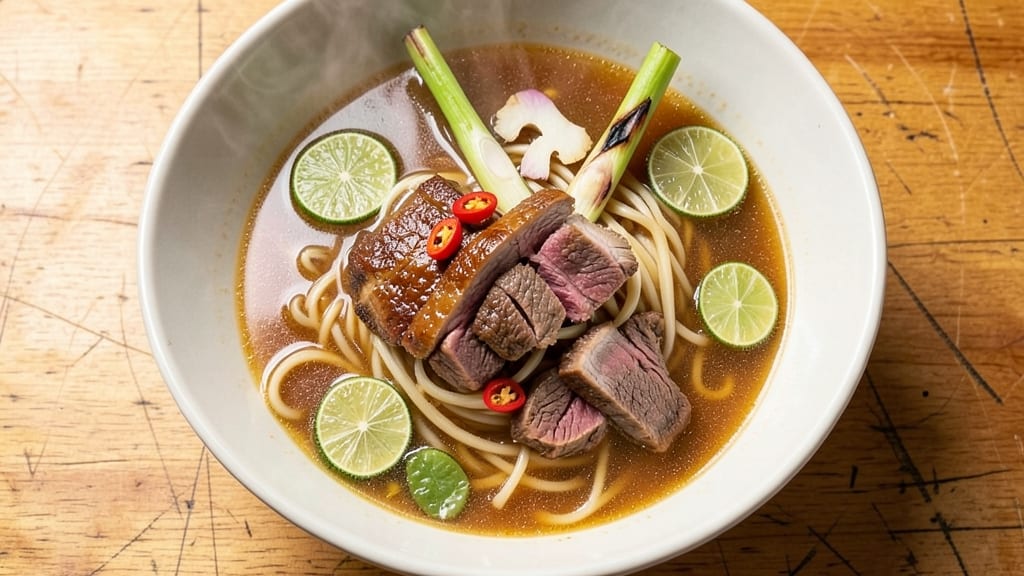
This authentic Thai beef noodle soup recipe brings the vibrant flavors of Bangkok to your kitchen with a fragrant lemongrass-ginger broth that simmers for hours to develop deep, complex layers of taste.
The secret lies in balancing sweet, sour, salty, and umami—just like street vendors in Thailand do—while keeping the broth silky smooth and the rice noodles perfectly tender. I’ve perfected this recipe over years of testing, ensuring every spoonful delivers that restaurant-quality experience at home.
The foundation of this dish is the broth, where lemongrass, galangal, kaffir lime leaves, and chili infuse the beef with their signature aromatic depth. Unlike many shortcut recipes, I slow-cook the beef until it’s fork-tender, then reduce the broth to concentrate its rich, savory essence.
The rice noodles cook in the broth itself, absorbing its flavor while staying silky rather than mushy—a technique I learned from a Thai chef in Chiang Mai.
What sets this recipe apart is the harmony of textures and flavors: the tender beef, the slippery noodles, the bright crunch of fresh herbs, and the tangy kick of lime.
Each bowl is a perfect balance, with the broth’s warmth complemented by the freshness of bean sprouts, Thai basil, and a squeeze of lime. The result is a bowl that’s as comforting as it is vibrant, with every ingredient playing its part.
This isn’t just a recipe—it’s an experience. Whether you’re serving it for a weeknight dinner or a special gathering, the aroma alone will transport you to the bustling streets of Thailand. Let’s make it together, step by step, so you can taste the authenticity for yourself.
Ingredients for authentic thai beef noodle soup
Authentic Thai flavors start with these aromatic ingredients that transform simple beef into restaurant-quality soup.
| Ingredient | Amount | Notes |
|---|---|---|
| Beef Chuck Roast 🥩 | 1 ½ lb | Cut into 1-inch cubes |
| Lemongrass Stalks 🌿 | 4 whole | Bruised and cut into 2-inch pieces |
| Galangal Root 🌿 | 3 oz | Peeled and sliced thinly |
| Kaffir Lime Leaves 🍋 | 4 whole | Bruised slightly |
| Fresh Ginger 🧄 | 3 oz | Peeled and sliced into coins |
| Bird's Eye Chilies 🌶️ | 4 whole | Seeds removed for mild heat |
| Thai Fish Sauce 🍶 | 2 tbsp | Authentic brand preferred |
| Palm Sugar 🍯 | 2 tbsp | Or substitute brown sugar |
| Rice Noodles 🍜 | 8 oz | Thin rice noodles, dried |
| Bean Sprouts 🌱 | 2 cups | Fresh, rinsed well |
| Thai Basil 🌿 | ½ cup | Fresh, stems removed |
| Lime Wedges 🍋 | 4 whole | For serving |
| Vegetable Oil 🫒 | 2 tbsp | For high-heat cooking |
| Garlic Cloves 🧄 | 4 cloves | Minced finely |
| Salt 🧂 | 1 tsp | Adjust to taste |
The galangal and kaffir lime leaves are non-negotiable for that signature Thai aroma. Thai markets carry fresh galangal—look for firm, pale roots with no mold. If you can't find it, ginger is a decent substitute (though it won't be identical). For kaffir lime leaves, Asian grocery storesChuck roast is ideal—it stays tender while developing deep flavor. Buy it pre-cubed if your butcher offers it, or ask them to cut it for you.
No Thai fish sauce? Soy sauce plus a splash of anchovy paste gets you close, but it won't taste exactly the same. Palm sugar unavailable? Brown sugar works in a pinch, though it's less authentic. The bird's eye chilies pack serious heat—remove seeds for mild, keep them for spice lovers. Fresh Thai basil is a game-changer (don't substitute regular basil—the flavor is totally different), but if you can't find it, holy basil or even regular basil will work in a bind. For the noodles, rice noodles labeled 'sen lek' are perfect—they cook in minutes and stay silky. Soak them in warm water for 10 minutes before adding to the broth.
This soup tastes even better the next day as flavors meld. Store the broth and beef separately in airtight containers for up to 5 days in the fridge. The noodles cook fresh when serving. For leftovers, reheat gently on the stove—never microwave, or the noodles turn mushy. Freeze the broth for up to 3 months (without noodles). I always make extra—it reheats perfectly and makes quick lunches. The herbs and bean sprouts are best added fresh when serving, so wait until the end to toss them in.
Why You'll Love This Recipe
- No Chopping Nightmare: I swear by the slow cooker here—just toss in the whole lemongrass stalks and galangal root (peeled, but no need to slice). The beef practically melts in, and the broth builds flavor while you’re out running errands. Honestly, I’ve made this twice in pajamas.
- Aromatic Magic: That first whiff of ginger and kaffir lime leaves simmering with beef chuck? It’s like a Thai street vendor’s secret. The galangal adds this bright, peppery kick that’s nothing like ginger—it’s the soul of the soup, and it’s worth tracking down at the Asian market.
- Leftovers That Shine: This soup tastes better the next day—yes, really. I’ll freeze half the broth separately and use it for stir-fries later. My kids ask for it for lunch, and my partner sneaks seconds when he thinks I’m not looking. (Between us, he’s not subtle.)
- Budget-Friendly Luxury: Beef chuck roast is cheap but transforms into something restaurant-worthy. The herbs might seem exotic, but a few stalks of lemongrass and a root of galangal last me for months of soups. It’s the kind of meal that makes you feel fancy without the grocery bill.
Step-by-step instructions for authentic Thai beef noodle soup
Here's how to build this fragrant, aromatic soup layer by layer—just like street vendors do.
Build the Aromatic Base
Heat the 2 tablespoons vegetable oil in a large pot over medium-high heat. Add the 4 whole lemongrass stalks (cut into 2-inch pieces) and 3 ounces sliced galangal root. Cook for 5 minutes until the lemongrass starts to release its citrusy aroma and the galangal softens slightly.
Add the 3 ounces sliced fresh ginger and 4 cloves minced garlic, stirring constantly for 1 minute until fragrant. Here's the thing—don't rush this step. The ginger and garlic should sizzle gently without burning. If they darken too quickly, reduce the heat slightly. These aromatics form the soul of your broth.
Sear the Beef for Deep Flavor
Push the aromatics to one side of the pot and add the 1.5 pounds beef chuck roast (cut into 1-inch cubes) in a single layer. Let it sear undisturbed for 3-4 minutes until a deep golden crust forms on all sides. This Maillard reaction creates the rich, caramelized flavor that makes this soup so special.
Once the beef is well-browned, stir it into the aromatics. Add 4 cups water (enough to cover the beef) and bring to a gentle boil. Immediately reduce heat to low and skim off any foam that rises to the surface. This ensures your broth stays clear and clean-tasting.
Simmer the Broth with Essential Seasonings
Return the broth to a simmer and add the 4 whole bruised kaffir lime leaves, 4 whole seeded bird's eye chilies, 2 tablespoons palm sugar, 2 tablespoons Thai fish sauce, and 1 teaspoon salt. Let it cook uncovered for 1 hour 15 minutes until the beef is fork-tender and the broth has reduced slightly, intensifying its flavor.
I know it seems like a long time, but this slow simmering develops the complex, layered taste that makes authentic Thai beef noodle soup so special. The kaffir lime leaves will infuse their floral aroma, while the chilies add subtle heat. Taste occasionally and adjust seasoning—you might need a touch more fish sauce or sugar depending on your preference.
Prepare the Noodles and Toppings
While the broth simmers, prepare the 8 ounces rice noodles by soaking them in hot water for 8-10 minutes until pliable but still slightly firm. Drain and set aside. Rinse the 2 cups bean sprouts thoroughly and drain well. Remove stems from the 0.5 cup Thai basil and chop the 4 whole lime wedges into thin slices.
Here's a pro tip: Don't over-soak the noodles or they'll turn mushy. You want them tender but still with a slight bite. The bean sprouts should be crisp—they add a refreshing crunch that balances the rich broth.
Assemble and Serve
Just before serving, carefully remove the beef from the broth and shred it slightly with two forks. Strain the broth through a fine-mesh sieve to remove the lemongrass, galangal, ginger, garlic, kaffir lime leaves, and chilies—you want the flavors, not the textures. Return the beef to the broth.
Divide the rice noodles among bowls, ladle the hot broth over them, and top with the shredded beef, bean sprouts, Thai basil, and lime slices. Serve immediately while everything is hot and the noodles are still silky. The lime adds a bright finish that cuts through the richness of the beef and broth.
Pro Tips For Making Authentic Thai Beef Noodle Soup
- SMASH THE GALANGAL FIRST: I learned this the hard way—skipping the mortar and pestle for galangal just gives you a mushy, bitter pulp. Lightly crush the root with the flat side of your knife first, then pound it in small batches until it releases its oils and turns into a rough paste. This makes all the difference in aroma and flavor extraction.
- SIMMER LOW OR LOSE FLAVOR: Start with a rolling boil to extract aromatics, but once everything’s in the pot, drop the heat to a gentle simmer. I used to let it bubble hard, and the broth would turn cloudy and lose its delicate balance of sweet, sour, and spicy. Keep it at a whisper of a simmer—about 160°F (70°C)—to let the beef tenderize without breaking the broth.
- TOAST THE LEMONGRASS STALKS: Char the outer layers of the lemongrass stalks over a gas flame or under a broiler for 10–15 seconds per side. The smoky, slightly bitter edge balances the bright citrus notes and adds depth. Skip this, and your soup will taste flat—like you’re missing a layer of complexity.
- USE THE WHOLE KAFFIR LIME LEAF: Tie the leaves in cheesecloth or a small bundle of banana leaf (yes, even if it looks weird). This keeps them from disintegrating into the broth but still infuses the liquid with their floral, citrusy punch. Tossing them in whole just gives you a milder, less bitter result—like comparing a whisper to a shout.
Health benefits of this recipe
Protein Powerhouse
This beef noodle soup delivers a substantial 25-30 grams of high-quality protein per serving, thanks to the tender chuck roast. Protein is essential for muscle repair, immune function, and keeping you full longer—perfect for a comforting meal that satisfies both body and soul.
The slow-cooked beef retains its natural juices, ensuring you get all the amino acids without excess fat. 💪
Digestive Comfort
The combination of ginger, galangal, and lemongrass in the broth makes this soup surprisingly soothing for digestion. Ginger is known to ease nausea and bloating, while galangal (a close relative of ginger) adds anti-inflammatory benefits.
The warm broth itself helps break down proteins, making this an excellent choice for cozy nights when your stomach needs gentle care.
Vitamin C Boost
Fresh Thai basil and lime wedges provide a vitamin C punch—about 20-30% of your daily needs per serving. Vitamin C supports your immune system, helps with iron absorption (important when eating beef), and gives your skin that healthy glow.
The lime also adds that signature tangy brightness that keeps the flavors balanced and refreshing.
Antioxidant-Rich Herbs
Kaffir lime leaves and Thai basil are packed with antioxidants that combat free radicals in your body. These aromatic herbs contain compounds like limonene (from lime) and eugenol (from basil) that have been linked to reduced inflammation.
The slow simmering process actually concentrates these beneficial compounds in the broth, making every sip work for you.
Balanced Flavors for Energy
The perfect harmony of sweet (palm sugar), sour (lime), salty (fish sauce), and umami (beef) creates a flavor profile that stabilizes blood sugar. Unlike heavy, greasy comfort foods, this soup provides sustained energy without the crash.
The fiber from bean sprouts and the complex carbs from rice noodles work together to keep you energized for hours after eating.
Hydration Helper
This soup is essentially liquid gold for hydration—each bowl contains about 1.5 cups of flavorful broth that counts toward your daily water intake.
The electrolytes from beef and fish sauce help replenish what you lose during the day, making it an excellent choice for post-workout meals or when you're feeling under the weather. 💧
Nutrition facts
Frequently asked questions
Can I substitute beef with chicken or pork?
While beef gives that signature rich depth, chicken works well for a lighter version—use 1.5 lbs boneless thighs instead. For pork, boneless pork shoulder is ideal as it stays tender when slow-cooked. Just reduce cooking time by 20-30 minutes since pork cooks faster than beef. The broth flavors will adapt beautifully to either protein.
How do I adjust the spice level?
Remove all seeds from bird's eye chilies for mild heat, or keep them for spicy. For extra kick, add 1 extra chili or a pinch of chili flakes. If you prefer no heat, simply omit them entirely—the broth will still be flavorful. Taste the broth before serving and adjust with more fish sauce or lime juice if needed.
Why do I need to strain the broth?
Straining removes tough herb fibers and aromatics that add texture but not flavor. The broth should be silky smooth, not fibrous. Use a fine-mesh sieve and press gently with a spoon to extract all the infused flavors. This step is key for that restaurant-quality finish—it's what separates homemade soup from street-style perfection.
Can I make this soup in an Instant Pot?
Yes! Sauté the aromatics for 3 minutes, sear the beef for 4 minutes, then add all ingredients and cook on high pressure for 30 minutes. Quick-release the pressure, strain, and finish as directed. The broth will be slightly less reduced but still packed with flavor. For extra depth, increase cooking time to 45 minutes on high pressure.
What if I can't find galangal or kaffir lime leaves?
Use extra ginger (1 oz more) for galangal and double the lime juice (2 tbsp) plus 1 tsp lime zest for kaffir lime leaves. While not identical, these substitutes will keep your soup flavorful. For galangal, you can also find it frozen in Asian markets. The key is balancing those citrusy, peppery notes that define Thai cuisine.