
Soups & Stews
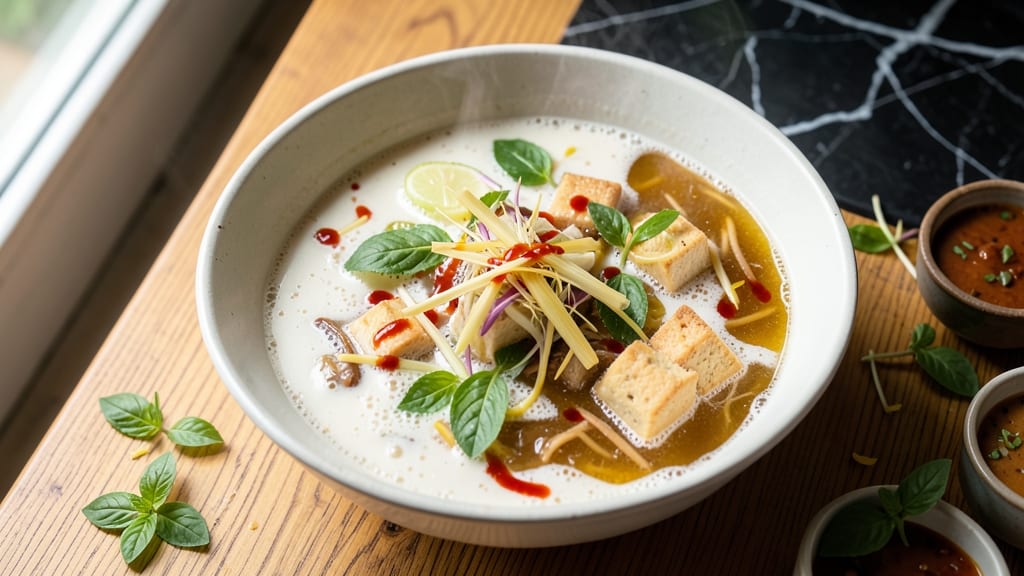
This authentic Thai tom kha soup recipe delivers the perfect balance of coconut creaminess, tangy lime, and spicy kick—all in just 30 minutes. The secret lies in simmering aromatic galangal, lemongrass, and kaffir lime leaves to create a fragrant broth that forms the soul of this dish.
Unlike many vegetarian adaptations, this version stays true to traditional flavors while using tofu or mushrooms as protein substitutes.
The magic happens when you bloom the spices in coconut milk, allowing their natural oils to infuse before adding the broth. A splash of lime juice brightens the dish, while a touch of chili paste adds subtle heat—never overpowering, just enough to wake up your palate.
The result is a velvety, aromatic soup that’s rich yet light, creamy yet refreshing.
What makes this recipe truly special is the attention to texture—silky coconut broth, tender tofu or mushrooms, and fresh herbs that add a final burst of freshness. Every spoonful delivers layers of flavor: the earthy warmth of galangal, the citrusy tang of lime, and the creamy depth of coconut.
It’s the kind of soup that feels like a warm embrace on a chilly day.
Perfect for a cozy weeknight dinner or a special meal with friends, this tom kha soup is as comforting as it is impressive. The best part? It’s easier to make than you think, with no shortcuts that compromise authenticity. Let’s get cooking!
Ingredients for authentic thai tom kha soup
Creamy coconut, zesty lime, and aromatic galangal—this soup delivers restaurant-quality harmony in 30 minutes.
| Ingredient | Amount | Notes |
|---|---|---|
| Coconut Milk (Full-Fat) 🥥 | 1 ½ cups | Canned, unsweetened preferred |
| Vegetable Broth 💧 | 3 cups | Homemade or quality store-bought |
| Fresh Galangal 🌿 | 3 inches | Peeled, sliced thin (about 2 oz) |
| Stems Lemongrass 🌿 | 3 whole | Bruised, cut into 2-inch pieces |
| Kaffir Lime Leaves 🍋 | 4 whole | Torn into strips (or 2 tbsp dried) |
| Extra-Firm Tofu 🍄 | 1 lb | Pressed, cubed (or mushrooms) |
| Red Curry Paste 🌶️ | 1 ½ tbsp | Mild or medium heat preferred |
| Fish Sauce (Vegetarian Substitute) 🥢 | 1 ½ tbsp | Soy sauce or coconut aminos |
| Lime Juice 🍋 | ¼ cup | Freshly squeezed, about 2 limes |
| Thai Chili Paste 🔥 | 1 tbsp | Adjust for spice preference |
| Fresh Ginger 🌿 | 1 inch | Peeled, sliced thin |
| Fresh Cilantro 🌿 | ¼ cup | Chopped, for garnish |
| Fresh Thai Basil 🌿 | 0.15 cup | Or regular basil in a pinch |
| Palm Sugar (or Brown Sugar) 🍯 | 1 tbsp | Dissolved in warm water |
| Vegetable Oil 🫒 | 1 tbsp | For blooming spices |
Galangal is the soul of this soup—it's that earthy, citrusy root that gives tom kha its signature depth. Asian markets usually carry it fresh, but if you can't find it, ginger is a decent substitute (though not identical). Look for firm, aromatic pieces with no mold. The lemongrass and kaffir lime leaves? Bruise them gently before adding to release their oils. I always grab extra because they make the broth smell like a Thai kitchen. For the tofu, press it for 20 minutes to remove excess water—trust me, it makes all the difference.
No fish sauce? Coconut aminos or soy sauce work in a pinch, though the flavor won't be identical. The curry paste is non-negotiable—Maesri or Mae Ploy are my go-tos, but any good-quality Thai brand works. Short on galangal? Double the ginger and add a pinch of turmeric for color. The lime juice should be fresh—bottled just won't cut it. For a smoother soup, blend a portion of the cooked broth before adding it back. And if you're using mushrooms, shiitake or oyster add the most umami punch.
This soup tastes even better the next day—honestly, the flavors meld into pure comfort. Store leftovers in an airtight container for 4-5 days in the fridge. Freezes beautifully for 3 months, though the tofu might get a bit mushy. I always make a double batch because it disappears fast. Garnish with cilantro and Thai basil right before serving—they add that final fresh pop of flavor. And if you've got any leftover broth, use it for rice or noodles the next day.
Why You'll Love This Recipe
- No-Chop Necessary: This soup is my lazy-day hero—the galangal and lemongrass just need rough chopping (or even smashing with a knife), and the broth does the rest. Between us, I’ve made it after work with takeout containers still on the counter.
- Creamy-Spicy Magic: That first sip of coconut milk and galangal heat? It’s like a hug for your taste buds. The kaffir lime leaves add this bright, citrusy whisper that makes every spoonful feel like a little vacation.
- Double-Duty Soup: Make a big batch—it’s just as good reheated for lunch as it is fresh for dinner. Honestly, I’ve turned it into a curry by adding chickpeas, or a quick breakfast by tossing in tofu and chili. Versatile doesn’t even begin to cover it.
- Budget-Friendly Luxury: Full-fat coconut milk makes it feel special, but the rest of the ingredients are pantry staples or cheap to find. I’ve made this for under $10 and still felt like I ordered takeout. Plus, leftovers taste better the next day—yes, really.
Step-by-step instructions for authentic Thai tom kha soup
This vibrant coconut-lime soup delivers restaurant-quality Thai flavors in your kitchen—let's make it together!
Bloom the Aromatics in Vegetable Oil
Heat the 1 tablespoon vegetable oil in a large pot over medium heat. Add the 3 inches fresh galangal (sliced thin) and 1 inch fresh ginger (sliced thin), cooking for 2-3 minutes until fragrant and the galangal releases its citrusy aroma. Galangal has a peppery kick similar to ginger but more complex—don't skip this step, as it's the soul of the soup.
Next, add the 3 whole stems lemongrass (bruised and cut into 2-inch pieces) and 4 whole kaffir lime leaves (torn into strips). Cook for another 1 minute until the lemongrass softens slightly. These aromatics infuse the oil with their signature citrusy, floral notes—this is where the soup's authentic character begins to develop.
Add Curry Paste and Build the Flavor Base
Stir in the 1.5 tablespoons red curry paste and cook for 1-2 minutes until it darkens slightly and becomes deeply fragrant. The paste contains dried chili peppers, lemongrass, galangal, and other spices—this is the flavor backbone of the soup. If using a vegetarian substitute for fish sauce, add it now along with the curry paste.
Pour in the 3 cups vegetable broth and bring to a gentle simmer. Add the 1 tablespoon palm sugar (dissolved in a splash of warm water) and 1 tablespoon Thai chili paste. Let the broth simmer for 5 minutes to allow the flavors to meld together. The sugar should dissolve completely, balancing the heat and acidity of the chili paste.
Incorporate the Coconut Milk and Tofu
Reduce the heat to low and gradually whisk in the 1.5 cups coconut milk (full-fat) to prevent curdling. Add the 1 lb extra-firm tofu (pressed and cubed) and simmer gently for 5-7 minutes until the tofu is heated through. The coconut milk should create a velvety texture, but don't let it boil—this keeps the soup smooth and prevents separation.
Here's the thing—adding the coconut milk too quickly can cause it to split. Whisk it in slowly, a little at a time, while stirring constantly. The soup should have a rich, creamy consistency with a beautiful golden hue from the coconut and spices.
Finish with Lime Juice and Fresh Herbs
Remove the pot from heat and stir in the 0.25 cup lime juice (freshly squeezed). The acidity brightens all the flavors and cuts through the richness of the coconut milk. Taste and adjust seasoning with additional fish sauce (or vegetarian substitute) if needed—the soup should balance sweet, sour, spicy, and umami flavors.
Let the soup rest for 2-3 minutes to allow the lime juice to fully integrate. Then, divide among bowls and garnish with 0.25 cup fresh cilantro and 0.15 cup fresh Thai basil. The herbs add freshness and a pop of color, making the soup visually stunning and irresistibly aromatic.
Serve Immediately with Crispy Accompaniments
Serve the soup hot, accompanied by steamed jasmine rice and crispy fried shallots or garlic chips for texture contrast. The combination of creamy coconut, tangy lime, spicy chili, and fresh herbs creates a harmonious balance that's quintessentially Thai. Each spoonful should deliver a symphony of flavors—sweet, sour, spicy, and umami all in one bite.
For an extra touch of authenticity, serve with a side of Thai cucumber salad or pickled mustard greens to cleanse the palate between bites. This soup is best enjoyed fresh, so don't wait—dig in while it's still steaming!
Pro Tips For Making Authentic Thai Tom Kha Soup
- Bruise the Galangal: Run the fresh galangal root over a cutting board with the flat side of your knife a few times before slicing—this releases its oils and makes the soup sing. I used to just chop it, and the flavor was always half as strong. (Yes, even if you’re impatient like me.)
- Simmer Slow and Low: After adding the coconut milk, drop the heat to a bare simmer and let it cook uncovered for at least 15 minutes. Skipping this step leaves the broth thin and the coconut flavor underdeveloped. Sounds weird, but it works: the milk thickens just enough to coat the back of a spoon.
- Toast the Lemongrass First: Lightly char the lemongrass stems over a gas flame (or under a broiler for 2 minutes) before adding them to the pot. The smoky edge cuts through the coconut richness and adds depth—my grandmother swore by this, and she was right: it’s the thing that matters most when you want restaurant-level flavor.
- Strain the Broth: After simmering the broth with galangal, lemongrass, and kaffir lime leaves, strain it through a fine-mesh sieve before mixing in the coconut milk. This removes bitter fibers and gives you a silky base. I skip this when I’m lazy, but the dish is noticeably better when I don’t. (Your future self will thank you.)
Essential equipment for this recipe
Wok for Aromatics
Start with a 14-inch carbon steel wok—it’s the gold standard for Thai cooking because it heats evenly and develops a natural nonstick patina over time. I swear by Made In woks (their 14-inch model is perfect) because they’re affordable and durable.
If you don’t have one, a heavy-bottomed stainless steel pot works in a pinch, but it won’t caramelize the spices as beautifully. 🔥
Immersion Blender
An immersion blender is a game-changer for achieving that ultra-smooth coconut broth without curdling. I use the Ninja MN1901—it’s powerful enough to blend hot liquids and easy to clean.
If you’re blending by hand, use a regular blender but let the soup cool slightly first to avoid splattering. Never boil coconut milk, or it’ll separate.
Fine-Mesh Strainer
After simmering the aromatics, you’ll need a fine-mesh strainer to remove the galangal, lemongrass, and lime leaves while keeping the fragrant broth. The OXO Good Grips strainer is my go-to—it’s sturdy and has a comfortable handle.
If you’re in a hurry, you can also use a cheesecloth, but it’s messier and harder to clean. 💫
Kaffir Lime Leaves
Fresh kaffir lime leaves are essential for that authentic Thai aroma, but they can be tricky to find. If you’re buying them dried, look for Asian markets that sell them whole—H Mart or 99 Ranch usually carry them.
Store fresh leaves in the fridge for up to 2 weeks or freeze them for 3 months. Never skip them—they’re the secret to that floral, citrusy depth in tom kha.
Measuring Spoons Set
Thai cooking relies on precise measurements for balance, so a high-quality measuring spoon set is a must. I recommend the OXO Good Grips set—they’re easy to read and made from durable stainless steel.
For this recipe, you’ll need accurate measurements for the red curry paste, Thai chili paste, and fish sauce (or substitute). A pinch too much chili paste can overpower the dish, while too little won’t deliver that signature kick.
Tongs for Garnishing
When it’s time to plate, kitchen tongs make garnishing effortless. I use OXO Good Grips tongs—they’re comfortable and have a secure grip. Hold the tongs over the bowl and sprinkle cilantro and Thai basil evenly so every spoonful gets that fresh, herby finish.
A quick shake of the tongs ensures no clumps, and you can even use them to add crispy fried shallots for extra texture. ✨
Nutrition facts
Frequently asked questions
Can I make this soup without galangal?
Yes, but the flavor will be different. Galangal gives tom kha its signature citrusy, peppery depth. Use a combination of extra ginger (1.5 inches) and a pinch of turmeric (1/4 teaspoon) for color and warmth. For best results, toast the ginger first to enhance its flavor.
How do I prevent the coconut milk from curdling?
Add the coconut milk slowly while stirring constantly on low heat. Never let it boil—keep it at a gentle simmer. If it starts to separate, whisk in 1 tablespoon cornstarch mixed with water to stabilize it. The key is patience and gentle heat!
Can I use chicken instead of tofu?
Replace the tofu with 1 lb boneless chicken breast or thigh, cut into bite-sized pieces. Simmer for 10-12 minutes until fully cooked. For extra flavor, marinate the chicken in 1 tablespoon fish sauce and 1 teaspoon lime juice for 15 minutes before adding to the soup.
What makes this soup different from tom yum?
Tom kha is creamy (coconut milk) and tangy (lime), while tom yum is clear and spicy with a sour kick. Tom kha has galangal and kaffir lime leaves for aroma, while tom yum uses more lemongrass and lime leaf. The coconut milk in tom kha creates a velvety texture that tom yum lacks.
How do I store leftovers?
Store in an airtight container in the fridge for 4-5 days. For longer storage, freeze for up to 3 months. Reheat gently on the stove over low heat, adding a splash of water if needed. The flavors actually improve overnight—it's even more comforting the next day!