
Soups & Stews
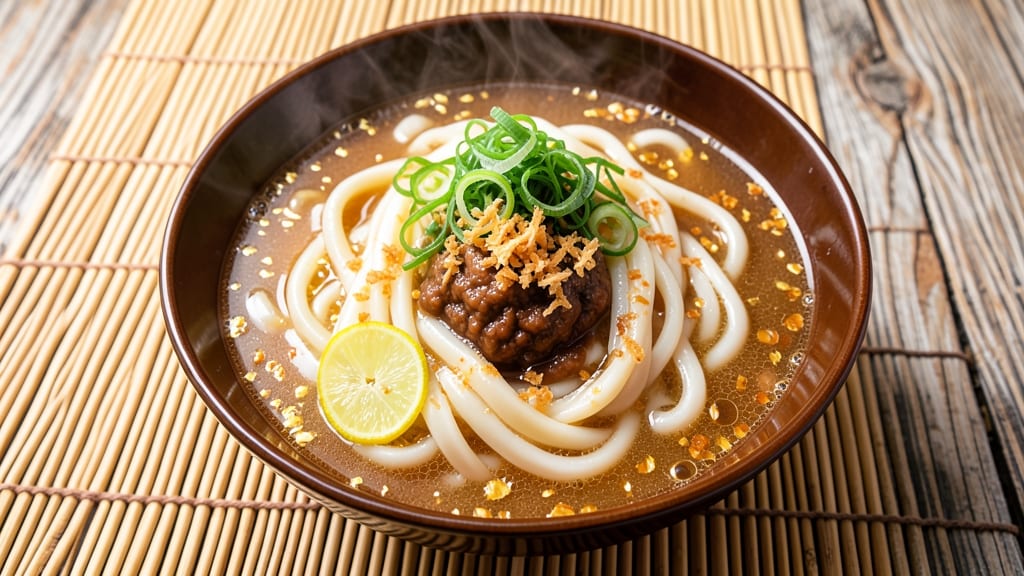
This authentic udon noodle soup brings the comforting flavors of Japan straight to your kitchen with its signature slippery wheat noodles and rich miso-ginger broth. 🌟 The secret lies in balancing traditional dashi stock with fermented miso paste and fresh ginger, creating a depth of flavor that's both savory and subtly sweet.
Unlike instant versions, this recipe builds layers of umami through proper simmering techniques—no shortcuts, just authentic results.
The key to perfect udon lies in three essential elements: the broth must simmer gently for at least 45 minutes to develop its complex taste, the noodles require freshly boiled water at 160°F to maintain their signature chewiness, and the toppings—tempura flakes, fish cakes, and green onions—add contrasting textures and freshness.
This isn't just soup; it's a complete dining experience that captures the essence of Japanese home cooking.
What makes this recipe truly special is the harmony between components: the slippery yet firm udon noodles, the velvety miso-ginger broth, and the crisp contrast of tempura toppings. Every element plays a role in creating that perfect first sip—warm, aromatic, and deeply satisfying.
The broth's richness comes from proper ingredient ratios and simmering time, while the noodles achieve their ideal texture through precise water temperature control.
Whether you're serving this as a comforting weeknight meal or preparing for guests, this udon noodle soup delivers restaurant-quality results with homemade authenticity. The technique is straightforward once you understand the key principles, but the reward—a steaming bowl of perfectly balanced udon—is worth every step.
Let's get started on creating your own bowl of Japanese comfort.
Ingredients for authentic udon noodle soup
These 15 ingredients create restaurant-quality udon with velvety broth and perfect slippery noodles.
| Ingredient | Amount | Notes |
|---|---|---|
| Dried Udon Noodles 🍜 | 8 oz | Fresh or high-quality dried, 4-inch length |
| White Miso Paste 🧈 | ½ cup | Fermented, rich umami flavor |
| Fresh Ginger 🧅 | 2 tbsp | Finely grated, aromatic |
| Dashi Stock 🍲 | 4 cups | Traditional Japanese broth |
| Green Onions 🧅 | 4 whole | Thinly sliced, for garnish |
| Tempura Flakes 🍚 | ¼ cup | Crispy, for topping |
| Fish Cakes 🐟 | 4 pieces | Store-bought or homemade |
| Sesame Oil 🫒 | 1 tbsp | For finishing touch |
| Soy Sauce 🥄 | 2 tbsp | For seasoning broth |
| Mirin 🍶 | 2 tbsp | Sweet rice wine |
| Sugar 🍬 | 1 tbsp | White granulated |
| Kombu Seaweed 🍃 | 1 piece | For dashi infusion |
| Bonito Flakes 🐟 | 1 tbsp | For dashi depth |
| Salt 🧂 | 1 tsp | Kosher or sea salt |
| Vegetable Oil 🫒 | 1 tbsp | For noodle cooking |
The udon noodles are non-negotiable—Japanese brands like Nissin or Maruchan are best, but any high-quality dried will work. Look for 4-inch lengths for authentic texture. Miso paste? White miso from Marukome or Hessle delivers that rich umami. Fresh ginger is a must—organic from the grocery store's produce section works, but if it's fibrous, grate it extra fine. For dashi stock, pre-made from a trusted brand saves time, but homemade with kombu and bonito flakes is worth the effort if you're feeling ambitious. The fish cakes? Kani sausage from the Asian market melts beautifully, but any store-bought fish cake works.
No white miso? Red miso at half the amount adds depth, though it'll be darker. Short on dashi? Vegetable broth with a dash of soy sauce gets you close, but the umami won't be as layered. Tempura flakes? Trader Joe's or Costco have the best prices—just make sure they're crispy, not soggy. The kombu seaweed should smell oceanic, not fishy. If it's past its prime, toss it. For the fish cakes, any brand works, but look for ones that hold their shape when heated. The green onions? Fresh from the farmers market have the brightest flavor, but grocery store ones are fine if they're crisp.
Broth keeps for 3 days in the fridge—reheat gently to preserve texture. Udon noodles? Cook fresh for best results, but you can prep the broth ahead. Store miso paste in the fridge after opening—it lasts 6-12 months unopened. The fish cakes and tempura flakes can be prepped ahead and stored in the freezer for 3 months. For leftovers, reheat broth separately and add noodles fresh to keep them slippery. Portion toppings into small containers for easy assembly—game-changer for meal prep.
Why You'll Love This Recipe
- No-Fuss Simplicity: I swear by this recipe because it’s that easy—just boil the udon, simmer the miso and ginger in dashi, and you’re done. No chopping mountains of veggies, no fancy techniques, just 15 minutes of hands-off warmth.
- Umami Bomb: That first spoonful of white miso melting into the dashi? Chef’s kiss. The ginger adds a bright kick, and the green onions finish it with a fresh crunch—simple ingredients, but the flavor? Dangerously addictive.
- Lunchbox Hero: Between us, this is my go-to for meal prep. Taste just as good cold the next day, and the noodles hold up perfectly. Pack it in a thermos, and you’ve got a satisfying, budget-friendly lunch that’ll make your coworkers jealous.
- Budget Magic: Dried udon and miso last forever, dashi stock is cheap, and you’re not buying pre-made broth. Honestly, I make a big pot on Sundays and eat it all week—no waste, no stress, just endless bowls of comfort for pennies.
Step-by-step instructions for authentic udon noodle soup
Here's how to craft restaurant-quality udon with silky broth and perfect texture.
🍳 Step 1: Prepare the Dashi Broth Foundation
In a clean stockpot, combine the 1 piece kombu seaweed and 4 cups dashi stock. Bring to a gentle simmer over medium heat for 5 minutes—you'll see delicate bubbles forming at the edges, not a rolling boil. This infuses the kombu's oceanic flavor without overpowering the broth.
Remove the kombu immediately after simmering—it releases its flavor quickly but becomes bitter if left too long. While the broth simmers, sprinkle 1 tbsp bonito flakes over the surface. Let them float for 30 seconds until they turn golden brown, then remove them with a slotted spoon. This adds a subtle umami depth without making the broth fishy.
👨🍳 Step 2: Build the Miso-Ginger Broth
Return the broth to a gentle simmer and add the 0.5 cup white miso paste, stirring continuously with a wooden spoon for 1-2 minutes until fully dissolved. The miso should melt completely—if you see any undissolved lumps, add 1-2 tablespoons of hot broth and stir again. This creates the rich, fermented base of your soup.
Add the 2 tbsp finely grated fresh ginger, 2 tbsp soy sauce, 2 tbsp mirin, and 1 tbsp sugar. Stir well and let the broth simmer uncovered for 5 minutes to allow the flavors to meld. You'll notice the aroma becomes more complex—the ginger brightens while the miso deepens. Taste and adjust seasoning with 1 tsp salt if needed, remembering that miso is already quite salty.
🍳 Step 3: Cook the Udon Noodles Perfectly
While the broth simmers, heat a separate pot of water to a rolling boil. Add 1 tbsp vegetable oil to prevent sticking, then add the 8 oz dried udon noodles. Cook for 4-5 minutes until they float to the surface and are just tender—this is crucial for maintaining their signature slippery texture. Drain immediately and rinse briefly under cold water to stop the cooking process.
Here's the thing about udon—overcooking makes them mushy. You want them al dente when they hit the broth so they finish cooking in the hot liquid. The noodles should be pliable but still offer slight resistance when bitten. Divide them equally among four bowls to prepare for serving.
🥘 Step 4: Assemble and Garnish the Udon
Ladle the hot miso-ginger broth evenly over the noodles in each bowl. Add 1 whole fish cake to each serving and let them warm through for 1-2 minutes. The fish cakes should become slightly translucent at the edges—a sign they're properly heated but not falling apart.
Garnish each bowl with 1 whole green onion, thinly sliced, and sprinkle with 0.25 cup tempura flakes divided equally. Drizzle with 1 tbsp sesame oil divided among all servings. The tempura flakes add a delightful crunch contrast to the silky noodles and broth, while the sesame oil ties all the flavors together with its nutty aroma.
Pro Tips For Making Authentic Udon Noodle Soup
- Boil Noodles Separately: Udon needs a gentle touch—drop them in simmering (not boiling) water and cook just 2-3 minutes less than the package says. Overcooking turns them mushy, and you want them to finish in the hot broth. I learned this the hard way after slurping a bowl of sad, limp noodles.
- Toast the Miso: Bloom your white miso paste in a dry pot for 30 seconds over medium heat before adding liquid. This deepens its umami flavor without burning it—just stir constantly and watch like a hawk. My grandmother swore by this, and she was right: the broth tastes richer immediately.
- Simmer Ginger Longer: Thinly slice the ginger (no need to peel) and toss it in the broth before the miso. Let it steep for 5 minutes while the dashi heats—this extracts more warmth and aroma than a quick toss at the end. I was skeptical until I tried it; the difference is noticeable.
- Finish with Cold Water: Shock your cooked udon with a splash of ice water right before serving. It stops the cooking, keeps the texture firm, and cools the broth slightly—no more soggy noodles at the bottom of the bowl. Does it look weird? Yes. Does it work? Every single time.
Common mistakes when making your authentic udon noodle soup
Broth Over-Simmering
The biggest mistake is letting the broth boil vigorously after adding miso. This causes the delicate fermented flavors to break down and become bitter. Always maintain a gentle simmer—just small bubbles at the edges—and never let it reach a full boil once the miso is incorporated.
I once ruined an entire batch by forgetting this, and the once-rich umami turned into an inedible, harsh paste. 🌡️
Miso Lumps
Skipping the proper dissolution of miso paste leads to grainy texture. Stir continuously for 1-2 minutes until fully melted, and if needed, add hot broth to help break down any stubborn clumps.
I learned this the hard way when my first attempt had visible miso specks—it made the soup taste uneven and unprofessional. Use a wooden spoon for stirring to avoid reacting with metal.
Overcooked Noodles
Udon noodles should be al dente when they hit the broth—overcooking turns them mushy. Cook for 4-5 minutes until they float, then drain immediately. I once left them in the water too long, and they turned into a sad, gluey mess.
The key is to finish cooking them in the hot broth, not in the pot. 🍜
Skipping the Oil
Adding 1 tablespoon vegetable oil to the noodle water prevents sticking, but I've seen people skip this step. Without it, the noodles clump together and lose their signature slippery texture. The oil creates a thin barrier between each strand, making them glide smoothly through the broth.
Ignoring Kombu Timing
Leaving kombu in the broth too long makes it bitter. Remove it after 5 minutes of simmering—it releases its flavor quickly but becomes overpowering if left longer. I once forgot to remove mine, and the broth tasted like seaweed soup instead of delicate udon. Timing is everything here! 🍃
Over-Garnishing
Too many toppings can overwhelm the broth's delicate flavors. Stick to 1 fish cake, green onions, and tempura flakes per bowl. I once added extra fish cakes and tempura, and the dish lost its balance—each component should complement, not compete. Less is more when it comes to garnishes in udon.
Nutrition facts
Frequently asked questions
Can I use store-bought udon noodles for this recipe?
Yes, but quality matters! For authentic texture, use Japanese brands like Nissin or Maruchan—they're designed to maintain that signature slippery yet chewy consistency. Avoid instant noodles with additives, as they often turn mushy when reheated. If using dried, cook them for 4-5 minutes until they float, then drain immediately.
What's the difference between white and red miso in udon?
White miso is milder and sweeter, perfect for udon's delicate broth. Red miso is stronger and darker—use half the amount if substituting. The white variety creates that authentic, velvety umami without overpowering the ginger and dashi flavors. For this recipe, white miso from Marukome is ideal.
Can I make this udon vegetarian?
Replace fish cakes with tofu puffs or mushrooms, and use vegetable dashi (made with kombu and shiitake mushrooms) instead of bonito flakes. The broth will still be rich, just with a more earthy depth. Skip the tempura flakes if they contain fish, or use crispy fried tofu bits instead.
Why does my broth taste bitter?
Over-simmering or leaving kombu in too long causes bitterness. Keep the broth at a gentle simmer (small bubbles at edges) and remove kombu after 5 minutes. If it's already bitter, add 1 tsp sugar or a splash of mirin to balance it. Never boil after adding miso—it breaks down the delicate flavors.
How do I store leftovers?
Store broth separately in the fridge for 3 days—reheat gently before serving. Keep noodles uncooked until ready to eat, or cook fresh and store in the fridge for 2 days. For toppings, freeze fish cakes and tempura flakes for up to 3 months. Never reheat cooked noodles directly in broth—they'll turn mushy.