
Soups & Stews
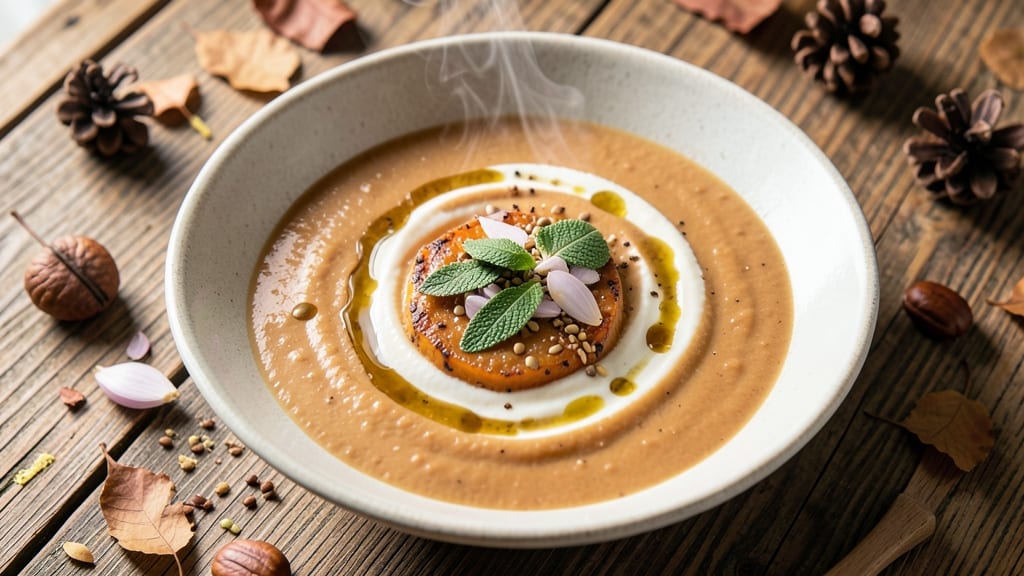
This autumn butternut squash soup recipe transforms humble ingredients into a velvety masterpiece with warm spices and satisfying crunch. The secret lies in slow-roasting the squash for natural sweetness, then blending it with aromatic broth and a touch of coconut milk for luscious depth. What begins as a simple vegetable becomes a comforting bowl that tastes like fall in every spoonful.
The recipe unfolds in four straightforward steps: roast, sauté, simmer, and blend—no specialized equipment required. A toasted spice blend of cinnamon, nutmeg, and smoked paprika infuses the soup with autumnal warmth, while crispy pumpkin seeds on top add texture that elevates it from ordinary to extraordinary.
The result is a soup that’s rich yet light, hearty yet balanced—perfect for chilly evenings or cozy gatherings.
What makes this recipe truly special is its versatility. Swap apple cider for broth, stir in coconut milk for extra creaminess, or garnish with fresh sage for an herbal note.
Each bowl delivers that perfect harmony of sweet, savory, and spiced flavors, making it a crowd-pleaser that feels both rustic and refined. The instructions are designed to guide beginners through every stage with confidence.
Serve it warm with crusty bread to soak up every last drop, or let it cool slightly for a refreshing lunch option. The aroma alone will fill your kitchen with the essence of autumn, proving that the best comfort foods often require the least effort.
Ready to create this soup that tastes like a hug in a bowl?
Ingredients for autumn butternut squash soup
Warm spices, roasted squash, and creamy coconut milk—this soup is fall in a bowl.
| Ingredient | Amount | Notes |
|---|---|---|
| Medium Butternut Squash 🎃 | 2 lb | Peeled, seeded, cubed (1.5-inch pieces) |
| Extra-Virgin Olive Oil 🫒 | ¼ cup | For roasting squash and sautéing |
| Yellow Onion 🧅 | 1 whole | Diced, medium size |
| Garlic Cloves 🧄 | 3 cloves | Peeled, roughly chopped |
| Vegetable Broth 💧 | 4 cups | Low-sodium preferred |
| Full-Fat Coconut Milk 🥥 | ½ cup | For velvety richness |
| Ground Cinnamon 🌶️ | ½ tsp | Toasted for deeper aroma |
| Ground Nutmeg 🌶️ | ¼ tsp | Freshly grated preferred |
| Smoked Paprika 🌶️ | ½ tsp | For smoky depth |
| Pumpkin Seeds 🥜 | ¼ cup | Raw, for toasting |
| Fresh Sage Leaves 🌿 | ¼ cup | Chopped, optional garnish |
| Salt 🧂 | 1 tsp | Kosher or sea salt |
| Black Pepper 🌶️ | ½ tsp | Freshly ground |
| Apple Cider Vinegar 🍎 | 1 tbsp | For brightness (optional) |
The squash is the star, so grab a medium-sized one—about 2 pounds—with smooth skin and no soft spots. Trader Joe's and Whole Foods usually carry perfect ones, but any grocery store will do. Toasting the spices in the olive oil before adding them to the soup? Game-changer—it deepens their flavor and fills your kitchen with that cozy autumn aroma. If you can't find full-fat coconut milk, light works too, but you'll lose some of that luscious creaminess. And for the seeds? Pepitas from the bulk section are cheaper and just as tasty.
No smoked paprika? Regular paprika plus a pinch of liquid smoke works in a pinch. Fresh sage is ideal, but dried works at half the amount. The apple cider vinegar adds that perfect tang—skip it if you're short on time, but trust me, it balances the sweetness. For extra richness, stir in 2 tablespoons of tahini at the end. Want more crunch? Toast extra pumpkin seeds in a dry pan until golden and sprinkle on top. The broth can be homemade or store-bought—just make sure it's low-sodium so you control the seasoning.
Roasted squash keeps in the fridge for 5 days if stored in an airtight container. The soup reheats beautifully—just add a splash of broth or water if it thickens. For make-ahead prep, roast the squash and toast the seeds a day ahead, then blend everything fresh. The seeds stay crispy for 2 days if stored in a sealed container. Freeze portions for up to 3 months—thaw overnight in the fridge and stir in extra broth if needed. Nothing beats this soup straight from the pot with warm bread, though.
Why You'll Love This Recipe
- Here’s what sold me: the caramelized squash edges after roasting—crispy like a toasted marshmallow—then blending into velvety smoothness. That contrast? It’s the reason I always save the best squash for this. (Yes, even on a Tuesday night.)
- Fewer Ingredients, Same Magic: I swear by this recipe because it’s that simple—just squash, onion, garlic, broth, and olive oil. No fancy pantry items, no last-minute grocery runs. Honestly, the first time I made it, I used whatever was in my fridge and still got a bowl that made my roommate pause mid-sentence.
- Roasted Edge, Creamy Heart: Here’s what sold me: the caramelized squash edges after roasting—crispy like a toasted marshmallow—then blending into velvety smoothness. That contrast? It’s the reason I always save the best squash for this. (Yes, even on a Tuesday night.)
- Leftovers That Don’t Suck: Between us, most soups turn into sad, watery meals by day three. Not this one. The flavors deepen overnight, and I’ve reheated portions for days—still rich, still satisfying. Pro tip: Freeze half for when you’re too tired to cook.
Step-by-step instructions for autumn butternut squash soup
Here's how to create a soup that's rich, spiced to perfection, and topped with irresistible crunch.
🍳 Step 1: Roast the Squash Until Caramelized
Preheat your oven to 400°F and line a baking sheet with parchment paper. Toss the 2 lb medium butternut squash cubes with 1 tablespoon of the extra-virgin olive oil and ½ teaspoon salt. Spread them in a single layer, leaving space between pieces for even browning.
Roast for 25-30 minutes, stirring halfway through, until the edges are deep golden brown and the squash yields slightly when pressed with a fork. The caramelization here develops that sweet, nutty depth that makes this soup extraordinary. Don't skip this step—raw squash will make your soup watery and bland.
🍳 Step 2: Sauté Aromatics for Flavor Foundation
While the squash roasts, heat the remaining ¼ cup extra-virgin olive oil in a large pot over medium heat. Add the diced yellow onion and cook for 5-6 minutes until soft and translucent, stirring occasionally. Add the 3 peeled garlic cloves and cook for another 30 seconds until fragrant.
Here's where the magic begins: sprinkle in the ½ teaspoon smoked paprika, ½ teaspoon ground cinnamon, and ¼ teaspoon ground nutmeg. Stir constantly for 30 seconds until the spices release their aromas. This toasting step intensifies their flavors—don't rush it. The spices should smell warm, earthy, and just slightly sweet.
🥘 Step 3: Build the Soup Base
Pour in the 4 cups vegetable broth and bring to a gentle boil. Add the roasted squash, reduce heat to medium-low, and simmer for 15 minutes until the squash is completely tender and the flavors meld together. Use an immersion blender to purée until completely smooth, or carefully transfer to a blender in batches (don't fill beyond ⅔ capacity).
Return the puréed soup to the pot and stir in the ½ cup full-fat coconut milk. The coconut milk adds incredible creaminess without making the soup heavy. Taste and adjust seasoning with additional salt and black pepper as needed. The soup should be rich but not overpowering—balance is key here. If it's too thick, whisk in 1-2 tablespoons water to reach your desired consistency.
🔥 Step 4: Toast the Pumpkin Seeds and Finish
While the soup simmers, toast the ¼ cup pumpkin seeds in a dry skillet over medium heat for 3-4 minutes, stirring constantly, until they're golden brown and fragrant. Watch them closely—they burn quickly. Immediately transfer to a plate to cool.
For the final touch, stir the 1 tablespoon apple cider vinegar into the soup. This brightens the flavors and cuts through the richness of the coconut milk. Taste again and adjust seasoning one last time. The vinegar should add just a hint of tang—enough to make your taste buds dance, but not enough to overpower the sweet squash.
🍽️ Step 5: Serve with Crunch and Freshness
Ladle the soup into bowls and top each serving with 1 tablespoon toasted pumpkin seeds and a sprinkle of chopped fresh sage leaves. The seeds add a satisfying crunch that contrasts beautifully with the velvety soup, while the sage brings a fresh, herbal note that brightens the dish.
Serve immediately with crusty bread or a simple green salad. The contrast of textures and temperatures—warm soup, cool seeds, and crisp greens—makes this a truly satisfying autumn meal. Each spoonful delivers that perfect balance of sweet squash, warm spices, and creamy richness that defines fall flavors.
Pro Tips For Making Autumn Butternut Squash Soup
- Char the Onion First: I learned this the hard way—sautéing onions low and slow makes the soup taste like it’s missing something. Crank the heat to medium-high and let them brown for 5-6 minutes until they’re deep golden, not just translucent. That caramelization builds flavor that cuts through the sweetness of the squash.
- Cut Squash in Even Chunks: Skip the peeling if you’re in a hurry, but do cut the squash into 1.5-inch cubes—no smaller, no larger. Smaller pieces turn to mush; bigger ones stay stubbornly undercooked. Roasting or boiling them this size guarantees a silky texture without waiting forever.
- Salt the Broth Early: Add a pinch of salt to the vegetable broth while it heats up—yes, even if it’s labeled "low-sodium." It evens out the flavor before the squash absorbs it, so you’re not left guessing if the soup needs more seasoning later. Trust me, your taste buds will notice.
- Blend in Stages: Don’t dump everything into the blender at once—you’ll end up with a gloppy mess. First, blend the roasted squash and broth until smooth, then add the sautéed onions and garlic. Pulse until just combined, leaving a few tiny lumps if you like texture. This keeps the soup from turning into wallpaper paste.
Troubleshooting great autumn butternut squash soup
Grainy Texture Fix
If your soup turns out grainy after blending, it’s likely because the squash wasn’t fully broken down. For next time, roast the squash slightly longer (up to 35 minutes) until it’s very soft, or simmer it in broth for an extra 5-10 minutes before blending.
If it’s already made, blend again in smaller batches with 1-2 tablespoons of broth to help emulsify the mixture. 💫
Overly Thick Soup
Thick soup happens when the coconut milk or broth reduces too much. To fix it, whisk in 2-3 tablespoons of hot broth or water while stirring constantly. For a smoother texture, strain the soup through a fine-mesh sieve after blending.
If you prefer it thicker, simmer uncovered for 5-10 minutes to evaporate excess liquid. Always taste as you go—adjust gradually!
Spices Too Mild
If your spices feel underwhelming, toast them longer in the oil (1-2 minutes) until they’re deeply fragrant. For extra warmth, add a pinch of ground cloves or cardamom to the spice blend.
If the soup is already made, sprinkle a pinch of cayenne pepper or a dash of hot sauce on top to add heat without altering the base flavor. 🌶️
Burnt Squash
Burnt squash happens when it roasts too long or at too high a temperature. To prevent this, rotate the baking sheet halfway and check at 25 minutes. If it’s already burnt, trim off the blackened edges before blending.
For future batches, reduce the oven temp to 375°F and roast for 30 minutes for even cooking. A light char adds flavor, but burnt bits make the soup bitter.
Lack of Depth
If your soup tastes flat, it might need more umami or acidity. Stir in 1 teaspoon of soy sauce or 1 tablespoon of miso paste for depth, or add ½ teaspoon of fish sauce (if vegetarian, use vegetable bouillon).
A splash of apple cider vinegar or lemon juice brightens the flavors. For richness, whisk in 1 tablespoon of tahini or a dollop of Greek yogurt before serving.
Seeds Not Crispy
If your pumpkin seeds turn out soft or oily, they were likely toasted at too low a heat. Next time, use medium-high heat and stir constantly for 3-4 minutes until golden. For extra crispiness, spread them on a baking sheet and bake at 350°F for 8-10 minutes.
Store toasted seeds in an airtight container to keep them crisp for up to 3 days. 🥜
Nutrition facts
Frequently asked questions
Can I substitute regular squash for butternut?
Butternut squash is ideal for its natural sweetness, but you can use acorn or kabocha squash as substitutes. Avoid pumpkin—it has a different texture and flavor profile. If using a different squash, adjust roasting time by 5-10 minutes to ensure full tenderness before blending.
How do I make this soup vegan?
Replace the coconut milk with full-fat coconut cream or cashew cream (blend soaked cashews with water). Use vegetable broth and omit any dairy-based garnishes like sour cream. The toasted pumpkin seeds and sage still work perfectly!
Can I make this soup ahead of time?
Roast the squash and toast the seeds 1-2 days ahead and store separately in airtight containers. Reheat the soup from scratch (don't reheat blended soup directly) by simmering the roasted squash in fresh broth for 15 minutes, then blending. The seeds stay crispy for 2 days if stored properly.
What's the best way to reheat leftovers?
Reheat gently on the stovetop over low heat for 5-7 minutes, stirring occasionally. If it thickens too much, whisk in 1-2 tablespoons of broth or water. Never microwave directly from the fridge—this can make the soup watery. For best texture, reheat only until warm, then add fresh toasted seeds when serving.
Can I freeze this soup?
Yes, but freeze it unblended for best texture. Portion the roasted squash and broth mixture into freezer bags, leaving 1-inch headspace. Thaw overnight in the fridge and blend fresh. The soup keeps for 3 months frozen. Avoid freezing blended soup—it can become grainy when thawed.