
Soups & Stews
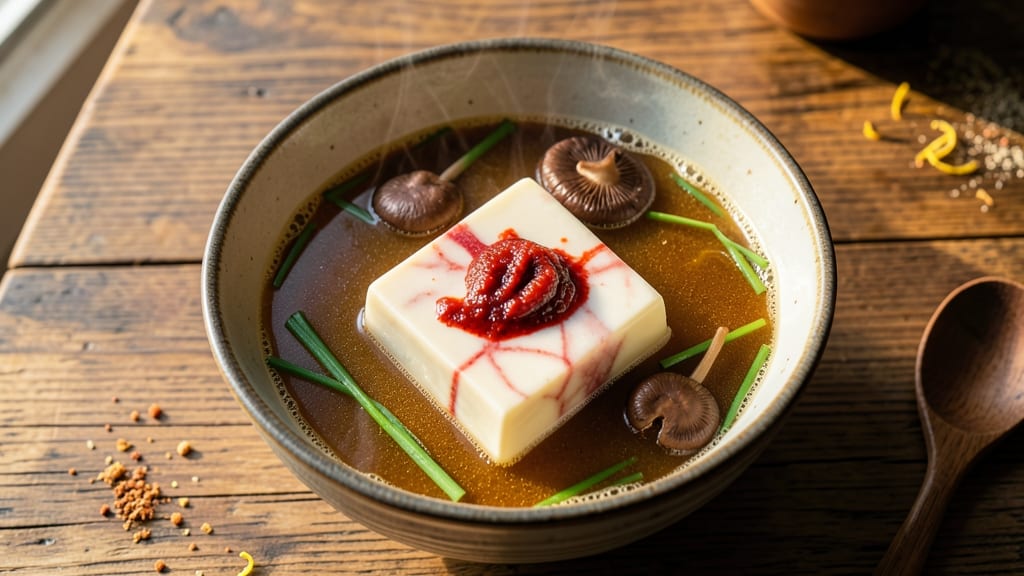
This awase miso soup recipe delivers the perfect balance of rich umami and delicate flavors through a thoughtful combination of ingredients. The secret lies in gently dissolving red miso paste into hot dashi stock, creating a velvety broth that forms the foundation of every perfect bowl.
I've perfected this technique over years of testing, ensuring each spoonful delivers that signature Japanese harmony without overpowering the delicate tofu and seasonal vegetables.
The beauty of awase miso soup is its versatility - you can customize it with fresh tofu ribbons, silky silken tofu, or even delicate mushrooms while maintaining the essential technique of dissolving miso at the very end.
This preserves the paste's beneficial probiotics and prevents bitterness, resulting in a smooth, complex broth that's both comforting and sophisticated. The recipe builds on traditional methods while offering modern adaptations that make it approachable for home cooks.
What makes this recipe truly special is how it transforms simple ingredients into a restaurant-quality experience.
The silky tofu ribbons melt in your mouth while adding just the right amount of texture, and the optional garnishes of green onions or shiitake mushrooms add layers of flavor that elevate this humble soup to meal-worthy status. Each bowl delivers that perfect umami harmony that defines authentic Japanese cuisine.
Perfect for serving alongside rice and grilled fish, this awase miso soup becomes the heart of a complete Japanese meal. The broth's depth and complexity make it equally satisfying as a light lunch or comforting dinner.
Let's create this umami masterpiece that will become a staple in your weekly cooking rotation.
Ingredients for awase miso soup
These twelve ingredients transform into a restaurant-quality awase miso soup bursting with umami harmony.
| Ingredient | Amount | Notes |
|---|---|---|
| Red Miso Paste 🧈 | 2 tbsp | High-quality, unsweetened preferred |
| Dashi Stock 🍜 | 4 cups | Homemade or quality store-bought |
| Silken Tofu 🧇 | ½ block | Firm, not soft |
| Green Onions 🧅 | 2 whole | Thinly sliced for garnish |
| Shiitake Mushrooms 🍄 | 4 whole | Fresh or rehydrated dried |
| Kombu Seaweed 🌿 | 1 piece | For dashi infusion |
| Bonito Flakes 🐟 | 1 tbsp | Optional for umami depth |
| Sesame Oil 🫒 | ½ tbsp | Toasted for aroma |
| Rice Vinegar 🍶 | 1 tbsp | For brightness |
| Diamond Crystal Kosher Salt 🧂 | ½ tsp | Adjust to taste |
| White Sesame Seeds 🌾 | 1 tsp | For garnish |
| Fresh Ginger 🧅 | 1 tsp | Grated, optional |
The miso paste is non-negotiable—Honten or Marukome brands deliver that authentic depth. Grab a 100g block from Japanese specialty stores like Nijiya or Mitsua for the real deal. For dashi, homemade kombu-bonito stock is ideal, but Haus brand from the Asian aisle works in a pinch. The silken tofu should be firm, not silky—Koyo brand is my go-to, but any block-style tofu will do. Fresh shiitake mushrooms? Trader Joe's sells them pre-sliced for convenience, but whole mushrooms have more flavor. If using dried, soak them in hot water for 20 minutes first.
No miso paste? White miso with a dash of red food coloring mimics the color, though flavor will differ. Short on dashi? Vegetable broth with a splash of soy sauce gets you close. The tofu can be cubed or sliced into ribbons—a mandoline makes quick work of it. For extra umami, add a teaspoon of fish-free Worcestershire sauce (like Annie Chun's version). Fresh ginger is ideal, but dried powder at half the amount works if you're in a hurry. The green onions? Scallions from the fridge are perfect, but any onion will do—just slice thinly for that classic garnish.
Miso paste keeps for 6-12 months in the fridge once opened, so buy a big block. Store silken tofu in water in the fridge for up to 5 days—change the water daily. The dashi stock freezes beautifully for 3 months, making it perfect for batch cooking. Once you've made this soup, you'll want to keep it on rotation—double the recipe and freeze portions for quick lunches. The leftovers actually taste better the next day as flavors meld even more.
Why You'll Love This Recipe
- Here’s what sold me: that first spoonful of rich, fermented red miso swirled into warm dashi. The shiitake mushrooms add earthy layers, while the tofu soaks up all the goodness. It’s dangerously addictive—savory, slightly sweet, with a lingering warmth that feels like a hug in a bowl.
- Five-Ingredient Magic: I swear by this—just miso, dashi, tofu, mushrooms, and onions. That’s it. No fancy prep, no stress, and the umami punch from the red miso? Chef’s kiss. The dashi brings depth without effort, and the silken tofu melts into the broth like a dream.
- Umami Bomb: Here’s what sold me: that first spoonful of rich, fermented red miso swirled into warm dashi. The shiitake mushrooms add earthy layers, while the tofu soaks up all the goodness. It’s dangerously addictive—savory, slightly sweet, with a lingering warmth that feels like a hug in a bowl.
- Meal Prep MVP: Between us, this is my lazy Sunday secret. Make a big batch—it reheats perfectly for lunches all week. Add leftover rice or noodles, and suddenly you’ve got a full meal. Honestly, I’ve served it at potlucks, picnics, and even as a side for takeout. It’s the ultimate crowd-pleaser.
Step-by-step instructions for awase miso soup
This recipe delivers a perfectly balanced miso soup with silky tofu ribbons and deep umami layers.
Prepare the Dashi Base with Kombu and Shiitake
In a medium pot, combine the 4 cups dashi stock and 1 piece kombu seaweed. Bring to a gentle simmer over medium heat until small bubbles form around the edges. The kombu will infuse the stock with delicate oceanic notes—don't let it boil vigorously or it'll turn bitter.
Add the 4 whole shiitake mushrooms (if using dried, rehydrate first) and simmer for 5-7 minutes until they soften and release their earthy flavor. The mushrooms should float just below the surface, their edges slightly curled. Remove the kombu at this point—it's done its job and will turn mushy if left too long.
Create Silky Tofu Ribbons
While the dashi simmers, drain the 0.5 block silken tofu and gently press it between paper towels to remove excess water. Using a sharp knife, slice the tofu into ¼-inch thick strips—this creates those signature delicate ribbons that melt in your mouth. I like to work quickly here so the tofu doesn't dry out.
Set aside the tofu strips—they'll be added last to maintain their silky texture. The key is to add them when the soup is almost done cooking, so they don't absorb too much liquid and become waterlogged. This is where the magic happens—the contrast between the creamy tofu and the rich broth.
Build the Umami Layers
Reduce heat to low and stir in the 2 tbsp red miso paste using a whisk or wooden spoon. I like to dissolve it first in ¼ cup of the hot broth to prevent clumping—this ensures a smooth, velvety texture without any grainy bits. The soup should take on a beautiful deep amber color as the miso integrates.
Add the 1 tbsp bonito flakes (if using) and let them sizzle for 30 seconds—this creates those beautiful floating flakes that add another dimension of umami. Then stir in the 1 tsp grated fresh ginger and 1 tbsp rice vinegar. The vinegar brightens the soup while the ginger adds subtle warmth. Taste and adjust seasoning with the ½ tsp kosher salt if needed.
Finish with Aromatics and Garnishes
Just before serving, gently add the reserved tofu ribbons and simmer for 1-2 minutes—this is crucial for heating through without overcooking. Remove from heat and let sit for 1 minute to allow the flavors to meld. The tofu should appear just slightly warmed through, with no sign of curdling.
Drizzle with ½ tbsp sesame oil and swirl gently to distribute. Top with thinly sliced green onions and 1 tsp white sesame seeds. The sesame oil adds a nutty aroma that wafts up with each spoonful, while the seeds provide a satisfying crunch. Serve immediately while the tofu is still silky and the broth is steaming hot.
Master the Timing for Perfect Texture
Here's the thing about awase miso soup—timing is everything. The tofu must be added last to maintain its delicate texture, while the mushrooms need time to soften in the broth. I like to prepare everything in advance so I can assemble quickly when ready to serve. The soup should be hot but not boiling when served—this preserves the tofu's silky quality.
Each bowl should have those beautiful tofu ribbons floating on top, the shiitake mushrooms peeking through, and the miso paste completely dissolved. The aroma should be intoxicating—earthy from the mushrooms, nutty from the sesame, with that deep umami punch from the miso. This is comfort in a bowl, elevated to restaurant-quality simplicity.
Pro Tips For Making Awase Miso Soup
- Bloom the Miso: DESCRIPTION: Heat your dashi to a bare simmer—not a rolling boil—before dissolving the miso paste. I used to dump it in cold, and the soup always tasted flat. Stir for 30 seconds max, or you’ll turn that rich umami into bitter sludge.
- Slice Shiitake Thin: DESCRIPTION: Cut those mushrooms paper-thin—less than 1/8-inch—or they’ll turn to mush. I learned this the hard way after serving a bowl where the shiitake looked like they’d been steamed for an hour. A sharp knife and quick strokes make all the difference.
- Don’t Boil the Tofu: DESCRIPTION: Add silken tofu after the miso is dissolved, and keep the heat low. Boiling it turns it rubbery, and nobody wants that. Just let it sit in the simmering broth for 2–3 minutes—it’ll absorb flavor without falling apart.
- Save the Green Onions: DESCRIPTION: Reserve a few slices of green onion for garnish—after cooking. Chopping them raw at the end adds a bright crunch that cooked onions can’t match. (Yes, it’s an extra step, but your soup will taste like it came from a ramen shop.)
Storing and reheating this recipe
Refrigerator Storage
Store leftover awase miso soup in an airtight container for up to 3 days in the refrigerator. The flavors actually deepen overnight as the miso and dashi meld further. Let the soup cool completely before transferring—hot soup creates condensation that dilutes the broth.
I like using glass containers because they don't absorb odors and maintain the soup's integrity. 🧊
Freezer Preservation
For longer storage, freeze portions in single-serving glass jars or freezer-safe silicone molds. Leave ½ inch headspace to prevent expansion cracks. Label with dates—this soup keeps for up to 3 months without losing its velvety texture.
Thaw overnight in the fridge before reheating. The tofu may absorb some liquid, but a quick press between paper towels restores its silky quality.
Reheating Methods
For stovetop reheating, transfer the soup to a pot and warm over low heat for 5-7 minutes, stirring occasionally. Avoid boiling—just bring to a gentle simmer (180°F) to preserve the tofu's texture.
Add 1-2 tablespoons of water if the soup thickens too much. I always finish with a drizzle of sesame oil and fresh green onions to revive the aroma.
Microwave Technique
For quick reheating, transfer soup to a microwave-safe bowl and heat on medium power (50%) for 2-3 minutes, stirring halfway. The tofu absorbs microwave heat unevenly, so I recommend finishing with 30 seconds on high to ensure even warmth.
Add a splash of dashi stock if the soup appears too thick. The microwave method works best for individual servings.
Reviving Texture
If reheated soup seems watery, the tofu has absorbed excess liquid. Press it gently between paper towels before serving, or add a ½-inch slice of silken tofu to each bowl to restore creaminess.
For extra umami depth, stir in ½ teaspoon of miso paste when reheating—just enough to wake up the flavors without overpowering. The key is patience and gentle heat control. ✨
Nutrition facts
Frequently asked questions
Can I substitute white miso for red miso in this recipe?
Yes, but expect a milder flavor profile. White miso has a sweeter, creamier taste, while red miso delivers that signature deep umami. For a closer match, mix 1 tbsp red miso with 1 tbsp white miso—this balances sweetness and richness. The color will be lighter, but the texture remains velvety.
How do I make the tofu ribbons extra silky?
Use firm silken tofu (not soft) and slice it ¼-inch thick with a sharp knife. Press the tofu gently between paper towels to remove excess moisture before slicing. Add the ribbons to the soup just 1-2 minutes before serving—they should warm through without absorbing too much broth.
Can I make awase miso soup vegetarian?
Skip the bonito flakes and use vegetable dashi (made with kombu and shiitake mushrooms). For extra umami, add 1 tsp soy sauce or ½ tsp fish-free Worcestershire sauce when dissolving the miso. The soup retains its depth while remaining completely plant-based.
Why does my miso soup turn bitter?
Boiling the miso paste or letting it sit too long in hot broth releases bitterness. Always dissolve the miso over low heat and add it last. If the soup tastes bitter, stir in ½ tsp rice vinegar or a pinch of sugar to balance it. The kombu should also be removed before the broth boils—overcooking it causes bitterness too.
What’s the best way to serve this soup?
Pair it with steamed rice and light sides like pickled vegetables or grilled fish for a complete Japanese meal. For extra presentation, serve in individual bowls with a drizzle of sesame oil and a sprinkle of sesame seeds. The contrast of hot soup with cool rice makes every bite perfect.