
Soups & Stews
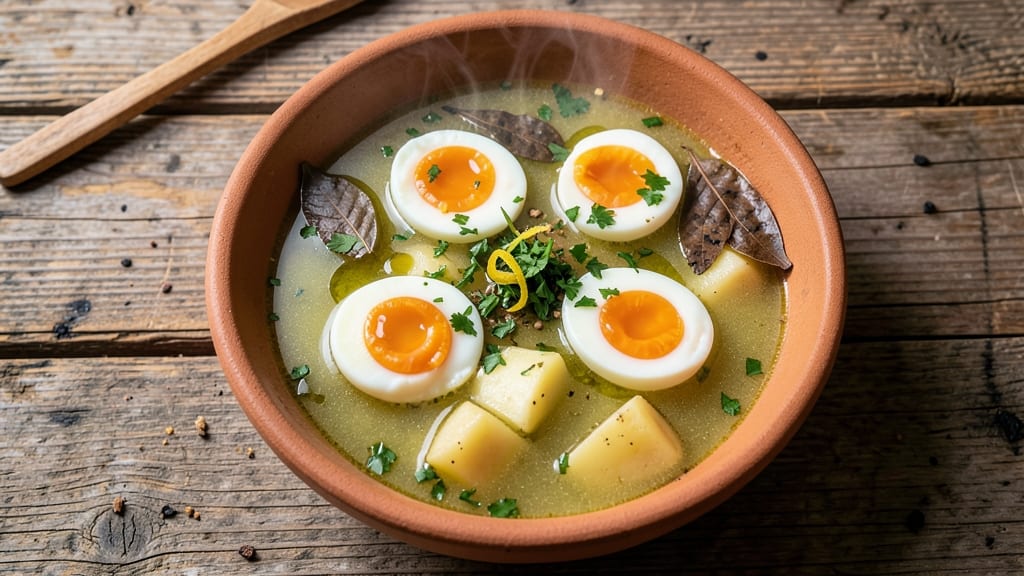
This Azores Holy Ghost Soup recipe brings the islands' soul-warming traditions to your kitchen with its ethereal egg ribbons floating in velvety potato broth.
The dish, known locally as Caldo Verde de Ovos, transforms humble ingredients into something extraordinary—where tender potatoes and silky egg threads create a cloud-like texture that's both comforting and elegant.
What makes this recipe special is its balance of simplicity and sophistication, requiring just a few key components but delivering restaurant-quality results.
At the heart of this dish lies the technique of stretching raw egg into delicate ribbons while simmering, creating those signature "ghostly" strands that give the soup its name.
The potatoes, slow-cooked until they break down into a creamy base, form the soup's foundation, while local spices and herbs add depth without overpowering. This recipe preserves the Azores' culinary heritage while making it accessible for home cooks—no special equipment needed, just patience and attention to detail.
The result is a soup that's simultaneously rustic and refined: light yet satisfying, with each spoonful offering layers of flavor from the potatoes' earthy sweetness to the eggs' delicate silkiness.
The broth absorbs the subtle aromatics of bay leaf and parsley, creating a harmonious blend that feels both nostalgic and fresh. Perfect for chilly evenings or special gatherings, this soup transforms an ordinary meal into an experience that tells a story of the Azores.
While traditionally served as a main dish, this soup also works beautifully as a starter or light lunch. The recipe includes modern adaptations like adding smoked paprika for extra depth or incorporating local seafood for a coastal twist—all while keeping the soul of the original intact.
Let's create this timeless Azorean masterpiece together.
Ingredients for azores holy ghost soup
The soul of Azores Holy Ghost Soup lies in these twelve ingredients—where humble potatoes and delicate eggs transform into ethereal clouds of flavor.
| Ingredient | Amount | Notes |
|---|---|---|
| Yukon Gold Potatoes 🥔 | 2 lb | Waxy variety, peeled and cubed |
| Large Eggs 🥚 | 6 whole | Fresh, room temperature |
| Extra-Virgin Olive Oil 🫒 | ½ cup | For slow cooking potatoes |
| Water 💧 | 4 cups | Filtered preferred |
| Bay Leaves 🌿 | 2 whole | Fresh or dried |
| Fresh Parsley 🌿 | ½ cup | Chopped, stems removed |
| Smoked Paprika 🌶️ | 1 tsp | For depth of flavor |
| Ground Black Pepper 🌶️ | ½ tsp | Freshly ground |
| Diamond Crystal Kosher Salt 🧂 | 1 ½ tsp | Adjust to taste |
| Fresh Thyme 🌿 | 1 tbsp | Leaves only, chopped |
| Garlic Cloves 🧄 | 2 cloves | Minced for aromatic base |
| Heavy Cream 🥛 | ¼ cup | Optional for richness |
The Yukon Gold potatoes are non-negotiable here—their waxy texture breaks down into a velvety base without turning gluey. Whole Foods or local farmers markets carry the freshest tubers, but any waxy variety works in a pinch. For best results, peel and cube them uniformly—about 1.5-inch pieces ensures even cooking. The bay leaves should be vibrant, not brittle; if dried, toast them briefly in a dry pan to release their aroma before adding. Smoked paprika from Penzeys adds that signature Azorean depth, though any quality smoked variety will suffice. Fresh thyme and parsley elevate the dish beyond basic potato soup—don't substitute dried unless it's a true emergency.
No fresh herbs? Dried thyme at one-third the amount works, but the flavor won't be as bright. Running short on eggs? Use 5 large eggs plus 1 extra yolk for that signature silkiness—just be sure they're room temperature to stretch properly. The heavy cream is optional but recommended for restaurant-quality richness; for a lighter version, omit it entirely. Swapping the Yukon Golds? Russet potatoes will work, but they'll yield a slightly starchier broth. The key technique is stretching the eggs into delicate ribbons while simmering—patience is everything here. If your kitchen is humid, chill the eggs for 15 minutes before stretching to prevent them from sliding through your fingers.
This soup tastes even better the next day as flavors meld—store in airtight containers for up to 4 days in the fridge. For maximum freshness, keep the broth and egg ribbons separate until reheating. The potatoes will absorb liquid, so add a splash of water or broth when warming. Freezes beautifully for 3 months if you portion it into containers with a layer of olive oil on top to preserve texture. The egg ribbons are delicate post-freezing, so reheat gently over low heat or in a double boiler. For serving, garnish with extra parsley and a drizzle of olive oil—trust me, it makes all the difference.
Why You'll Love This Recipe
- Here’s what sold me: those eggs, floating golden and tender, with that just-right set. The bay leaves infuse the broth with a subtle earthiness that makes the whole thing taste like a hug from your nonna. And the Yukon Golds? They break down into fluffy clouds—no gummy mess here.
- I’ll be real: this recipe saved me during my "I can’t afford groceries" month. Potatoes and eggs are cheap, olive oil lasts forever, and bay leaves? You’ve got those tucked away somewhere. It’s the kind of soup that stretches, reheats beautifully, and never lets you down.
Step-by-step instructions for Azores Holy Ghost soup
Master this delicate technique for transforming simple potatoes and eggs into ethereal ribbons of flavor.
Slow-Cook the Potatoes to Perfection
In a large, heavy-bottomed pot, combine the 2 lb Yukon Gold Potatoes, 4 cups Water, 2 whole Bay Leaves, 1 tsp Smoked Paprika, 0.5 tsp Ground Black Pepper, and 1.5 tsp Diamond Crystal Kosher Salt. Bring to a gentle boil over medium-high heat, then immediately reduce to a simmer. Cover and cook for 25-30 minutes until the potatoes are fork-tender and the liquid reduces by half.
The key here is patience—don't rush the cooking. You're not just boiling potatoes; you're building the velvety base of the soup. The potatoes should collapse easily under gentle pressure, and the liquid should thicken into a creamy, starchy consistency. If the potatoes aren't tender enough, they'll turn to mush when blended later, ruining the texture. Taste the liquid occasionally and adjust seasoning if needed.
Infuse the Flavor Base
Remove the pot from heat and discard the bay leaves. Stir in the 0.5 cup Extra-Virgin Olive Oil, 1 tbsp Fresh Thyme, and 2 cloves Garlic Cloves that have been minced. Return the pot to low heat and let it simmer gently for 5 minutes, allowing the aromatics to meld with the potato mixture. This step develops the soup's depth of flavor—don't skip it.
Here's where the magic happens: the olive oil emulsifies with the potato starch, creating a silky texture. The thyme and garlic infuse their essence without overpowering. Stir occasionally to prevent sticking, but avoid vigorous mixing—you want the flavors to marry gently. The mixture should smell rich and aromatic, with notes of garlic and thyme wafting through the kitchen.
Prepare the Egg Ribbons
While the potato mixture cooks, separate the 6 whole Large Eggs, ensuring no yolk breaks into the whites. In a separate bowl, whisk the egg whites to soft peaks—they should hold their shape when the whisk is lifted but still be slightly fluid. This texture is crucial for creating delicate ribbons when incorporated into the soup.
In a different bowl, whisk the egg yolks until smooth and pale. Here's the thing—don't over-whip them or they'll turn into scrambled eggs instead of silky ribbons. The yolks should be thick but still runny, like a light custard. Keep both bowls nearby; you'll need to work quickly in the next step.
Create the Holy Ghost Effect
Return the potato mixture to low heat and let it warm through. Using a ladle, slowly pour about 1 cup of the hot potato liquid into the egg whites while whisking constantly. This gradual addition prevents the eggs from curdling. Once fully incorporated, pour the egg white mixture back into the pot and stir gently but continuously for 1-2 minutes until the mixture thickens into ribbons.
This is the moment that matters: the egg whites transform from liquid to delicate, translucent strands that float like ghostly ribbons in the soup. The heat from the potatoes gently cooks the eggs without scrambling them. If the soup thickens too quickly, remove it from heat temporarily and stir vigorously to break up any lumps. The texture should be light and airy, not dense or gluey.
Finish with Cream and Garnish
Reduce the heat to lowest setting and stir in the 0.25 cup Heavy Cream (if using) and the 0.5 cup Fresh Parsley. Simmer gently for just 1 minute—longer cooking will turn the egg ribbons into scrambled eggs. Taste and adjust seasoning with more salt or pepper if needed. The soup should be rich, creamy, and subtly spiced.
Ladle the soup immediately into warmed bowls, garnishing each serving with an additional sprinkle of fresh parsley and a pinch of smoked paprika. Serve with crusty bread to soak up every last drop of this ethereal Azorean delicacy. The contrast between the silky egg ribbons and the creamy potato base creates a textural experience unlike any other soup. Enjoy while warm—this dish doesn't reheat well.
Pro Tips For Making Azores Holy Ghost Soup
- Peel Potatoes Thinly: This soup isn’t about chunks—it’s about silky texture. Use a sharp peeler and slice potatoes paper-thin (about 1/8-inch), or they’ll turn mushy. I learned this the hard way after serving a watery version where I cut them too thick.
- Simmer, Don’t Boil: Holy Ghost Soup needs a gentle touch. Once potatoes are submerged, keep heat at a bare simmer—tiny bubbles, no rolling. Boiling shreds the potatoes and turns the broth cloudy. (Yes, even if you’re impatient like me.)
- Eggs in Cold Broth: Drop whole eggs into the cold soup off heat, then let them warm gradually. This keeps yolks intact and prevents them from breaking into scrambled bits mid-bowl. My first attempt with hot broth? A disaster.
- Strain the Broth: After cooking potatoes and bay leaves, strain the broth through a fine-mesh sieve. This removes starch and bits that make the soup gluey. (Skip this, and you’ll get a pasty consistency—trust me.)
Storing and reheating your leftovers
Refrigerator Storage
Store your Holy Ghost Soup in an airtight container for up to 4 days—the flavors actually deepen overnight as the spices meld. I recommend using glass Pyrex containers with snap-on lids to maintain freshness.
Let the soup cool completely before refrigerating to prevent condensation, which can make the egg ribbons soggy. When ready to serve, reheat gently over low heat with a splash of water or broth to restore creaminess. 💫
Freezer Preservation
This soup freezes beautifully for 3 months if stored properly. Portion into quart-sized freezer bags or airtight containers, leaving 1 inch headspace for expansion. For best texture, keep the broth and egg ribbons separate until reheating—this prevents the eggs from turning rubbery.
When ready to enjoy, thaw overnight in the fridge, then reheat on the stovetop over low heat with a little water to loosen the mixture. Avoid microwaving to preserve the delicate egg strands. ❄️
Reheating Techniques
For stovetop reheating, transfer the soup to a heavy-bottomed pot and warm over low heat for 5-7 minutes, stirring occasionally. Add 2-3 tablespoons of water or broth if the soup seems too thick. Never bring it to a full boil, or the egg ribbons will curdle.
If using the microwave, heat in 30-second intervals on 50% power, stirring between each interval until just warmed through. The goal is 165°F internal temperature—no higher! 🔥
Garnish Refresh
After reheating, revive the presentation with a fresh garnish of chopped parsley and a sprinkle of smoked paprika. Drizzle with extra-virgin olive oil just before serving to restore shine and richness. For extra flair, add a few crispy fried shallots or toasted breadcrumbs on top.
These finishing touches make reheated soup feel as special as the original. The contrast of textures elevates the dish every time. ✨
Make-Ahead Tips
Prepare the potato base one day ahead and store it separately from the egg ribbons. When ready to serve, simply reheat the potatoes, then add the fresh egg ribbons just before serving. This two-stage approach keeps the egg strands delicate and prevents overcooking.
For a shortcut, make a double batch and freeze half—just thaw and reheat when needed. The key is patience: never rush the egg ribbon process, even when working with leftovers. 💡
Nutrition facts
Frequently asked questions
Why does this Azorean soup get called "Holy Ghost"?
The name comes from the ethereal egg ribbons that float like ghostly strands in the creamy potato broth. The delicate, translucent strands resemble spectral threads—hence the "Holy Ghost" moniker. This visual effect makes the dish feel almost magical when served.
Can I make this soup without heavy cream for a lighter version?
Skip the cream and use 2 tablespoons of milk or even just a splash of water to adjust consistency. The egg ribbons will still form beautifully—the cream just adds richness. For extra body, stir in 1 tablespoon of olive oil at the end instead. The texture remains light and airy.
What if my egg ribbons turn into scrambled eggs?
This happens when the soup gets too hot or sits too long. Remove from heat immediately if the mixture thickens too quickly, then stir vigorously to break up any lumps. For best results, work quickly when adding the egg whites and keep the heat at lowest setting during the final step.
Are there vegetarian alternatives for this Azorean dish?
While traditional versions use fish or seafood, you can adapt this as a vegetable soup by adding chopped mushrooms or roasted red peppers to the potato base. For extra protein, stir in crumbled tofu or white beans at the end. The egg ribbon technique remains the same—just adjust seasoning to complement your additions.
How can I make this soup more flavorful for guests?
Boost the depth by adding 1/2 teaspoon of saffron threads (steeped in warm water) or a pinch of nutmeg to the potato cooking liquid. For a smoky twist, increase the smoked paprika to 1.5 teaspoons. Garnish with toasted breadcrumbs or crispy fried shallots for extra texture and wow factor.