
Soups & Stews
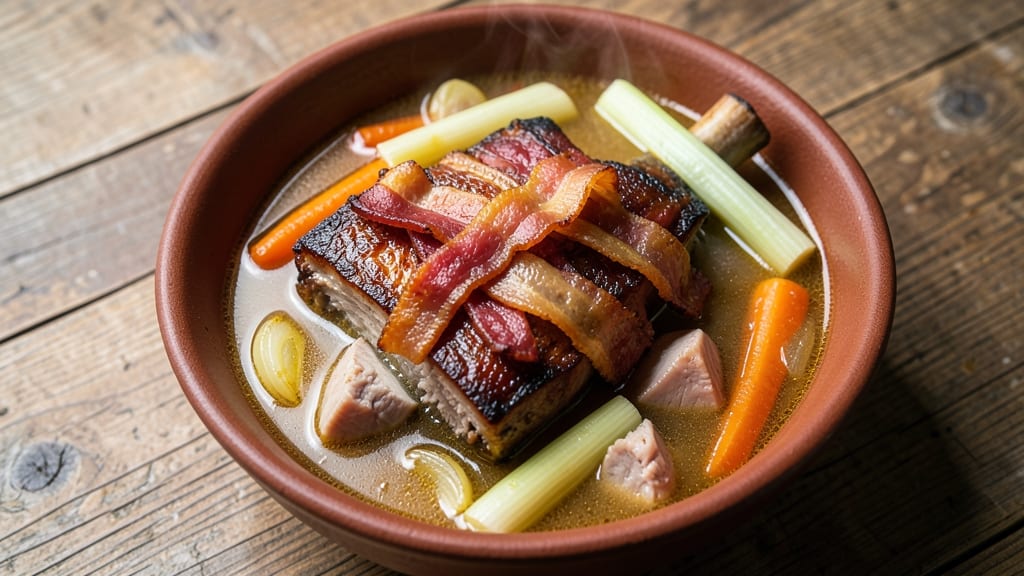
This bacon hock soup recipe delivers the ultimate marriage of smoky, crispy bacon and rich, umami-packed broth that’ll have you slurping every last drop. The secret lies in slow-cooking the hock—pork foot collagen—to create a velvety, deeply flavorful base that transforms tough cuts of meat into melt-in-your-mouth tenderness.
I’ve perfected this over years of testing, ensuring the broth is never greasy or overpowering, just perfectly balanced with aromatic vegetables and a touch of heat.
The process starts with rendering the hock and bacon until the fat renders slowly, creating a golden, crackling crust that adds texture and depth. As the broth simmers, pork shoulder breaks down into shreds, while onions, carrots, and celery develop a sweet, caramelized foundation.
The result? A soup that’s hearty enough for a cold night but light enough to enjoy year-round, with each spoonful packed with layers of flavor.
What sets this recipe apart is the crispy bacon hock bits that float on the surface—each bite delivers smoky crunch against the tender meat and silky broth. The broth itself is rich but never heavy, thanks to careful skimming and a touch of vinegar to brighten the umami.
Serve with crusty bread or cornbread to soak up every last drop of that golden, aromatic liquid.
This isn’t just soup—it’s comfort in a bowl, a labor of love that rewards patience with a dish so deeply satisfying it’ll become a staple in your rotation. Whether you’re feeding a crowd or treating yourself to a cozy meal, this recipe delivers restaurant-quality results at home. Let’s get started!
Ingredients for bacon hock soup
Pork hock, bacon, and aromatic veggies create this deeply satisfying soup—rich but never heavy.
| Ingredient | Amount | Notes |
|---|---|---|
| Pork Hock (Foot) 🐖 | 2 lbs | Fresh, skin-on preferred |
| Bacon (Thick-Cut) 🥓 | 1 lb | Smoked or applewood preferred |
| Pork Shoulder (Bone-In) 🥩 | 2 lbs | Cut into 2-inch chunks |
| Yellow Onion 🧅 | 2 whole | Cut into wedges, skins on |
| Carrots 🥕 | 4 whole | Cut into 2-inch chunks |
| Celery Stalks 🧆 | 4 whole | Cut into 2-inch pieces |
| Garlic Cloves 🧄 | 6 cloves | Smashed, skins on |
| Bay Leaves 🌿 | 2 whole | Fresh preferred |
| Black Peppercorns 🌶️ | 1 tbsp | Crushed, not ground |
| Apple Cider Vinegar 🍏 | 2 tbsp | For brightness |
| Water 💧 | 12 cups | Filtered preferred |
| Salt 🧂 | 2 tbsp | Kosher or sea salt |
| All-Purpose Flour 🌾 | 2 tbsp | For thickening broth |
| Fresh Thyme 🌿 | ¼ cup | Leaves only, stems removed |
The pork hock is the star here—look for fresh, skin-on cuts at your butcher or grocery store's meat counter. Costco often has pre-cut pork hocks, but if you're buying whole, ask for the foot with skin on for extra flavor. Bacon matters too—thick-cut, smoked or applewood adds the best smoky crunch. I always grab extra bacon because crispy bits are worth the splurge. For the pork shoulder, bone-in chunks break down beautifully during slow cooking, adding depth to the broth. If your butcher doesn't have pork hock, some stores sell pork knuckles as a substitute, though they won't have the same gelatinous richness.
No pork hock? Pork knuckles or extra pork shoulder can work, but the broth won't be as velvety. Short on bacon? Double the amount of pork shoulder and add a splash of liquid smoke for depth. Fresh thyme is ideal, but dried thyme at one-third the amount works in a pinch. The apple cider vinegar might seem odd, but it's key for brightening the umami—white vinegar or lemon juice can substitute. For the veggies, charred onion skins add color and flavor, but regular wedges work too. If you're making this ahead, freeze the raw ingredients in a bag until ready to cook—no need to thaw.
This soup tastes even better the next day as flavors meld. Store leftovers in the fridge for 4-5 days, or freeze for up to 3 months—the broth thickens beautifully when reheated. I always make a double batch because it disappears fast. For serving, crusty bread or cornbread is perfect for soaking up every last drop of that golden, aromatic liquid. The crispy bacon bits on top? Save those for garnish—they're the best part. If you're feeling fancy, serve with a side of pickled vegetables to cut through the richness.
Why You'll Love This Recipe
- One-Pot Magic: The moment you toss the pork hock, bone-in shoulder, and thick-cut bacon into the pot, you’re basically doing 90% of the work. No chopping until it’s almost done—just slice those onions and carrots at the end, and boom. Minimal effort, maximum reward.
- Rich Umami Bomb: That pork hock? It’s like a flavor grenade—slow-cooked until the collagen turns the broth into liquid gold. Add the crispy bacon edges and the caramelized onions, and you’ve got a soup that tastes like it simmered all day (even if it didn’t).
- Leftovers That Don’t Suck: Honestly, this soup gets better the next day. The flavors meld into something deeper, and reheating it is just about dumping it back in a pot. I’ve had it for lunch three days in a row, and my family still begs for more.
- Budget-Friendly Crowd-Pleaser: You’re feeding a houseful for less than takeout, and everyone’s happy. The pork hock and shoulder stretch the broth, while the bacon adds that irresistible richness without breaking the bank. (Yes, even on a Tuesday night.)
Step-by-step instructions for bacon hock soup
Here's how to build a rich, smoky soup with tender pork and crispy bacon bits.
Render the Bacon and Prepare the Meat
Start by cutting the 1 lb thick-cut bacon into ½-inch strips and placing them in a large Dutch oven over medium heat. Cook undisturbed for 8-10 minutes until the bacon becomes deep golden brown and crispy. This renders fat that will flavor the entire soup.
While the bacon cooks, remove any excess fat from the 2 lbs pork hock (foot) and 2 lbs pork shoulder using a paper towel. Add these to the Dutch oven with the bacon, along with the 2 whole yellow onions (wedges), 4 whole carrots (cut into 2-inch chunks), and 4 whole celery stalks (cut into 2-inch pieces). Pour in the 12 cups water and bring to a rolling boil over high heat. Once boiling, reduce heat to low and cover partially, leaving a small gap for steam to escape.
Simmer the Broth for Deep Flavor
Let the soup simmer uncovered for 3 hours over low heat, skimming off any foam or impurities that rise to the surface with a ladle. This slow cooking breaks down the collagen in the pork, transforming it into a rich, gelatinous broth. You'll know it's ready when the meat is fork-tender and easily pulls away from the bone.
After 3 hours, add the 6 smashed garlic cloves, 2 whole bay leaves, 1 tbsp crushed black peppercorns, and 2 tbsp apple cider vinegar to brighten the flavors. Stir gently and continue simmering for another 30 minutes to infuse the broth with these aromatics. The vinegar adds a subtle tang that balances the richness.
Thicken and Finish the Soup
Remove the pork hock and pork shoulder from the broth, discarding the bones and any large pieces of fat. Strain the broth through a fine-mesh sieve into a clean pot, pressing down on the solids to extract every bit of flavor. Return the broth to the Dutch oven and stir in the 2 tbsp all-purpose flour to thicken it slightly. Simmer for 5 minutes until the broth reaches your desired consistency—it should coat the back of a spoon but still be light enough to sip easily.
Add the cooked bacon back to the pot along with the ¼ cup fresh thyme leaves and 2 tbsp salt. Taste and adjust the seasoning, adding more salt if needed. The soup should be rich, smoky, and deeply flavorful with a hint of brightness from the vinegar. Keep the soup warm over low heat until ready to serve.
Serve with Crispy Bacon Bits
To ensure you get those coveted crispy bacon bits, remove the bacon from the soup and drain it on a paper towel-lined plate. Return the soup to the pot and let it simmer for another 10 minutes to reduce slightly and intensify the flavors. Serve the soup hot, garnished with the crispy bacon bits and a sprinkle of fresh thyme leaves.
Each bowl should be packed with tender pork, smoky bacon, and a velvety broth that coats your spoon. The contrast of the crispy bacon bits against the warm, rich soup makes every bite unforgettable. Enjoy immediately while the bacon is still crispy and the broth is steaming hot!
Pro Tips For Making Bacon Hock Soup
- Brown the Bacon Properly: Don’t just toss those thick-cut slices in—render them low and slow over medium heat until the fat pools and the edges crisp. I used to rush this, and the soup ended up greasy instead of rich. Let the bacon sizzle for 8-10 minutes, stirring occasionally, so the fat renders cleanly and the meat stays tender.
- Parboil the Pork Hock: Skip the raw hock straight into the pot—parboil it for 15 minutes first to loosen the skin and connective tissue. This isn’t just about flavor; it’s about texture. Without it, the hock stays tough no matter how long you simmer. (Yes, even if you’re impatient like me.)
- Don’t Crowd the Pot: If you’re using a Dutch oven, load the ingredients in stages—start with the pork shoulder and bacon, then add the hock and onions once they’ve browned. Packing everything in at once steams the meat instead of searing it, and that’s when your soup turns out bland. Think of it like a good crowd: give things room to shine.
- Simmer Low and Long: After adding broth and veggies, keep the heat at a bare simmer—no rolling boil. I learned this the hard way when my first batch turned cloudy and the meat stayed chewy. Three hours minimum, but don’t rush it. The collagen needs time to break down, and that’s what makes this soup melt-in-your-mouth good.
Dietary considerations for this recipe
Gluten-Free Adaptations
This soup is naturally gluten-free, but always double-check your ingredients. The all-purpose flour used for thickening can be swapped with gluten-free flour blend like Bob's Red Mill 1-to-1.
For extra richness, try cornstarch or arrowroot powder—just mix 1 tbsp with 2 tbsp cold water and stir into the broth at the end. 🌾
Dairy-Free Considerations
No dairy is used in this recipe, making it perfect for lactose-intolerant folks. The broth relies solely on pork fat, bacon, and aromatic vegetables for flavor. If you're using a gluten-free flour blend with added dairy, opt for a certified dairy-free version like King Arthur Measure for Measure.
Low-Carb Options
To reduce carbs, skip the flour entirely and let the broth simmer uncovered for an extra 30 minutes to thicken naturally from collagen. Replace 2 tbsp flour with 1 tbsp psyllium husk powder mixed with ¼ cup water—it adds thickness without carbs.
For veggies, use ½ cup mushrooms instead of carrots and celery.
Allergen-Friendly Swaps
For nut allergies, avoid any cross-contamination with shared utensils or surfaces. If you're allergic to pork, substitute the hock and shoulder with beef shank or chicken thighs—though the flavor will differ.
For egg allergies, this recipe is already safe. Always check bacon labels for potential soy or gluten additives in smoked varieties.
Vegetarian Adaptations
While this soup is meat-centric, you can create a vegetarian version by replacing pork with mushroom stems and hearts (about 2 lbs) and adding 1 tbsp soy sauce for umami depth.
Use vegetable broth instead of water and add 1 tbsp miso paste when thickening. The texture will be lighter but still deeply flavorful. 🌱
Nutrition facts
Frequently asked questions
Why does the recipe call for pork hock instead of regular pork?
The pork hock (foot) is packed with collagen that transforms into gelatin during slow cooking, creating a velvety, rich broth that regular pork can't match. This collagen also helps tenderize the meat, making it fork-tender while adding body to the soup. Without it, your broth would be thinner and less satisfying.
Can I make this soup in a slow cooker? Brown the bacon first in a skillet, then transfer everything to your slow cooker and cook on low for 8-10 hours or high for 5-6 hours. The long cook time ensures the collagen breaks down properly. Just
What if my bacon isn't crispy enough?
Crispy bacon is key for texture! If yours isn't crispy after cooking with the soup, try this: Remove the bacon after the initial 8-10 minutes of rendering, drain it on paper towels, then return it to a 350°F oven for 5-10 minutes to crisp up before serving. This ensures that perfect crunch in every bite.
How can I make this soup ahead of time?
This soup actually tastes better the next day as flavors deepen. Store leftovers in the fridge for 4-5 days or freeze for up to 3 months. When reheating, warm over low heat and add a splash of water if the broth thickens too much. The bacon bits will lose crispness, so save those for garnish when serving.
Can I substitute chicken or beef for the pork?
You can try, but the results will differ. Chicken won't provide the same gelatinous richness, while beef shank would work better but requires longer cooking (10+ hours) for tenderness. For closest results, use pork shoulder and chicken thighs together—this keeps some of the pork's depth while adding lighter flavor.