
Soups & Stews
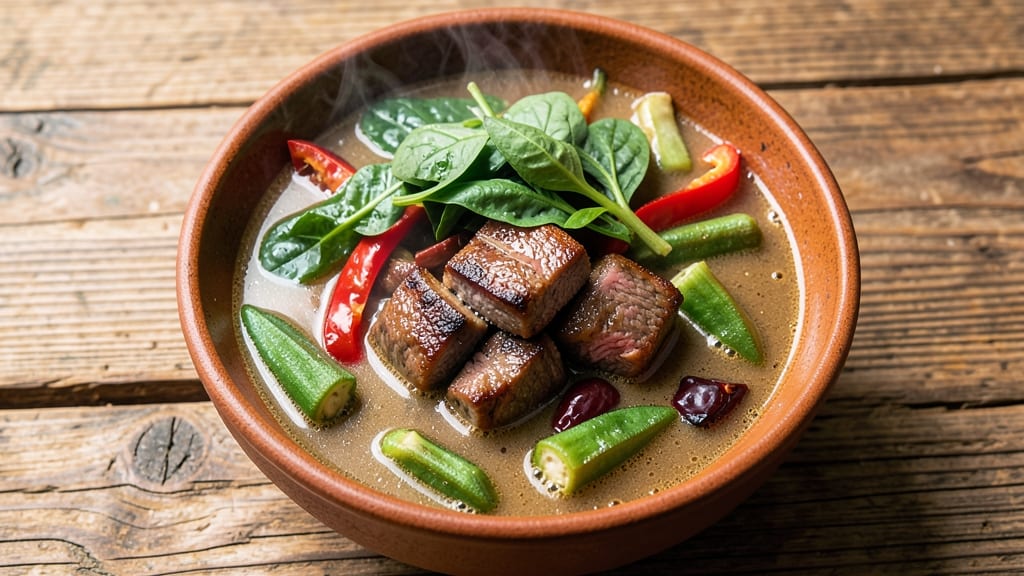
This Banga Soup Nigerian recipe brings the heart of West African cuisine to your kitchen, where smoky okra and rich beef create a stew that’s both comforting and deeply flavorful.
The secret lies in blending fresh leafy greens, aromatic spices, and slow-simmered meat until the broth becomes velvety and packed with umami. I’ve perfected this version to deliver restaurant-quality results at home, using accessible ingredients and traditional techniques that honor its roots.
The magic starts with a blend of okra, peppers, and spices that form the stew’s signature thick, glossy base. Unlike many Nigerian soups, Banga relies on a delicate balance of earthy flavors—smoky from the okra, peppery from the blend, and rich from the beef or fish.
The key is simmering the soup low and slow, allowing the flavors to meld into a harmonious broth that’s both hearty and light enough to pair with staples like pounded yam, eba, or rice.
What makes this recipe special is its versatility—traditionally made with beef, fish, or even bushmeat, it adapts effortlessly to your preferences. The leafy greens (often spinach or pumpkin leaves) add a vibrant touch, while the okra thickens the broth naturally, creating that signature glossy finish.
Every spoonful delivers layers of flavor, from the smoky depth of the okra to the bright heat of the peppers, making it a dish that’s as satisfying as it is authentic.
Perfect for family dinners or special occasions, this Banga Soup is a celebration of Nigerian culinary tradition. Whether you’re serving it with a side of eba or a plate of jollof rice, the rich, aromatic broth will leave everyone asking for seconds.
Let’s get cooking—your taste buds are in for a treat.
Ingredients for banga soup nigerian
These 15 ingredients bring West African flavors to your pot—smoky, rich, and full of tradition.
| Ingredient | Amount | Notes |
|---|---|---|
| Beef Chuck Roast 🥩 | 1 ½ lb | Cut into 1-inch cubes |
| Fresh Okra 🌿 | 1 lb | Trimmed, sliced into rounds |
| Red Bell Peppers 🌶️ | 2 whole | Seeds removed, chopped |
| Scotch Bonnet Peppers 🌶️ | 2 whole | Seeds removed, chopped |
| Fresh Spinach 🌱 | 2 cups | Packed, roughly chopped |
| Fresh Ginger 🌿 | 1 inch | Peeled, grated |
| Fresh Ginger 🌿 | 2 tbsp | Grated, for aroma |
| Garlic Cloves 🧄 | 6 cloves | Peeled, minced |
| Dried Shrimp 🦐 | ½ cup | Rinsed, for umami |
| Locust Beans (Iru) 🌱 | ¼ cup | Soaked, blended smooth |
| Palm Oil 🫒 | ½ cup | Red palm oil preferred |
| Vegetable Oil 🫒 | 2 tbsp | For sautéing |
| Ground White Pepper 🌶️ | 1 tsp | Freshly ground preferred |
| Salt 🧂 | 1 ½ tsp | Adjust to taste |
| Stock Cubes 💧 | 2 whole | Beef or vegetable stock |
The beef is non-negotiable for that deep, meaty flavor—chuck roast gives you the best texture. Grab it from the butcher counter if possible, or pre-cubed from the grocery store. Okra is your secret weapon here; farmers markets often have fresher batches than the store. Look for vibrant green pods—none of that yellowing stuff. The locust beans (iru) are the soul of this soup; if you can't find them at African markets, blend dried locust beans with water until smooth. For palm oil, African specialty stores have the real red kind—it’s worth tracking down for that authentic color and flavor.
No scotch bonnet peppers? Habanero or jalapeño will work, but cut them in half to control the heat. Fresh ginger is ideal, but powdered ginger at half the amount gets you close. Dried shrimp out of stock? Anchovy fillets add a similar umami punch. The locust bean paste can be made ahead—just blend, store in the fridge, and use within 2 weeks. For the spinach, kale or pumpkin leaves are perfect substitutes if that’s what’s available. And if you’re worried about the okra sliming up, blanch it first to keep the texture intact.
This soup tastes even better the next day—3-4 days in the fridge, no problem. For leftovers, skim off any excess oil that rises to the top before reheating. Freezes beautifully for up to 3 months if you portion it into containers. I like to make a big batch on Sunday so I have soup ready all week. The palm oil will solidify when cold, so reheat gently and stir to restore its rich texture. Serve with eba, pounded yam, or jollof rice—the possibilities are endless.
Why You'll Love This Recipe
- One-Pot Magic: I swear by this—just toss everything in one pot (beef, okra, peppers) and let it simmer. No chopping boards to clean, no extra pans, and the flavors meld together like they’ve been friends forever.
- Heat Without the Burn: That Scotch bonnet packs a punch, but the okra and spinach balance it out—creamy, spicy, and fresh all at once. Honestly, it’s the kind of heat that lingers in your memory, not just your mouth.
- Leftovers That Beg for More: The beef gets tender enough to fall apart, and the soup only gets better the next day. I’ll be real: I’ve reheated this three times in a week and still crave it.
- Budget-Friendly Crowd-Pleaser: A chuck roast stretches across meals, and the veggies (okra, peppers, spinach) are cheap but packed with flavor. Perfect for feeding the whole family without breaking the bank—or your taste buds.
Step-by-step instructions for Banga soup Nigerian recipe
This rich, smoky stew comes together with layers of flavor—start with the beef and work through the aromatic base.
Brown the Beef for Deep Flavor
Heat the 2 tablespoons vegetable oil in a large pot over medium-high heat. Add the 1.5 lb beef chuck roast, cut into 1-inch cubes, in a single layer. Let them sear undisturbed for 3-4 minutes until they develop a deep brown crust. This step builds the foundation of the soup's rich flavor—don't rush it.
Once browned on all sides, remove the beef from the pot and set aside. You'll notice the beef releases some juices and fond—this is pure flavor that will dissolve into the soup later. If the oil starts smoking, reduce the heat slightly to maintain control without burning the beef.
Build the Aromatic Base
In the same pot, add the 0.5 cup palm oil and swirl to coat the bottom. Increase heat to medium and add the 1-inch fresh ginger and 6 cloves minced garlic. Sauté for 1-2 minutes until the ginger becomes fragrant and the garlic turns golden—this is your signal to move to the next ingredient.
Add the 2 whole red bell peppers and 2 whole Scotch bonnet peppers, both chopped and seeds removed. Stir frequently for 3-4 minutes until the peppers soften and release their oils. The Scotch bonnet will add a subtle heat that balances the richness of the soup. Be careful not to let the peppers burn—they should soften rather than char.
Incorporate the Okra and Locust Beans
Add the 1 lb fresh okra, sliced into rounds, and the 0.25 cup locust beans (iru), which should be soaked and blended smooth. Stir well to combine with the peppers and oil mixture. The okra will release a thick, gel-like substance as it cooks—this is what gives Banga Soup its signature texture and body.
Pour in 4 cups of water (enough to cover the ingredients) and add the 2 whole stock cubes. Bring to a gentle boil, then reduce heat to low and let it simmer for 15 minutes. This allows the okra to fully break down and the flavors to meld. Skim off any foam that rises to the surface during this time—it's just impurities.
Finish with Beef, Shrimp, and Spinach
Return the browned beef to the pot and add the 0.5 cup dried shrimp and 1.5 teaspoons salt. Increase heat to medium-high and bring the soup to a boil. Once boiling, reduce heat to medium-low and let it simmer uncovered for 45-60 minutes, stirring occasionally. The beef should become fork-tender, and the soup should thicken slightly as it reduces.
About 10 minutes before the soup is done, add the 2 cups fresh spinach and the 2 tablespoons grated fresh ginger. Stir gently to wilt the spinach—it should just barely turn vibrant green without becoming mushy. Taste and adjust seasoning with ground white pepper if needed. The soup should be rich, slightly spicy, and deeply flavorful.
Rest and Serve
Remove the pot from heat and let the soup rest for 5-10 minutes. This allows the flavors to fully develop and the okra to thicken the broth even more. Serve the Banga Soup hot, garnished with additional chopped Scotch bonnet peppers if you prefer more heat. The soup is best enjoyed with pounded yam, fufu, or eba to soak up the rich, smoky broth.
Each bite should deliver tender beef, the distinctive okra texture, and layers of spicy, aromatic flavors. The longer it sits, the better the flavors meld—so don't rush this step. Leftovers keep well in the refrigerator for up to 3 days, and the soup actually tastes even better the next day as the flavors deepen.
Pro Tips For Making Banga Soup Nigerian
- Brown the Beef First: That beef won’t tenderize properly if you toss it straight into the pot. Sear the chuck roast in batches over medium-high heat until deep brown—about 3-4 minutes per side—before adding any liquids. I learned this the hard way when my soup tasted bland and chewy instead of rich and melt-in-your-mouth.
- Slice Okra Thinly: Thick okra chunks turn mushy and slimy. Use a sharp knife to slice them paper-thin (about 1/8-inch) and soak in cold water for 10 minutes before adding to the pot. This keeps them crisp and lets them release their gummy texture gradually—no more gloppy soup.
- Toast the Peppers: Skip this, and your soup lacks depth. Char the red bell and Scotch bonnet peppers directly over an open flame or under a broiler for 2-3 minutes per side until blackened in spots. The smoky flavor cuts through the richness of the beef and balances the heat—trust me, it’s worth the extra minute.
- Add Spinach Last: Tossing spinach in early wilts it into oblivion. Wait until the very end, when the soup is simmering gently, then stir it in for just 1-2 minutes. You want those leaves vibrant, not sad and limp—like a well-timed guest who leaves before the party gets boring.
Serving suggestions for this banga soup nigerian
Traditional Pairings
Banga Soup shines best with pounded yam, the classic Nigerian staple that soaks up every bit of smoky broth. I always make a big batch of yam dough using 2 cups yam flour, 1 cup water, and a pinch of salt—it’s like eating warm, comforting clouds.
For a lighter option, eba (garri pudding) works perfectly, especially when you want to balance the soup’s richness with a fluffy, neutral base. 🌟
Protein Variations
While beef gives Banga its signature depth, don’t hesitate to swap it for fish (like tilapia or mackerel) or goat meat for a leaner option. If you’re feeling adventurous, try locust beans (iru) as the main protein—blend them into a smooth paste and simmer for 30-40 minutes until tender.
The result is a vegetarian-friendly version that still packs umami punch. 🌱
Garnish Like a Pro
Fresh Scotch bonnet peppers aren’t just for heat—they add vibrant color and aroma. I like to chop 2 extra peppers and sprinkle them on top right before serving. For extra flair, add chopped fresh parsley or cilantro to brighten the dish.
A drizzle of red palm oil (if you have leftover) ties everything together with its signature richness. ✨
Beverage Pairings
Cool down the spice with a mango or guava drink—blend 2 cups mango chunks with 1 cup water and a splash of lime for a refreshing contrast.
For a boozy twist, serve with chilled Nigerian gin like 33 Export or a light lager beer to cut through the soup’s richness. The effervescence cleanses your palate between bites. 🍺
Make-Ahead Magic
Banga Soup tastes even better the next day, so double the batch and store leftovers in an airtight container for up to 3 days. Reheat gently on the stove with 1-2 tablespoons water to restore its velvety texture.
For meal prep, portion into glass jars—the palm oil solidifies on top, making it easy to reheat and serve family-style. 💪
Kid-Friendly Adjustments
If serving to picky eaters, reduce the Scotch bonnet peppers to just 1 pepper and add a pinch of sugar to balance the flavors. Serve with soft rice or mashed plantains to make it more approachable.
I’ve found that letting kids dip their yam or rice into the broth (without the okra) often wins them over. 👶
Nutrition facts
Frequently asked questions
What makes Banga Soup different from other Nigerian soups?
Banga Soup stands out for its unique blend of okra and locust beans (iru), which create a thick, glossy texture unlike any other Nigerian stew. While soups like Egusi or Okra Soup rely on single thickeners, Banga combines both for a richer, more complex body. The smoky depth from palm oil and the peppery heat from Scotch bonnet peppers also set it apart.
Can I make Banga Soup without beef?
You can substitute beef with fish (like tilapia or mackerel), goat meat, or even locust beans (iru) for a vegetarian version. The key is maintaining the soup's rich flavor—fish adds a lighter profile, while goat meat keeps the hearty texture. For a veggie option, blend extra locust beans into a paste and simmer for 30-40 minutes to create a meaty substitute.
Why does my Banga Soup turn out too thin?
Thin soup usually means the okra didn't release enough natural thickener. Try blending 1/4 cup of the cooked okra with 2 tablespoons water and stirring it back into the pot. Alternatively, simmer uncovered for 10-15 extra minutes to reduce the broth naturally. If using canned okra, soak it in warm water for 10 minutes first to activate its thickening properties.
How do I store leftover Banga Soup?
Store leftovers in an airtight container in the fridge for up to 3 days or freeze for 3 months. To reheat, add 1-2 tablespoons water and simmer gently—never microwave directly from frozen to avoid breaking the okra's texture. The soup actually tastes better the next day as flavors meld further!
What's the best way to serve Banga Soup?
Pair it with pounded yam, eba, or jollof rice to soak up the rich broth. For extra flair, garnish with chopped Scotch bonnet peppers and a drizzle of red palm oil. The contrast of soft, starchy sides with the smoky soup creates the perfect Nigerian meal experience.