
Soups & Stews
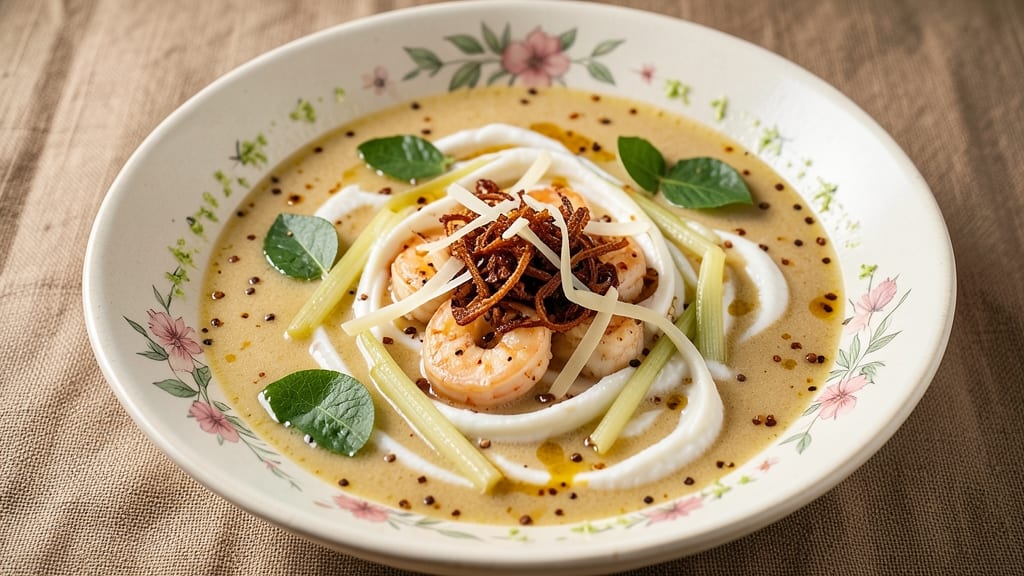
This Bangla Thai soup recipe blends the aromatic warmth of Bengali spices with the bright, herbal notes of Thai cuisine—creating a broth so complex it’ll transform any meal. The secret lies in balancing mustard oil’s bold heat with coconut milk’s creamy richness, while silky egg ribbons add a delicate finish.
I developed this after years of experimenting with regional fusion, and it’s become a staple in my kitchen for its depth and versatility.
The foundation starts with a fragrant base of panch phoron (Bengali five-spice blend) and galangal, simmered with lemongrass and kaffir lime leaves for that signature Thai tang. Coconut milk mellows the spice while keeping the broth light, and a touch of tamarind paste bridges the gap between sweet and sour.
The result? A soup that’s equally comforting and invigorating—perfect for chilly evenings or as a palate-cleansing starter.
What makes this dish truly special is the texture contrast: tender egg ribbons swirl through the broth, their delicate strands dissolving just enough to coat your spoon.
Garnish with fried shallots and fresh cilantro for crunch and brightness, and serve with steamed jasmine rice or crusty naan to soak up every last drop. The flavors develop as it sits, so plan ahead—this soup tastes even better the next day.
For those new to fusion cooking, don’t be intimidated by the ingredient list. Each spice plays a distinct role, and I’ve included substitutions for hard-to-find items like galangal (use ginger in a pinch).
The key is patience—letting the broth simmer slowly allows the flavors to marry beautifully. Trust the process, and you’ll have a dish that bridges two culinary worlds in the most delicious way possible.
Ingredients for bangla thai soup
Fusion flavors start with these 15 ingredients—each playing a key role in balancing heat, tang, and creaminess.
| Ingredient | Amount | Notes |
|---|---|---|
| Panch Phoron (Bengali Five-Spice Blend) 🌶️ | 1 tbsp | Or make your own blend |
| Mustard Oil 🫒 | ¼ cup | Lightly toasted, not burned |
| Galangal (or Ginger) 🌿 | 2 inches | Fresh, peeled, sliced (thin) |
| Lemongrass 🌿 | 3 stems | Bruised, bottom 4 inches only |
| Kaffir Lime Leaves 🍋 | 2 whole | Or 2 tsp dried lime zest |
| Coconut Milk 🥥 | 1 ½ cups | Full-fat, unsweetened |
| Tamarind Paste 🍈 | 1 tbsp | Adjust for tang preference |
| Large Eggs 🥚 | 4 whole | Fresh, cold from fridge |
| Shallots 🧅 | 3 whole | Thinly sliced, for frying |
| Fresh Cilantro 🌿 | ¼ cup | Chopped, for garnish |
| Jasmine Rice 🍚 | 1 cup | Uncooked, for serving |
| Salt 🧂 | 1 tsp | Adjust to taste |
| White Pepper 🌶️ | ½ tsp | Freshly ground |
| Sugar 🍬 | 1 tsp | Balances tamarind |
| Vegetable Oil 🫒 | 2 tbsp | For frying shallots |
Panch phoron is the soul of this soup—look for it in Indian markets or make your own blend (fenugreek, cumin, fennel, coriander, nigella seeds). Mustard oil should be lightly toasted but never burned—heat it just until it smells nutty. Galangal is the Thai star, but fresh ginger in a pinch works (it won't be identical, but still delicious). Kaffir lime leaves are worth hunting down at Asian grocery stores—they add that signature citrus aroma. If you can't find them, lime zest or even a splash of lime juice will help, though it won't be the same.
No tamarind paste? Lime juice plus a pinch of sugar mimics the tang, though it won't be as complex. Coconut milk must be full-fat—light versions won't give that creamy richness. For the eggs, use cold ones straight from the fridge so they ribbon beautifully. The shallots for frying? Any small onion works, but shallots add a delicate sweetness. Fresh cilantro is ideal, but dried works in a pinch—just use half the amount. The rice can be any jasmine variety, but Thai brands like Jasmine Mom have the best aroma. Pro tip: Toast the rice in the pot for 30 seconds before adding water for extra nuttiness.
This soup tastes even better the next day as flavors meld—make a double batch and store leftovers. Keeps 4-5 days in the fridge, or freeze for 3 months. For frying shallots, keep the heat medium—burnt shallots ruin the dish. Garnish just before serving so the cilantro stays vibrant. The broth reduces as it sits, so add a splash of water if it gets too thick. Serve with extra lime wedges on the side—trust me, you'll want more tang.
Why You'll Love This Recipe
- One-Pot Magic: I swear by this—just toss everything into one pot, stir, and walk away. No chopping mountains of veggies, no fancy techniques, just panch phoron sizzling in mustard oil and lemongrass doing all the heavy lifting.
- Flavor Bomb: That first spoonful? Chef’s kiss. The mustard oil’s sharp punch meets galangal’s citrusy bite, while kaffir lime leaves whisper something exotic—like a secret handshake between Thai and Bengali flavors.
- Weeknight & Potluck Hero: Serve it steaming at a dinner party (no one will guess how easy it was) or reheat it for three lazy lunches. The spices actually brighten the next day—unlike most soups that taste sad after reheating.
- Budget-Friendly Powerhouse: Mustard oil and galangal stretch a long way, and you’re not drowning in expensive ingredients. Honestly, I’ve made this for under $2 per serving, and my frugal college self would be proud.
Step-by-step instructions for Bangla Thai soup
Here's how to craft this aromatic fusion dish with layers of spice and silky egg ribbons.
Toast the Mustard Oil and Aromatics
Heat the 0.25 cup mustard oil in a heavy-bottomed pot over medium-low heat. Watch closely as the oil begins to shimmer—it should never smoke or burn. Add the 1 tbsp panch phoron and stir constantly for 30 seconds until the spices sizzle and release their aroma.
Add the 2 inches galangal (or ginger) and 3 stems lemongrass (bruised and cut to 4-inch pieces). Cook for 2 minutes until the galangal softens slightly and the lemongrass releases its citrusy fragrance. Add the 2 whole kaffir lime leaves and cook for another 30 seconds. You'll notice the oil will develop a deep golden color and rich aroma—this is the foundation of your soup's complex flavor profile.
Build the Spiced Broth
Pour in the 1.5 cups coconut milk and bring to a gentle simmer over medium heat. Stir in the 1 tbsp tamarind paste, 1 tsp sugar, 1 tsp salt, and 0.5 tsp white pepper. Let the mixture simmer uncovered for 10 minutes, stirring occasionally, until it reduces slightly and the flavors meld together.
Taste the broth and adjust the seasoning if needed—you want a balance of sweet, sour, and spicy. The tamarind should add a tangy depth while the sugar mellows the heat. Keep the broth simmering gently; it will continue to develop flavor as you prepare the remaining components.
Fry the Shallots and Prepare the Egg Ribbons
In a separate small pan, heat the 2 tbsp vegetable oil over medium heat. Add the 3 whole shallots (thinly sliced) and fry for 3-4 minutes until they turn golden brown and crispy. Remove them with a slotted spoon and drain on paper towels, reserving the oil for later.
While the shallots fry, place the 4 whole large eggs in a bowl and whisk them lightly until the yolks and whites are just combined. The eggs should be cold from the refrigerator—this helps create those signature silky ribbons when cooked properly.
Cook the Egg Ribbons and Assemble
Return the pot with the simmering broth to medium-low heat. Slowly drizzle the whisked eggs in a thin, steady stream while gently stirring the broth with a wooden spoon. The constant stirring creates those beautiful ribbons while cooking the eggs just enough to set them into delicate strands.
Cook for 2-3 minutes until the egg ribbons are just set but still silky. Remove from heat and immediately stir in the fried shallots. The contrast of crispy shallots against the smooth egg ribbons adds incredible texture to each spoonful.
Serve with Jasmine Rice
Divide the 1 cup jasmine rice among serving bowls. Ladle the hot soup over the rice, ensuring each bite gets both the aromatic broth and tender rice. Garnish each serving with 0.25 cup chopped fresh cilantro for a bright, herbal finish.
Serve immediately while the egg ribbons are still silky and the shallots remain crisp. This dish is best enjoyed fresh, with the flavors at their peak. The combination of spiced coconut broth, delicate egg ribbons, and fragrant jasmine rice creates a harmonious blend of textures and flavors that's both comforting and exciting.
Pro Tips For Making Bangla Thai Soup
- Bloom the Panch Phoron: Toast the five-spice blend in mustard oil over medium-low heat for 30 seconds—just until it smells fragrant, not browned. I learned the hard way that skipping this step leaves the soup tasting flat; the spices need that quick sizzle to wake up.
- Slice Galangal Thin: Use a sharp knife and cut the galangal into paper-thin slices—no need to peel it. Thinner slices release their citrusy punch faster, and you’ll actually taste it instead of just ginger vibes. (Yes, even if you’re impatient like me.)
- Control the Mustard Oil Heat: Once the panch phoron hits the oil, keep the flame low—medium at most. Mustard oil burns fast, and charred spices turn bitter. I’ve ruined batches by letting it smoke; trust me, the soup will still taste bold without the acrid aftertaste.
- Strain the Kaffir Lime: Remove the kaffir lime leaves after 10 minutes of simmering, then strain the broth through a fine-mesh sieve. The leaves add depth, but their fibers turn the soup slimy if left too long. (Your future self will thank you.)
Flavor customization for this dish
Spice Level Control
The mustard oil and panch phoron deliver bold heat, but you can adjust to taste. For a milder version, reduce panch phoron to ½ tbsp and toast the mustard oil for just 20 seconds instead of 30.
If you crave more heat, add ½ tsp cayenne pepper to the broth or swap in 1 tsp red chili flakes when frying shallots. 🌶️
For a smoky twist, replace ½ cup of the mustard oil with sesame oil—it adds nutty depth while keeping the heat balanced. I like toasting the sesame oil first for 10 seconds before adding panch phoron to avoid bitterness.
Tangy Balance Adjustments
The tamarind paste provides the signature sourness, but if you prefer extra tang, increase it to 1.5 tbsp and reduce sugar to ½ tsp. For a sweeter profile, add ½ tsp honey or maple syrup while simmering.
Lime wedges on the side let diners customize their bowl—always include these! 🍋
Need a tamarind substitute? Mix 1 tbsp lime juice with ½ tsp sugar—it won’t be identical, but it’ll keep the bright acidity. For a deeper complexity, add 1 tsp fish sauce (a Thai staple) to the broth for umami richness.
Creamy Variations
Coconut milk gives this soup its velvety texture, but you can swap it for ½ cup Greek yogurt (for tang) or ½ cup cashew cream (for nutty notes).
For extra richness, stir in 2 tbsp toasted coconut flakes while serving. Just ensure the broth stays light—overly thick soups can overwhelm the egg ribbons. 🥥
For a dairy-free option, use full-fat coconut milk and add 1 tsp arrowroot powder to thicken naturally. Simmer the broth for 5 extra minutes to let the arrowroot activate fully before adding the eggs.
Protein Swaps
Skip the eggs for a vegetarian version by adding ½ cup silken tofu (cut into ribbons) or ½ cup shredded chicken (poached in the broth). For extra protein, stir in ½ cup cooked shrimp just before serving—they’ll stay tender while the broth simmers. 🍤
For a heartier bowl, fold in ½ cup chickpeas (simmered with the broth) or ¼ cup crispy fried tofu (like Thai tau hu). These additions hold up well to the soup’s acidity and add satisfying texture.
Herb and Garnish Ideas
Fresh cilantro brightens the dish, but try Thai basil for a deeper anise note or mint leaves for a refreshing twist. For a smoky finish, sprinkle toasted cumin seeds or crushed fried garlic on top. I love adding lime zest for an extra citrus pop. 🌿
For a crunchy garnish, top with toasted pumpkin seeds or crushed peanuts—both add a satisfying contrast to the silky broth. A drizzle of chili oil (mix 1 tbsp neutral oil with ½ tsp chili flakes) elevates the dish to restaurant-level flair.
Nutrition facts
Frequently asked questions
Can I make this soup without mustard oil?
Yes! Mustard oil adds depth, but you can substitute 2 tbsp sesame oil or neutral oil (like vegetable oil). Toast the oil for 10 seconds before adding spices to prevent bitterness. For a milder flavor, use 1 tbsp coconut oil instead—it’ll still work but won’t have the same aromatic punch.
What if I can't find galangal?
Fresh ginger is the best substitute—use 2 inches ginger (peeled and sliced) for every 2 inches galangal called for. For a closer match, add ½ tsp ground galangal powder (found in Asian markets) if available. The flavor won’t be identical, but it’ll still add warmth and zing to the broth.
How do I get perfect egg ribbons?
Use cold eggs straight from the fridge and whisk them lightly—just until combined. Drizzle them slowly into the simmering broth while stirring constantly with a wooden spoon. Keep the heat at medium-low and cook for only 2-3 minutes. Overcooking turns them rubbery!
Can I make this soup spicier?
Add ½ tsp cayenne pepper or 1 tsp red chili flakes to the broth while simmering. For smoky heat, stir in ½ tsp smoked paprika with the panch phoron. For a Thai-inspired kick, top each bowl with chili crisp or a drizzle of chili oil before serving.
How long will leftovers keep?
Store in an airtight container in the fridge for 4-5 days. The flavors actually improve overnight! For freezing, cool completely, then freeze for up to 3 months. Reheat gently on the stove—never microwave—until steaming hot. The egg ribbons may break down slightly but will still be delicious.