
Soups & Stews
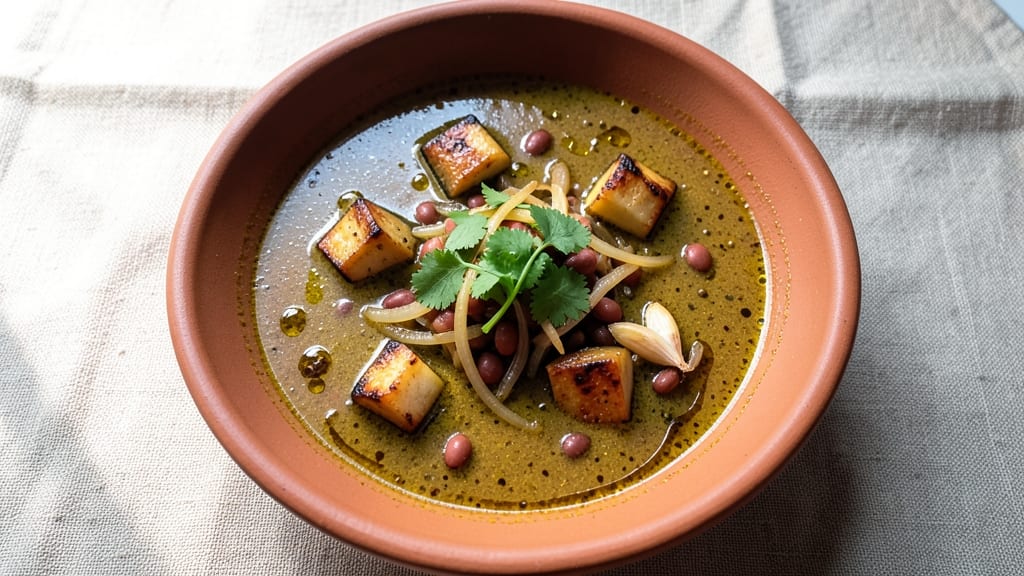
This Bangladeshi eggplant soup recipe delivers the comforting warmth of a traditional beguni shorosh that's been perfected over generations. The aromatic blend of mustard seeds, turmeric, and panch phoron creates a fragrant broth that perfectly complements tender eggplant and spiced lentils.
What makes this dish special is the balance of earthy flavors and subtle heat—just enough to satisfy without overwhelming.
The recipe begins with a fragrant tempering of mustard oil, garlic, and whole spices that infuses the entire soup with depth. Eggplant is gently simmered until tender, while red lentils break down into a creamy texture that thickens the broth naturally.
Traditional ingredients like turmeric and cumin root add layers of complexity that set this apart from ordinary vegetable soups.
By the time you serve this soup, you'll have a dish that's rich in flavor and tradition—golden from the fried onions on top, fragrant from the mustard oil, and perfectly balanced between creamy and hearty.
The eggplant absorbs the aromatic broth beautifully, while the lentils provide a satisfying texture. This is the kind of soup that warms both body and soul, especially during cooler months.
Pair it with steamed rice or crispy luchi for a complete meal that feels like home. The recipe includes tips for adjusting spice levels to suit your preference, ensuring everyone at the table can enjoy this taste of Bangladesh. Let's get started on creating this comforting classic.
Ingredients for bangladeshi soup
Mustard oil, turmeric, and panch phoron create the aromatic foundation for this traditional Bangladeshi comfort.
| Ingredient | Amount | Notes |
|---|---|---|
| Eggplant 🍆 | 1 ½ lb | Medium-sized, peeled and cubed |
| Red Lentils 🌾 | 1 cup | Rinsed thoroughly |
| Mustard Oil 🫒 | ½ cup | For authentic flavor |
| Garlic Cloves 🧄 | 6 cloves | Minced finely |
| Turmeric Powder 🌿 | 1 tsp | Freshly ground preferred |
| Cumin Seeds 🌶️ | 1 tbsp | Toasted lightly |
| Panch Phoron 🌶️ | 1 tsp | Traditional Bengali spice blend |
| Cumin Root 🌿 | 1 piece | Optional for extra depth |
| Yellow Onions 🧅 | 1 whole | Thinly sliced for frying |
| Tomatoes 🍅 | 2 medium | Chopped, or 1 cup diced |
| Green Chilies 🌶️ | 2 whole | Adjust to taste |
| Salt 🧂 | 1 ½ tsp | Adjust to taste |
| Fresh Coriander Leaves 🌿 | ¼ cup | Chopped for garnish |
| Lemon Juice 🍋 | 1 tbsp | Freshly squeezed |
| Water 💧 | 4 cups | For simmering |
Mustard oil is the soul of this soup—look for authentic brands at Indian grocery stores like Patanjali or Nira. The panch phoron blend (five-spice mix) is essential; check the spice aisle at any South Asian market for authentic versions. If unavailable, mix equal parts cumin, fenugreek, nigella, black pepper, and fennel seeds. For the eggplant, choose firm, glossy-skinned varieties—they hold up better during simmering. The cumin root adds earthy depth but isn't strictly necessary; substitute with extra cumin seeds if needed.
No mustard oil? Vegetable or coconut oil works in a pinch, though the flavor won't be identical. Fresh tomatoes are ideal, but canned diced tomatoes (San Marzano preferred) save time. For heat control, remove green chili seeds before chopping. The red lentils should be rinsed thoroughly to remove debris—this prevents bitterness. If you can't find panch phoron, garlic powder plus a pinch of asafoetida mimics its complexity. The fried onions? Use a mix of yellow and red onions for visual appeal and sweetness contrast.
This soup tastes even better the next day as flavors meld. Store in an airtight container in the fridge for up to 5 days. For freezing, portion into containers with 1-inch headspace—it reheats beautifully. Garnish with fresh coriander and a drizzle of mustard oil before serving. Double the batch if you're feeding a crowd—it's that good. The mustard oil aroma lingers in the fridge, so keep it sealed tightly to preserve freshness.
Why You'll Love This Recipe
- One-Pot Magic: I swear by this recipe—just toss everything in one pot, stir, and let it simmer. No chopping marathons, no fancy techniques, and honestly? The eggplant softens so well you’ll forget it was ever a hassle.
- Mustard Oil Magic: That first spoonful of mustard oil—warm, nutty, with a subtle kick—transforms the whole dish. It’s the secret weapon here, cutting through the richness of the eggplant and making every bite sing.
- Leftover Hero: This soup actually improves the next day. The flavors meld deeper, the lentils get even creamier, and I’ve reheated it for breakfast with toast—yes, even on a Tuesday morning.
- Budget Feast: Red lentils and eggplant stretch this into a full meal for less than $5. Between us, I’ve fed four people for under $10 with leftovers, and no one ever complains about the portion size.
Step-by-step instructions for Bangladeshi eggplant soup
This aromatic soup delivers deep flavors through precise layering of spices and techniques.
Prepare the Eggplant and Aromatics
Begin by peeling and cutting the 1.5 lb eggplant into 1-inch cubes. I like to salt them lightly and let them sit for 10 minutes to draw out bitterness, then rinse and pat dry thoroughly. In a separate bowl, combine the 1 cup red lentils, 1 whole yellow onion (thinly sliced), 2 medium tomatoes (chopped), 2 whole green chilies (finely chopped), 6 cloves garlic (minced), 1 piece cumin root (if using), 1 tbsp cumin seeds, and 1 tsp panch phoron. This mixture forms the flavor base for the soup.
Toast the cumin seeds in a dry skillet over medium heat for 1-2 minutes until fragrant. This step unlocks their nutty aroma, which is essential for authentic flavor. Immediately transfer them to a bowl to cool slightly—they'll release their oils into the soup later.
Build the Spiced Oil Base
Heat the 0.5 cup mustard oil in a heavy-bottomed pot over low heat. Add the 1 tsp turmeric powder and stir constantly for 2-3 minutes until it dissolves completely. The oil should turn a pale yellow—this indicates proper infusion. Remove from heat and let it cool slightly before proceeding.
Here's where the magic happens: return the pot to medium heat and add the toasted cumin seeds, garlic, and green chilies. Cook for 2-3 minutes until the garlic turns golden and the chilies darken slightly. This step develops the soup's signature aromatic depth. Be careful not to burn the garlic—it should sizzle gently without turning dark brown.
Simmer the Lentils and Eggplant
Add the prepared lentil mixture to the pot along with the 4 cups water. Bring to a boil, then reduce heat to low and simmer uncovered for 15 minutes, stirring occasionally. This initial simmer softens the lentils and allows flavors to meld. After 15 minutes, add the eggplant cubes and 1.5 tsp salt. Continue simmering for another 10 minutes until the eggplant begins to soften but doesn't disintegrate.
I check for doneness by piercing an eggplant cube with a fork—it should offer slight resistance but yield easily. If the soup appears too thick, add ½ cup water to maintain proper consistency. The eggplant should absorb the spiced broth while retaining some texture.
Finish with Mustard Oil and Garnish
Once the eggplant is tender, remove the pot from heat and let it cool for 5 minutes. Slowly drizzle in the 0.5 cup mustard oil while stirring constantly. The oil should emulsify into the soup, creating a rich, velvety texture. This step is crucial for achieving the soup's characteristic mouthfeel.
Stir in the 1 tbsp lemon juice and 0.25 cup fresh coriander leaves (chopped). Taste and adjust seasoning with additional salt if needed. The lemon juice brightens the dish, cutting through the richness of the mustard oil. Serve immediately in bowls, garnished with extra coriander leaves and a drizzle of mustard oil.
Pro Tips For Making Bangladeshi Soup
- CHAR THE EGGPLANT FIRST: I learned this the hard way—skipping the char on eggplant leaves it watery and bland. Use a gas flame (or broiler) to blacken the skin all over, then scrape off the flesh. The smoky bitterness cuts through the richness of mustard oil and balances the lentils.
- SALT THE LENTILS MID-COOK: Adding salt early turns red lentils mushy. Wait until they’re half-cooked (about 8-10 minutes), then season with salt and turmeric. This keeps them firm and lets the flavors meld properly—no more sad, grainy soup.
- LOW AND SLOW FOR GARLIC: Sautéing garlic in mustard oil at high heat burns it fast. Reduce heat to medium-low after adding the cloves, and stir constantly. You want golden, not black—bitter garlic ruins the whole dish.
- RESERVE THAT OIL: Mustard oil separates when cold. After cooking, strain the soup through a fine sieve, then press the solids to extract every last drop of oil. Mix it back in later—this keeps the soup silky and prevents a greasy mess.
Health benefits of this bangladeshi soup
Rich in Plant-Based Protein
This soup packs a protein punch thanks to the 1 cup red lentils, delivering about 18 grams of protein per serving. Lentils are a complete protein source, containing all nine essential amino acids your body needs for muscle repair and immune function.
Unlike meat-based soups, this dish provides protein without saturated fat, making it heart-healthy. 💪
Fiber for Digestion
The combination of eggplant and lentils creates a fiber-rich bowl with about 12 grams of fiber per serving. This helps regulate digestion, keeps you full longer, and supports gut health.
The eggplant's soluble fiber also helps lower cholesterol levels when consumed regularly. I notice my digestion improves when I include more plant-based fiber in my meals.
Antioxidant Powerhouse
Eggplant is loaded with antioxidants like nasunin and chlorogenic acid, which combat oxidative stress in your body. The turmeric adds curcumin, a compound with powerful anti-inflammatory benefits.
Together, these ingredients help protect your cells from damage while providing vibrant flavors. The green chilies contribute capsaicin, which boosts metabolism and circulation. 🌿
Vitamin and Mineral Boost
This soup is packed with essential vitamins and minerals. The eggplant provides vitamin K for bone health, while the lentils offer iron and folate for energy and red blood cell production.
The tomatoes contribute vitamin C and lycopene, an antioxidant linked to heart health. Mustard oil contains omega-3 fatty acids, which support brain function and reduce inflammation. 💡
Low-Calorie Comfort
Despite its rich flavors, this soup is surprisingly light, with about 250 calories per serving. The eggplant's high water content keeps it satisfying without heaviness, while the lentils provide lasting energy.
It's perfect for cooler weather when you crave warmth without guilt. The mustard oil adds depth without significant calories, making it a nutritious comfort food. ✨
Anti-Inflammatory Benefits
The spices used in this recipe—cumin, turmeric, and panch phoron—are all known for their anti-inflammatory properties. Turmeric's curcumin reduces joint pain and inflammation, while cumin aids digestion and blood sugar regulation.
Green chilies contain capsaicin, which may help lower blood pressure. Together, these ingredients create a flavorful dish that also supports overall wellness. 💛
Nutrition facts
Frequently asked questions
Can I substitute mustard oil in this Bangladeshi eggplant soup?
Yes! While mustard oil is traditional, you can use vegetable oil or coconut oil for a neutral flavor. For authenticity, try sesame oil (1 tbsp) as a partial substitute—it adds a nutty depth. Just reduce the amount slightly since oils vary in potency. The key is balancing richness with the broth's spices.
How do I adjust the spice level for kids or sensitive palates?
Start by removing seeds from green chilies before chopping. For milder heat, reduce panch phoron to ½ tsp and skip the cumin root. Add green chilies last and let kids remove them before eating. A splash of yogurt (1 tbsp) at the end also cools the broth. Always taste as you go!
What other vegetables work well in this soup?
This recipe shines with eggplant, but you can add potatoes (½ lb, cubed) for heartiness or carrots (½ cup, sliced) for natural sweetness. For a seafood twist, stir in 1 cup cooked shrimp in the last 5 minutes of cooking. Spinach or kale (½ cup) wilts beautifully when added at the end.
Can I make this soup in an Instant Pot?
Sauté spices as directed, then add all ingredients (except mustard oil and garnishes) to the Instant Pot. Cook on high pressure for 8 minutes, then quick-release. Finish by stirring in mustard oil and lemon juice. The pressure cooker reduces simmering time to just 15 minutes total—perfect for busy days!
Why does my soup taste bitter?
Bitterness usually comes from overcooked eggplant or unrinsed lentils. For eggplant, reduce simmering time to 8 minutes after adding it. Always rinse lentils 3 times to remove debris. If the broth tastes bitter, balance it with 1 extra tbsp lemon juice or a pinch of sugar. Mustard oil can also taste bitter if overheated—keep heat low when infusing.