
Soups & Stews
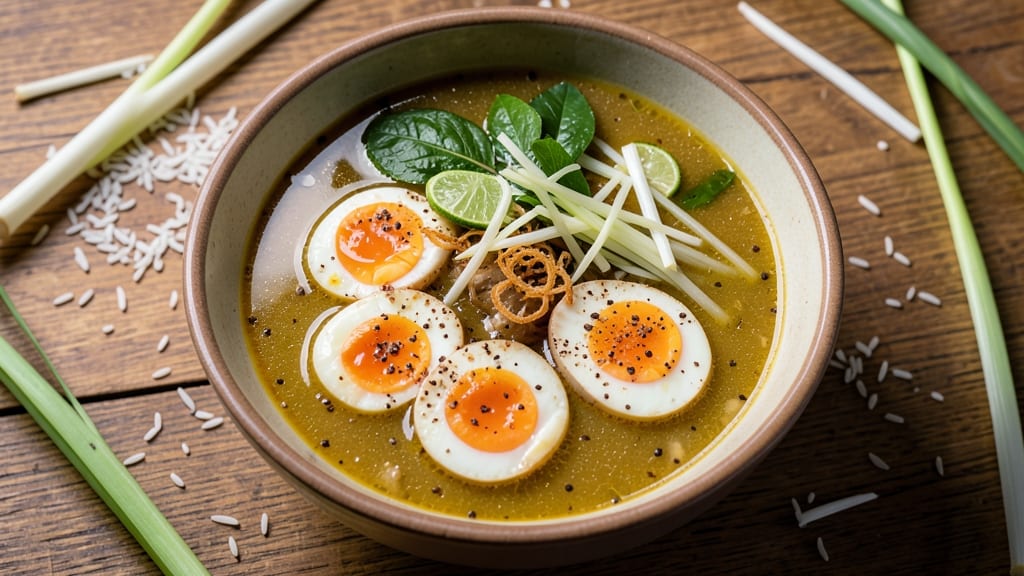
This Bangladeshi-style Thai soup recipe blends the aromatic warmth of South Asian spices with the bright, herbal notes of Thai cuisine—creating a fragrant turmeric-lime broth that feels like a hug in a bowl. 💛 The secret lies in balancing mustard oil’s bold punch with lemongrass and galangal for a depth that’s both familiar and exciting.
I developed this recipe after years of experimenting with fusion flavors, and it’s become a go-to for chilly evenings or when craving something comforting yet vibrant.
The dish starts with a rich broth infused with turmeric, ginger, and a touch of coconut milk, then simmers with silky egg ribbons that add protein and elegance.
Traditional Bangladeshi flavors like panch phoron (five-spice blend) meet Thai galangal and kaffir lime leaves, creating a harmony that’s surprisingly simple to achieve. The key is slow simmering—letting the spices meld without overpowering the delicate broth.
What you’ll end up with is a soup that’s creamy yet light, tangy from lime and mustard oil, and aromatic with every spoonful. The egg ribbons add a luxurious texture, while fresh cilantro and green onions brighten the dish at the end.
It’s the kind of meal that feels special but comes together in under an hour—perfect for weeknight dinners or gatherings.
Serve with steamed jasmine rice or crusty bread to soak up every last drop of that fragrant broth. The recipe scales easily, so you can make a big batch for leftovers or share with friends. Let’s get cooking!
Ingredients for bangladeshi style thai soup
Six eggs, fragrant spices, and a touch of coconut milk create this aromatic fusion soup.
| Ingredient | Amount | Notes |
|---|---|---|
| Eggs 🥚 | 6 whole | Large, fresh for silky ribbons |
| Chicken Broth 🍲 | 4 cups | Homemade or quality store-bought |
| Mustard Oil 🫒 | 2 tbsp | For authentic flavor (use sparingly) |
| Galangal 🌿 | ½ cup | Fresh, peeled and sliced thin |
| Lemongrass 🌿 | ¼ cup | Fresh, finely chopped (about 3 stalks) |
| Kaffir Lime Leaves 🍋 | 4 whole | Fresh, torn into pieces |
| Fresh Turmeric 🧄 | 1 tbsp | Grated, vibrant orange color |
| Fresh Ginger 🧄 | 1 tbsp | Grated, aromatic and fresh |
| Coconut Milk 🥥 | ½ cup | Full-fat for creaminess |
| Panch Phoron 🌶️ | 1 tsp | Bangladeshi five-spice blend |
| Fish Sauce 🍶 | 1 tbsp | For umami depth |
| Lime Juice 🍋 | 2 tbsp | Freshly squeezed |
| Fresh Cilantro 🌿 | ¼ cup | Chopped, for garnish |
| Green Onions 🧅 | ¼ cup | Sliced, for garnish |
| Salt 🧂 | 1 tsp | Adjust to taste |
The galangal and lemongrass are the soul of this soup. Asian markets carry the best quality—look for firm, aromatic galangal with no dark spots. If you can't find fresh galangal, ginger at double the amount works in a pinch, though the flavor won't be identical. Kaffir lime leaves add a citrusy aroma that's essential; if unavailable, lime zest plus a bay leaf can substitute. The mustard oil is non-negotiable for authenticity—Bangladeshi or Indian grocery stores usually have it, or order online. Use sparingly as it's potent.
No panch phoron? Mix equal parts cumin, coriander, fennel, nigella seeds, and fenugreek for a DIY version. Fish sauce adds umami depth—Red Boat is a reliable brand. For a vegetarian version, swap fish sauce for soy sauce or coconut aminos. Fresh turmeric and ginger should be vibrant, not shriveled. If using dried, reduce to half the amount and toast spices lightly in a dry pan first to deepen their flavor. The coconut milk should be full-fat for that creamy texture; canned brands like Thai Kitchen work perfectly.
This soup tastes even better the next day as flavors meld. Store in an airtight container for 3-4 days in the fridge. For longer storage, freeze for up to 3 months—just thaw overnight in the fridge. The egg ribbons keep well for 2 days in the broth, so you can prep the base ahead and add eggs later. Garnish with fresh cilantro and green onions just before serving to keep the herbs vibrant.
Why You'll Love This Recipe
- Mustard Oil Magic: The first spoonful hits you like a warm hug—earthy, sharp, and just a little spicy. That mustard oil base transforms simple broth into something soulful, and honestly? It’s the kind of flavor that makes you want to eat soup for breakfast.
- Eggs in Minutes: Poached eggs in broth? Done. No fancy techniques—just a quick simmer, and they’re silky with a runny yolk that coats every bite. My lazy Sundays just got a whole lot easier.
- Weeknight Workhorse: This soup feels fancy but comes together faster than takeout. Toss in pre-chopped galangal and lemongrass (or use paste), and you’re left with a fragrant, comforting bowl that’s perfect for when you’re too tired to cook.
- Leftovers That Shine: Between us, this soup tastes better the next day. The flavors meld into something richer, and reheating it? Just a splash of water and a quick stir. My freezer’s always stocked with this—because who has time for complicated meals?
Step-by-step instructions for Bangladeshi-style Thai soup
This aromatic broth delivers silky egg ribbons and vibrant turmeric-lime flavors in every spoonful.
🍳 Step 1: Bloom the Spices in Mustard Oil
Heat the 2 tablespoons mustard oil in a large pot over medium-low heat. Add the 1 teaspoon panch phoron and let it bloom for 30 seconds until the spices release their aroma—you'll smell a warm, earthy fragrance that's the soul of this dish. Then add the 0.5 cup galangal and 0.25 cup lemongrass, stirring for 2 minutes until fragrant but not browned.
Here's the thing—mustard oil has a low smoke point, so keep the heat gentle. If you see any smoke, reduce immediately. The spices should dance in the oil, releasing their oils and creating that signature depth that sets this soup apart from others. This step builds the flavor foundation, so don't rush it.
🍳 Step 2: Build the Turmeric-Ginger Base
Add the 1 tablespoon fresh turmeric and 1 tablespoon fresh ginger, stirring constantly for 1 minute until the turmeric dissolves completely and the mixture turns a vibrant golden color. Pour in the 4 cups chicken broth and bring to a gentle boil. Here's where the magic happens: the turmeric should infuse the broth with its signature golden hue.
Once boiling, reduce heat to medium-low and let it simmer for 10 minutes. This allows the galangal and lemongrass to fully infuse their citrusy, peppery notes into the broth. Skim off any foam that rises to the surface—this ensures a clean, smooth final product. The broth should smell like a warm spice market by now, with bright citrus undertones from the galangal.
🥘 Step 3: Add Aromatics and Coconut Milk
Tear the 4 whole kaffir lime leaves into pieces and add them to the simmering broth along with the 1 tablespoon fish sauce. Stir well and simmer for 5 minutes—this lets the fish sauce mellow and integrate its umami depth. Then stir in the 0.5 cup coconut milk and 2 tablespoons lime juice, tasting as you go. The lime juice should brighten the broth while the coconut milk adds a luxurious creaminess.
Season with the 1 teaspoon salt, adjusting to taste. The broth should be flavorful but balanced—savory from the fish sauce, bright from the lime, and creamy from the coconut. If it tastes too acidic, add a pinch more salt. If it needs more depth, a splash of fish sauce helps. This is your flavor checkpoint before adding the eggs.
🍳 Step 4: Create Silky Egg Ribbons
Remove the pot from heat and let it cool slightly for 2 minutes—you want the broth warm but not boiling when you add the eggs. Crack the 6 whole eggs directly into the broth, one at a time, letting each one gently poach and form delicate ribbons. Here's the critical part: don't stir. Let the eggs cook undisturbed for 2-3 minutes until they form soft, silky strands.
For perfectly formed ribbons, the broth should be at 160-170°F when you add the eggs. If it's too hot, the eggs will scramble. If it's too cool, they won't set properly. The ribbons should look like delicate, translucent strands when done—almost like cooked fettuccine. If they look too opaque, let them cook another 30 seconds off heat.
🍽️ Step 5: Finish and Serve
Return the pot to low heat and gently stir the egg ribbons, letting them warm through for 1 minute—just enough to meld their flavors with the broth. Remove from heat and stir in the 0.25 cup fresh cilantro and 0.25 cup green onions, reserving some for garnish. The herbs should brighten the soup with fresh notes while keeping the broth's vibrant color.
Ladle the soup into bowls, garnishing each serving with the reserved cilantro and green onions. Serve immediately while the egg ribbons are still silky and the broth is steaming hot. The contrast of the warm, aromatic broth with the cool, delicate egg ribbons makes this dish truly special. Each spoonful delivers layers of turmeric's earthy warmth, galangal's citrusy bite, and the umami richness of the fish sauce.
Pro Tips For Making Bangladeshi Style Thai Soup
- CRUSH THE GALANGAL: Buy the fresh root—dried won’t cut it here—and smash it with the flat side of your knife before slicing. I learned this the hard way: pre-crushing releases the oils and aromatics faster, so your broth gets that deep, peppery kick in half the time. (Yes, even if you’re impatient like me.)
- SIMMER THE BROTH LOW: Once you add the lemongrass and galangal, drop the heat to a gentle simmer—not a rolling boil. I used to rush this, and the broth turned cloudy and bitter. Low and slow (15–20 minutes) lets the flavors meld without breaking the broth.
- SALT THE BROTH LAST: Hold off on adding salt until the very end, even if your broth tastes bland midway. Mustard oil and galangal are intense, and salting early can overpower the eggs and chicken when they go in. Trust me: your taste buds will thank you.
- POACH EGGS IN STAGES: Don’t dump all the eggs in at once—add them in batches of 2, stirring gently between additions. This keeps the broth from curdling and lets each egg cook perfectly without stealing heat from the others. (Your future self will curse you if you skip this.)
Common mistakes when making this dish
Overcooking Mustard Oil
Mustard oil has a low smoke point of around 320°F, so heating it too aggressively causes it to smoke and lose its delicate aroma. I’ve seen beginners burn it completely, leaving a bitter aftertaste. Always use medium-low heat and remove the pot from heat immediately after adding spices.
If you notice smoke, reduce heat instantly—this is your cue to slow down. The goal is to bloom the spices, not char them. 🔥
Skipping the Bloom Step
Many recipes call for blooming spices in oil, but skipping this step means missing out on the full depth of flavor. The panch phoron and galangal need 30 seconds to 2 minutes to release their essential oils.
Without this, your broth will taste flat and underdeveloped. Trust me, the difference between a fragrant soup and a bland one often comes down to this simple step. Don’t rush it—let the spices sing.
Adding Eggs to Boiling Broth
The most common mistake with egg ribbons is adding them to boiling broth, which causes them to scramble into clumps instead of forming delicate strands. The broth should be warm but not boiling—around 160-170°F—when you crack in the eggs.
If it’s too hot, the eggs will curdle. If it’s too cool, they won’t set properly. A quick fix? Let the broth sit off heat for 2 minutes before adding the eggs.
Using Dried or Old Spices
Fresh spices make all the difference in this fusion soup. Dried or old turmeric, ginger, or galangal will lack the bright, vibrant flavors needed to balance the mustard oil and coconut milk. Always use fresh turmeric and ginger—their sharp, zesty notes cut through the richness.
If you must use dried spices, toast them lightly in a dry pan first to revive their flavor. The difference is night and day. ✨
Over-Salting the Broth
Fish sauce and mustard oil are already savory and potent, so it’s easy to over-salt the broth. Taste as you go and adjust gradually. If you’ve already added too much salt, the fix is simple: stir in 1-2 tablespoons of warm water to dilute it slightly.
The key is balance—this soup should be savory, bright, and aromatic, not salty. Trust your taste buds and adjust in small increments.
Ignoring the Resting Time
After simmering the broth, it’s tempting to rush to the egg ribbons. But letting the soup rest for 5-10 minutes off heat allows the flavors to meld and the spices to infuse fully. Skipping this step means the galangal and lemongrass won’t release their full citrusy, peppery notes.
Patience here ensures a richer, more complex flavor—worth the wait. The eggs will thank you too, as the broth cools slightly for their delicate cooking. 💫
Nutrition facts
Frequently asked questions
Can I make this soup vegetarian?
Yes! Swap the fish sauce for soy sauce or coconut aminos and use vegetable broth instead of chicken broth. The umami depth will still shine through, though the flavor profile will be slightly milder. For extra richness, add a splash of miso paste or nutritional yeast.
What if I can't find galangal?
Use double the amount of fresh ginger (about 2 tablespoons) as a substitute. While it won’t be identical, the citrusy bite will still brighten the broth. For a closer match, try adding a pinch of black pepper—it enhances the peppery notes galangal provides.
How do I store leftovers?
Store in an airtight container in the fridge for up to 3-4 days. The broth and egg ribbons keep well separately, so you can reheat just the broth and add fresh eggs when serving. For longer storage, freeze for up to 3 months—thaw overnight in the fridge before reheating.
Can I use dried spices instead of fresh?
Fresh spices are ideal, but if you must use dried, toast them lightly in a dry pan first to revive their flavor. Reduce amounts by half—½ teaspoon dried turmeric instead of 1 tablespoon fresh. The difference won’t be as vibrant, but it’ll still work. For best results, seek out fresh ingredients at Asian markets.
Is this soup spicy?
Not traditionally! The recipe relies on aromatic spices like panch phoron and galangal for depth, not heat. If you’d like a kick, add a pinch of red chili flakes or a dash of chili paste to the broth. The mustard oil itself has a mild pungency but won’t be spicy—it’s more about bold flavor than heat.