
Soups & Stews
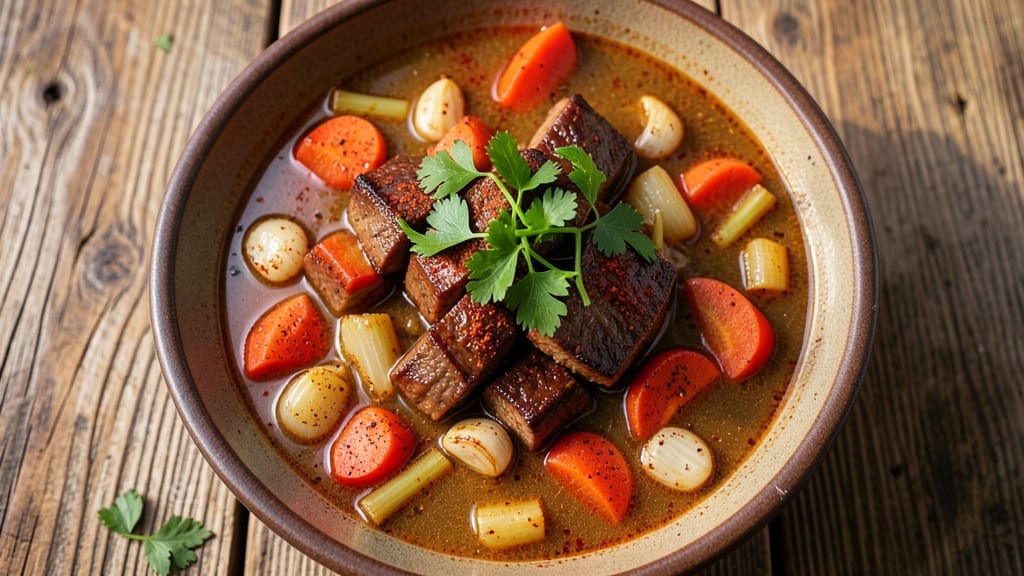
This Bavarian goulash soup recipe delivers hearty, paprika-spiced beef and tender dumplings in a single comforting pot. The rich aroma of slow-simmered beef and aromatic spices transforms a simple meal into a cozy tradition.
I developed this recipe after years of perfecting the balance between smoky paprika, earthy marjoram, and the tender texture of homemade dumplings.
The secret lies in the slow simmering process, which develops deep, savory flavors while keeping the beef fork-tender. Unlike many goulash recipes, this version includes homemade dumplings that absorb the flavorful broth, creating a dish that's both satisfying and restaurant-quality.
The combination of tender beef, root vegetables, and fluffy dumplings makes this soup perfect for chilly evenings or family gatherings.
What you'll end up with is a steaming bowl of Bavarian goulash that's rich, aromatic, and packed with hearty ingredients. The paprika gives it a signature smoky depth, while the dumplings add a comforting, pillowy texture. Each spoonful delivers layers of flavor that warm you from the inside out.
Serve with a dollop of sour cream and fresh parsley for a touch of brightness. This recipe is designed to be both traditional and approachable, making it perfect for home cooks looking to recreate the flavors of Bavaria. Let's get started on this comforting classic!
Ingredients for bavarian goulash soup
Sixteen ingredients transform into a rich, paprika-spiced Bavarian goulash with tender beef and homemade dumplings.
| Ingredient | Amount | Notes |
|---|---|---|
| Beef Chuck Roast 🥩 | 2 ½ lb | Cut into 1-inch cubes, trimmed of fat |
| Yellow Onion 🧅 | 2 whole | Medium, chopped into half-moons |
| Carrots 🥕 | 4 whole | Medium, peeled and sliced into rounds |
| Celery Stalks 🌿 | 3 whole | Trimmed and chopped into 1-inch pieces |
| Garlic Cloves 🧄 | 4 cloves | Minced for aromatic depth |
| Sweet Hungarian Paprika 🌶️ | 2 tbsp | Smoked variety for authentic flavor |
| Tomato Paste 🍅 | ½ cup | High-quality, no sugar added |
| Beef Broth 💧 | 6 cups | Homemade or premium low-sodium |
| Red Wine 🍷 | 1 cup | Dry, full-bodied like Cabernet Sauvignon |
| Bay Leaves 🌿 | 2 whole | Fresh for optimal flavor |
| Dried Marjoram 🌿 | 1 tbsp | Earthy, aromatic variety |
| All-Purpose Flour 🌾 | 2 cups | For dumpling dough, sifted |
| Baking Powder 🍞 | 1 tsp | For fluffy dumplings |
| Salt 🧂 | 1 ½ tsp | Diamond Crystal preferred |
| Black Pepper 🌶️ | 1 tsp | Freshly cracked for brightness |
| Sour Cream 🧀 | ½ cup | For serving, full-fat preferred |
| Fresh Parsley 🌿 | ¼ cup | Chopped, for garnish |
The beef chuck roast is non-negotiable for authentic texture—Costco or Whole Foods carry excellent cuts. Look for good marbling to ensure tenderness. If using pre-cubed beef, pat dry with paper towels before browning to achieve that signature Maillard crust. For the paprika, Penzeys or Hungarian specialty stores offer the best quality, but McCormick works in a pinch. The tomato paste should be San Marzano-based if possible—its sweetness balances the smokiness perfectly. Fresh bay leaves elevate the broth, so buy a small bunch and freeze extras for future use.
No red wine? Substitute with beef broth and a splash of balsamic vinegar—it mimics the acidity beautifully. Short on marjoram? Dried oregano at half the amount works in a bind, though it lacks the same earthy depth. The dumpling dough can be made ahead and refrigerated for up to 2 days—just bring to room temperature before rolling. For a gluten-free option, almond flour or chickpea flour can replace the all-purpose flour, though texture will differ. The sour cream should be full-fat for that velvety finish, but Greek yogurt works too if you're watching calories.
Store the cooked beef and broth separately in airtight containers for up to 4 days—the flavors deepen overnight. The dumpling dough keeps in the fridge for 3 days or frozen for 3 months in a sealed bag. For reheating, simmer gently on the stove with a splash of broth to prevent drying. Garnish with fresh parsley just before serving to maintain vibrant color. This soup freezes beautifully—portion into individual containers for quick meals later.
Why You'll Love This Recipe
- One-Pot Magic: I swear by this recipe because it’s all about one pot—no chopping chaos, no extra bowls. Just dump in the beef chuck, onions, carrots, and celery (I even leave the celery stalks whole sometimes), and let the slow simmer work its magic. The onions caramelize right in the pot while you’re doing whatever else—that’s my kind of cooking.
- Deep Meat Love: Between us, the beef chuck roast is the star here. It gets tender after hours of simmering, falling apart with just a fork, while the garlic and onions build this rich, savory base. Honestly, the first time I tasted it, I nearly burned the kitchen—it’s that good.
- Budget-Friendly Powerhouse: Beef chuck is cheap, and a single roast stretches to feed four—or even six if you’re serving with crusty bread. Plus, the veggies (onions, carrots, celery) are pantry staples you already have. It’s the kind of meal that makes me feel like I’m feeding a crowd without breaking the bank.
Step-by-step instructions for Bavarian goulash soup
A rich, paprika-spiced beef stew with tender dumplings that transforms humble ingredients into hearty comfort.
Sear the Beef Chuck Roast
Pat the 2.5 lb Beef Chuck Roast dry with paper towels and cut it into 1-inch cubes, trimming any excess fat. Heat a large Dutch oven over medium-high heat and add the beef in batches—don't overcrowd the pan. Sear for 3-4 minutes per side until deeply browned and caramelized. This step develops the deep, meaty flavor that forms the soul of the soup.
As you work, remove the seared beef and set it aside. You'll notice the beef releases its rendered fat into the pan—this golden liquid is pure flavor. Once all the beef is browned, reduce the heat to medium and add the 2 whole Yellow Onion (chopped into half-moons), 4 whole Carrots (sliced into rounds), and 3 whole Celery Stalks (chopped into 1-inch pieces). Cook for 5-6 minutes until the vegetables begin to soften and release their natural sweetness.
Build the Flavor Base
Stir in the 4 cloves Garlic Cloves (minced) and cook for 30 seconds until fragrant. Add the 2 tbsp Sweet Hungarian Paprika (smoked variety) and let it toast in the pan for 1 minute, stirring constantly—this awakens its smoky depth. Immediately pour in the 1 cup Red Wine, scraping up all the browned bits from the bottom of the pan. Let it simmer for 3-4 minutes until the alcohol aroma dissipates.
Next, add the 0.5 cup Tomato Paste, 6 cups Beef Broth, 2 whole Bay Leaves, and 1 tbsp Dried Marjoram. Bring to a gentle boil, then return the seared beef to the pot. Reduce heat to low, cover partially, and let it simmer for 2 hours. The beef should be fork-tender, and the broth should have thickened slightly into a rich, velvety sauce. If the liquid reduces too quickly, add hot water 1 tablespoon at a time to maintain consistency.
Prepare the Dumpling Dough
While the soup simmers, create the dumplings by whisking together the 2 cups All-Purpose Flour, 1.5 tsp Salt, 1 tsp Black Pepper, and 1 tsp Baking Powder in a medium bowl. Gradually stir in 1 cup of the hot broth from the soup until a soft dough forms. Knead lightly for 1 minute until smooth—it should hold together when pressed but still be slightly sticky. Cover with a damp towel and let it rest for 10 minutes while the soup finishes cooking.
Here's the thing—don't skip the resting time. It allows the gluten to relax, ensuring fluffy, tender dumplings rather than dense, chewy ones. The dough should be cool enough to handle but still warm to the touch. If it feels too sticky after resting, add 1 tablespoon flour and knead briefly.
Add Dumplings and Finish
Using a sharp knife or pastry cutter, divide the dough into 12 equal pieces. Drop them gently into the simmering soup, spacing them 1 inch apart. Cover the pot and let the dumplings cook for 15-18 minutes, until they've puffed slightly and are no longer doughy to the touch. The soup should be bubbling gently around them—this indicates they're cooking through.
Once the dumplings are done, remove the 2 whole Bay Leaves and adjust the seasoning if needed. Ladle the soup into bowls, reserving a few dumplings per serving. Top each portion with 0.5 cup Sour Cream and garnish with 0.25 cup Fresh Parsley (chopped). Serve immediately with crusty bread to soak up every last drop of that paprika-spiced broth.
Pro Tips For Making Bavarian Goulash Soup
- BROWN THE MEAT FIRST: Skip the slow start—sear the beef chuck roast in batches until it’s deep brown, not just pink. I used to rush this, and the soup always tasted flat. A hot pan and 3-4 minutes per side make all the difference.
- JULIENNE THE VEGETABLES: Cut onions, carrots, and celery into even ¼-inch matchsticks, not chunks. They’ll cook faster and soak up the flavors better. My first few batches had mushy veggies because I was lazy—don’t be like me.
- DON’T SKIP THE DEGLAZE: After browning the meat, splash in ½ cup of broth or beer right away and scrape every last bit from the pan. That crust holds flavor, and ignoring it means losing half the taste. (Yes, even if you’re impatient like me.)
- USE A DUTCH OVEN FOR LOW HEAT: If your pot lacks a tight lid, cover it with foil instead of a loose lid. Bavarian goulash needs steady, gentle heat—too much boiling turns the meat tough. A Dutch oven keeps it stable, but foil works in a pinch.
Essential equipment for bavarian goulash soup
Dutch Oven Essentials
A heavy-bottomed Dutch oven is non-negotiable for this recipe—it distributes heat evenly and prevents scorching. I recommend the Lodge 5.5-quart cast iron Dutch oven for its durability and heat retention. If you're on a budget, the Le Creuset stoneware Dutch oven offers similar performance with a lighter weight.
Preheat your Dutch oven on the stove before adding ingredients to ensure even searing. 🔥
Measuring Tools
Precision matters when balancing flavors. Use a digital kitchen scale for the beef (aim for 2.5 lbs with accuracy) and a stainless steel measuring cup for liquids like broth and wine. For dry ingredients like paprika and marjoram, a spice scoop ensures consistent measurements.
I keep a West Bend scoop set on hand for all my spice measurements—it's a game-changer for repeatable results.
Knife and Cutting Board
A sharp chef's knife (like the Victorinox 8-inch) is essential for cleanly chopping onions, carrots, and celery into uniform pieces. Pair it with a non-slip cutting board—I prefer the Teakhaus bamboo board—to prevent accidents.
For the dumpling dough, a pastry cutter or bench scraper helps divide the dough into even pieces without sticking. Keep your knife sharp with a Wüsthof whetstone for consistent cuts every time.
Thermometer for Perfect Doneness
While the recipe calls for a 2-hour simmer, a meat thermometer ensures the beef reaches 203°F for fork-tender results. I use the ThermoWorks Dot—it's wireless and accurate. Insert it into the thickest piece of beef to check doneness.
For the dumplings, there's no need for a thermometer, but they should float and feel firm when pressed gently with a spoon.
Broth and Wine Essentials
For the beef broth, I recommend Kettle & Fire or Imagine brands—they're rich and low-sodium. If using red wine, a Cabernet Sauvignon (like Apothic Red) works perfectly.
For a non-alcoholic version, substitute with beef broth + 1 tbsp balsamic vinegar to mimic the acidity. Always use full-bodied wine to avoid a thin, watery soup. 🍷
Dumpling Prep Tools
Preparing the dumplings requires a few key tools: a medium mixing bowl for combining ingredients, a damp kitchen towel to keep the dough from drying out, and a sharp knife or pastry cutter for dividing.
I also keep a lightweight rolling pin (like the OXO Good Grips) on hand if I want to roll out the dough for a flatter dumpling shape. The key is to keep everything clean and dry to prevent sticking.
Nutrition facts
Frequently asked questions about Bavarian goulash soup
Can I make this soup without red wine?
Replace the 1 cup red wine with 1 cup beef broth + 1 tablespoon balsamic vinegar to maintain acidity and depth. The balsamic adds a subtle tang that mimics wine's complexity. For extra richness, add 1 teaspoon beef bouillon powder to the broth.
How do I fix dumplings that turn out dense instead of fluffy?
Dense dumplings usually mean the dough wasn't rested long enough or overworked. Always let the dough rest for 10 minutes after mixing, and knead just until smooth. For extra fluffiness, use hot broth from the soup to hydrate the dough—this activates the baking powder properly. Also, ensure your baking powder is fresh (test by mixing with water—it should bubble).
What's the best cut of beef for authentic Bavarian goulash?
The traditional choice is beef chuck roast—it's flavorful and tenderizes beautifully during the long simmer. Look for 1-inch cubes with good marbling (fat within the meat). Budget-friendly alternatives include chuck stew meat or stewing beef, but avoid lean cuts like sirloin—they'll turn tough.
Can I make this soup in a slow cooker?
Yes! Brown the beef and vegetables in a skillet first, then transfer everything to a 6-quart slow cooker. Cook on low for 6-7 hours or high for 3-4 hours. For dumplings, drop them in during the last 30 minutes of cooking (they won't puff as much but will still be tender). The slow cooker method is perfect for hands-off flavor development.
Why does my goulash taste too acidic or winey?
This usually happens when the wine isn't fully cooked off (simmer for 3-4 minutes until the alcohol aroma disappears). To balance acidity, add 1 teaspoon sugar or 1/2 teaspoon honey to the soup. For a richer mouthfeel, stir in 1 tablespoon tomato paste or a splash of heavy cream. Always taste as you go—adjust seasoning gradually!