
Soups & Stews
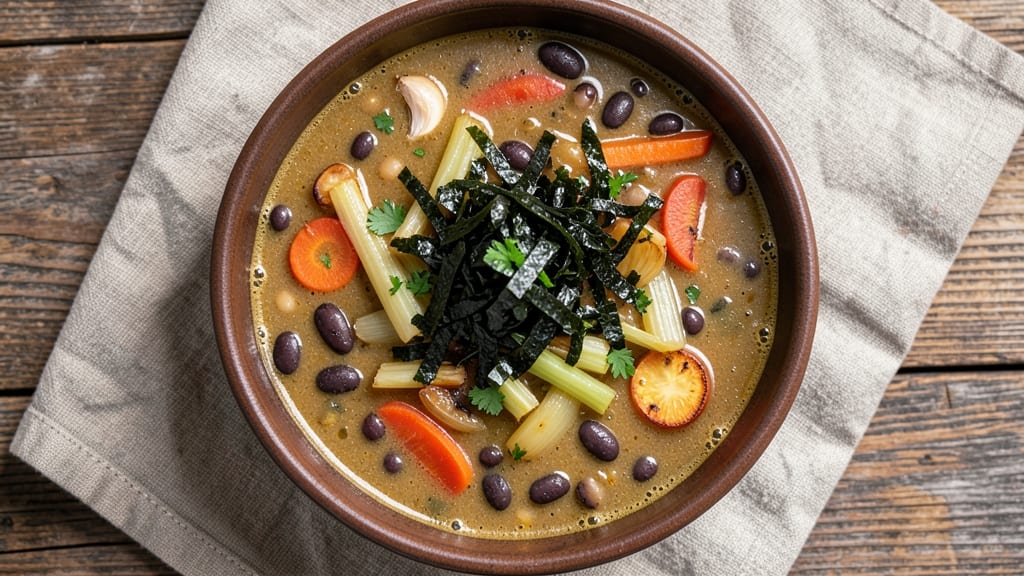
This bean soup from scratch recipe transforms humble ingredients into a deeply satisfying, slow-simmered masterpiece with layers of caramelized onion and rich herbal notes. The secret lies in patient cooking—letting flavors meld over hours rather than rushing through a quick fix.
I developed this version after years of testing different techniques, and it’s now my go-to for hearty, vegetarian meals that feel luxurious without the fuss.
The foundation begins with properly soaked beans (or shortcut dried beans cooked with kombu for extra tenderness), then builds with aromatic vegetables sautéed until golden. A slow simmer develops depth while preserving texture, and the final touch of fresh herbs elevates it from ordinary to extraordinary.
This method delivers restaurant-quality results at home, with a broth so flavorful it stands alone or pairs beautifully with crusty bread.
What you’ll achieve is a bowl of soup that’s comforting yet refined—creamy from beans but never mushy, with caramelized onions adding sweet complexity. The technique is straightforward, but the patience pays off in every spoonful.
Whether you’re feeding a crowd or meal prepping for the week, this recipe adapts effortlessly while keeping its soul intact.
Serve with a sprinkle of fresh parsley, a drizzle of olive oil, and warm bread to soak up every last drop. The beauty of this soup is its versatility—equally at home as a light lunch or a cozy dinner. Let’s get started with the step-by-step instructions that make it foolproof.
Ingredients for bean soup from scratch
Sixteen ingredients, slow-simmered patience, and layers of caramelized depth transform simple beans into restaurant-quality soup.
| Ingredient | Amount | Notes |
|---|---|---|
| Dried Navy Beans 🌱 | 1 ½ cups | Unsoaked, rinsed thoroughly |
| Yellow Onions 🧅 | 3 whole | Thinly sliced for caramelization |
| Carrots 🥕 | 3 medium | Peeled, cut into 1/2-inch chunks |
| Celery Stalks 🌿 | 3 whole | Diced, including leafy tops |
| Garlic Cloves 🧄 | 4 cloves | Minced for aromatic depth |
| Kombu Seaweed 🍃 | 1 sheet | For tenderizing beans |
| Extra-Virgin Olive Oil 🫒 | ¼ cup | For sautéing vegetables |
| Vegetable Broth 💧 | 6 cups | Low-sodium preferred |
| Tomato Paste 🍅 | 2 tbsp | For rich umami depth |
| Bay Leaves 🌿 | 2 whole | Fresh preferred |
| Fresh Thyme 🌿 | 1 tbsp | Leaves only, chopped |
| Fresh Parsley 🌿 | ¼ cup | Chopped for garnish |
| Salt 🧂 | 1 ½ tsp | Diamond Crystal preferred |
| Black Peppercorns 🌶️ | ½ tsp | Freshly cracked |
The beans are the heart of this soup, and navy beans deliver that perfect creamy texture without being mushy. Buy dried beans from bulk bins—they stay fresher longer than canned. Soak overnight for best texture, but the kombu sheet is your secret weapon for tenderizing without soaking. Trader Joe's carries kombu in the Asian foods aisle, or order online if your local store doesn't stock it. For the onions, patience is key—caramelizing them low and slow develops that sweet, complex flavor that makes this soup sing. Use yellow onions for mild sweetness, but red onions add a brighter acidity if you prefer.
No kombu? Double the vegetable broth—it won't tenderize as effectively, but the soup will still be flavorful. Fresh thyme is ideal, but dried thyme at one-third the amount works in a pinch. The tomato paste can be swapped for 1 cup crushed tomatoes if you prefer a chunkier texture. For the carrots and celery, baby carrots or pre-cut celery from the salad bar save time. If you're prepping ahead, sauté the onions and celery first, then freeze them in a sealed container—they'll reheat beautifully when you're ready to complete the soup.
This soup tastes even better the next day as flavors meld further. Store in an airtight container in the fridge for up to 5 days, or freeze for 3 months. I like to portion it into individual containers for easy lunches—just reheat with a splash of water or broth. The kombu sheet can be saved and reused once (just rinse it thoroughly between uses). For meal prep, make a double batch and freeze half—having a ready-made pot of soup is a game changer for busy weeks.
Why You'll Love This Recipe
- No-Soaking Hassle: I just toss the dried navy beans in a pot with water, a pinch of salt, and let them simmer—no pre-soaking, no fuss. That crispy texture they develop? Chef’s kiss. Honestly, I’ve tried fancy shortcuts, but this method actually saves me time.
- Umami Bomb: The combo of caramelized onions, celery, and garlic—sautéed until they’re soft but still pack a punch—turns this into something ridiculously flavorful. Add a bay leaf and thyme while it simmers, and suddenly you’ve got depth without the effort.
- Meal Prep MVP: This soup tastes even better the next day, which means I can make a big batch on Sunday and have lunch sorted for the week. (Yes, even on a Tuesday night when I’m too tired to think.)
- Pantry Staple Power: Onions, carrots, celery, garlic—these are things I always have lying around. Navy beans? Cheap, shelf-stable, and way more filling than you’d expect. Between us, this is my go-to when I’m low on groceries but still want something hearty.
Step-by-step instructions for slow-simmered bean soup
Mastering this soup hinges on patience and layering flavors through precise technique.
Prepare the Beans for Maximum Tenderness
Rinse the 1.5 cups dried navy beans thoroughly under cold water to remove any debris. Place them in a large bowl and cover with plenty of cold water—at least 8 cups—to ensure complete submersion. Let them soak for 8 hours or overnight at room temperature. This long soak prevents the beans from splitting during cooking and ensures even hydration.
Before cooking, drain and rinse the beans again. Add them to a 6-quart pot along with the 1 sheet kombu seaweed, which naturally tenderizes the beans without added salt. Cover with 4 cups fresh water and bring to a gentle boil over medium-high heat. Once boiling, immediately reduce heat to low and simmer uncovered for 2 hours, stirring occasionally to prevent scorching. The beans are ready when they're fork-tender but not mushy.
Develop Deep Flavor Through Caramelization
While the beans simmer, heat the 0.25 cup extra-virgin olive oil in a large Dutch oven over medium-low heat. Add the 3 whole yellow onions, sliced paper-thin, and cook without stirring for 5 minutes. This initial undisturbed cooking allows the onions to release their moisture and begin caramelizing.
After 5 minutes, gently stir the onions and continue cooking for another 10-12 minutes until they're a deep golden brown with crispy edges. Add the 3 medium carrots, cut into ½-inch chunks, and the 3 whole celery stalks, diced, along with the 1.5 tsp salt. Cook for 5 minutes until the vegetables soften slightly but retain their shape. Stir in the 4 cloves minced garlic and cook for 30 seconds until fragrant—this prevents the garlic from burning while maximizing its flavor.
Build the Base with Umami and Aromatics
Reduce the heat to low and stir in the 2 tbsp tomato paste, spreading it evenly over the vegetables. Cook for 2 minutes to toast the tomato paste slightly, deepening its flavor. Pour in the 6 cups vegetable broth and scrape up any browned bits from the bottom of the pot—these contain concentrated flavor. Add the 2 whole bay leaves and 1 tbsp chopped fresh thyme, then bring the mixture to a gentle simmer.
Carefully transfer the simmering bean mixture to the Dutch oven using a slotted spoon, reserving the soaking water. Add 2 more cups of the reserved bean soaking water to the pot to maintain the proper liquid level. The soup should now have a rich, aromatic base with layers of caramelized onions and tender beans.
Simmer to Perfection and Finish with Herbs
Return the heat to medium-low and let the soup simmer uncovered for 45-60 minutes, stirring occasionally. This slow simmer allows all the flavors to meld while the beans continue to soften. Taste the soup and adjust seasoning with additional salt or 0.5 tsp freshly cracked black peppercorns as needed—this ensures the soup is balanced before finishing.
Just before serving, stir in the 0.25 cup chopped fresh parsley and remove the bay leaves. The parsley not only adds freshness but also brightens the deep, savory flavors of the soup. Serve immediately in warm bowls, garnished with additional parsley if desired. The soup should be thick but spoonable, with each bite delivering the complex interplay of caramelized onions, tender beans, and umami-rich broth.
Pro Tips For Making Bean Soup From Scratch
- SOAK BEANS OVERNIGHT: I learned this the hard way—rushing the soak with dried navy beans leaves them tough and chewy. Dump them in cold water with a pinch of baking soda (yes, it works) and let them sit 12+ hours. No time? At least do a 2-hour hot soak, but drain and rinse twice before cooking to cut down on gassiness.
- CHOP VEGETABLES UNIFORM: Carrots and celery in big chunks? Your soup will have a muddy, uneven texture. Aim for ¼-inch dice—small enough to disappear but big enough to hold shape. Onions should be the same size; garlic, minced so finely it melts into the broth. (I use the pulse function on my food processor for the celery—saves my hands.)
- SKIP THE BOILING START: Throwing beans into a roaring boil dumps starch into the water, making the soup gluey. Instead, cover beans with cold water, bring to a gentle simmer, then reduce to a low bubble. This keeps them tender without turning the broth into paste. (Your future self will notice the difference.)
- SAUTE AROMATICS LONGER: After 2 minutes of garlic and onions sweating, walk away. Let them caramelize until the onions are deep golden and the garlic has browned edges—about 8-10 minutes total. The deeper the color, the richer the flavor. (I know, I know, but trust the process—this is the thing that matters most.)
Essential equipment for this recipe
Dutch Oven Essentials
A 6-quart Dutch oven is my non-negotiable tool for this recipe—it distributes heat evenly and handles the long simmer beautifully. I recommend Le Creuset for its durable stoneware construction or All-Clad for stainless steel performance. Both hold heat consistently, preventing hot spots that can burn your onions or beans. 🔥
Precision Thermometer
While this soup doesn’t require exact temperatures like meat dishes, a thermometer helps monitor the simmer. I use a Thermoworks Thermapen to verify the broth stays between 195-205°F—this gentle range prevents rapid evaporation while developing deep flavors. A budget option like OXO Good Grips works too.
Kombu Seaweed
The kombu sheet is the secret weapon for tenderizing beans without added salt. You can find it at Trader Joe’s, Whole Foods, or online retailers like Amazon.
If unavailable, double the vegetable broth (to 12 cups total) and add ½ tsp baking soda to the soaking water—though kombu’s mineral-rich flavor can’t be fully replicated.
Mandoline Slicer
For paper-thin onion slices, a mandoline like the OXO Good Grips saves time and ensures even caramelization. Set it to 1mm thickness and work in batches to avoid overcrowding. If you don’t own one, use a sharp chef’s knife—just take your time for consistent slices. 💡
Slotted Spoon
A long-handled slotted spoon (like the Cuisinart Stainless Steel) is perfect for transferring beans without breaking them up. I also use it to skim any foam that rises during the simmer, keeping the broth clear.
A ladle with a strainer works in a pinch, but the slotted design gives better control.
Fine-Mesh Strainer
A fine-mesh strainer (I use OXO’s Good Grips) is essential for rinsing beans and draining kombu after cooking. It catches tiny debris that could make your soup gritty.
For meal prep, I rinse the beans in the strainer under cold water to stop cooking immediately—this preserves texture when storing or freezing.
Nutrition facts
Frequently asked questions
Can I use canned beans instead of dried for this recipe?
Yes, but with adjustments! Use 3 (15-oz) cans of navy beans (drained and rinsed) to replace 1.5 cups dried. Add them directly to the pot after sautéing the vegetables, but reduce the simmering time to 30-45 minutes since canned beans are already pre-cooked. For extra flavor, crush a few beans with your hands to thicken the soup slightly.
How do I make this soup vegan?
Simple swaps make it fully plant-based! Replace the vegetable broth with vegan broth (check labels for fish-free ingredients) and use olive oil instead of any animal fats. The kombu seaweed is already vegan—just ensure it's certified. For extra richness, stir in 1 tbsp nutritional yeast when serving. The recipe stays identical otherwise!
Why do my onions burn before caramelizing?
This happens when heat is too high or onions are crowded. Start with medium-low heat and spread onions in a single layer—don't stir for the first 5 minutes. If your pan isn't wide enough, cook in batches. A Dutch oven is ideal for even caramelization without burning.
Can I make this soup in a slow cooker?
Perfect for hands-off cooking. Sauté the onions, carrots, and celery separately, then transfer everything to the slow cooker with all other ingredients. Cook on low for 6-8 hours or high for 3-4 hours. The long cook time enhances flavors—just stir occasionally to prevent sticking.
What's the best way to reheat leftovers?
Gently reheat on the stove over low heat with 2-3 tbsp water or broth to prevent thickening. Never microwave directly—it makes beans mushy. For meal prep, portion into containers and reheat each serving separately for 1-2 minutes until steaming hot. Stir well before eating!