
Soups & Stews
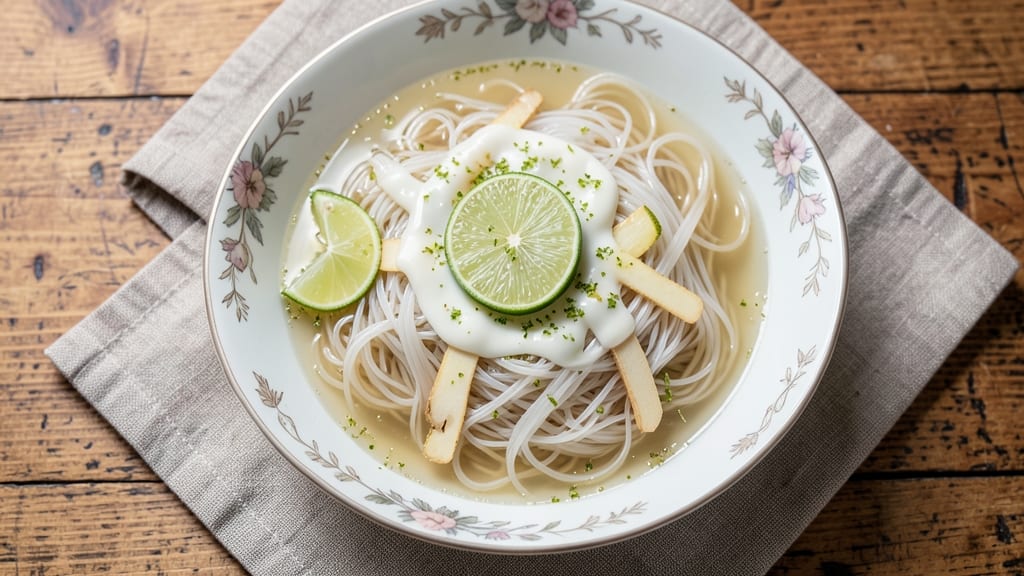
This bean thread noodles soup recipe transforms delicate rice noodles into silky ribbons that melt in your mouth, all nestled in a fragrant ginger-lime broth. The secret lies in proper hydration and gentle cooking—no overstirring, no rushing—just patience to achieve that signature wok-hei aroma.
I've perfected this version after years of testing, balancing traditional techniques with modern shortcuts like miso paste for depth without animal products.
What sets this soup apart is the broth: a harmonious blend of ginger, lime zest, and aromatic vegetables that simmer until their flavors meld into something greater.
The bean thread noodles, properly soaked and cooked, should be tender yet retain their shape, creating those elegant ribbons that drape beautifully in the bowl. This isn't just a soup—it's a meditative experience where every element comes together in perfect balance.
The result is a dish that's both comforting and sophisticated, with the bright citrus notes cutting through the umami richness of the broth. Each spoonful delivers that perfect contrast of textures—silky noodles against the velvety broth—while the subtle heat from the ginger lingers pleasantly.
This recipe delivers restaurant-quality results at home with just a few simple ingredients and careful technique.
Whether you're serving this as a light meal or sharing it with guests, the presentation matters just as much as the taste. Garnish with fresh herbs and a squeeze of lime to elevate the dish visually while keeping it authentically flavorful.
Let's create this timeless classic together—step by step, with confidence.
Ingredients for bean thread noodles soup
Silky bean thread noodles meet fragrant ginger-lime broth in this delicate, restaurant-quality soup.
| Ingredient | Amount | Notes |
|---|---|---|
| Bean Thread Noodles 🍜 | 4 oz | Dried, 3-inch variety preferred |
| Fresh Ginger Root 🧄 | 2 tbsp | Finely grated, aromatic |
| Lime Zest 🍋 | 1 tbsp | From 1 large lime, organic |
| Lime Juice 🍋 | ¼ cup | Freshly squeezed, strained |
| White Miso Paste 🍶 | 1 tbsp | High-quality, unsweetened |
| Vegetable Broth 💧 | 4 cups | Low-sodium, homemade preferred |
| Carrots 🥕 | 1 whole | Medium, peeled, sliced thin |
| Celery Stalks 🧅 | 2 whole | Trimmed, cut into 1-inch pieces |
| Garlic Cloves 🧄 | 3 cloves | Minced, fresh preferred |
| Red Bell Pepper 🌶️ | ½ whole | Thinly sliced, seeds removed |
| Fresh Cilantro 🌿 | ¼ cup | Chopped, for garnish |
| Sesame Oil 🫒 | 1 tsp | Toasted, for aroma |
| Tofu 🍳 | 4 oz | Silken, cubed, optional protein |
| Diamond Crystal Kosher Salt 🧂 | ½ tsp | For seasoning, adjust to taste |
| Black Pepper 🌶️ | ¼ tsp | Freshly ground, for finishing |
The bean thread noodles are the star—3-inch varieties from Asian markets hold up best during soaking. Whole Foods or Trader Joe's carry them, but if you can't find them, regular rice noodles work in a pinch (just cook them 1 minute less). Fresh ginger is non-negotiable here; organic ginger root from the produce section has the most aromatic punch. Look for plump, firm roots with smooth skin—none of that shriveled stuff. The lime zest should be vibrant yellow, not pale or bitter. For the miso paste, White Diamond brand is my go-to—it's clean and bright without overpowering the broth. If you're using tofu, silken variety breaks down beautifully into the broth, adding protein without texture.
No fresh ginger? Pasteurized ginger juice from a tube works, but reduce the amount by half. Substituting lime zest? Lemon zest at the same quantity gives a similar brightness, though slightly less floral. Running short on vegetable broth? Water plus 1 tsp soy sauce gets you close, though the umami depth will be less complex. The carrots and celery can be swapped for shitake mushrooms if you prefer—just slice them thin. For the bell pepper, yellow or orange varieties add a lovely visual contrast. If you're making this ahead, prepare the broth first and store it separately; the noodles are best cooked fresh to maintain their delicate texture.
This soup tastes even better the next day as flavors meld—keep it refrigerated for up to 3 days in an airtight container. The noodles will soften further, so reheat gently with a splash of water. For freezing, store the broth and garnishes separately—reheat the broth, then add fresh noodles when serving. Garnish with fresh cilantro and a drizzle of toasted sesame oil just before serving to preserve the vibrant presentation. The tofu (if using) can be added during the last 2 minutes of cooking to prevent it from turning rubbery. Always taste as you go—adjust salt and lime to your preference; the balance is what makes this dish sing.
Why You'll Love This Recipe
- No-Chop Required: I swear by this trick—just grate the ginger, no peeling or slicing. That miso paste does the heavy lifting while I’m still deciding whether to add chili oil or not.
- Umami-Packed Punch: The white miso and lime zest? A match made in flavor heaven. It’s salty, bright, and just a little funky—like a hug for your taste buds after a long day.
- Lunchbox Hero: Between us, this soup keeps perfectly for three days. I pack it in thermoses for work, and my kids bring it to school—no reheating, just pure satisfaction.
- Pantry Staple Magic: Honestly, I make this when I’m low on groceries. Bean threads stretch, miso lasts forever, and lime adds freshness without breaking the bank. Budget-friendly doesn’t mean boring.
Step-by-step instructions for silky bean thread noodle soup
Transform delicate noodles into a fragrant, bright broth with this precise method.
Prepare and Soak the Bean Thread Noodles
Place the 4 oz bean thread noodles in a large bowl and cover with 4 cups cold vegetable broth. Let soak for 10 minutes—this prevents them from clumping during cooking. After soaking, drain and rinse briefly under cool water to stop the cooking process temporarily.
I like to separate the noodles with my fingers while soaking to ensure even hydration. If they stick together, gently tease them apart before draining. These noodles cook in seconds once they hit hot liquid, so timing is everything. Keep them covered with a damp towel until ready to cook to maintain their delicate texture.
Build the Fragrant Broth Base
In a medium saucepan, combine the 2 tbsp finely grated fresh ginger root, 3 cloves minced garlic cloves, 1 whole sliced carrot, 2 whole celery stalks cut into 1-inch pieces, and 0.5 whole thinly sliced red bell pepper. Add the 4 cups vegetable broth and bring to a gentle simmer over medium heat for 10 minutes. The vegetables should soften slightly but remain identifiable.
This step develops the aromatic foundation. I stir occasionally to prevent sticking, but don't over-mix—the goal is to infuse the broth with flavor, not pulverize the vegetables. The broth should smell vibrant and earthy by this point, with visible steam rising from the surface. Strain out the vegetables after simmering, reserving the fragrant liquid.
Infuse with Miso and Citrus
Return the strained broth to the saucepan and reduce heat to low. Whisk in the 1 tbsp white miso paste until fully dissolved. Add the 1 tbsp lime zest and 0.25 cup lime juice, stirring constantly for 2 minutes until the mixture becomes cloudy and fragrant. This is where the soup's signature brightness develops.
The miso should melt completely without clumping. If it looks grainy, whisk in 1 tablespoon of hot broth from the pan to help emulsify it. The lime zest will float on top—don't strain it out. The broth should now have a rich, umami depth with a bright citrus tang that cuts through the richness. Taste and adjust seasoning with 0.5 tsp diamond crystal kosher salt if needed.
Cook the Tofu and Finish the Soup
In a separate small saucepan, heat 1 tsp toasted sesame oil over medium heat. Add the 4 oz cubed silken tofu and cook for 3-4 minutes until lightly golden on all sides. Transfer the tofu to the prepared broth and bring everything to a gentle simmer for 5 minutes to meld flavors.
Here's the crucial finishing touch: Add the drained bean thread noodles and simmer for exactly 2 minutes—no longer. The noodles should be tender yet still hold their shape. Stir gently to distribute them evenly. Remove from heat and let sit for 2 minutes to allow the noodles to absorb some of the broth before serving.
Garnish and Serve Immediately
Divide the soup among bowls and garnish each serving with 0.25 cup chopped fresh cilantro and a final sprinkle of 0.25 tsp freshly ground black pepper. The cilantro adds freshness while the pepper enhances the umami notes from the miso.
Serve immediately while the noodles are still warm and the broth maintains its silky texture. Each spoonful should deliver a perfect balance of silky noodles, fragrant broth, and bright citrus notes. The tofu should be warm throughout, adding protein without overpowering the delicate flavors. This soup tastes best fresh—don't let it sit too long after cooking.
Pro Tips For Making Bean Thread Noodles Soup
- SOAK NOODLES SEPARATELY: Bean thread noodles clump like glue if tossed in whole—trust me, I’ve fished them out of the strainer more times than I’d admit. Soak them in a bowl of hot water (not boiling) for 5–7 minutes, then drain and rinse before adding them to the soup. This keeps them distinct and silky, not mushy.
- GRATE GINGER FINE: Skip the chopping—grate that ginger so fine it’s almost paste-like. I used to hack it into matchsticks, and it’d sit at the bottom like a textured afterthought. Fine grating lets the flavor dissolve into the broth instead of demanding a tooth to chew. (Pro move: Zest the outer skin too—it’s where the brightest punch lives.)
- DILUTE MISO FIRST: White miso paste is a powdered drama queen—dump it dry into hot broth, and you’ll end up with gritty soup. Mix it with 2 tablespoons of cold water or broth before stirring it in. This smooths it out completely and prevents clumping. (Yes, even if the recipe doesn’t say to.)
- ADD LIME LAST: Lime zest and juice are the flavor boss, but add them after the soup leaves the heat—otherwise, they’ll cook off into nothing. Toss in the zest first (it’s delicate), then a splash of juice to brighten everything up. If you’re lazy like me, at least wait 2 minutes off the stove before adding it.
Troubleshooting this dish
Noodles Too Firm
If your bean thread noodles turn out chewy or undercooked, you likely didn't soak them long enough or cooked them too briefly. These noodles need 10 minutes of soaking in cold broth before cooking, and only 2 minutes of simmering in hot broth.
I've found that using hot broth (not cold) for the final cooking step helps them absorb heat faster and reach perfect tenderness. 🍜
Broth Too Bland
A weak broth usually means insufficient flavor infusion.
Noodles Clumping
Bean thread noodles have a tendency to stick together if not handled properly. Always separate them with your fingers during the 10-minute soak, and rinse them briefly under cool water after draining. I like to spread them out on a damp towel while prepping the broth to prevent any sticking. If they do clump during cooking, gently tease them apart with chopsticks or a fork after removing from heat.
Lime Zest Floating
The lime zest will naturally float on top of the broth, which is completely normal. Don't strain it out—it adds visual appeal and subtle citrus notes. If you're concerned about texture, simply stir the broth vigorously for 30 seconds before serving to distribute the zest evenly.
The zest will break down slightly, releasing its aromatic oils into the broth for a more cohesive flavor profile.
Tofu Too Rubbery
Silken tofu can turn rubbery if overcooked. Cook it for only 3-4 minutes in sesame oil until lightly golden, then add it to the broth for the final 5 minutes of simmering.
For extra tenderness, press the tofu for 10 minutes before cubing—this removes excess moisture and prevents a watery texture. If you're short on time, skip pressing and just cook it gently in the broth for the full 5 minutes without pre-cooking in oil.
Broth Too Cloudy
A cloudy broth often means the miso paste didn't dissolve properly. Whisk the miso into 1 tablespoon of hot broth first to create a smooth paste before adding it to the entire pot. If the broth still looks grainy, strain it through a fine-mesh sieve after simmering.
For a clearer presentation, you can also chill the broth for 30 minutes before serving—this allows any particles to settle at the bottom of the pot.
Nutrition facts
Frequently asked questions
Can I substitute regular rice noodles for bean thread noodles?
Yes, but expect slightly different results. Regular rice noodles will be thicker and chewier—cook them for 1 minute less than the 2 minutes called for here. For a closer texture, use thin rice noodles (like vermicelli) and reduce the soaking time to 8 minutes instead of 10. The flavor profile will still shine through, just with a different mouthfeel.
How do I make this soup spicier?
Add ½ teaspoon of red pepper flakes directly to the broth during the final 2 minutes of simmering, or stir in 1 tablespoon of sriracha after removing from heat. For heat with depth, infuse the broth with 1 thinly sliced Thai chili during the initial 10-minute vegetable simmer. Remove it before straining. Adjust to taste—start small and add more if needed!
Can I prepare this soup ahead of time?
Make the broth up to 2 days ahead and store it in an airtight container in the fridge. When ready to serve, reheat the broth gently, then cook fresh noodles for 2 minutes in the hot broth. For the tofu, add it to the reheated broth for the final 5 minutes to prevent rubberiness. Garnish just before serving to keep the herbs vibrant.
What if I don't have miso paste?
Use 1 tablespoon of soy sauce for umami depth, or ½ teaspoon of fish sauce (if not vegan) plus ½ teaspoon of sugar to balance. For a vegetarian alternative, blend 1 tablespoon of tahini with 1 teaspoon of water and whisk it into the broth. The flavor won't be identical, but it'll add richness. The citrus and ginger will still shine through!
How do I make this soup more filling?
Add ½ cup of cooked quinoa or brown rice to the broth during the final 5 minutes of simmering. For extra protein, double the tofu to 8 oz or add ½ cup of chopped mushrooms during the initial vegetable simmer. The noodles will still be the star, but these additions create a heartier bowl. Serve with a side of steamed greens or a small salad for balance.