
Soups & Stews
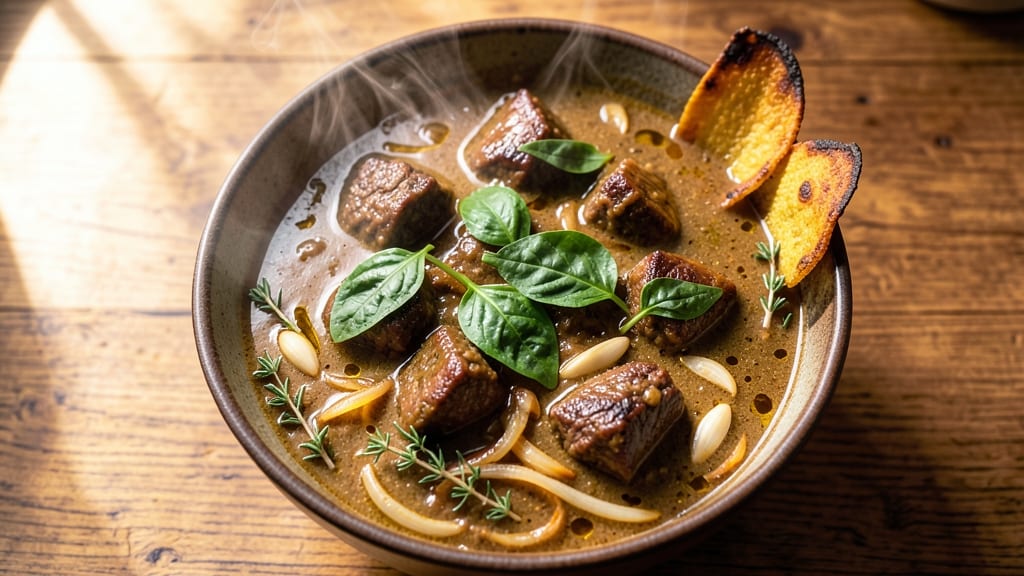
This beef egusi soup recipe brings the rich, nutty flavors of West Africa to your kitchen with tender beef and aromatic seeds. The secret lies in properly browning the meat and blending the egusi seeds into a velvety paste—transforming simple ingredients into a deeply satisfying dish.
Every spoonful delivers layers of savory, earthy, and slightly sweet notes that make this more than just soup; it's a celebration of tradition.
The process starts with slow-cooked beef that becomes fork-tender, then melds with blended egusi seeds for that signature nutty texture. Leafy greens like spinach or bitterleaf add freshness, while spices like thyme and curry powder create warmth.
This isn't just a recipe—it's a taste of home, where every bite tells a story of cultural heritage and family gatherings.
What you'll achieve is a soup so rich and flavorful, it pairs perfectly with jollof rice or fufu. The beef remains juicy, the egusi paste thickens into a luxurious broth, and the aroma alone will have everyone at the table asking for seconds.
The best part? This recipe delivers restaurant-quality results with minimal fuss—just patience and attention to detail.
Perfect for special occasions or cozy weeknights, this beef egusi soup proves that comfort food doesn't have to be complicated. The key is letting the flavors develop slowly, allowing the spices and seeds to infuse the broth into something truly extraordinary. Ready to bring this classic to your table?
Ingredients for beef egusi soup
Sixteen ingredients blend West African tradition with homey comfort for this deeply satisfying beef egusi soup.
| Ingredient | Amount | Notes |
|---|---|---|
| Beef Chuck Roast 🥩 | 2 lb | Cut into 1.5-inch cubes, trimmed of fat |
| Egusi Seeds 🌿 | 1 cup | Raw, unshelled, high-quality |
| Fresh Spinach 🍃 | 2 cups | Chopped, stems removed |
| Onions 🧅 | 2 whole | Yellow or red, sliced |
| Garlic Cloves 🧄 | 6 cloves | Minced, fresh preferred |
| Fresh Thyme 🌿 | ¼ cup | Stems removed, chopped |
| Curry Powder 🌶️ | 1 tbsp | Mild to medium heat |
| Ground Black Pepper 🌶️ | 1 tsp | Freshly ground preferred |
| Salt 🧂 | 1 ½ tsp | Kosher or sea salt |
| Vegetable Oil 🫒 | ¼ cup | For browning beef |
| Water 💧 | 6 cups | For initial broth |
| Tomato Paste 🍅 | 2 tbsp | Smooth, no salt added |
| Scotch Bonnet Pepper 🌶️ | 1 whole | Seeded, optional for heat |
| Locust Beans (Irish Moss) 🌱 | ½ cup | Soaked overnight, optional |
| Utazi Leaves 🌿 | ¼ cup | Dried, optional for authenticity |
The beef is non-negotiable—chuck roast delivers that melt-in-your-mouth texture, while egusi seeds are the heart of this soup's signature nutty depth. For the best seeds, African grocery stores or online specialty shops are your go-to—they carry the high-quality, unshelled variety that makes all the difference. If you can't find fresh spinach, bitterleaf or waterleaf work beautifully for that signature West African bite. The locust beans and utazi leaves add authenticity but aren't essential—skip them if you can't find them, though the soup will still be delicious.
No fresh thyme? Dried thyme at one-third the amount works in a pinch, though fresh is ideal. The curry powder should be mild to medium—Madras or berbere blends add complexity without overpowering. For the tomato paste, squeeze tubes from Trader Joe's are perfect—they're fresh-tasting and won't go to waste. If you're avoiding heat, omit the Scotch bonnet entirely or swap for a mild red pepper. The locust beans need overnight soaking if using, but the rest of the ingredients can be prepped in under 20 minutes.
This soup tastes even better the next day as flavors meld. Store in an airtight container in the fridge for up to 4 days, or freeze portions for 3 months. I always make extra—it reheats beautifully and makes for great leftovers. For serving, pair with jollof rice or fufu to soak up every last drop of that rich, nutty broth. The beef stays tender when reheated, so don't skip the slow cook—rushing it makes the meat tough.
Why You'll Love This Recipe
- Here’s what sold me: this feeds six with minimal effort. My in-laws, who claim to hate "African food," devour it. The chuck roast stays juicy, the spinach adds freshness, and the garlic? Oh, the garlic makes it dangerously shareable. Serve with pounded yam or rice—everyone wins.
- I’ll be real: the second day is my favorite. The flavors meld even more, and reheating? Just add water, stir, and let the egusi’s magic work. Budget-friendly too—egusi is cheap, and a big cut of beef stretches far. Pack it for lunch or freeze portions; it’s my secret weapon for lazy Sundays.
Step-by-step instructions for beef egusi soup
Transform tough beef into tender, flavorful bites with this traditional technique.
Brown the Beef for Deep Flavor
Heat the 0.25 cup vegetable oil in a large pot over medium-high heat until shimmering. Add the 2 lb beef chuck roast cut into 1.5-inch cubes, working in batches if needed to avoid crowding. Brown the beef on all sides for 3-4 minutes per batch until deeply golden.
This browning step creates the Maillard reaction that builds rich, complex flavors. Don't rush it—you'll know it's ready when the beef releases easily from the pot. Remove the beef and set aside temporarily while you prepare the base.
Build the Aromatic Base
In the same pot, add the 2 whole onions sliced and cook for 5 minutes until softened and translucent. Add the 6 cloves garlic cloves and 0.25 cup fresh thyme, cooking for another 1 minute until fragrant.
Stir in the 1 tbsp curry powder, 1 tsp ground black pepper, and 1.5 tsp salt, toasting for 30 seconds to release their aromas. This aromatic foundation forms the flavor backbone of your soup. Add the 2 tbsp tomato paste and cook for 1 minute to deepen the color.
Simmer the Beef with Locust Beans
Return the browned beef to the pot and add the 6 cups water. Bring to a boil, then reduce heat to low and cover partially. Add the 0.5 cup locust beans (Irish moss) (if using) and simmer for 1 hour until the beef is fork-tender.
Check the beef after 45 minutes—it should easily pull apart with two forks. If the soup reduces too much before the beef is tender, add ½ cup water at a time. The locust beans will thicken the soup naturally as they cook.
Incorporate the Egusi and Vegetables
In a separate bowl, toast the 1 cup egusi seeds in a dry skillet over medium heat for 2-3 minutes until fragrant and lightly browned. Immediately add them to the simmering soup along with the 0.25 cup utazi leaves (if using) and 1 whole seeded Scotch bonnet pepper.
Stir well and simmer uncovered for 10 minutes to allow the egusi to bloom and release its nutty flavor. The soup should thicken slightly as the seeds absorb liquid. Taste and adjust seasoning—you may need to add more salt, especially if using salty locust beans.
Finish with Spinach and Rest
Add the 2 cups chopped fresh spinach and simmer for 2-3 minutes until just wilted. Remove from heat and let the soup rest for 10 minutes before serving. This resting period allows all the flavors to meld together.
Serve the beef egusi soup hot with crusty bread or boiled plantains. The perfect bowl should have tender beef that falls apart easily, a thick yet smooth consistency from the egusi, and a balance of nutty, spicy, and savory flavors throughout.
Pro Tips For Making Beef Egusi Soup
- BROWN THE BEEF FIRST: Chuck roast hides flavor when it’s pale. Sear it in batches over medium-high heat until deep brown—this builds a crust that melts into the soup later. I used to skip this, and the broth always tasted thin. Now it’s rich and full.
- ROAST EGUSI SEEDS: Raw egusi tastes bitter. Dry-toast the seeds in a pan for 3-4 minutes until they smell nutty, then grind them. I learned this the hard way—my first batch had that weird, chalky aftertaste. Now it’s smooth and earthy every time.
- STRAIN THE BROTH: After simmering the beef, strain the broth through a fine-mesh sieve before adding egusi. This keeps the soup silky, not gritty. I know it’s extra work, but the difference is noticeable—no one wants to chew on beef bits while eating.
- ADD SPINACH LAST: Toss in spinach only in the final 2 minutes of cooking. It wilts fast and keeps its vibrant color. I used to add it earlier, and it turned sad and mushy—like overcooked greens in a sad salad. Now it’s bright and fresh-tasting.
Make-ahead tips for beef egusi soup
Prep Ahead for Efficiency
Start by prepping the beef and aromatics the night before. Cut the 2 lb beef chuck roast into 1.5-inch cubes and refrigerate in an airtight container. Slice the 2 onions and mince the 6 garlic cloves, storing them separately.
This saves 20 minutes of prep time on cooking day. The beef will also develop deeper flavors overnight. 🌟
Toast and Store Egusi
Toast the 1 cup egusi seeds in a dry skillet for 2-3 minutes until fragrant, then let them cool completely. Store them in an airtight container in the freezer for up to 3 months.
When ready to cook, simply add them directly to the simmering broth—no need to toast again. This shortcut maintains their nutty flavor without extra effort.
Slow-Cooker Adaptation
For a hands-off approach, use a 6-quart slow cooker on low for 8 hours or high for 4 hours. Brown the beef first, then add all ingredients except the spinach.
Stir in the spinach during the last 30 minutes of cooking. This method is perfect for busy schedules and ensures tender beef without constant monitoring.
Freezer-Friendly Components
Assemble the soup base (browned beef, onions, garlic, spices, and tomato paste) in a freezer-safe bag. Freeze for up to 3 months. When ready to cook, thaw overnight in the fridge, then add the remaining ingredients and simmer as directed.
The beef will still tenderize beautifully, and the egusi seeds can be toasted fresh when reheating.
Reheating Leftovers
Reheat leftovers on the stovetop over medium-low heat for 10-15 minutes, stirring occasionally. Add ¼ cup water if the soup thickens too much. For microwave reheating, cover with a damp paper towel and heat in 1-minute intervals until steaming.
The beef stays juicy, and the egusi paste maintains its creamy texture. 💫
Make-Ahead Serving Suggestions
Pre-portion the soup into serving bowls and refrigerate. When reheating, cover with foil and warm in a 300°F oven for 20 minutes to keep the spinach vibrant. Serve with pre-cooked jollof rice or fufu stored in the fridge. This approach makes entertaining effortless—just reheat and serve straight from the table.
Nutrition facts
Frequently asked questions
Can I substitute regular groundnuts for egusi seeds?
No, egusi seeds and groundnuts (peanuts) are completely different ingredients. Egusi provides that signature nutty, earthy flavor and creamy texture that groundnuts can't replicate. If you absolutely must substitute, try melon seeds (common in West African cooking), but the flavor will be subtly different. The seeds must be toasted first to remove any bitterness and enhance their aroma.
Why does my beef egusi soup taste bitter?
Bitterness usually comes from overcooking the egusi seeds or using stale seeds. Always toast the seeds lightly in a dry skillet for 2-3 minutes before adding to the soup. Remove the seeds immediately after they become fragrant to prevent burning. Also, check your locust beans—if they're too salty, they can contribute to bitterness.
How do I make the soup thicker without using locust beans?
For a natural thickening agent, blend ½ cup of the cooked egusi seeds with ½ cup water until smooth, then stir it back into the soup. Alternatively, mash 1 small cooked plantain and mix it in. If you prefer commercial thickeners, use 1 tablespoon cornstarch mixed with 2 tablespoons water, stirring it in at the end.
Can I use beef stew meat instead of chuck roast?
Yes, but chuck roast is ideal because it stays tender and flavorful during long cooking. Beef stew meat will work, but you may need to add 15-20 extra minutes to the simmering time. For best results, choose cuts with good marbling, like chuck shoulder, to keep the meat juicy. The key is patience—don't rush the cooking process!
What's the best way to store leftovers?
Store in an airtight container in the fridge for up to 4 days or freeze for 3 months. For freezing, portion into individual servings to reheat easily. When reheating, add ¼ cup water if the soup seems too thick. The beef and egusi paste reheat beautifully, maintaining their texture and flavor.