
Soups & Stews
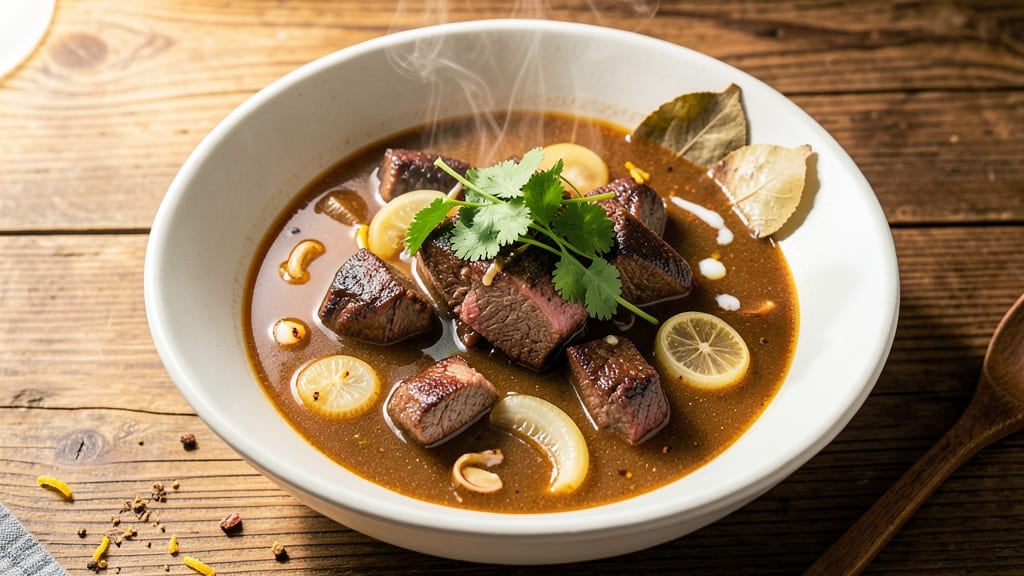
This beef nilaga soup recipe delivers the soul-soothing comfort of Filipino home cooking, where tender beef simmers for hours in a fragrant vinegar broth until it practically melts in your mouth. 💛 The secret lies in slow cooking—transforming tough cuts into fork-tender perfection while building layers of savory depth from garlic, ginger, and bay leaves.
Unlike quick soups, this dish rewards patience with rich, aromatic broth that clings to every bite.
The magic happens in the broth, where vinegar tenderizes the beef while balancing the natural sweetness of onions and potatoes. Traditional recipes call for cabbage and carrots to round out the vegetables, but the real star is the beef—marinated briefly in vinegar and spices before simmering until fall-apart tender.
This isn’t just soup; it’s a hearty meal that pairs perfectly with steamed rice to soak up every last drop of that fragrant broth.
What makes this recipe special is its ability to transform simple ingredients into something deeply comforting. The vinegar not only tenderizes the beef but also adds a bright, tangy note that cuts through the richness.
Slow simmering develops a depth of flavor that canned or instant soups can’t match, making this a dish worth the time investment. Each spoonful delivers layers of savory, slightly sweet, and tangy goodness.
Perfect for family gatherings or cozy weeknight dinners, this beef nilaga soup is the kind of dish that gets better with leftovers. The broth thickens slightly as it cools, intensifying the flavors even more.
Garnish with fresh green onions or a squeeze of calamansi for a bright finish that elevates the dish to restaurant-quality. Let’s get started on this timeless Filipino classic.
Ingredients for beef nilaga soup
Sixteen ingredients transform tough beef into tender perfection with vinegar's magic touch.
| Ingredient | Amount | Notes |
|---|---|---|
| Beef Chuck Roast 🥩 | 2 ½ lb | Tough cut for slow cooking |
| White Vinegar 💧 | ½ cup | For marinating and broth |
| Yellow Onions 🧅 | 2 whole | Chopped into wedges |
| Garlic Cloves 🧄 | 8 cloves | Minced for aromatic base |
| Fresh Ginger 🌿 | 2 tbsp | Grated, for zesty kick |
| Bay Leaves 🌿 | 2 whole | For deep aromatic flavor |
| Russet Potatoes 🥔 | 2 lb | Peeled, cut into chunks |
| Green Cabbage 🥬 | 1 lb | Cut into wedges |
| Carrots 🥕 | 1 lb | Whole, peeled, halved |
| Salt 🧂 | 1 ½ tsp | Kosher or sea salt |
| Ground Black Pepper 🌶️ | ½ tsp | Freshly ground preferred |
| Green Onions 🧅 | 4 whole | Sliced, for garnish |
| Calamansi or Lemon Juice 🍋 | 2 tbsp | For bright finish |
| Olive Oil 🫒 | 2 tbsp | For searing beef |
The beef cut matters here—chuck roast is ideal for its marbling and tenderness when slow-cooked. Filipino markets often carry it pre-cut, but most grocery stores stock it too. Look for good marbling (white fat streaks) for juicier results. The vinegar is non-negotiable—white vinegar works best, but apple cider vinegar adds subtle sweetness. Whole Foods or Asian grocery stores usually have calamansi if you want that authentic tang, but lemon juice works beautifully too. For the ginger, fresh is best—dried lacks the zesty punch this dish needs.
No calamansi? Lemon juice with a pinch of salt gets you close. Skipping the bay leaves? Extra thyme or oregano adds depth, but the aroma is different. The potatoes and carrots can be swapped for sweet potatoes or parsnips if you prefer. For the cabbage, Napa cabbage adds a sweeter note, but green cabbage is traditional. If you're short on time, pre-cut frozen veggies work—just thaw and drain well. The beef marinade? 1 hour minimum—overnight is even better for maximum tenderness.
This soup tastes even better the next day as flavors meld. Store in the fridge for 4-5 days, or freeze portions for 3 months. I always make double batches—leftovers reheat beautifully and taste richer. For serving, keep the broth hot and the beef warm separately, then combine just before eating. Garnish with fresh green onions and a squeeze of calamansi right before serving—that bright finish makes all the difference.
Why You'll Love This Recipe
- One-Pot Magic: I swear by this recipe when I’m too tired to scrub pots. Toss the beef, onions, and ginger into a single pot, add water and vinegar, then let it simmer—no straining, no fuss. The vinegar does all the work, tenderizing the meat while keeping the broth bright.
- Ginger-Garlic Punch: That first spoonful of broth? Chef’s kiss. The vinegar cuts through the richness of the beef, while the fresh ginger and garlic add layers of warmth. It’s the kind of flavor that makes you want to slurp it straight from the pot—no shame.
- Weeknight Workhorse: This soup is my go-to for busy nights, but it also stars at Sunday family dinners. Serve it with rice for a quick meal, or let it cool for packed lunches. Honestly, I’ve even turned it into a filling for dumplings—versatility at its finest.
- Budget-Friendly Feast: A single chuck roast stretches for days, and the ingredients cost pennies. The vinegar keeps it from drying out, so leftovers taste just as good reheated. Between us? This is how I feed my household without breaking the bank.
Step-by-step instructions for beef nilaga soup
Slow-cooked beef becomes melt-in-your-mouth tender in this fragrant vinegar broth.
🔥 Step 1: Sear the Beef Chuck Roast for Depth of Flavor
Heat a large Dutch oven over medium-high heat and add the 2 tablespoons olive oil. Once shimmering, place the 2.5 lb beef chuck roast in the pot, turning to coat all sides with oil. Sear for 4-5 minutes per side until deeply browned—this creates the Maillard reaction that builds rich flavor in the broth.
I press down gently on the roast during the first minute to prevent curling, which ensures even contact with the hot pan. Remove the beef and set aside on a plate. Don't drain the browned bits—they're packed with flavor that will form the base of your soup.
🍳 Step 2: Build the Aromatic Vinegar Broth
In the same Dutch oven, add the 2 whole yellow onions (chopped into wedges), 8 cloves garlic (minced), and 2 tablespoons fresh ginger (grated). Cook over medium heat for 5-6 minutes until the onions soften and the garlic turns golden—this prevents bitter flavors in the final broth.
Pour in the ½ cup white vinegar and scrape up all the browned bits from the bottom of the pot. Add 2 whole bay leaves, 1½ teaspoons salt, and ½ teaspoon ground black pepper. Stir well, then pour in 8 cups water (or enough to cover the beef by 2 inches). Bring to a gentle boil over high heat.
⏰ Step 3: Slow-Simmer for Maximum Tenderness
Return the seared beef to the pot and reduce heat to low. Partially cover and simmer for 1½ hours, skimming off any foam that rises to the surface. This gentle cooking breaks down the connective tissue, transforming tough chuck roast into fork-tender beef.
After 1½ hours, add the 2 lb russet potatoes (cut into chunks), 1 lb green cabbage (cut into wedges), and 1 lb carrots (peeled and halved). The vegetables will cook through in the remaining time, absorbing the rich beef broth.
🥘 Step 4: Finish with Bright Citrus Notes
Continue simmering uncovered for another 30-40 minutes until the beef is fork-tender and the vegetables are easily pierced with a knife. Taste and adjust seasoning—you may need to add more salt depending on your preference.
Remove the beef from the pot and let it rest for 5 minutes before shredding it with two forks. Return the shredded beef to the pot and stir in the 2 tablespoons calamansi or lemon juice. This final touch brightens the rich broth with a refreshing acidity that cuts through the meal's heartiness.
🍽️ Step 5: Serve with Fresh Garnishes
Ladle the hot soup into bowls, garnishing each serving with 4 sliced green onions. The vibrant green color contrasts beautifully with the rich broth and tender beef. Serve immediately with steamed rice to soak up every last drop of that fragrant, vinegar-infused beef broth.
Each spoonful should deliver perfectly tender beef, sweet potatoes, crisp-tender cabbage, and carrots all bathed in a broth that's tangy from vinegar but balanced by the bright citrus finish. The aroma alone will have everyone gathering around your table!
Pro Tips For Making Beef Nilaga Soup
- Sear the Beef First: That chuck roast won’t melt in your mouth if you skip this—high heat for 3-4 minutes per side until deep brown. I learned this the hard way when my first batch turned out dry despite hours of simmering. The crust locks in flavor and keeps the meat tender.
- Peel and Slice Ginger Thin: No need for fancy julienne skills—just thin slices (about 1/8-inch) so they infuse without turning to mush. Thick chunks sit like rocks and make the soup taste uneven. (Yes, even if you’re impatient like me, this makes a real difference.)
- Add Vinegar Last: Tossing it in early curdles the broth and turns your soup into vinegar punch. Wait until the last 10 minutes—just enough to brighten the flavor without killing the depth. Trust me, your future self will thank you.
- Simmer Low and Slow: This isn’t a race—keep it at a bare simmer (tiny bubbles, not rolling) for at least 2.5 hours. I used to rush it, and the beef came out chewy. Low heat breaks down collagen, turning tough chuck into fork-tender perfection. No shortcuts here.
Essential equipment for this recipe
Dutch Oven Essentials
The heart of this recipe beats in a heavy-duty Dutch oven—I swear by my Lodge 5.5-quart with lid. Its thick walls distribute heat evenly, preventing hot spots that could burn your onions or scorch the beef.
The lid helps trap steam during simmering, which is crucial for breaking down collagen in the beef. If you don’t own one, a stainless steel stockpot with lid (like All-Clad) works too, but monitor heat more carefully. 🔥
Precision Thermometer
While this recipe doesn’t require exact temperatures like sous vide, a meat thermometer ensures your beef reaches perfect doneness. I use a Thermoworks Smoke—it’s durable and gives instant readings. Insert the probe into the thickest part of the beef; it should hit 195-205°F for fork-tender results.
For the broth, keep it at a gentle simmer (small bubbles, not a rolling boil) to prevent curdling or overcooking the veggies.
Immersion Blender (Optional)
If you love ultra-smooth broths, an immersion blender (like Ninja NB1100) lets you blend directly in the pot for a velvety texture without transferring hot liquid. Pulse for 10-15 seconds after removing the beef, then return it to the pot.
Skip this step for a rustic, chunky broth—both styles are delicious, but blending adds a restaurant-quality finish. For extra richness, strain the broth through a fine-mesh sieve to remove any stray bits.
Vegetable Prep Tools
Efficient prep makes all the difference. A sharp chef’s knife (I prefer Wüsthof) and mandoline (for even potato/carrot slices) speed up chopping. For cabbage, a large cutting board (like John Boos 24x18-inch) gives you space to work.
If you’re short on time, pre-cut frozen veggies (like Birds Eye Steamer Veggies) save 20 minutes—just thaw and drain well before adding to the pot. 🥬
Storage Containers
Leftovers taste even better the next day, so invest in airtight glass containers (like Pyrex 8-cup bowls) for fridge storage. For freezing, use quart-sized freezer bags—squeeze out excess air to prevent freezer burn. Label with the date; this soup keeps for 3 months in the freezer.
When reheating, add 2-3 tablespoons of broth to prevent drying out. A slow cooker on low heat is ideal for reheating—it gently warms the soup without breaking down textures.
Nutrition facts
Frequently asked questions about beef nilaga soup
Why does vinegar make the beef so tender?
Vinegar contains acetic acid, which breaks down collagen in the beef's connective tissue during slow cooking. The acid also helps tenderize the meat while adding a bright, tangy flavor that balances the richness. Marinating the beef in vinegar for even 1 hour before cooking enhances this effect.
Can I use a slow cooker instead of a Dutch oven?
Brown the beef in a skillet first, then transfer everything to a 6-quart slow cooker with 8 cups water. Cook on low for 8 hours or high for 5 hours, adding vegetables in the last 1 hour. The slow cooker maintains gentle heat, perfect for tenderizing the beef.
What if my beef isn't tender after cooking?
If the beef feels tough, it likely didn't simmer long enough. Extend cooking time by 30-60 minutes on low heat or add ½ cup more vinegar to the broth—it will continue tenderizing. For extra insurance, check the internal temperature: it should reach 195-205°F for perfect tenderness.
Can I make this soup without bay leaves?
Yes, but the flavor will be different. Replace bay leaves with 1 teaspoon dried thyme or oregano for a similar aromatic depth. If you're avoiding herbs entirely, add ½ teaspoon ground coriander or 1 cinnamon stick for warmth. The vinegar and garlic will still carry the dish!
How do I make this soup spicier?
Add 1-2 tablespoons of chopped chili peppers (like siling labuyo) when building the broth, or stir in ½ teaspoon chili flakes at the end. For heat lovers, simmer the beef with 1 sliced Thai chili or 1 teaspoon gochugaru (Korean chili flakes)—adjust to taste!