
Soups & Stews
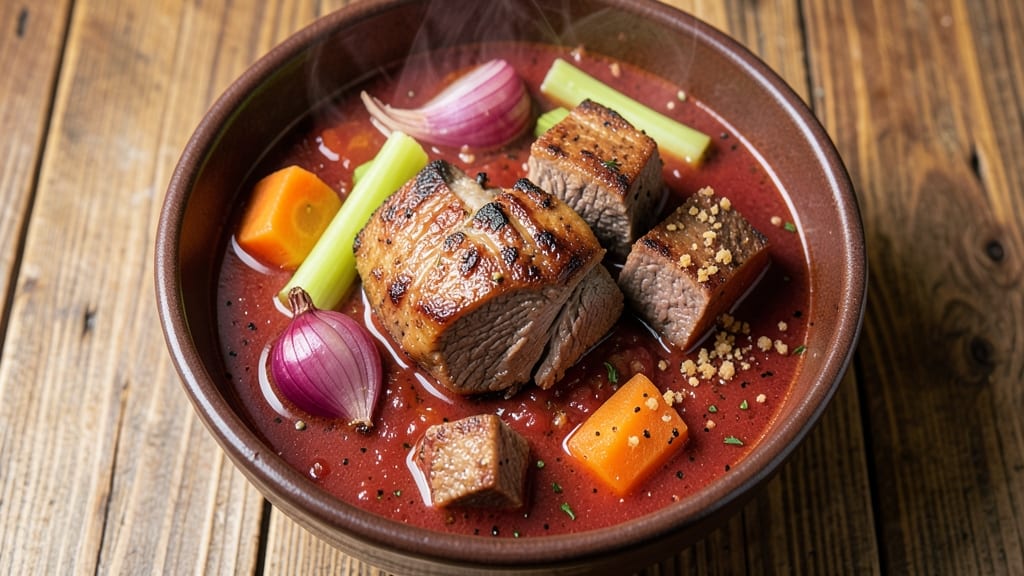
This beef pot roast soup recipe transforms tough cuts into melt-in-your-mouth tenderness through slow simmering and deep umami flavor development. The secret lies in proper searing and braising—techniques that unlock rich, caramelized depth while keeping the broth velvety and the beef fork-tender.
After years of perfecting this dish, I've found that patience pays off in every spoonful.
The process begins with browning the beef to build flavor, then simmering it low and slow until the meat falls apart. Carrots, celery, and onions form the aromatic base, while beef broth and tomatoes create a robust foundation.
The result is a soup where each component—tender beef, perfectly cooked vegetables, and deeply flavorful broth—works in harmony. This isn't just soup; it's a comforting, hearty meal that feels like a hug in a bowl.
What makes this recipe stand out is its ability to deliver restaurant-quality results at home with simple techniques. The slow cooking process infuses the broth with maximum flavor, while the right combination of herbs and spices elevates every bite.
Whether you're feeding a family or meal prepping for the week, this soup delivers consistent, satisfying richness that's hard to resist.
Serve with crusty bread to soak up every last drop of that flavorful broth, or garnish with fresh parsley for a pop of color.
The beauty of this recipe lies in its versatility—it's perfect for chilly evenings, game days, or whenever you crave a meal that feels both nourishing and indulgent. Let's get started on creating this slow-simmered masterpiece.
Ingredients for beef pot roast soup
Here's everything you need to create this slow-simmered masterpiece with restaurant-quality depth.
| Ingredient | Amount | Notes |
|---|---|---|
| Beef Chuck Roast 🥩 | 2 ½ lb | Pre-cut into 1.5-inch cubes |
| Yellow Onion 🧅 | 1 whole | Chopped into 1/2-inch pieces |
| Carrots 🥕 | 4 medium | Peeled and cut into 1-inch chunks |
| Celery Stalks 🧄 | 4 whole | Trimmed and chopped into 1-inch pieces |
| Garlic Cloves 🧄 | 6 cloves | Minced for deep flavor |
| Tomato Paste 🍅 | ½ cup | For rich umami depth |
| Beef Broth 💧 | 6 cups | Low-sodium preferred |
| Red Wine 🍷 | 1 cup | Bold dry variety like Cabernet |
| Fresh Thyme 🌿 | 2 tbsp | Leaves only, chopped fine |
| Fresh Rosemary 🌿 | 1 tbsp | Chopped, stems removed |
| Bay Leaves 🌿 | 2 whole | For aromatic depth |
| Olive Oil 🫒 | 2 tbsp | Extra-virgin for searing |
| Salt 🧂 | 1 ½ tsp | Kosher or sea salt |
| Black Peppercorns 🌶️ | 1 tsp | Freshly cracked |
| All-Purpose Flour 🌾 | 2 tbsp | For dusting beef cubes |
The beef is non-negotiable here—chuck roast is your best bet for that melt-in-your-mouth texture. Look for good marbling at Costco or your local butcher shop; they'll often cut it into cubes for you. The tomato paste might seem like a small amount, but it's what builds that deep umami flavor. I grab mine from Trader Joe's in the squeeze tubes—no waste, lasts forever. Fresh thyme and rosemary make all the difference, so grab a small bunch and use half here, half for garnish if you're feeling fancy.
No red wine? Dry white wine or extra beef broth with a splash of balsamic works in a pinch. Short on carrots? Substitute with parsnips or sweet potatoes—they hold up just as well. The bay leaves? One is fine, but two gives that extra depth. If you're prepping ahead, chop all your veggies and store them in separate containers in the fridge for up to 5 days. The beef can sit in the fridge for 2 days before cooking—just pat it dry first to help it brown better.
This soup tastes even better the next day—3-4 days in the fridge, honestly. I always make a double batch and freeze half in portions. The broth reduces slightly when reheated, so add a splash of water or broth when warming. For serving, I like to toast up some crusty bread and sprinkle with fresh parsley. The leftovers reheat beautifully—just stir in a splash of water if it's too thick. Keeps for 3 months in the freezer if you portion it right.
Why You'll Love This Recipe
- One-Pot Magic: I swear by this recipe—just toss everything in one pot, walk away, and let the slow cooker do the work. No chopping stress, no messy pans, and that deep, rich flavor develops all on its own.
- Rich, Meat-Focused Flavor: The beef chuck roast practically melts into tender perfection, while the garlic and onions caramelize into something irresistible. Honestly, the first bite makes me forget it’s soup—it’s more like a hearty hug in a bowl.
- Leftovers That Feel Fresh: This soup only gets better the next day. I’ll be real: my freezer is packed with portions because reheating it feels like making something new—thick, velvety, and still packed with that beefy goodness.
- Budget-Friendly Crowd-Pleaser: A big cut of beef chuck stretches far, and the veggies (carrots, celery, onions) are pantry staples. Between us, this is my go-to for game nights or when friends drop by—everyone leaves happy, and I leave with empty pockets (the good kind).
Step-by-step instructions for beef pot roast soup
Here's how to build a deeply flavorful soup that transforms tough chuck roast into melt-in-your-mouth perfection.
Sear the Beef for Maximum Flavor
Heat a large Dutch oven over medium-high heat until hot. Add the 2 tablespoons olive oil and swirl to coat the bottom. Working in batches if needed, add the 2.5 lb beef chuck roast cubes in a single layer. Let them sear undisturbed for 3-4 minutes per side until deeply browned.
This searing step is non-negotiable—it develops the Maillard reaction that creates deep, meaty flavor. Don't crowd the pan or the temperature will drop and you'll end up with steamed beef instead of browned. Once all cubes are golden, remove them and set aside on a plate.
Build the Flavor Base
In the same Dutch oven, add the 1 whole chopped yellow onion, 4 chopped carrots, and 4 chopped celery stalks. Cook for 5-6 minutes until the vegetables begin to soften and the onions turn translucent. Add the 6 minced garlic cloves and cook for 30 seconds until fragrant.
Stir in the 0.5 cup tomato paste and cook for another 2 minutes until it darkens slightly. This tomato paste forms the rich umami foundation of the soup. Sprinkle the beef cubes with the 2 tablespoons all-purpose flour and return them to the pot, tossing to lightly coat.
Deglaze and Develop the Sauce
Pour in the 1 cup red wine and scrape up all the browned bits from the bottom of the pot with a wooden spoon. This deglazing step captures all the concentrated flavor you just created. Let the wine simmer for 3-4 minutes until reduced by half and slightly thickened.
Add the 6 cups beef broth, 1.5 teaspoons salt, 1 teaspoon cracked black peppercorns, 2 whole bay leaves, 2 tablespoons fresh thyme, and 1 tablespoon fresh rosemary. Bring to a gentle simmer, then reduce heat to low to maintain a steady bubble.
Slow-Simmer for Tender Perfection
Cover the Dutch oven and let the soup simmer gently for 2.5-3 hours. This long cooking time is crucial—it breaks down the connective tissue in the beef, transforming it into fork-tender meat. Check periodically and add ½ cup water if the liquid level gets too low.
About 1 hour before the soup is done, skim any foam or fat that rises to the surface. This keeps the soup clean and ensures a smooth texture. The beef is ready when it easily pulls apart with two forks and the vegetables are tender but still hold their shape.
Finish and Serve
Remove the 2 whole bay leaves and discard them. Taste the soup and adjust seasoning if needed—you might need a little more salt or pepper depending on your broth. For a richer texture, you can mash a few of the cooked carrots against the side of the pot to thicken the broth slightly.
Ladle the soup into bowls and serve immediately. Each spoonful should deliver tender beef, aromatic vegetables, and a deep, savory broth that coats your palate. Pair with crusty bread to soak up every last drop of that flavorful liquid.
Pro Tips For Making Beef Pot Roast Soup
- SEAR THE ROAST FIRST: Skip the slow start—hit the chuck roast with high heat until it’s deep brown in a Dutch oven. That crust locks in flavor and makes the soup taste richer than if you just simmered it gently from the start. (Yes, even if you’re impatient like me.)
- CUT VEGETABLES UNIFORM: Onions, carrots, and celery should be roughly the same size—about 1-inch chunks. Uneven pieces mean some veggies turn to mush while others stay crunchy. I learned this the hard way when my soup looked like a veggie salad by the end.
- DON’T SKIP THE DEGLAZE: After browning the meat, splash in a splash of beef broth or red wine and scrape up those browned bits stuck to the bottom. Those bits are pure flavor—ignore them, and your soup will taste bland. (Your future self will notice.)
- USE COLD WATER FOR SOUP: Start with cold water instead of hot when adding the pot roast and veggies. It cooks more evenly and prevents the meat from toughening up. I was skeptical until I tried it—now it’s non-negotiable.
Make-ahead tips for beef pot roast soup
Prep Ahead Strategy
Chop all your vegetables—onions, carrots, and celery—and store them in separate airtight containers in the fridge for up to 5 days. The beef chuck roast can sit in the fridge for 2 days before cooking—just pat it dry first to help it brown beautifully.
I like to prep everything the night before so I can start cooking in the morning without stress. 📅
Freezing for Later
This soup freezes incredibly well, making it perfect for meal prep. After cooking, let it cool completely, then portion it into quart-sized freezer bags or glass containers, leaving 1 inch of headspace for expansion.
Label with the date—it keeps for 3 months in the freezer. When reheating, thaw overnight in the fridge, then warm on the stovetop with a splash of water or broth. ❄️
Reheating Like a Pro
For the best texture, reheat the soup on the stovetop over medium-low heat. Stir in ¼ cup water or beef broth to prevent sticking and help it heat evenly. If the soup seems too thick after reheating, add a splash more liquid—it reduces slightly when cooled.
I always taste and adjust seasoning after reheating, as flavors can mellow over time. 🔥
Make Double Batches
This soup tastes even better the next day, so I always double the recipe. Store the extra portion in the fridge for 3-4 days or freeze half.
The leftovers reheat beautifully and make quick lunches or dinners. Double batches also mean you can share with neighbors or save for busy nights—win-win! 💛
Vegetable Prep Shortcuts
Save time by using pre-cut vegetables from the store—I grab Trader Joe's pre-chopped mirepoix mix (onion, carrot, celery) to skip chopping entirely. If you're short on time, even frozen chopped vegetables work in a pinch, though fresh gives the best texture.
Just thaw them first and pat dry with a paper towel. 🥕
Herb Storage Tips
Fresh thyme and rosemary stay fresh longer if you wrap them in a damp paper towel and store them in a resealable bag in the fridge. Use half for cooking and save the rest for garnishing later.
Dried herbs work too, but fresh gives that vibrant, aromatic depth that makes this soup truly special. 🌿
Nutrition facts
Frequently asked questions
Can I use a different cut of beef for this soup?
While chuck roast is ideal for its marbling and flavor, you can substitute with beef shank or brisket for similar results. Avoid lean cuts like sirloin—they won't become tender with the same long cooking time. If using shank, increase simmering time to 3-4 hours for maximum tenderness.
Why does my beef pot roast soup turn out watery?
Watery soup often happens when the broth isn't reduced enough or too much liquid was added during cooking. Always simmer uncovered for the last 30 minutes to thicken the broth naturally. If needed, mash a few cooked carrots against the pot sides to release starch and thicken. Never add extra broth—trust the reduction process!
What's the best way to make this soup in a slow cooker?
Brown the beef first in a skillet, then transfer everything (including seared beef) to your slow cooker. Cook on low for 8 hours or high for 5-6 hours. The slow cooker method works beautifully—just skip the uncovered reduction step at the end. The texture will be slightly creamier than stovetop.
Can I make this soup vegetarian?
Replace the beef with mushrooms, lentils, or chickpeas for protein. Use vegetable broth instead of beef broth and add 1 teaspoon soy sauce for umami depth. The tomato paste and wine still work perfectly—just reduce cooking time to 1.5-2 hours since plant-based proteins cook faster.
How do I know when the beef is perfectly tender?
The beef is done when it easily falls apart with two forks and has a fork-tender texture. Test a piece after 2 hours of simmering—if it's still slightly chewy, return it to the pot for another 30-60 minutes. Overcooking won't hurt, but proper timing gives that melt-in-your-mouth quality.