
Soups & Stews
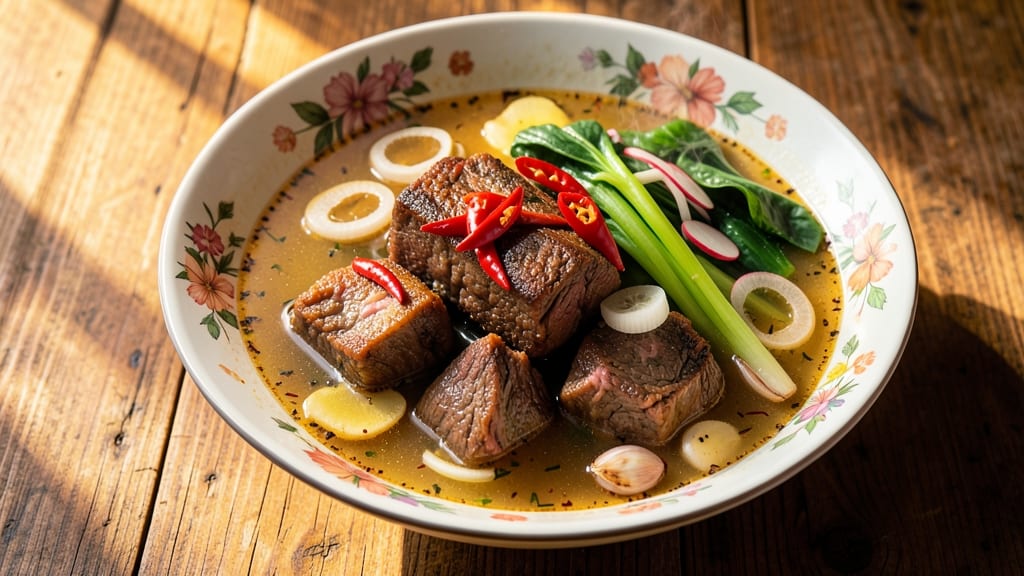
This beef sinigang soup recipe brings the bold, tangy flavors of Filipino comfort food to your kitchen with every simmering spoonful. The secret lies in balancing tamarind's sharp sourness with tender beef chunks and fresh vegetables—creating a broth so vibrant it transforms simple ingredients into a restaurant-worthy meal.
I've perfected this version after years of testing, ensuring the beef becomes fork-tender while the vegetables retain their crisp texture.
The magic happens in the broth, where tamarind paste or calamansi juice creates that signature tangy depth, while ginger, garlic, and chili add warmth. We use brisket or short ribs for rich flavor and melt-in-your-mouth tenderness, simmered low and slow until the meat practically falls apart.
The vegetables—radish, eggplant, and kangkong—absorb the broth's complex flavors while staying vibrant.
What you'll end up with is a steaming bowl of tender beef swimming in a rich, tangy broth, surrounded by perfectly cooked vegetables. The aroma alone will have everyone gathered around the table, while each bite delivers a perfect balance of sour, savory, and umami.
This is the kind of soup that feels like a hug in a bowl—comforting, satisfying, and full of Filipino soul.
Serve with steamed rice to soak up every last drop of that flavorful broth, or enjoy as-is for a hearty meal that's perfect for chilly evenings. The beauty of sinigang is its adaptability—adjust the sourness to taste and add your favorite vegetables. Let's get cooking!
Ingredients for beef sinigang soup
Six hearty servings of Filipino comfort—tender beef and vibrant vegetables simmered in a tangy tamarind broth that's pure umami magic.
| Ingredient | Amount | Notes |
|---|---|---|
| Beef Brisket or Short Ribs 🥩 | 2 lb | Cut into 1.5-inch chunks, bone-in preferred |
| Tamarind Paste 🍈 | ½ cup | Or 1 cup calamansi juice for brighter tang |
| White Onions 🧅 | 2 whole | Quartered, skins on for color |
| Garlic Cloves 🧄 | 8 cloves | Minced, not pre-minced jarred |
| Fresh Ginger 🌿 | ½ cup | Julienned, about 2-inch piece |
| Bird's Eye Chili Peppers 🌶️ | 4 whole | Adjust for heat preference |
| Daikon Radish 🥕 | 1 lb | Cut into 1-inch chunks, skin on |
| Eggplant 🍆 | 1 lb | Cut into 1-inch cubes, salted and drained |
| Kangkong (Water Spinach) 🌱 | 1 bunch | Trimmed, washed, cut into 2-inch pieces |
| Tomatoes 🍅 | 2 whole | Medium, quartered, or 1 cup diced |
| Fish Sauce 🍶 | 2 tbsp | Red Boat preferred for authentic flavor |
| Soy Sauce 🍶 | 1 tbsp | Light or regular, not low-sodium |
| Sugar 🍚 | 1 tbsp | Balances sourness, white or brown |
| Cooked White Rice 🍚 | 3 cups | For serving, jasmine preferred |
| Green Onions 🧅 | 4 whole | Thinly sliced, for garnish |
| Fresh Chili Leaves (Siling Labuyo) 🌿 | 4 whole | Optional, for garnish |
| Vegetable Oil 🫒 | ¼ cup | High smoke point for frying |
The beef is non-negotiable here—brisket or short ribs give that rich, melt-in-your-mouth texture. Costco or local butcher shops usually carry brisket pre-cut, but if you're buying a whole packer, ask for the flat cut. Look for good marbling—it's what makes the meat tender during long simmering. For the tamarind, Filipino markets carry paste in blocks, but the powdered kind works too (just add water). If you can't find tamarind, calamansi juice (or even lime juice in a pinch) will give that signature tang, though it's brighter. The ginger and garlic? Fresh is a must—jarred minced garlic has no soul in this dish.
No tamarind? Lime juice plus a pinch of sugar gets you close, though the depth won't be identical. Short on daikon? Regular radish or even turnips work, but the texture won't be as crisp. Eggplant can be swapped for zucchini or green beans, but they won't absorb the broth the same way. The fish sauce is key—Red Boat is the gold standard, but any good brand will do. If you're avoiding fish sauce, soy sauce plus a splash of vinegar mimics the umami. For the chili, Thai bird's eye peppers are easiest to find, but any small, hot chili works. Want it milder? Remove seeds and membranes first.
This soup tastes even better the next day—reheats beautifully with just a splash of water. Store in the fridge for up to 4 days, or freeze portions for 3 months. I always make a double batch because it disappears so fast. For serving, keep the rice hot in a steamer—jasmine rice holds up best to the broth. Garnish with green onions and chili leaves if you've got them, but honestly, the soup is already amazing without. The broth reduces as it sits, so add a little hot water when reheating if it's too thick.
Why You'll Love This Recipe
- Tamarind Magic in Minutes: The second you dissolve that tamarind paste in hot water, the broth transforms—no fancy reductions, no waiting hours. I’m talking real sour punch from just a spoonful, cutting through the richness of beef like a knife.
- Beef That Melts: Short ribs? Brisket? Either one falls apart with a fork, and the ginger-garlic base clings to every bite like it’s been simmering all day. (Between us, my lazy version uses a pressure cooker—same result, half the time.)
- Leftovers That Lie: This soup only gets better the next day. The flavors marry overnight, and reheating it is basically free lunch. I’ve brought jars to work for three days straight—no one ever guessed it was the same meal.
- Budget-Friendly Feast: A single brisket feeds six, and tamarind paste lasts forever. Onions and garlic? Pantry staples. This is the kind of recipe where you stretch every ingredient without sacrificing taste—my wallet thanks me every time.
Step-by-step instructions for beef sinigang soup
Here's how to create a deeply flavorful tamarind broth with melt-in-your-mouth beef and vibrant vegetables.
Prepare the Beef and Vegetables for Cooking
Begin by cutting the 2 lb beef brisket or short ribs into 1.5-inch chunks, leaving the bones intact if using short ribs. This size ensures even cooking and maximum flavor extraction. Pat the beef dry with paper towels—this helps develop a better sear later.
For the vegetables, quarter the 2 whole white onions (leave skins on for color) and cut the 1 lb daikon radish into 1-inch chunks. Cube the 1 lb eggplant into 1-inch pieces, then sprinkle with salt and let sit for 15 minutes to remove bitterness. Rinse and drain thoroughly before using. Trim the 1 bunch kangkong (water spinach), wash well, and cut into 2-inch pieces. Quarter the 2 whole tomatoes and slice the 4 whole green onions thinly for garnish later.
Sear the Beef and Build the Flavor Base
Heat 0.25 cup vegetable oil in a large pot over medium-high heat until shimmering. Working in batches, sear the beef chunks until deeply browned on all sides—this takes about 3-4 minutes per batch. Remove the beef and set aside, leaving the rich browned bits in the pot.
In the same pot, add the 8 minced garlic cloves and 0.5 cup julienned fresh ginger. Sauté for 1 minute until fragrant but not browned. Add the 4 whole bird's eye chili peppers (adjust for heat preference) and stir for 30 seconds to release their aroma. Pour in 4 cups of water and bring to a boil, scraping up any browned bits from the bottom of the pot—this is where all the flavor hides.
Simmer the Broth with Tamarind and Seasonings
Add the 0.5 cup tamarind paste, 2 tbsp fish sauce, 1 tbsp soy sauce, and 1 tbsp sugar to the pot. Stir well to dissolve the tamarind completely—this is key for that signature tangy flavor. Return the beef to the pot, reduce heat to low, and let it simmer uncovered for 1 hour. This slow cook time ensures the beef becomes fork-tender while the broth develops depth.
After 1 hour, add the 1 lb daikon radish chunks and 1 lb eggplant cubes. Simmer for another 15 minutes until the vegetables soften but still hold their shape. Taste the broth and adjust seasoning if needed—add more tamarind for tang, fish sauce for umami, or sugar to balance the acidity.
Finish with Vegetables and Garnishes
Add the 2 quartered tomatoes and 1 bunch kangkong (water spinach) to the pot. Simmer for 5-7 minutes until the water spinach wilts slightly but remains vibrant. The soup should be rich, tangy, and deeply flavorful at this point—each spoonful should sing with layers of taste.
Ladle the hot soup over 3 cups of cooked white rice and garnish with the 4 sliced green onions and 4 fresh chili leaves (siling labuyo) if using. Serve immediately while the broth is steaming hot—this is when the flavors truly shine. The combination of tender beef, silky broth, and fresh vegetables makes every bite unforgettable.
Pro Tips For Making Beef Sinigang Soup
- Brown the Beef First: I learned this the hard way—skipping the sear means flavorless broth. Pat the brisket or short ribs very dry, then hit them with high heat in a pot until deep brown, about 5-7 minutes per side. That crust dissolves into the soup, giving it real depth instead of just salty beef water.
- Peel and Slice Onions Now: Sounds basic, but I used to peel onions right before adding them to the pot. Bad move—they stew into mush. Instead, peel and slice all onions (white and green) before you start cooking. Store them in cold water in the fridge until needed—they’ll stay crisp and bright.
- Dilute Tamarind Paste Properly: Tamarind paste is thick stuff—if you just toss in a spoonful, you’ll end up with clumpy, bitter soup. Mix it with ¼ cup hot water first, then whisk it smooth. This also lets you taste and adjust the sourness before committing. Trust me, your soup will thank you.
- Simmer Low and Slow: After the initial boil, drop the heat to a gentle simmer—just tiny bubbles breaking the surface. I used to rush it, and the broth turned cloudy, the meat tough. Let it cook at least 1.5 hours (2+ for short ribs) so the collagen melts into rich, silky broth. No shortcut here.
Perfect pairings for this beef sinigang soup
Rice Pairing Perfection
Sinigang is all about the rice—it's the perfect vessel for soaking up that tangy, savory broth. I always serve it with jasmine rice because its slightly floral aroma complements the dish beautifully.
Cook 3 cups of rice (about 1.5 cups dry) in a rice cooker or pot, then fluff it gently with a fork before ladling the hot soup over it. The rice should be hot but not mushy—just warm enough to soften slightly from the broth's heat. 🍚
Side Dish Harmony
For a complete Filipino spread, add garlic fried rice or sinangag as a side. These crispy, garlicky rice bites add texture contrast and let everyone scoop up extra broth.
I also love serving lumpia (Filipino spring rolls) or adobo-fried chicken for a heartier meal. The key is balancing textures—crispy, chewy, and tender all in one bite. 🥟
Drink Pairings
Cool down the spice with a refreshing calamansi soda or sarsaparilla, both classic Filipino drinks that cut through the richness. For something stronger, a cold San Miguel beer (the national beer of the Philippines) pairs perfectly with the soup's bold flavors.
If you prefer wine, a crisp Sauvignon Blanc with citrus notes enhances the tamarind's tang. 🍺
Garnish Game-Changers
Fresh garnishes elevate sinigang from good to extraordinary. Always finish with green onions and siling labuyo (chili leaves) for a pop of color and heat. I also sprinkle toasted garlic bits or crushed peanuts for crunch.
For extra flair, add a drizzle of patis (fish sauce) or a squeeze of calamansi juice right before serving. These little touches make the dish feel restaurant-quality. 🌿
Spicy Kick Options
If you love heat, serve extra bird's eye chili peppers on the side for dipping. I also like adding sambal oelek or chili crisp for those who want to turn up the spice. For a milder option, offer pickled red onions—their tangy crunch balances the soup's sourness beautifully. 🌶️
Nutrition facts
Frequently asked questions
Can I substitute tamarind paste with something else?
Yes! If you can't find tamarind paste, use 1 cup calamansi juice for a brighter tang or 1 cup lime juice plus 1 tsp sugar for a milder sourness. For deeper flavor, try 1 tbsp vinegar (rice or cane) plus 1 tbsp sugar. The key is balancing acidity with sweetness to mimic tamarind's complexity.
How do I make the beef extra tender?
For melt-in-your-mouth beef, use bone-in short ribs or brisket and simmer for at least 1.5 hours on low heat. Add 1 bay leaf and 1 tsp baking soda (dissolved in water) to the broth to tenderize. Never rush the cooking—patience is key for that silky texture.
What vegetables can I use if I don't have kangkong?
Kangkong (water spinach) is traditional, but you can substitute with baby spinach, bok choy, or even regular spinach. For crunch, add sliced cucumber or cabbage—they hold up well in the broth. Avoid mushrooms as they absorb too much liquid and lose texture.
Why does my sinigang taste too sour?
Over-sourness happens when tamarind isn't balanced with sweetness. Add 1 tbsp sugar or honey and taste again. For a quicker fix, stir in 1 tsp fish sauce or soy sauce to round out the flavors. Remember: simmering reduces acidity, so adjust gradually before serving.
Can I make this soup in a slow cooker?
Brown the beef first, then transfer everything to the slow cooker. Cook on low for 6-8 hours or high for 3-4 hours. The slow cooker's gentle heat enhances tenderness. Add vegetables in the last 30 minutes to prevent mushiness. Perfect for hands-off cooking!