
Soups & Stews
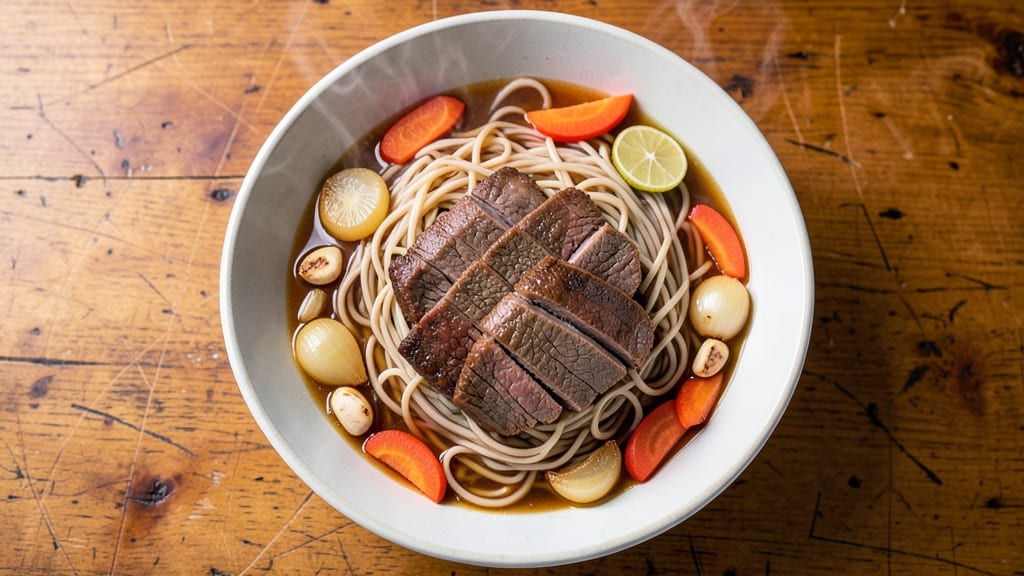
This beef soba noodle soup recipe delivers the perfect balance of rich umami broth, chewy noodles, and tender beef—each element working together for a deeply satisfying bowl. 💛 The secret lies in a slow-simmered beef broth infused with aromatic vegetables and a touch of soy sauce, creating layers of savory depth that transform simple ingredients into something extraordinary.
What sets this recipe apart is the combination of traditional techniques with modern twists. The beef is braised until fork-tender, while the soba noodles cook just until they reach that ideal chewy texture. The broth reduces gradually, intensifying its flavor and ensuring every spoonful is packed with warmth and richness.
By the time you assemble everything, you'll have a steaming bowl of soup where the tender beef practically melts in your mouth, the noodles provide satisfying chew, and the broth coats everything in a velvety, umami-rich sauce.
The aroma alone will have everyone gathering around the table, eager for their first taste.
Perfect for chilly evenings or as a comforting meal any time of year, this recipe scales beautifully for both small gatherings and larger crowds. The beauty of soba noodle soup is its versatility—easy to customize with your favorite garnishes or additional vegetables while maintaining its core appeal.
Ingredients for beef soba noodle soup
Rich umami broth meets chewy soba noodles and tender beef in this deeply satisfying bowl.
| Ingredient | Amount | Notes |
|---|---|---|
| Chuck Roast 🥩 | 1 ½ lb | Cut into 1-inch cubes |
| Soba Noodles 🍜 | 8 oz | Dried, buckwheat or 100% soba |
| Yellow Onion 🧅 | 1 whole | Chopped into 1/2-inch pieces |
| Carrots 🥕 | 3 medium | Peeled and sliced into 1/4-inch rounds |
| Fresh Ginger 🌿 | 1 inch | Peeled and sliced into thin coins |
| Garlic Cloves 🧄 | 6 cloves | Minced or finely chopped |
| Low-Sodium Soy Sauce 🥄 | ¼ cup | For umami depth |
| Dried Shiitake Mushrooms 🍄 | 4 whole | Rehydrated in hot water |
| Green Onion 🌱 | 3 whole | Thinly sliced for garnish |
| Sesame Oil 🫒 | 1 tbsp | For finishing |
| Vegetable Broth 💧 | 6 cups | Low-sodium preferred |
| Rice Vinegar 🍶 | 1 tbsp | Balances flavors |
| Sesame Seeds 🌾 | 1 tbsp | Toasted for garnish |
| Salt 🧂 | 1 tsp | Diamond Crystal preferred |
| Black Pepper 🌶️ | ½ tsp | Freshly ground |
The chuck roast is your secret weapon here—it's budget-friendly and breaks down beautifully into tender pieces. Look for well-marbled cuts at Whole Foods or your local butcher, and ask for it pre-cut if you're short on time. Soba noodles should be 100% buckwheat for that authentic chew, but if you can't find them, regular wheat soba works too. For the shiitake mushrooms, dried is perfect since they intensify flavor when rehydrated. Trader Joe's has a great bulk bin option if you want to stock up.
No fresh ginger? Substitute 1/2 teaspoon ground ginger, but it won't have the same zing. Running low on sesame oil? Toast the seeds in a dry pan first—they'll release their flavor even without the oil. The soy sauce can be swapped for coconut aminos if you're soy-sensitive, though you might want to add a pinch more salt. For extra depth, add 1 teaspoon of miso paste when you combine the broth ingredients. And if you're feeling adventurous, swap half the vegetable broth for dashi powder for a more traditional Japanese touch.
This soup tastes even better the next day—double the batch and store leftovers in airtight containers for 4-5 days. The noodles soften further when reheated, so add a splash of water to keep them chewy. For freezing, portion the broth separately from the noodles (they get mushy when frozen). Costco sells pre-cut chuck roast in bulk—perfect for making this again next week. And if you have extra broth, use it for stir-fries or rice bowls.
Why You'll Love This Recipe
- One-Pot Magic: I swear by this—just sear the chuck roast with onions and ginger, then let it slow-cook in the same pot. No extra dishes, no fuss, and that deep, savory broth builds right into the noodles.
- Umami Bomb: That chuck roast? It practically melts into the broth, turning tender and rich—like a slow-cooked secret. Add the soba noodles at the end, and you get that perfect bite: chewy strands with beef so flavorful, you’ll forget it’s budget-friendly.
- Meal Prep MVP: Between us, this keeps perfectly for days. I make a big batch on Sundays, and by Wednesday, it’s still hearty enough to feed the whole family. Reheat the broth and noodles separately, toss together—no soggy mess.
- Budget-Friendly Luxury: Chuck roast stretches for miles here, and soba noodles are a steal. Honestly, I’ve served this to guests who thought it was a restaurant dish. They had no idea it cost me less than $10 to feed six people.
Step-by-step instructions for beef soba noodle soup
Here's how to build a rich, umami-packed broth with perfectly tender beef and chewy soba noodles.
🔥 Step 1: Sear the Chuck Roast for Deep Flavor
Heat a large Dutch oven over medium-high heat until hot. Add the 1.5 lb chuck roast cut into 1-inch cubes and sear undisturbed for 3-4 minutes until deeply browned on all sides. This step develops the Maillard reaction, creating that irresistible meaty depth we want in the broth.
I like to work in batches if needed—don't crowd the pan or the beef will steam instead of sear. Once all pieces are golden brown, transfer them to a plate. You'll want to keep them warm while you prep the rest of the ingredients, but don't worry about cooking them through yet—that happens in the broth.
👨🍳 Step 2: Build the Umami-Packed Base
In the same Dutch oven, add 1 tablespoon sesame oil and swirl to coat the bottom. Add ½-inch chopped yellow onion and cook for 3 minutes until softened. Add ¼-inch sliced carrots, thin ginger coins, and minced garlic cloves, stirring constantly for 2 minutes until fragrant.
Here's where the magic happens: pour in the 6 cups vegetable broth and scrape up all those browned bits from the bottom of the pan. These bits are packed with flavor—don't miss this step! Add the 4 rehydrated dried shiitake mushrooms (squeeze out any excess water) and bring to a gentle boil.
🔥 Step 3: Simmer the Beef Until Fork-Tender
Return the seared beef to the pot along with ½ cup low-sodium soy sauce and 1 teaspoon salt. Reduce heat to low and simmer uncovered for 1½ to 2 hours, skimming any foam that rises to the surface. You're looking for the beef to become fork-tender—when it pulls apart easily with two forks.
I know it seems like a long time, but patience pays off here. The longer the beef simmers, the more it breaks down into the broth, creating that rich, velvety texture. Stir occasionally to prevent sticking, but don't over-stir—you want to minimize surface foam.
🍳 Step 4: Prepare and Add the Soba Noodles
While the beef simmers, prepare the 8 oz soba noodles according to package instructions—usually 4-5 minutes in boiling water until al dente. Drain and set aside. Here's the thing—soba noodles continue cooking in the hot broth, so they'll finish perfectly without becoming mushy.
When the beef is tender, add the cooked soba noodles to the pot along with 1 tablespoon rice vinegar and ½ teaspoon black pepper. Simmer for just 1-2 minutes—enough to heat through and infuse with flavor, but not so long they turn to mush. Taste the broth and adjust seasoning if needed.
🥘 Step 5: Finish and Serve with Fresh Garnishes
Remove the pot from heat and let it sit for 5 minutes to allow the noodles to absorb some of the broth. This resting step is crucial—it lets the flavors meld and the noodles firm up slightly. Skim off any excess fat that has risen to the surface if desired.
Ladle the soup into bowls and garnish each serving with thinly sliced green onion and a drizzle of 1 tablespoon sesame oil. Sprinkle with 1 tablespoon toasted sesame seeds just before serving for that perfect crunch and nutty aroma. The contrast of textures—chewy noodles, tender beef, crisp sesame seeds—makes every bite satisfying.
Pro Tips For Making Beef Soba Noodle Soup
- Sear the Chuck First: Chuck roast releases its best flavor when browned deeply—don’t skip this step. Heat your pot until a drop of water sizzles instantly, then sear the meat in batches (2-3 minutes per side) until it’s dark and crusty. I used to rush this, and the broth always tasted flat afterward.
- Slice Ginger Thin: Fresh ginger loses its bite when boiled whole. Use a mandoline or sharp knife to slice it paper-thin (1-2mm) so it infuses the broth without turning it bitter. Toss the slices in at the end if you’re worried about muddiness—just 5 minutes makes a difference.
- Don’t Boil the Noodles Dry: Soba noodles turn mushy fast. Cook them in the hot broth directly (no pre-boiling) for 3-4 minutes—just until they float and soften. Drain only if the broth is too thin, but most of the time, you’ll want that starchy richness.
- Save the Meat Juices: After shredding the chuck, don’t pour out the pot—those juices are liquid gold. Use a slotted spoon to transfer the meat, then stir the fond into the broth with a splash of water. It’ll thicken and deepen the flavor without extra effort.
Make-ahead tips for this recipe
Broth Prep Ahead
Make your beef broth 1-2 days ahead—it develops even deeper flavor as it rests. Store it in a glass airtight container in the fridge. When reheating, warm it gently on the stove over low heat to preserve its richness.
I always double the batch because this broth is perfect for other meals too. 💛
Noodle Prep Shortcut
Cook your soba noodles 1 day ahead and store them in the fridge in a sealed container with a damp paper towel to prevent drying. When ready to serve, simply reheat them in the hot broth for 1-2 minutes—they'll finish perfectly without overcooking.
This saves 10 minutes on busy days.
Beef Braising Hack
For maximum tenderness, braise the beef overnight in the fridge—up to 12 hours. This cold braising method breaks down the meat fibers even more, resulting in melt-in-your-mouth texture.
Just transfer the seared beef to a slow cooker with broth and soy sauce, then refrigerate. Cook on low for 8 hours the next day.
Garnish Prep
Toast your sesame seeds 2 days ahead and store them in a small airtight jar at room temperature. Thinly slice green onions and store them in a sealed container in the fridge for up to 5 days.
This way, you can assemble your soup bowls quickly with fresh garnishes whenever needed.
Freezer-Friendly Components
Freeze the cooked beef and broth separately in quart-sized freezer bags for up to 3 months. When ready to serve, thaw overnight in the fridge, then reheat the beef in the broth.
Add fresh noodles just before serving to maintain their texture. This is my go-to method for meal prep Sundays. ❄️
Portion Control Tips
For easy reheating, portion the soup into individual microwave-safe containers before storing. Add 1 tablespoon water to each container before reheating to prevent drying. Microwave on medium power for 2-3 minutes, stirring halfway through. The extra water keeps the noodles chewy and the broth flavorful.
Nutrition facts
Frequently asked questions about beef soba noodle soup
Can I substitute regular wheat noodles for soba?
While you can use wheat noodles, they won't offer the same nutty flavor or satisfying chew that authentic soba provides. For a closer match, try 100% buckwheat soba noodles—they have a distinct earthy taste that pairs beautifully with the umami beef broth. If you're using wheat soba, add an extra ½ teaspoon sesame oil to compensate for the flavor difference.
How do I make the broth richer without extra fat?
For a deeper flavor without excess fat, skim the surface foam during simmering and discard it. Add 1 tablespoon miso paste or 1 teaspoon fish sauce when combining ingredients—they'll amplify umami without adding calories. Another trick is to toast 1 teaspoon dried shiitake powder (blend dried mushrooms into a fine powder) and sprinkle it into the broth during the final 5 minutes of cooking.
Why did my beef turn out tough instead of tender?
Tough beef usually means it wasn't cooked long enough or the heat was too high. For best results, simmer on low heat and check tenderness after 1½ hours—it should pull apart easily with two forks. If you're short on time, try the cold braising method: sear the beef, then refrigerate it in broth overnight before cooking on low heat for 8 hours the next day.
Can I make this soup spicier?
Add ½ teaspoon red pepper flakes or 1 teaspoon gochujang (Korean chili paste) when combining the broth ingredients. For heat control, stir in 1 teaspoon sugar along with the rice vinegar—it balances the spice beautifully. Garnish with sliced jalapeños or a drizzle of sriracha before serving for extra kick.
What's the best way to reheat leftovers?
Reheat only the broth and beef separately, then combine with fresh noodles. Portion the beef and broth into microwave-safe containers, cover with a damp paper towel, and reheat on medium power for 2 minutes. Add cooked soba noodles to the hot broth just before serving—they'll absorb flavor without becoming mushy. For stovetop reheating, warm over low heat for 5 minutes, stirring occasionally.