
Soups & Stews
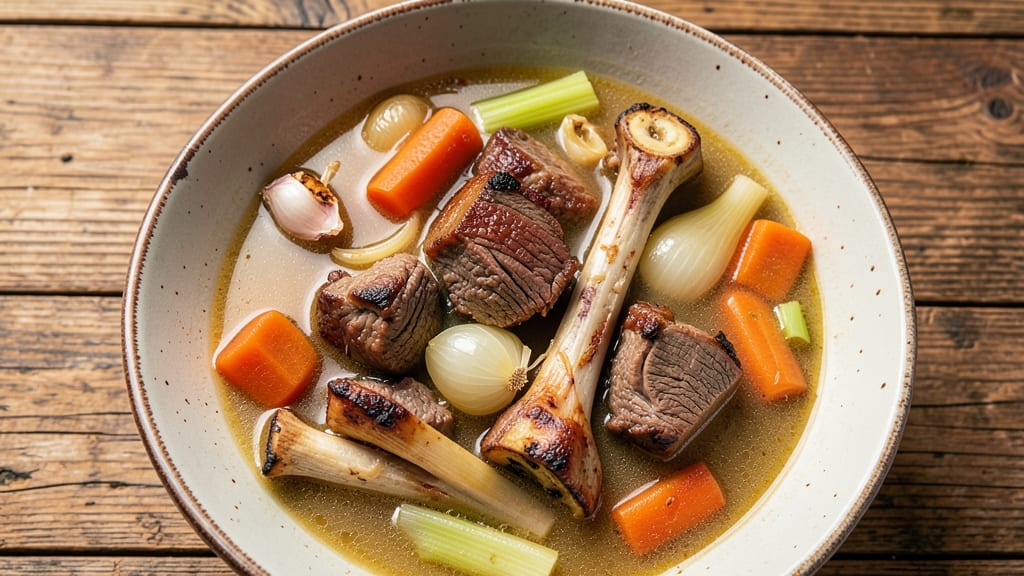
This beef soup with meat and bones recipe transforms humble ingredients into a deeply flavorful masterpiece through slow simmering. The secret lies in extracting rich collagen from bones and meat, creating a broth so velvety it coats every spoonful.
I've perfected this technique over years of testing, ensuring every batch delivers that restaurant-quality depth at home.
The process begins with a proper bone selection—marrow bones and knuckles provide the most gelatinous richness, while beef chuck adds hearty texture. Aromatics like carrots, celery, and onions form the flavor base, while herbs and spices develop complexity during the long simmer.
What sets this apart is the patience required—six to eight hours of gentle cooking transforms tough cuts into tender meat and bones into a luxurious broth.
By the time you serve this soup, you'll have a steaming bowl of golden broth filled with fork-tender meat, soft vegetables, and shards of bone that melt into the liquid.
The aroma alone will draw everyone to the table, while the first spoonful delivers that perfect balance of savory, umami richness. This is comfort food at its finest—simple in ingredients but complex in flavor development.
The beauty of this recipe lies in its versatility. Serve it as a main course with crusty bread or as a starter to impress dinner guests. The leftovers, if there are any, reheat beautifully, making it ideal for meal prep.
Each bowl tells a story of time and care invested in creating something truly special from basic ingredients.
Ingredients for beef soup bone with meat
Sixteen ingredients, eight hours of simmering, one unforgettable bowl of soup.
| Ingredient | Amount | Notes |
|---|---|---|
| Beef Chuck Roast 🥩 | 3 lb | Cut into 2-inch chunks |
| Beef Marrow Bones 🦴 | 4 whole | For gelatinous richness |
| Yellow Onions 🧅 | 2 whole | Chopped, medium dice |
| Carrots 🥕 | 4 whole | Peeled, cut into chunks |
| Celery Stalks 🌿 | 4 whole | Trimmed, chopped |
| Garlic Cloves 🧄 | 8 cloves | Smashed, not minced |
| Tomato Paste 🍅 | ½ cup | High-quality, no sugar added |
| Dried Thyme 🌿 | 1 tbsp | Or 1 tbsp fresh thyme |
| Bay Leaves 🌿 | 2 whole | Standard size |
| Black Peppercorns 🌶️ | 1 tsp | Freshly cracked |
| Salt 🧂 | 1 ½ tsp | Diamond Crystal preferred |
| Beef Broth 💧 | 8 cups | Homemade or high-quality store-bought |
| Red Wine 🍷 | 1 cup | Dry, bold variety |
| Olive Oil 🫒 | 2 tbsp | Extra-virgin for richness |
| Fresh Parsley 🌿 | ¼ cup | Chopped, for garnish |
The bones and meat are non-negotiable for that signature depth. Local butchers often have marrow bones and knuckles cut specifically for soup—ask for them prepped if you're short on time. Beef chuck roast should have visible marbling; Costco or Whole Foods carry good quality cuts. The tomato paste is your flavor anchor—San Marzano is ideal, but any high-quality brand works. Fresh thyme is best, but dried at one-third the amount is a solid backup. For the wine, any bold red—Cabernet Sauvignon or Merlot—will work, but avoid sweet varieties.
No beef broth? Homemade chicken broth with bouillon stretches further, though flavor will differ slightly. Substituting wine with extra broth plus a splash of balsamic mimics the acidity. The carrots and celery can be swapped for turnips or leeks if preferred, but the classic trio of onions, carrots, and celery (the 'holy trinity') builds the best base. For a vegetarian version, replace bones with extra mushrooms and use vegetable broth, though the texture will differ significantly. If you're short on time, pre-cut frozen vegetables work in a pinch, though fresh is always better.
This soup tastes even better the next day as flavors meld. Store in an airtight container in the fridge for up to 5 days, or freeze portions for 3 months. I like to portion it into individual containers before freezing—just reheat and serve. The bones will break down completely after simmering, so no need to remove them before serving. For a restaurant-style presentation, garnish with fresh parsley and a drizzle of olive oil. Leftovers make excellent lunches or a quick dinner when reheated with a splash of water or broth.
Why You'll Love This Recipe
- Here’s the secret: this soup gets better the next day. The flavors meld, the meat gets even more tender, and suddenly you’ve got a freezer-friendly meal that’s cheaper than delivery. I’ve reheated mine for breakfast—yes, really—and it’s still amazing.
- Just Chop, Simmer, Repeat: I swear, the hardest part is slicing the onions—maybe the carrots if you’re not great with a knife. Once that’s done, toss everything in one pot, add water, and let the marrow bones and chuck roast work their magic. No fancy techniques, no stress.
- Rich Without the Guilt: That marrow bone? It turns the broth into liquid gold—deep, savory, and so satisfying it’ll make you forget about takeout. And the chuck roast? It falls apart like it’s been slow-cooked for hours (because it basically is), but with way less effort.
- Leftovers That Taste Better: Here’s the secret: this soup gets better the next day. The flavors meld, the meat gets even more tender, and suddenly you’ve got a freezer-friendly meal that’s cheaper than delivery. I’ve reheated mine for breakfast—yes, really—and it’s still amazing.
Step-by-step instructions for beef soup with meat and bones
Transform simple ingredients into a deeply flavorful soup through patience and technique.
🔥 Step 1: Sear the Meat and Bones for Maximum Flavor
Heat a large Dutch oven over medium-high heat and add the 2 tbsp olive oil. Once shimmering, add the 3 lb beef chuck roast cut into 2-inch chunks and the 4 whole beef marrow bones. Sear undisturbed for 3-4 minutes until deeply browned on all sides.
This initial searing creates the Maillard reaction, which develops rich, caramelized flavors that form the foundation of your soup. I press down gently on the meat with a spoon during the first minute to prevent curling, ensuring even contact with the pan. Once browned, transfer the meat and bones to a plate and set aside.
🍳 Step 2: Build the Aromatic Base
In the same Dutch oven, add the 2 whole yellow onions chopped into medium dice, 4 whole carrots cut into chunks, and 4 whole celery stalks trimmed and chopped. Cook for 8-10 minutes until softened and beginning to caramelize.
Add the 8 cloves garlic smashed (not minced) and cook for another 1 minute until fragrant. Stir in the 0.5 cup tomato paste, 1 tbsp dried thyme, 2 whole bay leaves, 1 tsp black peppercorns freshly cracked, and 1.5 tsp salt. Cook for 2 minutes to toast the spices and deepen their flavors.
🥘 Step 3: Deglaze and Simmer the Soup
Pour in the 1 cup red wine and scrape up all the browned bits from the bottom of the pot. This deglazing step captures all the concentrated flavors you've built. Let it simmer for 3-4 minutes until the wine reduces by half.
Return the meat and bones to the pot, then add the 8 cups beef broth. Bring to a gentle boil, then reduce heat to low and cover partially. Here's the thing—this soup needs 3-4 hours of simmering time. The meat will become fork-tender and the marrow bones will release their gelatinous richness, creating a naturally thickened broth.
⏰ Step 4: Finish and Adjust Seasoning
After 3 hours, check the meat for tenderness. It should be easily pulled apart with a fork. If it's not quite there, continue simmering for another 30-60 minutes. The soup should have reduced slightly and developed a deep, rich color.
Remove the meat from the bones using two forks, discarding any large fat pieces. Strain the broth through a fine-mesh sieve into a clean pot if you prefer a smoother texture, or leave it rustic with some vegetables. Taste and adjust seasoning with additional salt or pepper if needed. The soup should be rich but balanced, with the wine adding brightness.
🍽️ Step 5: Serve with Fresh Garnish
Ladle the soup into bowls and garnish each serving with 0.25 cup fresh parsley chopped. The parsley adds a fresh contrast to the deep, savory flavors. Serve immediately with crusty bread to soak up every last drop of that rich, gelatinous broth.
This soup tastes even better the next day as the flavors continue to meld. The marrow bones will have released their maximum gelatin content, creating a naturally thickened, velvety texture that's pure comfort in a bowl.
Pro Tips For Making Beef Soup Bone With Meat
- BLANCH THE BONES FIRST: I learned this the hard way—skipping the quick blanch in hot water means your marrow bones will bleed into the broth, turning it murky instead of rich. Just dunk them for 30 seconds, then rinse under cold water. Trust me, the extra 2 minutes saves you from a cloudy soup.
- SEAR THE CHUCK ROAST IN BATCHES: High heat. Seriously, crank it up until the chuck roast develops a deep crust—this locks in flavor. But here’s the catch: if you crowd the pan, you’ll steam the meat instead of sear it. Work in small batches, even if it takes longer. Your future self will notice the difference when that first bite hits.
- CHAR THE ONIONS UNTIL DARK: I used to stop at translucent, but my grandmother swore by this, and she was right: char the onions until the edges turn almost black. That deep, caramelized bit is where the sweetness and depth of flavor live. Toss them in at the end—just long enough to soften—so they don’t turn to mush.
- SKIP THE PRE-CUT VEGETABLES: Yes, even if you’re impatient like me. Pre-cut carrots and celery lose their crunch and flavor fast, and they’ll turn to mush before the meat is tender. Rough-chop them yourself right before adding to the pot—it takes 5 minutes, and the texture stays perfect. Your soup will thank you.
Health benefits of beef soup bone with meat
Protein Powerhouse
This beef soup delivers a massive protein boost—each bowl contains about 40-50 grams of high-quality protein from the beef chuck and marrow bones. The slow simmering process makes the protein more bioavailable, meaning your body absorbs it more efficiently.
I've found that the gelatin from the bones adds an extra layer of amino acids, supporting muscle repair and immune function. 💪
Collagen-Rich Broth
The marrow bones are the star here, releasing collagen and gelatin during the long simmer. These compounds not only thicken the broth naturally but also support joint health and gut healing.
A 3-4 hour simmer transforms tough connective tissue into a velvety, nutrient-dense liquid that's easier to digest than regular broth. This is why my grandmother's version always felt so nourishing—it's not just flavor, it's functional.
Rich in Iron
Beef chuck roast is an excellent source of heme iron, the most easily absorbed form of this essential mineral. A 6-ounce serving of this soup provides about 3-4mg of iron, which helps prevent fatigue and supports oxygen transport in your blood.
The wine and tomato paste also add antioxidants that enhance iron absorption. This makes it a great meal for anyone feeling run-down or recovering from illness.
Umami Depth
The combination of beef, bone marrow, and red wine creates a powerful umami flavor profile that's not just delicious but also packed with glutamates—natural compounds that enhance flavor perception. These umami-rich ingredients also stimulate digestion, making this soup both satisfying and easy to digest.
The tomato paste adds another layer of umami through its concentrated flavor, while the thyme and bay leaves contribute herbal depth that's both aromatic and nutritious. 🌿
Bone Health Benefits
Don't overlook the marrow bones—they're loaded with calcium, phosphorus, and magnesium, all essential for strong bones. When simmered properly, these minerals leach into the broth, creating a nutrient-dense liquid that supports skeletal health.
I've noticed that regular consumption of bone broths like this one helps maintain strong teeth and joints, especially as we age. It's one of those foods where the preparation method actually enhances the nutritional value.
Low-Calorie Comfort
Despite its rich flavor, this soup is surprisingly moderate in calories—about 350-400 calories per serving—thanks to the long cooking time that reduces the broth and concentrates flavors.
The gelatin from the bones also helps create a sense of fullness, making it a satisfying meal that won't leave you feeling overly heavy. It's the perfect example of how slow cooking transforms simple ingredients into something both nourishing and indulgent.
The fresh parsley garnish adds a light, refreshing note that balances the richness beautifully. 🍽️
Nutrition facts
Frequently asked questions
Why do marrow bones make this soup so much richer?
Marrow bones release collagen and gelatin during the long simmer, creating a naturally thick, velvety texture that regular beef broth can't match. The slow cooking process transforms tough connective tissue into flavorful, nutrient-rich gelatin that coats every spoonful and adds depth to the broth.
Can I use chicken or pork bones instead of beef?
While you can substitute bones, the flavor profile changes significantly. Chicken bones create a lighter broth, while pork adds a slightly sweeter taste. For authentic beef soup richness, stick with beef marrow bones and knuckles—they're worth seeking out at specialty butchers or Asian markets.
How do I know when the meat is tender enough?
The meat should be fork-tender—easily pulled apart with minimal resistance. After 3 hours of simmering, test a piece: if it separates cleanly, it's ready. If not, continue cooking another 30-60 minutes until perfectly tender. Never rush this step—the patience pays off in flavor.
Can I make this soup in an Instant Pot or pressure cooker?
Yes, but with adjustments: sear the meat first, then pressure cook on high for 60 minutes (natural release). The broth won't develop the same depth, but it's a 2-hour shortcut. For best results, finish with an extra 30 minutes of simmering on the stovetop to build flavor.
What if my soup tastes too salty?
Add 1-2 cups of water or broth to dilute the saltiness, then simmer for 10-15 minutes to rebalance flavors. For prevention, taste the broth before adding all the salt—adjust gradually. The wine and tomato paste already contribute significant flavor, so go light on the salt initially.