
Soups & Stews
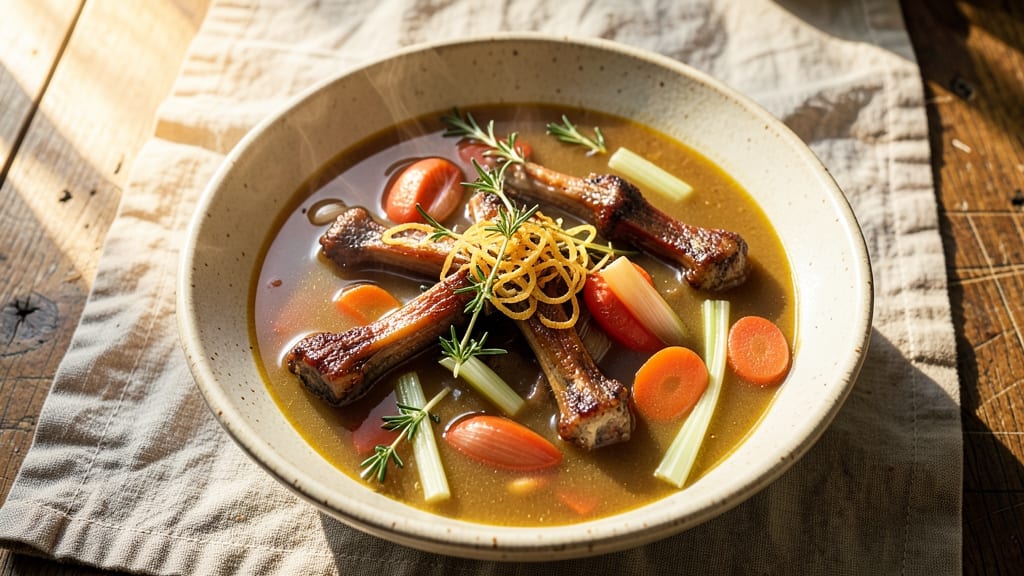
This beef soup recipe with beef bones delivers the kind of rich, marrow-infused depth that transforms a simple meal into a comfort food masterpiece. I first learned the technique from Nana Mae at her Peachtree Street diner, where every spoonful carried the legacy of generations—deep, savory, and impossible to resist.
The secret lies in slow-simmering bones until the broth becomes velvety and packed with natural collagen, creating a base that elevates every ingredient.
What makes this recipe truly special is the balance of traditional methods and modern convenience. You'll start with beef bones—either marrow or knuckle—that release their rich flavors over hours of gentle simmering.
As the broth develops, you'll add vegetables like carrots, celery, and onions for natural sweetness, while herbs like thyme and bay leaves infuse subtle earthiness. The result is a soup that's hearty enough for a cold winter's night but versatile enough for everyday meals.
The final touch comes from skimming foam and straining the broth for clarity, ensuring each bowl is smooth and unctuous. Garnished with fresh parsley and a drizzle of olive oil, this soup becomes a centerpiece—whether served with crusty bread or as a standalone dish.
The marrow-infused richness makes it unforgettable, and the technique is simpler than it sounds once you get the hang of it.
This recipe pays homage to Southern traditions while fitting seamlessly into modern kitchens. Perfect for feeding a crowd or meal prepping for the week, it's the kind of dish that gets better with time. Let's get started on creating something truly special.
Ingredients for beef soup recipe with beef bones
Six ingredients transform simple bones into velvety marrow-infused broth perfection.
| Ingredient | Amount | Notes |
|---|---|---|
| Beef Bones (Marrow or Knuckle) 🦴 | 4 lb | Raw, uncooked, for rich broth |
| Yellow Onions 🧅 | 2 whole | Chopped, medium size preferred |
| Carrots 🥕 | 4 medium | Peeled, cut into chunks |
| Celery Stalks 🌿 | 4 whole | Trimmed, cut into pieces |
| Garlic Cloves 🧄 | 6 cloves | Peeled, lightly crushed |
| Fresh Thyme 🌿 | ½ oz | Or 1 tbsp dried thyme |
| Bay Leaves 🍃 | 2 whole | Fresh preferred, dried works |
| Tomatoes (Canned) 🍅 | 1 can | San Marzano preferred, crushed |
| Tomato Paste 🍅 | 2 tbsp | Squeeze tube works fine |
| Olive Oil 🫒 | ¼ cup | Extra-virgin for richness |
| Salt 🧂 | 2 tsp | Kosher or sea salt |
| Black Peppercorns 🌶️ | 1 tsp | Freshly cracked preferred |
| Fresh Parsley 🌿 | ¼ cup | Chopped, for garnish |
| Red Wine (Optional) 🍷 | 1 cup | Dry red, like Cabernet |
The bones are everything here. Marrow bones deliver the richest flavor, but knuckle bones work too—just make sure they're raw and uncooked. Costco and local butchers often sell them pre-packaged, but check the meat section if you're at a regular grocery store. Look for bones that are clean, with minimal meat clinging to them—this ensures maximum collagen release. If you can't find marrow bones, beef neck bones are a solid alternative, though they'll be slightly less decadent. The key is to use bones that still have some meat on them—they'll brown beautifully and add extra depth to the broth.
No fresh thyme? Dried works at one-third the amount, but the flavor won't be as bright. The tomatoes? San Marzano is ideal, but any good-quality canned tomatoes will do—just drain them well. Short on olive oil? Vegetable oil works too, though it lacks the fruity notes. The red wine is optional but adds complexity—any dry red like Cabernet or Merlot will do. No wine? Beef broth with a splash of balsamic mimics the depth. For the vegetables, baby carrots or pre-cut celery save time, but whole stalks and medium carrots caramelize better. The tomato paste can be skipped if you're using crushed tomatoes, but it adds a concentrated umami punch that's worth the effort.
This broth gets better with time—plan for at least 4 hours of simmering for maximum richness. Store in airtight containers in the fridge for up to 5 days or freeze for 3 months. I always make double batches because the leftovers reheat beautifully and make an amazing base for other dishes. For serving, keep the bones in a separate container—they're perfect for making bone broth soup again later. The parsley garnish is optional but adds freshness; store it in a damp paper towel in the fridge for up to 5 days.
Why You'll Love This Recipe
- I swear by this: just rough-chop the onions, carrots, and celery into big chunks—no fancy dice needed. The bones do all the work while you sip wine and pretend you’re a sous chef.
- No-Chop Hack: I swear by this: just rough-chop the onions, carrots, and celery into big chunks—no fancy dice needed. The bones do all the work while you sip wine and pretend you’re a sous chef.
- Rich Without Effort: That marrow bone? It melts into a velvety, umami bomb while you’re scrolling through memes. No fancy broth base—just simmered bones and garlic doing their magic.
- Leftovers That Shine: This soup only gets better the next day. I freeze portions for lazy Mondays, and reheating it? Just add hot water—no sad, watery texture here.
Step-by-step instructions for beef soup with beef bones
Transform simple ingredients into a deeply flavorful soup where marrow bones infuse richness into every spoonful.
Prepare and Sear the Beef Bones
Preheat your oven to 450°F. Pat the 4 lb beef bones completely dry with paper towels—this ensures maximum browning. Place them on a baking sheet in a single layer and roast for 20-25 minutes until deeply browned and crispy in spots.
This step is non-negotiable for developing deep, caramelized flavors. Flip the bones halfway through roasting to ensure even browning. Once golden and crisp, transfer them to a large stockpot—those browned bits will dissolve into the broth, creating unmatched depth.
Sauté Vegetables and Aromatics
In the same stockpot (no need to clean it—the browned bits are flavor gold), heat 0.25 cup olive oil over medium heat. Add the chopped yellow onions, carrots, and celery stalks, cooking for 8-10 minutes until softened and slightly caramelized. Stir occasionally to prevent burning.
Add the lightly crushed garlic cloves and 0.5 oz fresh thyme, cooking for another 1-2 minutes until fragrant. The thyme should release its piney aroma—this is your cue that the aromatics are ready. Sprinkle in the 2 whole bay leaves and stir briefly to coat them in the oil.
Build the Broth Foundation
Pour in 8 cups cold water (enough to cover the bones by 2 inches) and bring to a boil over high heat. Once boiling, reduce heat to low and skim off any foam or impurities that rise to the surface with a large spoon. This ensures a crystal-clear broth.
Add the 2 tbsp tomato paste and stir to dissolve, then pour in the crushed canned tomatoes (San Marzano preferred). If using, add the 1 cup red wine now—it will deepen the broth's complexity. Season with 2 tsp salt and 1 tsp black peppercorns, then cover and simmer for 3-4 hours.
Simmer for Maximum Flavor Extraction
After the initial 3-4 hours of simmering, check the bones for tenderness. They should feel soft when pressed with tongs—this indicates the marrow has infused into the broth. If they're not tender yet, continue simmering for another 1-2 hours, adding hot water as needed to maintain the liquid level.
Taste the broth and adjust seasoning if needed. The soup should be rich and deeply flavorful, with a balance of savory, umami, and slightly sweet notes from the tomatoes. If it's too acidic, add a pinch more salt or a splash of the red wine to mellow the flavors.
Finish and Serve
Remove the beef bones from the broth and let them cool slightly. Use a spoon to scoop out the marrow from the bones—this is the creamy, flavorful centerpiece of your soup. Return the bones to the broth for a final 10 minutes of simmering to infuse any remaining flavor.
Strain the broth through a fine-mesh sieve into a clean pot, pressing gently on the solids to extract every last drop of flavor. Stir in the 0.25 cup chopped fresh parsley just before serving. Ladle the soup into bowls, top with a spoonful of marrow, and serve immediately with crusty bread.
Pro Tips For Making Beef Soup Recipe With Beef Bones
- BLISTER THE BONES FIRST: I learned this the hard way—skipping the char ruins the depth. Sear the bones in a dry pot over medium-high heat until they turn deep brown in spots (about 5-7 minutes per side). This isn’t just for looks; it locks in flavor and prevents the broth from tasting bland later.
- CHOP ONIONS COARSELY: Fine dicing makes onions disappear fast. Cut yellow onions into ½-inch chunks—they’ll soften but stay visible, adding texture and sweetness as they cook. (Yes, even if you’re impatient like me, resist the urge to make them too small.)
- SIMMER LOW AND SLOW: High heat at the start is good, but once you add liquid, drop the temperature to a bare simmer. Let the marrow bones cook for at least 3 hours (4+ for knuckle bones)—any faster, and the collagen won’t break down enough to make that rich, velvety broth you’re after.
- SAVE TIME WITH FROZEN VEGETABLES: Fresh carrots and celery are great, but frozen work just as well and skip the chopping. Just toss them in raw—they’ll soften perfectly during the long simmer. (Your future self will thank you, especially on weeknights.)
Flavor customization for beef soup recipe with beef bones
Smoky BBQ Twist
Swap the red wine for ½ cup BBQ sauce (I love Sweet Baby Ray's original) and add 2 tbsp smoked paprika to the broth. Simmer the bones with 2 slices of bacon for extra depth—crisp the bacon first and crumble it into the soup at the end.
Garnish with chopped scallions and a drizzle of hot sauce for a Texas-style fusion that still honors the marrow's richness. 🔥
Herb-Forward Variation
Boost the herbal profile by adding 1 sprig rosemary and 1 sprig tarragon along with the thyme. For a Mediterranean touch, stir in 1 tsp dried oregano and finish with lemon zest instead of parsley.
The bright, herbal notes cut through the richness beautifully—perfect for a lighter spring version. I first tried this after visiting a farm-to-table spot in Asheville where they used fresh herbs from their garden.
Spicy Asian Fusion
Infuse the broth with 1-inch fresh ginger, 2 cloves garlic, and 1 tbsp grated galangal (or extra ginger if unavailable). Add 1 tbsp fish sauce and 1 tsp chili crisp at the end for umami and heat.
Serve with rice noodles and fresh cilantro. This version transforms the soup into a Thai-inspired broth that still celebrates the beef's depth. 🌶️
Creamy Mushroom Addition
Sauté 8 oz cremini mushrooms with the onions and celery, then add ½ cup heavy cream at the very end. The mushrooms deepen the umami while the cream adds a velvety texture that balances the broth's richness.
Top with crispy fried shallots for crunch—this version feels like a cross between a classic beef soup and a wild mushroom risotto. 💛
Vegetarian Adaptation
Replace the beef bones with 4 lb portobello mushrooms (stemmed and halved) and 2 cups dried chickpeas (soaked overnight). Use vegetable broth instead of water and add 1 tsp liquid smoke for depth.
The marrow is replaced with cashew cream (blend ½ cup soaked cashews with ½ cup water) swirled into each bowl. This version keeps the soul of the soup while making it plant-based.
Winter Comfort Upgrade
Add 1 cup diced potatoes and ½ cup pearl barley to the broth during the last 30 minutes of cooking. Finish with grated Parmesan cheese and crispy fried sage leaves for a hearty, warming version perfect for cold nights.
The barley adds texture while the potatoes soak up the rich broth—this is the kind of soup Nana Mae served when winter storms hit Atlanta. ❄️
Nutrition facts
Frequently asked questions
Can I use leftover roast beef bones instead of raw ones?
Yes, but with a few adjustments. Leftover roasted bones work perfectly—they're already flavorful and won't need pre-roasting. Just skip the oven step and proceed with sautéing your vegetables in the stockpot. For maximum richness, add 1 extra bay leaf and simmer for 4-5 hours instead of 3-4, since roasted bones release collagen more slowly.
How do I know when the beef bones are tender enough?
Press a bone gently with tongs—it should feel soft like a ripe avocado pit, not firm like a raw chicken bone. The marrow should also be easily scooped out with a spoon. If bones feel rubbery after 4 hours, add 1 cup hot water and simmer 1 more hour. Never rush this step; tender bones = flavorful broth!
What if my broth tastes too acidic or bitter?
Add a pinch of sugar or ½ tsp baking soda to balance acidity, or stir in 1 tbsp tomato paste for umami depth. For bitterness, simmer the broth uncovered for 10 minutes to let flavors meld, then skim any foam. If using wine, reduce to ½ cup next time—it's easy to overdo the acidity!
Can I make this soup in an Instant Pot?
Sear the bones in the pot first, then add all ingredients and cook on High Pressure for 90 minutes (natural release). For extra richness, add 1 cup water after pressure releases and simmer 10 minutes on sauté mode. The Instant Pot cuts cooking time but may require extra salt since pressure cooking concentrates flavors differently.
How should I store and reheat leftovers?
Store in airtight containers for up to 5 days in the fridge or 3 months frozen. To reheat, warm gently on the stove over low heat (never microwave) and add 1-2 tbsp water if it thickens. For frozen soup, thaw overnight in the fridge first—never microwave directly from frozen to preserve texture.