
Soups & Stews
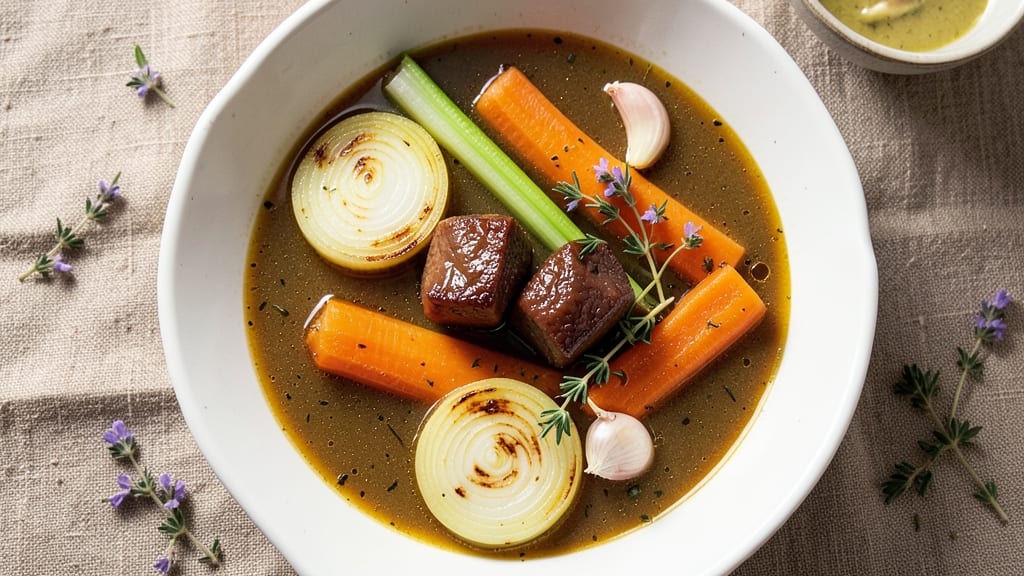
This beef stock vegetable soup transforms humble ingredients into a deeply flavorful, one-pot masterpiece that warms both body and soul. 🌟 The secret lies in slow-simmered beef stock—rich with collagen and umami—that melds with tender vegetables and aromatic herbs, creating layers of savory complexity without a single drop of bouillon cube.
What sets this recipe apart is the low-and-slow technique, where vegetables soften just enough to release their natural sweetness while maintaining texture.
Carrots caramelize slightly at the edges, celery develops a subtle crunch, and onions deepen into golden threads—all while the broth reduces to a velvety consistency that clings to every spoonful. The result? A soup that tastes like it simmered for hours, even if you're working with a 30-minute schedule.
This isn't just comfort food—it's a restaurant-quality dish built on simplicity. The beef stock forms the soul, while vegetables and herbs provide the harmony. Add a sprinkle of fresh parsley or a swirl of crème fraîche at the end, and you've elevated a basic pot of soup to something extraordinary.
The best part? Every ingredient plays a role, ensuring no bite is ever boring.
Perfect for chilly evenings, meal prep, or impressing guests with minimal effort, this soup proves that depth of flavor doesn't require complexity. Whether you're using store-bought stock or homemade, the technique remains the same—simmer, season, and savor.
Let's get started on creating a bowl that feels like a hug in every spoonful.
Ingredients for beef stock vegetable soup
Sixteen ingredients. One pot. Restaurant-quality depth from humble bones and vegetables.
| Ingredient | Amount | Notes |
|---|---|---|
| Beef Bones (Chuck or Short Rib) 🦴 | 2 lb | Raw, for homemade stock |
| Yellow Onions 🧅 | 1 ½ lb | Whole, peeled, halved |
| Carrots 🥕 | 1 ½ lb | Whole, scrubbed, halved |
| Celery Stalks 🧄 | 6 whole | Trimmed, cut in 2-inch pieces |
| Garlic Cloves 🧄 | 8 cloves | Peeled, smashed |
| Fresh Thyme Sprigs 🌿 | 4 whole | Stems attached |
| Fresh Parsley Stems 🌿 | 4 whole | For bouquet garni |
| Bay Leaves 🍃 | 2 whole | Dried, standard size |
| Black Peppercorns 🌶️ | 1 tbsp | Whole, lightly crushed |
| Tomatoes (Roma or Plum) 🍅 | 4 whole | Crushed by hand |
| Potatoes (Yukon Gold) 🥔 | 1 ½ lb | Peeled, cut into chunks |
| Parsnips 🥕 | ½ lb | Peeled, cut into chunks |
| Fresh Parsley Leaves 🌿 | ¼ cup | Chopped, for garnish |
| Crème Fraîche 🧀 | ½ cup | For finishing, optional |
| Diamond Crystal Kosher Salt 🧂 | 2 tsp | For seasoning |
The bones are the foundation—chuck or short ribs deliver the richest collagen and umami. Local butchers often sell them pre-cut for stock, but if buying whole, ask for marrow-rich cuts. Kroger or Whole Foods carry organic options, though conventional works fine. Avoid pre-made bouillon cubes; they lack the depth of homemade stock. For vegetables, organic carrots and celery reduce better without soil residue. Fresh thyme and parsley from the grocery store's herb section add brightness, but dried works in a pinch if you're short on time.
No beef bones? Pork femurs or chicken carcasses work, though flavor will differ slightly. Substitute store-bought stock for homemade—Kitchen Basics or Pacific Foods brands are top-tier. Celery leaves and carrot greens add extra flavor; don't toss them. The tomatoes can be canned (San Marzano preferred) if fresh aren't available, but crushed by hand releases more juice. For a vegetarian version, swap bones for mushroom stems and kombu—simmer for 2 hours instead of 1. The potatoes and parsnips should be similar size to cook evenly; cut them slightly larger if you prefer more texture.
The stock keeps for 5 days refrigerated or 3 months frozen in airtight containers. For meal prep, portion into individual bowls before freezing—reheat directly from frozen. Garnish with fresh parsley and a dollop of crème fraîche (or vegan crème fraîche) just before serving. The soup improves overnight as flavors meld; this is where the magic happens. If making ahead, hold the crème fraîche until serving to prevent curdling.
Why You'll Love This Recipe
- No-Chop Nightmare: I swear by the "soak the bones, dump everything in" method—just rough-chop the onions and toss the whole celery stalk in. The bones do all the work while you sip wine and pretend you’re fancy.
- Umami Bomb: That first sip of rich, caramelized beef stock with garlic-infused carrots? It’s the kind of flavor that makes you pause mid-bite. Between us, the celery adds this weirdly addictive depth—like a secret ingredient.
- Leftovers That Lie: I make this on Sundays and act like I’m not sneaking bowls for lunch all week. The stock thickens overnight into the most satisfying, zero-effort broth—perfect for reheating or freezing when life gets chaotic.
- Budget Magic: A single batch of chuck bones stretches into three meals, and the veggies? They’re the cheap, crunchy stars of the show. Honestly, it’s the only soup where I don’t feel guilty about the grocery bill.
Step-by-step instructions for beef stock vegetable soup
Transform simple ingredients into a rich, layered soup with deep umami flavor.
🔥 Step 1: Sear and Roast the Beef Bones for Maximum Flavor
Preheat your oven to 450°F. Pat the 2 lb beef bones (Chuck or Short Rib) completely dry with paper towels—this ensures maximum browning. Place them on a rimmed baking sheet in a single layer and roast for 20-25 minutes until deeply browned and crispy in spots.
Here's the thing—roasting the bones before simmering develops the Maillard reaction, which creates that deep, caramelized flavor that forms the foundation of your soup. Flip the bones halfway through roasting to ensure even browning. Once golden brown, transfer them to a large stockpot.
🍳 Step 2: Build the Aromatic Vegetable Base
Add the 1.5 lb yellow onions (peeled and halved), 1.5 lb carrots (scrubbed and halved), and 6 whole celery stalks (trimmed and cut in 2-inch pieces) to the stockpot with the roasted bones. Pour in 12 cups cold water—enough to cover everything by about 2 inches.
Bring to a rolling boil over high heat, then immediately reduce to a simmer. Skim off any foam or impurities that rise to the surface during the first 10 minutes of simmering. This step ensures your stock stays crystal clear. Meanwhile, crush the 8 cloves garlic and the 1 tbsp black peppercorns lightly with the flat side of a knife—just enough to release their flavors without turning to paste.
🥘 Step 3: Simmer the Stock with Herbs and Seasonings
Add the crushed garlic, peppercorns, 4 whole fresh thyme sprigs, 4 whole fresh parsley stems, and 2 whole bay leaves to the pot. Stir in the 2 tsp Diamond Crystal kosher salt. The herbs will infuse the stock with bright, fresh notes while the salt enhances all the flavors.
Cover the pot and simmer gently for 3-4 hours—this slow cooking extracts collagen from the bones, creating a rich, gelatinous stock. I like to check the liquid level occasionally and add hot water as needed to keep the bones covered. The stock should reduce slightly, intensifying its flavor. When the bones are fork-tender, remove them and discard.
🍳 Step 4: Cook the Vegetables and Tomatoes
Strain the stock through a fine-mesh sieve into a clean pot, discarding the solids. Return the stock to medium-high heat and add the 4 whole tomatoes (crushed by hand), 1.5 lb Yukon Gold potatoes (peeled and cut into chunks), and 0.5 lb parsnips (peeled and cut into chunks). Bring to a gentle boil, then reduce heat to maintain a simmer.
Cook the vegetables for 15-20 minutes until the potatoes are fork-tender and the parsnips are easily pierced with a knife. You'll notice the soup thickens slightly as the vegetables release their starches. Taste the broth and adjust the seasoning with additional salt if needed—this is your chance to balance the flavors before finishing.
🥘 Step 5: Finish with Fresh Herbs and Crème Fraîche
Remove the pot from heat and stir in the 0.25 cup chopped fresh parsley leaves. This final herb addition brightens the soup with a fresh, vibrant note. For the finishing touch, gently fold in the 0.5 cup crème fraîche—this adds a luxurious creaminess without overpowering the deep flavors of the stock and vegetables.
Ladle the soup into bowls and serve immediately, garnished with an additional sprinkle of parsley. The soup should be rich and comforting, with each spoonful delivering layers of savory depth from the beef stock, sweetness from the carrots and parsnips, and freshness from the herbs. The crème fraîche adds a velvety contrast that ties everything together.
Pro Tips For Making Beef Stock Vegetable Soup
- Char the Bones First: I learned this the hard way—skipping the char makes the stock taste bland. Use a blowtorch or high broiler to blacken the bones (30 seconds per side) before simmering. That crispy crust packs deep flavor into your broth, and you won’t believe how much richer the soup tastes afterward.
- Cut Celery and Onions Large: Tiny dice? Skip it. Roughly chop onions into ½-inch chunks and celery into 1-inch pieces—they’ll soften perfectly without dissolving into mush. Big pieces also release flavor more slowly, keeping your broth balanced instead of turning it into a vegetable purée.
- Simmer Low and Slow: After the initial boil, drop the heat until bubbles barely break the surface. I used to rush this, but 4-5 hours at a gentle simmer extracts collagen from bones and carrots, turning your soup into a velvety, restaurant-quality broth. No skipping—this is the thing that matters most.
- Add Garlic Late: Toss whole garlic cloves (peeled) into the pot only in the last 30 minutes. Cooking them too early burns their delicate flavor, leaving a bitter aftertaste. For extra punch, lightly toast the cloves in a dry pan first—it makes a real difference.
Creative variations of this dish
Classic French Twist
Transform this soup into a French-style potage by adding 1 cup pearl onions (peeled and halved) along with the carrots and celery. Finish with a swirl of crème fraîche and a sprinkle of chervil instead of parsley.
The pearl onions add delicate sweetness, while chervil provides an anise-like freshness that elevates the dish to bistro quality. 🌟
Hearty Italian Version
For an Italian-inspired take, stir in 1 cup diced pancetta (cooked until crispy) and ½ cup canned white beans (drained) during the final 10 minutes of simmering.
Top with grated Parmigiano-Reggiano and a drizzle of extra-virgin olive oil before serving. The pancetta adds smoky depth, while the beans create a rustic, satisfying texture.
Spicy Mexican Adaptation
Give your soup a Mexican-inspired kick by adding 1 diced chipotle pepper in adobo sauce and 1 teaspoon ground cumin along with the tomatoes. Garnish with avocado slices, cilantro, and a squeeze of lime.
The chipotle brings smoky heat, while the avocado adds a creamy contrast that balances the richness of the beef stock. 🌶️
Creamy Miso Upgrade
For a modern twist, stir in 1 tablespoon white miso paste at the end of cooking. This adds umami depth and a subtle fermented complexity. Top with toasted sesame seeds and scallions for a Japanese-inspired fusion. The miso enhances the beef stock's natural richness without overpowering the vegetables.
Vegetarian Mushroom Swap
Skip the beef bones and use 1 lb dried porcini mushrooms (rehydrated) and 1 piece kombu (seaweed) to create a vegetarian version with deep umami flavor. Simmer for 2 hours instead of 3 to extract maximum flavor.
The mushrooms provide a meaty texture, while the kombu adds a savory oceanic note that mimics the beef stock's depth.
Comforting Crouton Finish
Add crispy croutons made from 1 cup cubed sourdough bread (toasted in olive oil with garlic powder) for a textural contrast**. Toss them in just before serving so they stay crispy.
This classic touch turns your soup into a hearty, satisfying meal that feels like a warm embrace on a chilly day. 🥖
Nutrition facts
Frequently asked questions
Can I use store-bought beef stock instead of making it from scratch?
For convenience, use high-quality store-bought beef stock like Kitchen Basics or Pacific Foods. Look for brands without added MSG or preservatives. Simmer it with your vegetables for 30-40 minutes to meld flavors—just reduce the simmering time by about 2 hours compared to homemade stock. The depth will still be there, though homemade stock adds unmatched richness.
How do I prevent my soup from being too thin or too thick?
For a thicker consistency, mash a few cooked potato chunks against the pot's side to release starch. For thinner soup, add ½ cup hot water at a time while stirring. The key is balancing the vegetables—cut potatoes slightly smaller if you prefer creamier texture or larger for chunkier bites. Taste as you go!
What vegetables can I swap if I don't have parsnips or Yukon Gold potatoes?
Swap parsnips for turnips or rutabaga (peeled, cubed) for earthy sweetness. Replace Yukon Gold potatoes with russets (for fluffier texture) or sweet potatoes (adds natural sweetness). Keep pieces similar size to ensure even cooking. The soup will still be delicious—just adjust seasoning slightly if using sweeter vegetables.
Can I make this soup ahead of time? How does it reheat?
This soup tastes even better the next day! Store in an airtight container in the fridge for 4-5 days or freeze for 3 months. Reheat gently on the stove over medium-low heat, stirring occasionally. Avoid microwaving—it can make the vegetables mushy. Stir in fresh parsley and crème fraîche just before serving for maximum freshness.
Why does my homemade stock smell strong or have a funny color?
Strong smell or cloudy stock usually means impurities weren't skimmed properly. For rich flavor without funk, skim foam vigorously during the first 10 minutes of simmering. If color is too dark, strain through a cheesecloth-lined sieve. Browned bones create depth, but over-roasting can make stock bitter. Simmer uncovered for 3-4 hours for balanced flavor.