
Soups & Stews
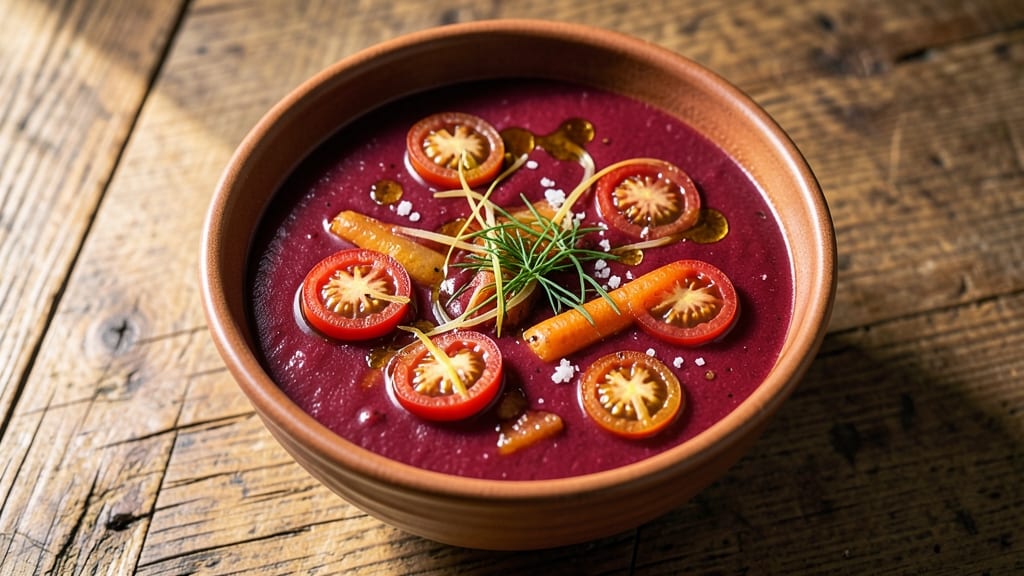
This beetroot carrot tomato soup recipe transforms humble vegetables into a velvety, earthy masterpiece that feels like a cozy hug in a bowl. The natural sweetness of roasted carrots and tomatoes pairs beautifully with the deep, slightly tangy notes of beetroot, creating a balance that's both comforting and sophisticated.
What makes this recipe special is the technique of roasting the vegetables first—it deepens their flavors and ensures a silky-smooth texture when blended.
With just a handful of simple ingredients and about 45 minutes of hands-on time, you'll have a soup that's rich, vibrant, and packed with natural sweetness. The roasting step caramelizes the vegetables, adding layers of depth that no raw prep could match.
This isn't just a soup; it's a flavor experience that works as a light lunch, a hearty appetizer, or even a side dish for a special dinner.
The result is a soup that's silky smooth, with a vibrant ruby-red hue from the beetroot and a subtle sweetness that lingers on the palate. The roasted flavors are balanced by a touch of acidity from the tomatoes, while the carrots add natural sweetness that rounds out the dish.
It's the kind of soup that tastes even better the next day, as the flavors meld and deepen.
Garnish with fresh herbs, a drizzle of olive oil, or a sprinkle of toasted seeds to elevate it further. This recipe is versatile enough for everyday meals but impressive enough for guests—proof that simple ingredients can create something truly special. Let's get cooking!
Ingredients for beetroot carrot tomato soup
Roasted beets, carrots, and tomatoes create this velvety soup's earthy-sweet foundation.
| Ingredient | Amount | Notes |
|---|---|---|
| Beets 🍠 | 2 medium | Raw, peeled, cut into chunks |
| Carrots 🥕 | 4 medium | Peeled, cut into chunks |
| Roma Tomatoes 🍅 | 4 whole | Halved, seeds removed |
| Yellow Onion 🧅 | 1 whole | Peeled, roughly chopped |
| Garlic Cloves 🧄 | 4 cloves | Peeled, smashed |
| Extra-Virgin Olive Oil 🫒 | ¼ cup | For roasting vegetables |
| Vegetable Broth 💧 | 4 cups | Low-sodium preferred |
| Fresh Thyme Leaves 🌿 | ½ tsp | Or 1/4 tsp dried thyme |
| Ground Black Pepper 🌶️ | ½ tsp | Freshly ground preferred |
| Sea Salt 🧂 | 1 ½ tsp | Adjust to taste |
| Fresh Lemon Juice 🍋 | 1 tbsp | Brightens flavors |
| Tofu Cream 🥛 | ½ cup | Silken tofu blended with 1 tbsp lemon juice |
| Fresh Parsley Leaves 🌿 | ¼ cup | Chopped, for garnish |
The beets and carrots are the stars here—look for firm, vibrant ones at the grocery store. Trader Joe's and Whole Foods often carry pre-washed carrots, which saves time, but regular grocery store carrots work just as well. For beets, medium-sized ones are perfect—they roast evenly without turning mushy. The Roma tomatoes add acidity that balances the sweetness, so don't skip them. If you can't find Roma, vine-ripened tomatoes work too, but remove all seeds to keep the soup smooth. Fresh thyme is ideal, but dried thyme works at one-third the amount if that's what you have.
No fresh thyme? Dried oregano at half the amount gives a similar earthy note. Short on tofu cream? Coconut milk or cashew cream adds richness without dairy. The vegetable broth is non-negotiable for flavor—low-sodium versions prevent the soup from tasting bland. For extra depth, roast the vegetables with a pinch of smoked paprika. The lemon juice brightens everything, so use freshly squeezed if possible. If you're making this ahead, add the lemon juice just before serving to keep the colors vibrant.
This soup tastes even better the next day as flavors meld. Store in the fridge for up to 5 days, or freeze for 3 months. The tofu cream can be prepped ahead and stored separately. For serving, drizzle with extra olive oil and toasted pumpkin seeds—adds crunch and extra flavor. The parsley garnish is optional but adds freshness. Leftovers reheat beautifully—just stir in a splash of water or broth if it thickens too much.
Why You'll Love This Recipe
- Here’s what sold me: the way roasted beets and carrots caramelize into the tomatoes, then get brightened by a splash of vinegar or a pinch of smoked paprika. It’s earthy but not heavy, sweet without being cloying, and that garlic? It lingers just enough to make every spoonful feel intentional.
- I’ll be real: beets and carrots are cheap, and Roma tomatoes are often cheaper than their grocery-store cousins. This recipe stretches a little goes a long way, and you’re not sacrificing quality for cost. Plus, the onion and garlic? Always on hand, always worth it. No wasted ingredients here.
Step-by-step instructions for beetroot carrot tomato soup
Transform vibrant vegetables into a velvety, earthy soup with this straightforward method.
Roast Vegetables for Deep Flavor
Preheat your oven to 400°F and line a large baking sheet with parchment paper. Arrange the 2 medium beets, 4 medium carrots, and 4 whole Roma tomatoes (halved) in a single layer. Drizzle with 0.25 cup extra-virgin olive oil and toss gently to coat evenly.
Spread the vegetables out so they don't overlap, then sprinkle with 0.5 tsp sea salt and 0.5 tsp ground black pepper. Roast for 25-30 minutes until the edges are tender and the carrots begin to caramelize. You'll see the beets soften and the tomatoes collapse slightly—this roasting step develops their natural sweetness and deepens their flavor.
Sauté Aromatics and Build the Base
While the vegetables roast, heat a large soup pot over medium heat. Add the 1 whole yellow onion (roughly chopped) and the 4 cloves garlic cloves (smashed) to the pot. Cook for 3-4 minutes until the onion becomes translucent and the garlic releases its aroma.
Add the roasted vegetables directly to the pot along with the 0.5 tsp fresh thyme leaves. Stir everything together and cook for another 2 minutes to meld the flavors. This step ensures all components come together in one cohesive base, with the roasted vegetables releasing their concentrated sweetness into the aromatics.
Simmer with Broth for Silky Texture
Pour in the 4 cups vegetable broth and bring the mixture to a gentle boil. Once boiling, reduce the heat to low and let it simmer uncovered for 15-20 minutes. You'll notice the vegetables breaking down and the soup becoming thicker as it simmers. Use an immersion blender to purée the soup directly in the pot until completely smooth—this ensures no lumps remain and the texture is velvety.
If the soup is too thick after blending, add ½ cup water at a time until it reaches your desired consistency. The soup should coat the back of a spoon but still be easy to ladle. This simmering step is crucial for developing the soup's depth of flavor and achieving that signature smooth texture.
Finish with Brightness and Garnish
Remove the pot from heat and stir in the 1 tbsp fresh lemon juice and 0.5 cup tofu cream. The lemon juice brightens the earthy flavors while the tofu cream adds a luxurious creaminess without dairy. Taste and adjust the seasoning with additional sea salt or black pepper if needed.
Ladle the soup into bowls and garnish each serving with 0.25 cup chopped fresh parsley leaves. The parsley adds a fresh, herbal note that contrasts beautifully with the rich, earthy flavors. Serve immediately while warm, as the flavors continue to develop even after removing from heat.
Pro Tips For Making Beetroot Carrot Tomato Soup
- ROAST THE BEETS FIRST: I learned this the hard way—raw beets taste like dirt in soup. Roast them whole at 400°F (200°C) for 45 minutes before peeling; the caramelized edges add depth without overpowering the sweetness.
- PEEL BEETS COLD: Hot beets slippery hands everywhere. Run them under cold water after roasting, then peel with a paring knife—no peeler needed. (Yes, even if you’re impatient like me.)
- SWEAT ONIONS LOW AND SLOW: Skip the high heat—sauté onions in 2 tablespoons oil over medium-low for 8–10 minutes until translucent but not browned. Burnt onions turn your soup bitter, and no one wants that.
- BLEND IN BATCHES: A full pot of hot veggies strains most blenders. Work in 2–3 batches, letting the motor rest 10 seconds between. (Your blender’s not a race car—it’ll thank you.)
Storing and reheating this recipe
Refrigerator Storage
Let your soup cool to room temperature before transferring it to an airtight container—I use glass Pyrex bowls with snap-on lids. Store it in the fridge at 40°F or below for up to 5 days.
The flavors actually deepen overnight as the ingredients meld together. Just before serving, stir in a splash of fresh lemon juice to keep the vibrant colors and brighten the taste. 💛
Freezer Prep Tips
For long-term storage, freeze the soup in quart-sized freezer bags or glass containers, leaving 1-inch headspace to prevent cracking. Label with the date—this soup stays delicious for up to 3 months.
When ready to reheat, thaw overnight in the fridge for best texture. I avoid freezing the tofu cream separately as it can separate when thawed. 🧊
Stovetop Reheating
My preferred method is stovetop reheating to preserve the silky texture. Pour the soup into a pot and heat over medium-low heat, stirring occasionally. Add 2-3 tablespoons of water or broth if it thickens too much.
Bring to a gentle simmer for 5-7 minutes, then taste and adjust seasoning—it often needs a pinch of sea salt after reheating. 🔥
Microwave Safety
For quick reheating, transfer soup to a microwave-safe bowl and cover loosely with a microwave-safe lid or damp paper towel. Heat on 50% power in 1-minute intervals, stirring between each, until warmed through.
Avoid boiling to prevent skin formation. If the soup seems too thick, add a splash of vegetable broth while reheating. ⚡
Garnish Refresh
After reheating, revive the presentation with fresh garnishes. I like topping with toasted pumpkin seeds or crispy fried shallots for crunch. A drizzle of extra-virgin olive oil and a sprinkle of fresh parsley restores the vibrant colors and adds freshness.
The lemon juice should be added fresh—never reheated—to maintain its bright acidity. ✨
Make-Ahead Pro Tip
Prep the tofu cream separately and store it in a small container in the fridge. When ready to serve, simply blend it into the reheated soup. This keeps the texture perfect without needing to thaw the entire soup.
I also recommend roasting extra vegetables and freezing them for future batches—just add them straight from the freezer to the pot when reheating. 💡
Nutrition facts
Frequently asked questions
Can I make this soup without roasting the vegetables?
You can, but the flavor will be less deep and sweet. Roasting caramelizes the natural sugars in the vegetables, creating that rich, earthy taste. If you skip roasting, simmer the raw chopped vegetables for an extra 10-15 minutes to develop some sweetness, but expect a milder flavor profile.
How can I make this soup creamier without dairy?
The tofu cream is your secret weapon! Blend ½ cup silken tofu with 1 tbsp lemon juice until completely smooth, then stir it into the finished soup. For even more creaminess, add 2 tbsp coconut milk or cashew cream—just stir it in at the very end to prevent curdling.
What if my soup turns out too thick after blending?
Don't worry—this happens often! Thin it with ½ cup water or vegetable broth at a time until it reaches your desired consistency. The soup should coat the back of a spoon but still be easy to ladle. If you prefer it thicker, simply simmer it uncovered for 5-10 extra minutes to reduce the liquid.
Can I use canned tomatoes instead of fresh?
Yes, but choose high-quality canned tomatoes without added salt or sugar. Drain and rinse them well to remove excess liquid. For best results, use fire-roasted crushed tomatoes—they mimic the concentrated flavor of roasted fresh tomatoes. Adjust seasoning after adding them, as canned varieties can vary in saltiness.
What's the best way to reheat leftovers without breaking the texture?
Reheat gently on the stovetop over medium-low heat with a splash of water or broth to prevent scorching. If using the microwave, heat in 30-second intervals while stirring. Never boil the soup—just warm through. For extra richness, stir in a dollop of tofu cream or a drizzle of olive oil after reheating.