
Soups & Stews
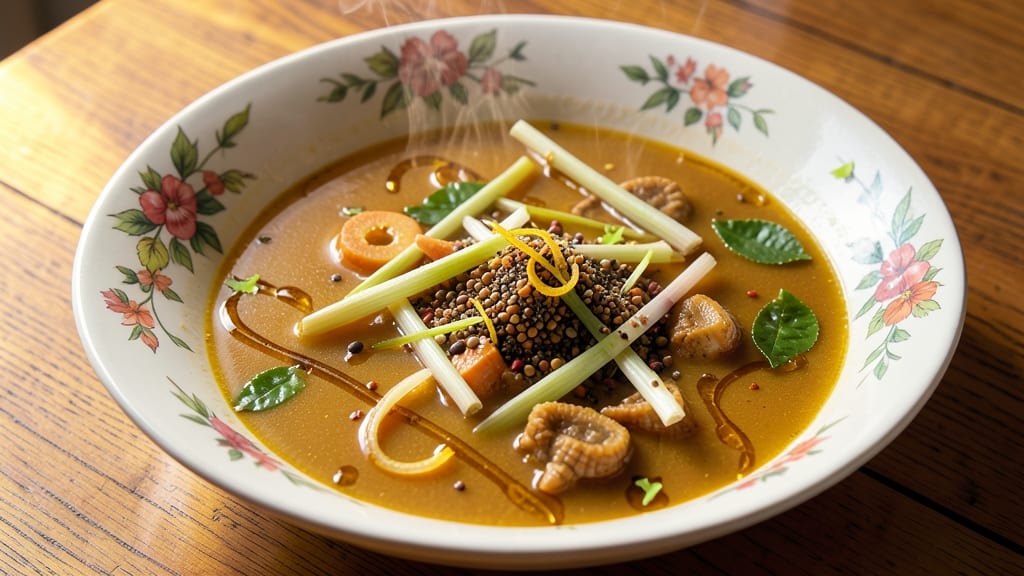
This Bengali Thai soup recipe blends two vibrant culinary traditions into one aromatic bowl, where golden turmeric meets fragrant lemongrass and silky egg ribbons swirl through a velvety broth. 🌟 The fusion begins with a base of mustard oil—essential in Bengali cooking—infused with Thai galangal and kaffir lime leaves for a depth of flavor that bridges continents.
What makes this dish special is how the spices harmonize: panch phoron (Bengali five-spice blend) dances with Thai curry paste, creating a balance of heat, earthiness, and brightness that’s impossible to resist.
The recipe starts with a turmeric-infused broth, simmered low and slow to develop layers of complexity. Silky egg ribbons—cooked just right—add a luxurious texture that elevates the soup from comforting to extraordinary.
The broth absorbs the essence of ginger, garlic, and coconut milk, while the optional garnishes of fried shallots and fresh cilantro add crunch and freshness. This isn’t just a soup; it’s a flavor journey that transforms an ordinary meal into something truly memorable.
What you’ll achieve is a rich, aromatic bowl that’s creamy yet light, spicy yet balanced, and deeply satisfying. The egg ribbons melt into the broth, creating a silky consistency that’s both elegant and comforting.
Perfect for chilly evenings or as a hearty starter, this soup brings the warmth of Bengali tradition and the zing of Thai cuisine together in one unforgettable dish.
Whether you’re serving it to guests or treating yourself to a flavorful escape, this recipe delivers restaurant-quality results with minimal fuss. The fusion of techniques—like tempering mustard oil with lemongrass and simmering the broth with coconut milk—ensures every spoonful is packed with flavor.
Let’s dive into the steps to bring this dish to life.
Ingredients for bengali thai soup
Golden turmeric, fragrant lemongrass, and silky egg ribbons create this aromatic fusion soup.
| Ingredient | Amount | Notes |
|---|---|---|
| Mustard Oil 🫒 | ½ cup | High-quality, unrefined preferred |
| Fresh Turmeric Root 🌿 | 1 tbsp | Grated, vibrant orange color |
| Fresh Lemongrass Stalks 🌿 | 4 whole | Bruised, bottom 3 inches used |
| Galangal Slices 🌿 | 2 tbsp | Fresh, thinly sliced |
| Kaffir Lime Leaves 🍋 | 4 whole | Torn into strips, not stems |
| Panch Phoron Spice Blend 🌶️ | 1 tsp | Bengali five-spice mix |
| Thai Red Curry Paste 🌶️ | 2 tbsp | High-quality, no added sugar |
| Fresh Ginger Root 🌿 | 1 tbsp | Grated, aromatic |
| Garlic Cloves 🧄 | 6 cloves | Minced, aromatic |
| Coconut Milk 🥥 | 1 ½ cups | Full-fat, unsweetened |
| Large Eggs 🥚 | 4 whole | Fresh, cold |
| Shallots 🧅 | 2 whole | Thinly sliced for frying |
| Fresh Cilantro 🌿 | ¼ cup | Chopped, for garnish |
| Vegetable Oil 🫒 | ¼ cup | For shallow frying |
| Diamond Crystal Kosher Salt 🧂 | 1 ½ tsp | Adjust to taste |
The mustard oil is non-negotiable for authentic Bengali flavor—look for unrefined, high-quality brands like Khetri or Patanjali at Indian grocery stores. Fresh turmeric and galangal are essential for that vibrant, earthy depth; substitute dried turmeric only if absolutely necessary, but it lacks the same complexity. Kaffir lime leaves can be found frozen in many Asian markets, though fresh is ideal. For panch phoron, Spicewalla or MCCA offer authentic blends—avoid generic 'curry powder' substitutes. The Thai red curry paste should contain no added sugar; Maesri or Thai Kitchen brands are reliable choices. All fresh aromatics—lemongrass, galangal, and kaffir lime—should be vibrant and free of blemishes, indicating peak freshness.
No fresh galangal? Substitute with ginger at double the amount, though the flavor will differ slightly. Running out of kaffir lime leaves? Lemon zest plus a pinch of lime juice provides a similar citrus note. For a vegetarian version, omit the eggs and add silken tofu ribbons instead. The coconut milk must be full-fat for proper texture—canned brands like Thai Kitchen or Goya work best. For the egg ribbons, use cold eggs straight from the fridge for that signature silky texture. The shallots should be fried until crispy; don't overcrowd the pan or they'll steam instead of crisp. Fresh cilantro is ideal, but dried works at one-third the amount if needed.
Store the broth base (without eggs) for 3 days in the fridge or 3 months frozen—it only gets more flavorful. The fried shallots keep for 1 week in an airtight container. For best results, prepare the egg ribbons fresh when serving, but you can make the broth and garnishes ahead. The soup reheats beautifully—simmer gently to maintain its velvety texture. For a restaurant-quality touch, garnish with crispy fried shallots and cilantro just before serving. The dish pairs wonderfully with steamed jasmine rice or warm naan bread.
Why You'll Love This Recipe
- I’ll be real: this tastes even better the next day. The flavors meld into something richer, and it’s cheap enough to make twice. Plus, reheating it? Just a splash of water and a stir—no sad, watery soup here.
- No Fuss, Big Payoff: I swear by this soup because it’s unfussy—just a quick bruise of turmeric, a few slaps of lemongrass, and galangal that needs zero prep. The mustard oil hits the pan in minutes, and suddenly, your kitchen smells like a bustling Bangkok street.
- Layered Heat Magic: Between us, that mustard oil carries the flavor like a boss, but the real showstopper? The galangal and kaffir lime leaves—earthy, citrusy, and just spicy enough to linger. It’s the kind of depth that makes you close your eyes and sigh.
- Weeknight to Party: Honestly, this soup works everywhere. Toss it together for a lazy Tuesday, or double the batch for guests—it’s got that restaurant-quality warmth without the fuss. My friends always ask for seconds, even the ones who “don’t eat spicy.”
Step-by-step instructions for turmeric-infused egg ribbon soup
This fusion dish balances Bengali warmth with Thai richness—each step builds the complex flavor profile.
🔥 Step 1: Bloom the Spices in Mustard Oil
Heat the 0.5 cup mustard oil in a heavy-bottomed pot over medium-low heat. Add the 1 tbsp grated fresh turmeric root and let it bloom for 1 minute until the oil becomes aromatic and slightly frothy. This step unlocks the turmeric's vibrant color and earthy notes.
Next, add the 1 tsp Panch Phoron spice blend and stir for 30 seconds until the spices sizzle and release their fragrance. Watch carefully—the oil should shimmer but not smoke. If it darkens too quickly, reduce the heat immediately to prevent bitterness.
🍳 Step 2: Build the Aromatic Base
Add the 2 whole shallots (thinly sliced) and cook for 3-4 minutes until softened and translucent. The shallots should caramelize slightly at the edges but not brown. Stir occasionally to prevent sticking.
Add the 1 tbsp grated fresh ginger root, 6 cloves minced garlic cloves, 2 tbsp galangal slices, and 2 tbsp Thai red curry paste. Cook for 2 minutes until the raw garlic smell disappears and the paste darkens slightly. This aromatic trio forms the soul of the broth.
🥘 Step 3: Simmer the Turmeric-Infused Broth
Pour in 4 cups water (enough to cover the aromatics) and bring to a gentle boil. Add the 4 whole bruised lemongrass stalks (bottom 3 inches) and 4 whole kaffir lime leaves (torn into strips). Reduce heat to low and simmer uncovered for 15 minutes to extract maximum flavor.
Stir in the 1.5 tsp Diamond Crystal kosher salt and 1.5 cups coconut milk. Simmer for another 5 minutes until the broth thickens slightly and the coconut milk blends smoothly. The broth should smell like a fusion of turmeric's warmth, galangal's peppery bite, and coconut's creaminess.
🍳 Step 4: Fry the Egg Ribbons
Heat the 0.25 cup vegetable oil in a separate pan over medium heat until shimmering. Crack the 4 whole large eggs into a bowl and gently whisk. Slowly pour the eggs into the hot oil, letting them spread into delicate ribbons. Cook for 1-2 minutes until the edges are just set but the centers remain runny.
Remove the egg ribbons with a slotted spoon and drain on paper towels. The ribbons should be silky and slightly translucent—this texture contrasts beautifully with the rich broth. Keep them warm while you finish the soup.
🥘 Step 5: Assemble and Garnish
Strain the broth through a fine-mesh sieve into a clean pot, pressing gently on the solids to extract all the flavor. Return the strained broth to medium heat and gently stir in the egg ribbons. Simmer for just 30 seconds to warm through—don't overcook or the eggs will curdle.
Ladle the soup into bowls and garnish with 0.25 cup chopped fresh cilantro. The final dish should feature vibrant golden broth, delicate egg ribbons, and bright green garnish. Serve immediately with steamed jasmine rice to soak up every last drop of the aromatic broth.
Pro Tips For Making Bengali Thai Soup
- Bloom the Spices Slow: Heat your mustard oil on low until it shimmers—about 3-4 minutes—before adding turmeric root. I used to crank it high and ended up with bitter oil every time. Let the turmeric infuse gently, then add lemongrass and galangal for a cleaner, brighter base.
- Bruise the Galangal: Lightly crush the galangal slices with the flat side of your knife before tossing them in. This releases more flavor without turning the soup into a mushy mess. (Yes, even if it looks like you’re prepping ginger—it’s the same idea.)
- Skip the Boil: Simmer, don’t boil, once the broth comes together. A rolling boil burns off the delicate lemongrass and kaffir lime aroma faster than you can say “second batch.” Keep it at a gentle bubble—you’ll taste the difference.
- Toast the Kaffir Lime: Give the kaffir lime leaves a quick 10-second dry toast in the oil before adding liquid. It deepens their citrusy punch without overpowering the soup. (I know, it sounds counterintuitive—but trust me, it works.)
Serving suggestions for bengali thai soup
Bowl Presentation
Serve the soup in warm, shallow bowls to showcase the vibrant golden broth and delicate egg ribbons. I use hand-painted ceramic bowls with a gold rim—they elevate the dish visually while keeping the heat.
The contrast between the silky egg ribbons and the deep amber broth creates an inviting presentation that feels both elegant and comforting. 🌟
Garnish Mastery
Fresh cilantro adds a bright pop of green that cuts through the richness, while crispy fried shallots bring a satisfying crunch. For extra flair, sprinkle toasted sesame seeds or crushed peanuts on top—both add texture and depth.
I like to finish with a lime wedge on the side so guests can squeeze fresh juice for a tangy brightness.
Side Pairings
Steamed jasmine rice is the classic choice, but warm naan bread or crusty baguette slices work beautifully too. For a lighter option, serve with quick-pickled cucumbers—the cool acidity balances the soup’s warmth. I always keep extra lime wedges on the table to enhance the flavors with each bite.
Serving Temperature
This soup tastes best hot but not boiling—around 160°F—so the egg ribbons stay silky. If reheating, warm gently on the stove over low heat for 2-3 minutes to preserve texture.
Never microwave, as it can make the broth watery and the eggs rubbery. Serve immediately for the best experience.
Family-Style Serving
For gatherings, prepare the broth in a large, shallow pot and let guests assemble their own bowls. Set out small bowls of extra garnishes (cilantro, shallots, lime) so everyone can customize their soup.
I love this interactive approach—it makes the meal feel special and communal. Plus, the aroma alone will have everyone gathering around the table. 💛
Leftovers Strategy
Store leftovers in an airtight container for up to 3 days, but save the egg ribbons for freshness. Reheat the broth separately and add fresh ribbons when serving.
The flavors actually improve overnight as the spices meld further. For a quick lunch, serve with leftover rice and a sprinkle of extra shallots.
Nutrition facts
Frequently asked questions
What makes this soup different from regular Thai or Bengali soups?
This recipe fuses the earthy warmth of Bengali cooking with Thai's aromatic brightness through key ingredients like mustard oil, panch phoron, and galangal. The silky egg ribbons add a luxurious texture that bridges both traditions—something you won't find in traditional versions of either cuisine.
Can I make this soup without mustard oil?
Yes, but the flavor will differ significantly. For a milder version, substitute with neutral oil (like vegetable or avocado oil) plus 1 tsp turmeric powder to mimic the earthy notes. However, the authentic Bengali profile comes from the mustard oil's nutty depth when bloomed with spices.
How do I get the perfect silky egg ribbons?
Use cold eggs straight from the fridge and cook them in hot oil over medium heat for just 1-2 minutes. The ribbons should be set at the edges but still runny in the center. Remove immediately—they'll firm up as they cool. Overcooking makes them rubbery!
What if I can't find galangal or kaffir lime leaves?
For galangal, use double the amount of ginger (4 tbsp total) though the flavor won't be identical. For kaffir lime leaves, combine 1 tbsp lime zest with 1 tsp lime juice—it won't replicate the aroma but adds citrus brightness. Both substitutions work in a pinch!
Can I make this soup vegetarian?
Replace the eggs with silken tofu ribbons (simmered in the broth for 5 minutes until tender). For extra protein, add chickpeas or edamame. The broth's rich flavor will still shine through—just adjust the simmering time to 10 minutes total for the aromatics.