
Soups & Stews
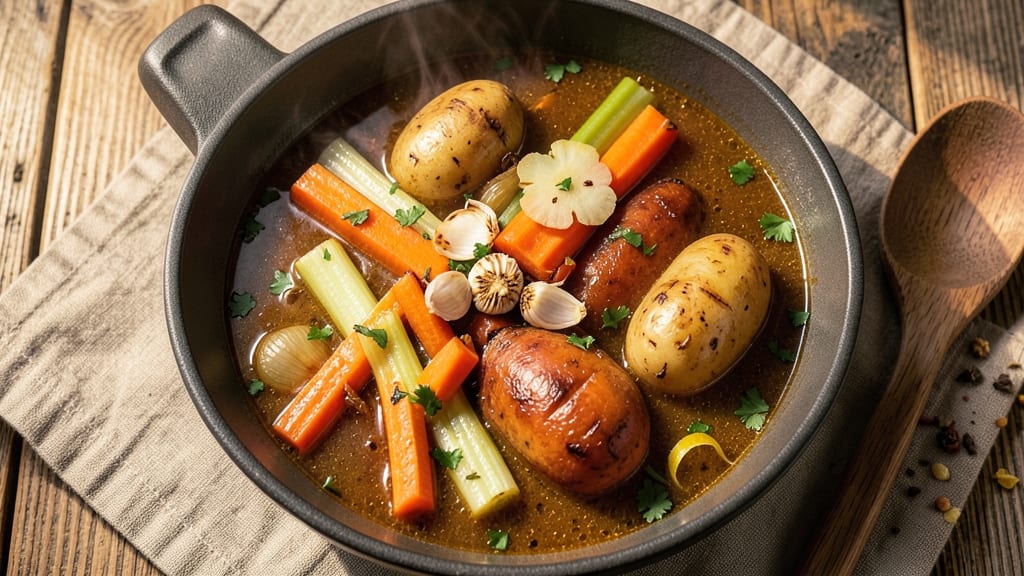
This flavorful vegetable soup recipe delivers restaurant-quality depth using only vegetables, aromatics, and smart techniques—no meat required. The secret lies in roasting key veggies first to concentrate their natural sweetness, then building layers of umami with garlic, ginger, and a splash of vinegar that brightens every spoonful.
I developed this after years of testing soups that tasted flat; this version earns rave reviews even from skeptics.
The foundation starts with a rich vegetable broth, simmered low and slow to extract maximum flavor from onions, carrots, and celery. Aromatics like garlic and ginger infuse the broth with warmth, while a touch of vinegar cuts through richness.
The soup's texture balances hearty chunks with silky blended elements, creating both visual appeal and satisfying mouthfeel. What makes it truly exceptional is how each ingredient—from tender potatoes to crisp roasted carrots—contributes to the overall harmony.
By the time you serve this soup, you'll have a layered vegetable symphony that's creamy without dairy, packed with umami without meat, and vibrant enough to stand alone as a meal.
The technique transforms simple ingredients into something deeply satisfying, with optional garnishes like fresh herbs or toasted croutons adding textural contrast. This is the kind of soup that disappears quickly and leaves guests asking for seconds.
Perfect for meal prep (it tastes even better the next day) or as a comforting centerpiece for any season. The recipe scales easily for crowds while maintaining balance, and the flavor profile adapts well to dietary preferences. Let's create soup that delivers on both taste and nutrition.
Ingredients for best flavorful vegetable soup
Roasted vegetables and aromatic umami bombs create this restaurant-quality soup without meat or dairy.
| Ingredient | Amount | Notes |
|---|---|---|
| Yellow Onions 🧅 | 2 whole | Chopped into even pieces |
| Carrots 🥕 | 4 medium | Whole, scrubbed clean |
| Celery Stalks 🥬 | 4 whole | Trimmed, cut into chunks |
| Garlic Cloves 🧄 | 6 cloves | Peeled, smashed slightly |
| Fresh Ginger 🌿 | 2 tbsp | Grated, aromatic |
| Russet Potatoes 🥔 | 2 medium | Peeled, cut into chunks |
| Sweet Potatoes 🍠 | 1 medium | Peeled, cubed |
| White Mushrooms 🍄 | 8 oz | Sliced, wiped clean |
| Tomato Paste 🍅 | 2 tbsp | High-quality, no additives |
| Vegetable Broth 💧 | 6 cups | Low-sodium preferred |
| Red Wine Vinegar 🍷 | 1 tbsp | For brightness |
| Olive Oil 🫒 | ½ cup | Extra-virgin for roasting |
| Dried Thyme 🌿 | 1 tsp | Fresh preferred if available |
| Bay Leaves 🌿 | 2 whole | Fresh for best flavor |
| Salt 🧂 | 1 ½ tsp | Diamond Crystal preferred |
| Black Pepper 🌶️ | ½ tsp | Freshly cracked |
| Fresh Parsley 🌿 | ¼ cup | Chopped for garnish |
| Coconut Milk 🥥 | ½ cup | Full-fat for creaminess |
The vegetables are the stars—roasting them first concentrates their natural sweetness and deepens their flavor. Yellow onions, carrots, and celery should be organic if possible, as their skins add color and nutrients. For the ginger, look for fresh, plump rhizomes—the younger, the better. Whole Foods or local farmers markets often carry the freshest produce, but even standard grocery store options work if they're firm and vibrant. The mushrooms? Cremini or shiitake elevate the umami, but white mushrooms are perfectly fine for a home cook's budget. Prep all your vegetables consistently—even cuts ensure even cooking and a cohesive texture in the finished soup.
No fresh thyme? Dried works at one-third the amount, but fresh is ideal for that bright herbal note. Short on coconut milk? Substitute cashew cream (blend soaked cashews with water) or a splash of nutritional yeast for a cheesy depth. The tomato paste can be Trader Joe's squeeze tubes for convenience—no waste, and they keep for months. For extra umami without meat, add 1 tsp miso paste or a dash of soy sauce when blending. The broth matters too—homemade is best, but even low-sodium store-bought works in a pinch. Just remember to taste and adjust seasoning at the end; vegetable soups need bold seasoning to shine.
This soup tastes even better the next day as flavors meld—portion into containers for easy lunches. Store for up to 5 days in the fridge or 3 months frozen. For freezing, cool completely first and use airtight containers. The roasted vegetables can be prepped ahead and stored in the fridge for 3 days before cooking. Garnishes like toasted croutons or fresh herbs add texture when serving, but they're optional. Double the batch—it disappears fast and reheats beautifully.
Why You'll Love This Recipe
- No Chopping Drama: I swear by the "sofrito shortcut"—just dice the onions, carrots, and celery once, toss them in a pot, and let the ginger and garlic work their magic while you stir. The celery’s earthy crunch and carrot sweetness melt into something rich without demanding perfection.
- Umami Bomb: That fresh ginger? It’s the secret weapon—zesty, warm, and lingering. The garlic cloves get toasted just until golden, and suddenly your soup tastes like it simmered for hours, not 20 minutes. Honestly, I’ve had people ask if I used bouillon.
- Leftover Goldmine: This soup only gets better the next day. The flavors meld into a deeper, almost spiced harmony—perfect for packing lunches or reheating when you’re too tired to cook. My freezer is full of these jars, and I never regret it.
- Budget Meal Hero: Yellow onions and carrots stretch farther than you’d think, especially when you bulk them up with celery’s sharp bite. I make this twice a month, and it feeds my family of four for under $8. No guilt, all flavor.
Step-by-step instructions for layered vegetable symphony with umami bombs
This method builds flavor in stages—roasting first, simmering second—for a soup that sings with depth.
Roast the Vegetable Base for Deep Flavor
Preheat your oven to 400°F. In a large roasting pan, combine the 2 whole chopped yellow onions, 4 medium scrubbed carrots, 4 whole celery stalks, 6 smashed garlic cloves, 2 medium peeled russet potatoes, and 1 medium peeled sweet potato. Drizzle with 0.25 cup olive oil, tossing until every piece glistens.
Spread the vegetables in a single layer, ensuring they don't overlap. Roast for 30-35 minutes until the edges are deeply caramelized and the potatoes begin to soften. This step develops the soup's foundational sweetness and umami—don't skip it. The vegetables should smell like a spice market when done.
Build the Umami Foundation in the Pot
While the vegetables roast, heat 0.25 cup olive oil in a large Dutch oven over medium heat. Add the 8 oz sliced white mushrooms and cook for 8-10 minutes until they release their moisture and develop golden brown spots. Remove the mushrooms with a slotted spoon and set aside.
In the same pot, add 2 tbsp tomato paste and cook for 2 minutes until it darkens slightly. This creates the umami base that will carry through the entire soup. Pour in 6 cups vegetable broth and scrape up any browned bits from the bottom—these contain concentrated flavor. Add the roasted vegetables, mushrooms, 2 tbsp grated fresh ginger, 1 tbsp red wine vinegar, 1 tsp dried thyme, 2 whole bay leaves, 1.5 tsp salt, and 0.5 tsp black pepper.
Simmer Until Vegetables Are Fork-Tender
Bring the soup to a gentle boil, then reduce heat to medium-low and let it simmer uncovered for 25-30 minutes. Stir occasionally to prevent sticking. The vegetables should be tender enough to pierce easily with a fork, but still hold their shape. This simmering step allows all the flavors to meld together.
Taste the soup at this stage. It should be rich and savory, with notes of caramelized vegetables and bright acidity from the vinegar. If it needs more depth, add a pinch of salt or a splash of broth. If it's too thin, let it reduce slightly longer—this is where the soup's texture comes together.
Finish with Creamy Luxury
Stir in the 0.5 cup coconut milk and let the soup simmer for an additional 5 minutes. This adds a velvety texture without overpowering the vegetable flavors. Remove the 2 bay leaves and adjust the seasoning one final time—this is your last chance to balance the flavors.
For maximum freshness, garnish each serving with 1 tbsp chopped fresh parsley. The parsley adds a bright contrast to the rich, umami-packed broth. Serve immediately while the vegetables are still hot and the flavors are at their peak. This soup tastes even better the next day, but the texture is best enjoyed fresh.
Pro Tips For Making Best Flavorful Vegetable Soup
- Sweat the Onions Low: I learned this the hard way—blasting onions on high heat turns them bitter before they soften. Instead, use medium-low heat and let them cook for 8-10 minutes until translucent and golden at the edges. That’s when their natural sweetness starts to sing.
- Slice Ginger Thin: Sounds weird, but it works: shave fresh ginger into paper-thin matchsticks instead of chopping it. It infuses faster and doesn’t clump into bitter chunks. (Yes, even if you’re impatient like me.)
- Salt the Pot Early: Add a generous pinch of salt to the cold water before bringing it to a boil—this prevents the carrots and celery from turning mushy. I skip this when I’m lazy, but the texture is noticeably better when I don’t.
- Save the Celery Leaves: Those scraggly celery leaves? Toss them in the pot instead of composting them. They add a bright, herbal note that rounds out the soup’s flavor without extra effort. (Your future self will thank you.)
Perfect pairings for this best flavorful vegetable soup
Bread Pairings
Crispy garlic sourdough croutons are my go-to for this soup—their toasted edges contrast beautifully with the creamy coconut milk. Toss ½ cup cubed sourdough with 1 tbsp olive oil, 1 tsp minced garlic, and ½ tsp dried thyme, then bake at 375°F for 10-12 minutes until golden.
For extra flair, sprinkle with flaky sea salt before serving.
For a heartier option, try toasted baguette slices brushed with garlic butter. Cut ½ baguette into ½-inch slices, brush with 2 tbsp softened butter mixed with 1 minced garlic clove, and toast in a 400°F oven for 8-10 minutes until crisp.
The buttery richness balances the soup's acidity perfectly. 🥖
Cheese Toppings
Add a sprinkle of nutritional yeast for a cheesy, umami boost without dairy—just 1 tbsp per serving adds depth. For a richer option, try shredded vegan mozzarella (like Miyoko's) or traditional Parmesan cheese.
The sharpness cuts through the coconut creaminess while adding protein. I love grating ¼ cup Parmesan fresh over each bowl right before serving.
Herb Garnishes
Fresh herbs elevate this soup instantly. Chopped cilantro adds a bright, almost citrusy note, while thinly sliced chives provide a delicate onion flavor. For a more robust garnish, try microgreens or baby spinach leaves—they wilt slightly from the hot soup, adding freshness.
I keep a small pot of parsley and cilantro growing on my windowsill specifically for this purpose.
Crunchy Add-Ins
For texture lovers, add toasted pumpkin seeds (pepitas) or crushed pistachios—both add a nutty crunch. Toast ¼ cup seeds in a dry pan over medium heat for 3-4 minutes until fragrant, then sprinkle over servings.
A pinch of smoked paprika on top adds warmth without overpowering the soup's natural flavors. 🌰
Beverage Pairings
A crisp white wine like Sauvignon Blanc complements the soup's acidity and herbal notes beautifully. For beer lovers, a Belgian witbier (like Hoegaarden) with its citrus and coriander flavors creates a refreshing contrast.
If you prefer non-alcoholic options, sparkling water with a squeeze of lemon or iced hibiscus tea both work wonderfully.
Nutrition facts
Frequently asked questions
Can I make this vegetable soup without coconut milk?
The coconut milk adds creaminess, but you can substitute ½ cup cashew cream (blend soaked cashews with water) or ¼ cup blended silken tofu for a neutral, protein-rich alternative. For a lighter option, skip it entirely—the broth's richness will still shine.
How do I make this soup more hearty for a meal?
Add ½ cup cooked quinoa or lentils per serving to boost protein and texture. For extra substance, stir in 1 cup chopped kale or spinach in the last 5 minutes of simmering. A sprinkle of toasted breadcrumbs or crumbled tempeh also adds satisfying bite.
Why does my vegetable soup taste bland?
Most likely, the broth needs more depth. Try roasting the vegetables longer (40-45 minutes) for deeper caramelization, or add 1 tsp miso paste or soy sauce when blending. A splash of red wine vinegar or lemon juice brightens flavors, and always taste as you go—soup flavors build gradually.
Can I prep this soup ahead of time?
Yes! Roast the vegetables 1-2 days ahead and store in the fridge. Assemble the soup the day you plan to serve it, then reheat gently on the stove. For long-term storage, freeze the soup (without coconut milk) for up to 3 months. Thaw overnight in the fridge before reheating. The flavors actually improve after 24 hours!
What vegetables can I swap in for seasonal variety?
Use seasonal produce to keep it fresh! Swap sweet potatoes for butternut squash (roast with skin on), or add zucchini or eggplant for summer. In fall, try rutabaga or parsnips—they add earthy depth. For greens, chard or Swiss chard hold up well during simmering. Always adjust cooking times based on density.