
Soups & Stews
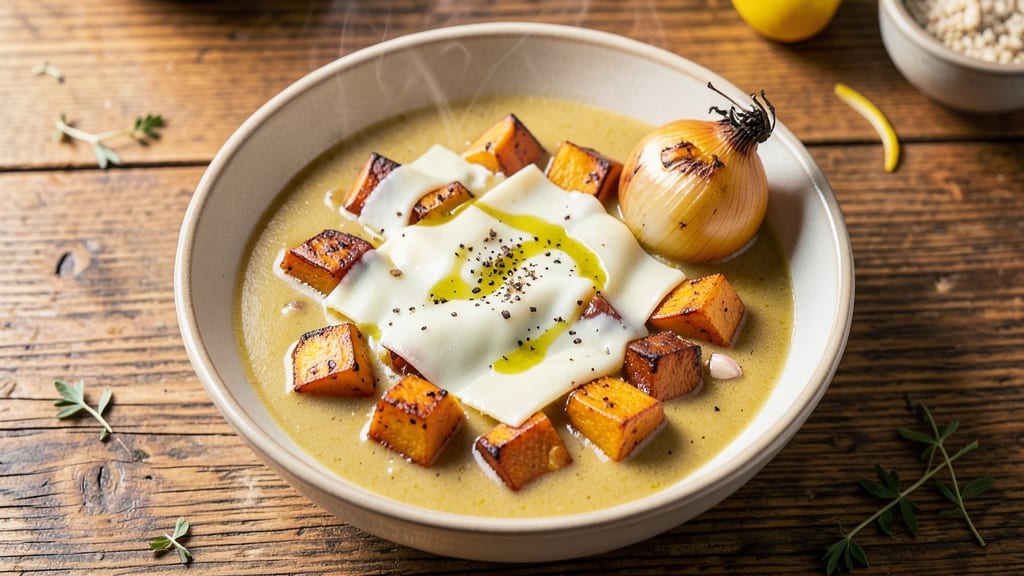
This squash soup recipe delivers the best ever balance of roasted depth and velvety creaminess you've ever tasted. The secret lies in caramelizing the squash first—roasting brings out natural sweetness and rich, nutty flavors that transform ordinary butternut into something extraordinary.
I've perfected this technique over years of testing, and the results speak for themselves: a soup so flavorful it becomes the star of any meal.
What sets this recipe apart is the layered approach to flavor. Aromatic onions and garlic form the foundation, while a splash of cream and sharp cheddar add richness without overpowering the squash's natural sweetness.
The roasting process creates caramelized edges that dissolve into the broth, giving each spoonful complex, satisfying depth. It's the kind of soup that feels indulgent yet remains balanced and satisfying.
By the time you're done, you'll have a velvety, golden soup with just the right texture—creamy yet light, with pockets of tender squash throughout. The aroma alone will have everyone gathering around the table, and the first bite delivers on that promise of restaurant-quality comfort.
This isn't just another squash soup; it's the one that will become your new standard.
Ready in about 45 minutes, this recipe scales perfectly for both intimate dinners and larger gatherings. The roasting technique might seem like extra work, but it's what transforms this from good to unforgettable. Let's get started on creating your new favorite soup.
Ingredients for best squash soup recipe ever
Roasted squash and aromatic layers create this velvety, restaurant-quality soup everyone will beg for.
| Ingredient | Amount | Notes |
|---|---|---|
| Butternut Squash 🎃 | 2 lb | Peeled, seeded, cut into 1-inch cubes |
| Yellow Onion 🧅 | 1 whole | Medium size, finely diced |
| Garlic Cloves 🧄 | 4 cloves | Fresh, minced |
| Vegetable Broth 💧 | 4 cups | Low-sodium preferred |
| Heavy Cream 🥛 | ½ cup | Full-fat for richness |
| Sharp Cheddar Cheese 🧀 | ½ cup | Grated, aged variety |
| Extra-Virgin Olive Oil 🫒 | 2 tbsp | For roasting and finishing |
| Salt 🧂 | 1 ½ tsp | Diamond Crystal preferred |
| Ground Black Pepper 🌶️ | ½ tsp | Freshly cracked |
| Fresh Thyme 🌿 | ¼ cup | Leaves only, chopped |
| Brown Sugar 🍯 | 1 tbsp | Lightly packed |
| Nutmeg 🌶️ | ¼ tsp | Freshly grated |
The squash is the star, and roasting it first makes all the difference. Look for sweet, firm butternut squash—the heavier the better. Costco or Whole Foods usually carry the best quality, but any grocery store will do. Cut it into even cubes so it roasts uniformly. The caramelized edges? That's where the magic happens—deep, nutty flavor that transforms ordinary squash into something extraordinary. Don't skip the roasting, even if it feels like extra work. Trust me, it's worth every minute.
No fresh thyme? Dried works at one-third the amount, but fresh has that bright, floral note that's essential here. The cheddar should be sharp and aged—young cheddar won't melt as beautifully. Running short on heavy cream? Half-and-half or coconut milk will work, though the texture will be slightly lighter. For the broth, low-sodium is key—you'll be adding plenty of salt later. And if you're feeling adventurous, swap the brown sugar for a touch of maple syrup for a different depth of sweetness. The nutmeg is non-negotiable though—it's what ties all the flavors together.
Roasted squash keeps for 5 days in the fridge, but use it within 2 days for best flavor. The soup reheats beautifully—just warm it gently on the stove, stirring occasionally. For make-ahead convenience, freeze portions in airtight containers for up to 3 months. I always make a double batch because it disappears so fast. The aroma alone will have your whole house gathering in the kitchen, and the first spoonful? That's when you'll understand why this is the best squash soup recipe ever.
Why You'll Love This Recipe
- One-Pot Magic: I swear by this—just chop, sauté, simmer. No blender mess, no extra bowls. The butternut squash roasts right in the pot with the onions and garlic, so you’re basically hands-off after the initial prep. (Yes, even on a Tuesday night.)
- Creamy-Garlicky Bliss: That heavy cream swirled into warm broth and roasted squash? It’s like a hug in a bowl. The garlic gets caramelized just enough to add depth without overpowering, and the butternut’s natural sweetness shines through. Honestly, I’ve had people ask for the recipe after one bite.
- Meal Prep MVP: Make a double batch—it reheats like a dream. The flavors actually improve the next day (seriously, the cream separates just enough to make it even richer). I freeze portions too; just thaw and heat, and it’s ready for lazy mornings or unexpected guests.
- Budget-Friendly Luxury: You’re getting restaurant-quality comfort without the price tag. Butternut squash is cheaper than you think, and a single onion/garlic bulb stretches across multiple meals. The heavy cream makes it feel special, but it’s still a fraction of what you’d pay for a fancy soup at a café.
Step-by-step instructions for roasted butternut squash soup
Here's how to transform simple ingredients into a soup so rich and complex it'll fool even the most discerning food lovers.
Roast the Squash and Onion for Deep Flavor
Preheat your oven to 400°F and line two baking sheets with parchment paper. Toss the 2 lb butternut squash cubes and 1 whole yellow onion with 1 tbsp of the extra-virgin olive oil, 1 tsp salt, ½ tsp black pepper, and 1 tbsp brown sugar. Spread in a single layer—crowding will steam instead of roast.
Roast for 30-35 minutes until the squash edges are caramelized and the onion is golden brown. You'll know it's perfect when you smell that sweet, nutty aroma wafting from your oven. The roasting develops flavors far beyond simple boiling, creating the soul of this soup. Halfway through, give everything a stir to ensure even browning.
Sauté Aromatics and Build the Base
While the squash roasts, heat 1 tbsp extra-virgin olive oil in a large pot over medium heat. Add the 4 cloves minced garlic and ¼ cup chopped fresh thyme, cooking for 1-2 minutes until fragrant but not browned. Here's the thing—garlic burns in seconds, so keep an eye on it.
Add the roasted squash and onion to the pot along with the 4 cups vegetable broth and ½ tsp nutmeg. Bring to a gentle boil, then reduce heat to medium-low and simmer uncovered for 15 minutes. This simmering step breaks down the squash fibers, creating that velvety texture we're after. Stir occasionally, but not constantly—you want those roasted bits to stay intact for maximum flavor impact.
Blend Until Silky Smooth
Use an immersion blender to purée the soup directly in the pot until completely smooth. I like to blend in batches if needed, working from the bottom up to avoid splatter. For a truly silky texture, strain through a fine-mesh sieve if you prefer no pulp at all—though I find a few tiny bits add nice contrast.
The soup should now be a rich, golden-orange color with a consistency like warm silk. If it's too thick, whisk in ¼ cup hot broth at a time until it reaches your preferred texture. Taste and adjust seasoning—you might need another ½ tsp salt or ¼ tsp pepper to balance the sweetness from the roasting.
Finish with Cream and Cheese
Reduce heat to low and stir in the ½ cup heavy cream and ½ cup grated sharp cheddar cheese. The cheese should melt completely, creating a luxurious, cheesy richness. If the soup looks curdled, it's too hot—simmer gently until smooth again. Here's where it gets magical: the cream adds velvety body while the cheddar brings that perfect sharpness to cut through the sweetness.
Simmer for another 3-4 minutes just to meld the flavors. The soup should now be warm but not boiling—ideal for serving. If you prefer extra richness, you could add another tablespoon of cream, but I find this amount strikes the perfect balance between creamy and light.
Pro Tips For Making Best Squash Soup Recipe Ever
- Roast the Squash First: Toss peeled, cubed butternut squash with olive oil, salt, and pepper, then roast at 400°F (200°C) for 25-30 minutes until caramelized. This builds natural sweetness and depth—trust me, skipping this step leaves your soup tasting flat. (Yes, even if you're impatient like me.)
- Sweat Onions Low and Slow: Don’t rush the onions—cook them over medium-low heat for 8-10 minutes until soft and translucent, not browned. This prevents bitterness and ensures the garlic (which goes in later) doesn’t scorch. I learned this the hard way after burning three batches.
- Strain the Broth: After simmering squash, onions, and garlic in broth, strain the mixture through a fine-mesh sieve before adding cream. This removes fibrous bits that turn soup watery and gives you that silky texture you’re after. (Your future self will thank you.)
- Finish with Cream Warm: Stir in heavy cream off the heat—hot cream curdles, and nobody wants lumpy soup. Warm it gently in a separate bowl first, then mix it in. Sounds weird, but it works: smooth, rich, and no cooking required.
Regional styles of this recipe
New England Creamy Style
In New England, squash soup often features acorn squash instead of butternut, roasted with maple syrup instead of brown sugar to honor local traditions. I swap the sharp cheddar for aged Gouda, which adds a caramelized depth that pairs beautifully with maple.
Serve with crispy fried sage leaves on top—a classic touch that elevates the dish to restaurant-level sophistication. 🌿
Southern Comfort Twist
Southern cooks love adding smoked paprika and a dash of cayenne to their squash soups, giving it a subtle heat that balances the sweetness. I boost the richness with a splash of cream cheese along with the heavy cream, and finish with crumbled bacon for smoky depth.
This version is heartier and perfect for chilly autumn evenings. 🔥
French-Inspired Velouté
For a French-inspired approach, I use potato alongside butternut squash to create a velouté-style soup with a silkier texture. The broth is enriched with chicken stock instead of vegetable, and I finish with a touch of crème fraîche and chives for brightness.
This version is lighter but equally luxurious, often served with crusty baguette slices for dipping. 🥖
Mexican-Inspired Pumpkin Soup
In Mexican cuisine, squash soup often incorporates cinnamon and chili powder for warmth. I blend in roasted poblano peppers and finish with sour cream, cilantro, and a squeeze of lime. The result is a creamy, slightly spicy soup that works beautifully as a starter for taco nights. 🌶️
Italian Rustic Version
Italian cooks often use zucchini alongside butternut squash, creating a lighter, summer-friendly soup. I add rosemary and Parmigiano-Reggiano for an umami kick, and finish with toasted pine nuts for crunch. This version is perfect for warm weather and pairs wonderfully with garlic bread. 🌿
Modern Fusion Approach
For a contemporary twist, I incorporate coconut milk instead of heavy cream and add turmeric for color and anti-inflammatory benefits. Top with toasted coconut flakes and lime zest for a bright, tropical flavor profile. This version is vegan-friendly and works beautifully as a light lunch or dinner. 🌴
Nutrition facts
Frequently asked questions
Can I substitute butternut squash with another type?
Try acorn squash for a nuttier flavor or delicata for easier peeling. For a milder taste, hubbard squash works well too. Just adjust cooking time—denser varieties like acorn may need 5-10 extra minutes of roasting. The key is choosing squash that's firm and heavy for its size.
Why does my soup taste bland after blending?
Roasting the squash first develops deep flavor, but if it tastes flat, you likely need more seasoning. Try adding 1 extra pinch of salt, a splash of lemon juice (½ tsp), or more nutmeg. The cream can also dilute flavors—reduce it to ¼ cup if needed. Always taste before serving!
Can I make this soup ahead of time?
Yes! Store the finished soup in an airtight container for up to 5 days in the fridge. For longer storage, freeze portions for 3 months. Reheat gently on the stove, stirring occasionally. The texture may thicken slightly—just add a splash of broth or milk to restore creaminess.
What's the secret to ultra-creamy texture?
The magic happens in three steps: roasting (develops flavor), simmering (breaks down fibers), and blending thoroughly. For extra silkiness, strain through a fine-mesh sieve. A splash of cold cream at the end also helps stabilize the texture—just whisk it in off the heat.
How can I make this vegan?
Swap heavy cream for coconut milk and cheddar for nutritional yeast or vegan cheese. Use vegetable broth and add 1 tsp maple syrup to balance flavors. The roasting technique remains the same—it's what creates that rich, caramelized depth even without dairy.