
Soups & Stews
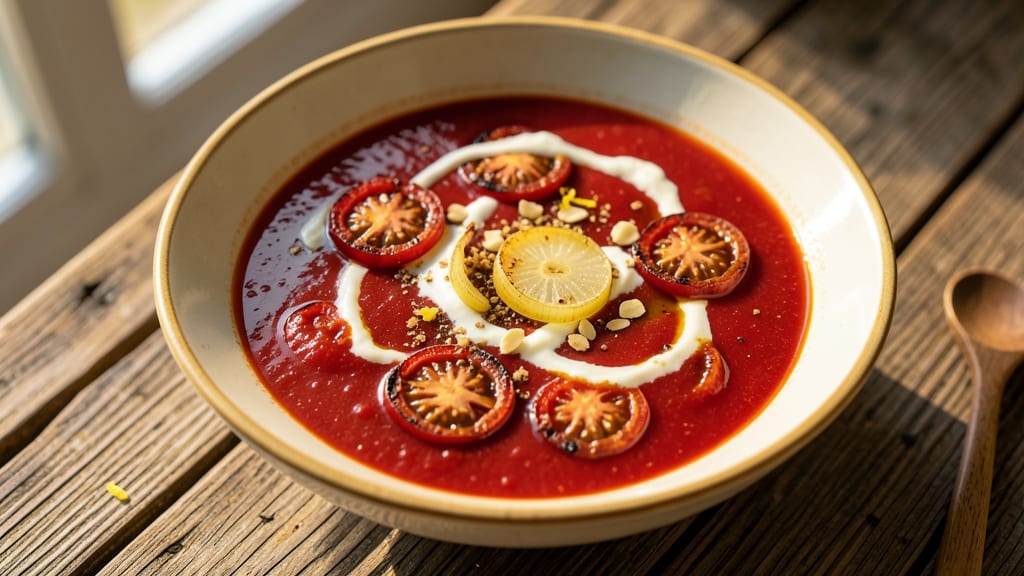
Biaggi's tomato soup recipe delivers the velvety, deeply flavorful soup that made the restaurant famous—silky, rich, and perfectly balanced with a crisp herbed crust. The secret lies in roasting tomatoes until caramelized, then simmering them with aromatic garlic, onions, and a touch of red wine for depth.
This isn’t your average canned-soup stand-in; it’s a restaurant-quality dish that transforms simple ingredients into something extraordinary.
The foundation of this recipe is patience—letting the tomatoes roast until concentrated and sweet, then blending them into a smooth, velvety base. Butter and Parmesan add richness without heaviness, while fresh basil and a sprinkle of herbed breadcrumbs on top elevate it to new heights.
Every spoonful is a testament to how roasting and slow simmering unlock flavors that canned tomatoes simply can’t match.
What sets this apart is the herbed crust—toasted breadcrumbs mixed with garlic, parsley, and Parmesan—that adds texture and a burst of freshness. It’s the kind of soup that warms you from the inside out, perfect for chilly evenings or as a comforting starter for dinner.
The blend of sweet, tangy, and umami notes makes it impossible to stop at just one bowl.
Ready in about 45 minutes, this recipe is surprisingly straightforward for the depth of flavor it delivers. Whether you’re serving it as a standalone dish or pairing it with grilled cheese, the result is a tomato soup that rivals the best Italian trattorias.
Let’s get started on creating this restaurant-worthy classic at home.
Ingredients for biaggi's tomato soup
Roasted tomatoes, aromatic herbs, and a touch of wine create Biaggi's signature velvety tomato soup.
| Ingredient | Amount | Notes |
|---|---|---|
| Fresh Roma Tomatoes 🍅 | 2 lb | Halved, cored, and roasted |
| Yellow Onion 🧅 | 1 whole | Diced, medium size |
| Garlic Cloves 🧄 | 4 cloves | Minced, fresh preferred |
| Dry Red Wine 🍷 | ½ cup | Bold, like Cabernet Sauvignon |
| Unsalted Butter 🧈 | 4 tbsp | European-style preferred |
| Heavy Cream 🥛 | ½ cup | Full-fat for richness |
| Parmesan Cheese 🧀 | ½ cup | Freshly grated, aged |
| Fresh Basil Leaves 🌿 | ¼ cup | Packed, stems removed |
| Fresh Parsley 🌿 | 0.1 cup | Chopped, for garnish |
| Stale Baguette 🍞 | 4 oz | Crusts removed, torn |
| Extra-Virgin Olive Oil 🫒 | ¼ cup | For roasting and finishing |
| Vegetable Stock 💧 | 2 cups | Low-sodium preferred |
| Salt 🧂 | 1 ½ tsp | Diamond Crystal preferred |
| Black Pepper 🌶️ | ½ tsp | Freshly ground |
| Dried Thyme 🌿 | ½ tsp | Or 1 tbsp fresh thyme |
The tomatoes are the soul of this soup—Roma tomatoes are ideal for their sweetness and low seed count, but any ripe heirloom works. Whole Foods or local farmers markets often carry perfect specimens; look for vibrant color and firmness. Roasting caramelizes their natural sugars, transforming them into a sweet, jam-like base. The red wine should be bold and dry—think Cabernet Sauvignon or Merlot, not a light Pinot. If you're short on time, San Marzano crushed tomatoes can be used instead of roasting, though they won't have the same depth. The butter matters too—European-style has higher fat content, which creates a silkier texture.
No red wine? Substitute with 0.5 cup beef stock plus 1 tbsp balsamic vinegar for similar depth. Fresh herbs elevate the dish, but dried thyme at one-third the amount works in a pinch. For the crust, day-old baguette is perfect, but any stale bread will do—just pulse it in a food processor for even crumbs. The Parmesan should be aged at least 24 months for maximum umami punch; Parmigiano-Reggiano is non-negotiable here. If you can't find fresh basil, dried basil at half the amount suffices, though it won't have the same brightness. The vegetable stock should be homemade if possible, but quality low-sodium brands like Pacific Foods work well.
This soup tastes even better the next day as flavors meld. Store in an airtight container in the fridge for up to 5 days, or freeze for 3 months. For the crust, toast it immediately before serving—it loses crispness quickly. The herbed topping keeps for 3 days in the fridge, stored in a sealed container. To reheat, warm gently on the stove with a splash of water or stock to restore creaminess. The crust can be prepped ahead and stored separately, then toasted just before serving for maximum crunch.
Why You'll Love This Recipe
- I’ll be real: my first batch always disappears too fast. But the second round? Even better. The flavors meld overnight, and reheating it just softens the edges into something creamy and warm. Plus, the wine makes it taste like you spent hours on it—when really, you just let time do the work.
- No-Fuss Simplicity: I swear by this recipe because it’s the kind of soup that doesn’t demand perfection—just a knife, a pot, and 15 minutes. Halve those Roma tomatoes, toss them in with the onion and garlic, and let the red wine do the heavy lifting while you stir. Honestly, I’ve made it with pre-chopped veggies from the store and still ended up with something better than takeout.
- Rich, Layered Depth: That splash of dry red wine isn’t just for show—it caramelizes into something almost syrupy, balancing the bright acidity of the tomatoes. The butter at the end? Pure magic. It turns a good soup into one where you’ll linger over the last spoonful, savoring how the garlic lingers like a whisper.
- Weeknight to Potluck: Between us, this is my go-to when I need to feed a crowd or just myself after a long day. Double the batch, freeze half, and you’ve got a ready-to-reheat meal for lazy Mondays. Bring it to a dinner party, and no one will guess it’s not from a fancy restaurant—just a pot of love with a few pantry staples.
Step-by-step instructions for Biaggi's tomato soup
Master this refined technique for a velvety roasted tomato base with a crispy herbed crust.
Roast Tomatoes and Aromatics for Deep Flavor
Preheat your oven to 425°F and line a baking sheet with parchment paper. Arrange the halved, cored 2 lb fresh Roma tomatoes cut-side up on the sheet. Drizzle with 2 tablespoons of the extra-virgin olive oil and sprinkle with ½ teaspoon of the salt and ¼ teaspoon of the dried thyme. Roast for 25-30 minutes until the edges are deeply caramelized and the flesh collapses slightly.
While the tomatoes roast, dice the 1 whole yellow onion into ¼-inch pieces and mince the 4 cloves garlic. Toss them with the remaining 2 tablespoons olive oil and spread on the same baking sheet. Roast for 15-20 minutes until the onions are golden and the garlic is fragrant. This roasting process develops concentrated sweetness and depth that transforms ordinary tomatoes into a luxurious base.
Build the Tomato Base with Wine and Stock
Transfer the roasted tomatoes, onions, and garlic to a blender or food processor. Add the 0.5 cup dry red wine and 2 cups vegetable stock. Blend until completely smooth, scraping down the sides as needed. This mixture should be silky and vibrant red—if it's too thick, add 1-2 tablespoons water to achieve a pourable consistency.
Pour the blended mixture into a large saucepan and bring to a gentle simmer over medium heat. Reduce the heat to low and let it cook uncovered for 15-20 minutes, stirring occasionally, until the liquid reduces by about 25%. You're looking for a concentrated flavor where the tomato essence shines through. The soup should coat the back of a spoon but remain fluid enough to ladle.
Finish with Cream and Herbs for Richness
Reduce the heat to low and stir in the 4 tbsp unsalted butter and 0.5 cup heavy cream. Let the soup simmer gently for 5 minutes to warm through. The cream should melt smoothly into the base, creating a luxurious texture without curdling. Taste and adjust seasoning with the remaining 1 teaspoon salt and ¼ teaspoon black pepper.
Remove the pan from heat and stir in 0.25 cup fresh basil leaves and 0.1 cup fresh parsley. The herbs should soften slightly but retain their vibrant color. This infusion adds freshness that balances the richness of the cream. Let the soup sit off heat for 5 minutes to allow the flavors to meld completely.
Create the Herbed Crust and Serve
Tear the 4 oz stale baguette into ½-inch pieces and pulse in a food processor until you achieve fine breadcrumbs. In a small skillet, toast the breadcrumbs over medium heat for 3-4 minutes, stirring constantly, until golden brown. Remove from heat and immediately mix in 0.5 cup freshly grated Parmesan cheese.
Ladle the warm tomato soup into bowls and top each serving with a generous spoonful of the herbed breadcrumb mixture. The contrast between the silky soup and crispy crust creates the signature texture that makes this dish exceptional. Serve immediately while the crust remains crisp and the soup maintains its velvety consistency.
Pro Tips For Making Biaggi'S Tomato Soup
- Sear Your Onions Low and Slow: I used to rush this step and end up with bitter, browned bits that ruined the whole dish. For Biaggi’s recipe, keep the heat at a steady simmer—not a sizzle—until the onions are translucent and sweet. This takes about 8-10 minutes, but it’s the foundation of that deep, rich flavor. (Yes, even if you’re impatient like me.)
- Blanch Tomatoes First: Dumping raw Roma tomatoes straight into the pot? Skip it. Instead, blanch them in boiling water for 30 seconds, then shock in ice water. This softens them just enough to break down faster while keeping them from turning mushy. It also makes peeling the skins (if you’re picky about that) a breeze—though I usually skip it and just fish out the tough bits later.
- Deglaze with Wine Immediately: The moment you remove the onions and garlic, pour in that red wine right away—don’t let the pan cool. The residual heat helps the wine reduce faster and pulls out those caramelized bits stuck to the bottom. If you wait, you’ll end up with a watery, underflavored soup. (Pro move: Use a wooden spoon to scrape every last bit from the pan while deglazing.)
- Finish with Cold Butter: Biaggi’s recipe calls for butter at the end, but I learned the hard way that warm butter burns faster than you think. Instead, let the soup cool slightly (just until it’s no longer steaming), then swirl in the cold butter off the heat. This coats the soup evenly without risking a greasy, bitter taste. (Bonus: It also makes the soup look silky and restaurant-worthy.)
Perfect pairings for these flavors
Classic Pairings
This velvety tomato soup pairs beautifully with a grilled cheese sandwich using sourdough bread and sharp cheddar. The crispy bread contrasts perfectly with the soup's silky texture. I like to use Kraft Natural Swiss for a slightly tangy bite that cuts through the richness. 🥪
For a more elegant presentation, serve with toasted baguette slices brushed with garlic-infused olive oil and sprinkled with flaky sea salt. The warm bread soaks up the soup beautifully while adding a rustic touch.
Another great option is creamy polenta—its mild flavor lets the soup's vibrant notes shine through.
Wine Pairings
A Chianti Classico from Tuscany is my go-to wine for this dish. Its bright acidity and cherry notes complement the tomato's sweetness while the tannins stand up to the cream. For something lighter, try a Pinot Grigio from Alto Adige—its crisp finish cleanses your palate between spoonfuls. 🍷
If you prefer red wine, a Valpolicella Ripasso offers a smoother profile with hints of dark fruit and spice. White wine lovers should opt for a Vermentino from Sardinia—its citrusy brightness balances the soup's richness perfectly. Avoid heavy, oaky whites or bold reds that could overpower the delicate flavors.
Unexpected Pairings
For a modern twist, pair this soup with crispy prosciutto-wrapped melon. The salty prosciutto and sweet melon create a refreshing contrast to the soup's richness. I like to serve it as a starter before the main course.
Another unexpected winner is charred Brussels sprouts with a balsamic glaze—their caramelized edges add a smoky depth that complements the tomatoes. 🥗
If you're serving this as a light lunch, add a side of arugula salad with lemon vinaigrette and toasted pine nuts. The peppery greens and nutty crunch provide a refreshing balance.
For a heartier meal, serve with roasted chicken thighs—their crispy skin and juicy meat make this soup a complete, satisfying dish.
Nutrition facts
Frequently asked questions
Why does Biaggi's tomato soup need roasting?
Roasting intensifies the tomatoes' natural sweetness and deepens their flavor by caramelizing sugars. This creates a rich, jam-like base that canned tomatoes can't replicate. The process also removes excess water, resulting in a velvety texture without needing extra thickeners.
Can I make this soup without red wine?
Yes! Substitute with ½ cup beef stock plus 1 tbsp balsamic vinegar for similar depth. The acidity from vinegar mimics wine's brightening effect, while the stock adds umami. For a non-alcoholic option, use ½ cup tomato paste instead.
How do I fix soup that's too thick?
Add 1-2 tablespoons water or vegetable stock at a time, stirring well after each addition. For a creamier texture without thinning, stir in 1 tbsp cold butter or 1 tbsp heavy cream off heat. Never add liquid while boiling to avoid breaking the emulsion.
What's the best bread for the herbed crust?
Use day-old baguette or any stale Italian bread for maximum crispiness. Avoid soft breads like brioche—they'll absorb too much oil and become gummy. For extra flavor, toast the breadcrumbs with 1 minced garlic clove before adding Parmesan.
Can I make this soup ahead of time?
Yes! Store in an airtight container for up to 5 days in the fridge. Reheat gently on the stove with a splash of water or stock to restore creaminess. The crust should be made fresh and toasted before serving for maximum crunch.