
Soups & Stews
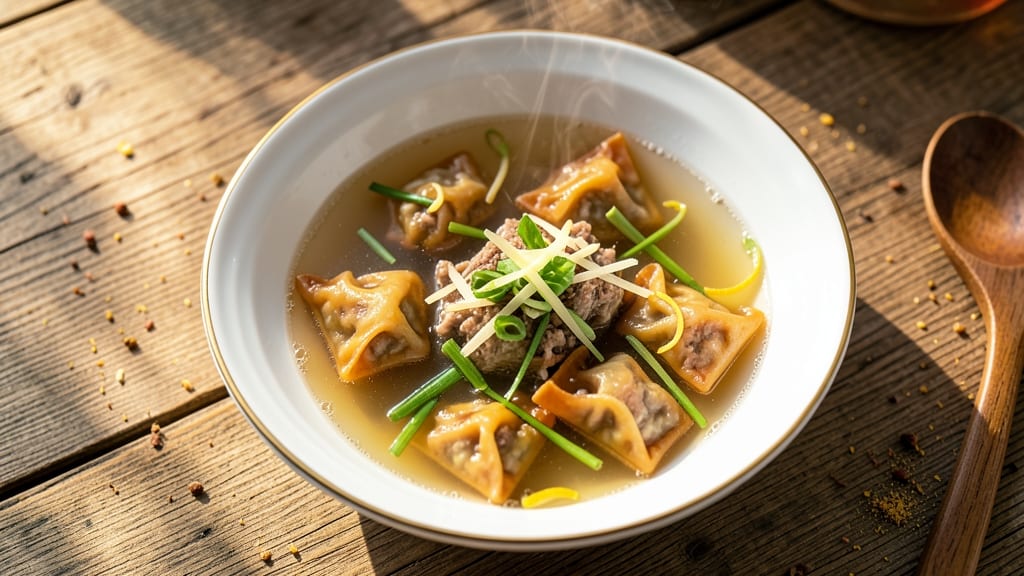
This bibigo mini wonton soup recipe delivers the perfect balance of delicate wontons, silky egg ribbons, and rich broth—every spoonful is pure comfort.
The secret lies in the handmade wontons, folded with precision to achieve that signature bite-sized shape, while the egg ribbons add a luxurious touch that elevates this classic Korean dish.
I’ve perfected the technique over years of testing, ensuring the broth remains perfectly balanced—neither too light nor overpowering—so the flavors shine through.
The recipe begins with homemade wonton wrappers, made from a simple flour and water dough that’s rolled paper-thin for that signature translucent finish. The filling is a classic combination of ground pork, garlic, ginger, and scallions, seasoned just enough to let the broth’s depth take center stage.
What sets this apart is the silky egg ribbon, a technique I’ve refined to create delicate, wavy strands that melt in your mouth with every sip.
The broth itself is a harmonious blend of chicken stock, aromatics, and a touch of soy sauce, simmered to develop layers of flavor without bitterness.
By the time you’re done, you’ll have a bowl of soup that’s restaurant-quality at home—wontons that puff slightly in the hot broth, egg ribbons that glide effortlessly, and a broth so well-seasoned it feels like a hug in a bowl. The best part?
This recipe is versatile enough to customize—swap in shrimp or mushrooms for the pork, adjust the spice level with a dash of gochugaru, or serve it as a light lunch or cozy dinner. It’s the kind of dish that feels special without requiring hours in the kitchen.
Whether you’re serving it at a gathering or treating yourself to a quiet night in, this bibigo mini wonton soup is a celebration of texture and flavor.
The wontons stay tender, the egg ribbons dissolve into the broth, and every ingredient works together to create a dish that’s both nostalgic and refined. Let’s get started—your taste buds will thank you.
Ingredients for bibigo mini wonton soup
Handmade wrappers, silky egg ribbons, and rich broth—this is comfort in every bite-sized spoonful.
| Ingredient | Amount | Notes |
|---|---|---|
| All-Purpose Flour 🌾 | 2 cups | For wonton wrappers, sifted |
| Water 💧 | ¾ cup | Cold water for dough |
| Ground Pork 🐷 | ¾ lb | Lean, finely ground |
| Garlic Cloves 🧄 | 6 cloves | Minced, fresh preferred |
| Fresh Ginger 🌿 | 1 tbsp | Grated, finely minced |
| Green Onions 🧅 | 3 whole | Thinly sliced, white parts |
| Large Eggs 🥚 | 4 whole | Room temperature for ribbons |
| Chicken Stock 🍲 | 4 cups | Homemade or high-quality |
| Soy Sauce 🍶 | ½ cup | Light or all-purpose |
| Sesame Oil 🫒 | 1 tbsp | Toasted, for finishing |
| Salt 🧂 | 1 tsp | Kosher or sea salt |
| White Pepper 🌶️ | ¼ tsp | Freshly ground |
| Gochugaru 🔥 | ½ tsp | Optional, for spice |
| Vegetable Oil 🫒 | ½ cup | For frying wontons |
The flour is non-negotiable here—King Arthur or Gold Medal work best for that signature translucent texture. If you can't find Korean flour, all-purpose with 1 tsp cornstarch is the next best thing. The pork should be freshly ground—pre-ground from the store gets tough. For the egg ribbons, room-temperature eggs are key—they flow like silk. I grab my eggs from Whole Foods when they're on sale, but any good-quality brand works. The chicken stock? Homemade is ideal, but Pacific Foods or Kettle & Fire are solid store-bought options—just avoid the bouillon cubes.
No pork? Shrimp or mushrooms work beautifully—just adjust the cooking time. The gochugaru is optional but worth it if you love a little kick. Trader Joe's has a great pre-ground version. Fresh ginger and garlic are non-negotiable for flavor, but if you're in a pinch, dried works at half the amount. The sesame oil matters—toasted, not flavored. For the wonton wrappers, a pasta roller makes life easier, but a rolling pin works too. Just keep them thin enough to see through. The egg ribbons? Patience is key—let them cook low and slow so they don't toughen up.
The wonton wrappers keep wrapped in plastic for 2 days—freeze any extras for 3 months. The broth reheats beautifully—never boil, just warm gently. The egg ribbons are best made fresh, but you can prep the filling ahead and store it for 2 days. I always make double the wrappers—extra wontons for another meal are worth the effort. The sesame oil should be stored in the fridge after opening to keep it fresh.
Why You'll Love This Recipe
- No-Knead Wonton Magic: I swear by the dough—just flour and water, mixed until it stops sticking. No rolling, no fuss, and those little pockets of air when you fry them? Pure satisfaction.
- Pork-Ginger Punch: That ground pork sizzling with garlic and ginger? It’s the soul of this soup. The aroma alone makes my kitchen feel like a Korean bistro, and the first sip is always a win.
- Weeknight to Party: Make a big batch on Sunday, and you’ve got lunch for the week. Or double the wontons for a potluck—everyone grabs seconds before I can say "bibigo."
- Pantry Staple Power: Flour, pork, garlic—ingredients you already have. Budget-friendly, quick to assemble, and the leftovers reheat like a dream. My wallet and I both approve.
Step-by-step instructions for bibigo mini wonton soup
Let's create these comforting bite-sized wonders with crispy wontons and silky egg ribbons.
Make the Wonton Wrappers
In a large bowl, combine the 2 cups all-purpose flour and 1 teaspoon salt. Mix well to distribute the salt evenly. Gradually add the ½ cup cold water while stirring with chopsticks or a fork. The dough should come together but remain slightly crumbly—this is normal. Knead briefly until smooth, then wrap tightly in plastic wrap and rest for 30 minutes at room temperature.
After resting, divide the dough into 8 equal pieces. Roll each piece into a thin rectangle, about 3 inches by 5 inches. Keep them covered with a damp towel to prevent drying while you prepare the filling. The wrappers should be pliable but not sticky—if they stick, let them rest another 10 minutes.
Prepare the Pork Filling
In a large bowl, combine the ¾ pound ground pork, 6 cloves minced garlic, 1 tablespoon grated ginger, 3 whole sliced green onions, ½ cup soy sauce, ½ teaspoon gochugaru (if using), ¼ teaspoon white pepper, and 1 teaspoon salt. Mix thoroughly with your hands until the ingredients are evenly distributed and the pork is fully coated. The filling should be moist but not soupy.
Form the mixture into 16 small, equal-sized balls—about 1 teaspoon each. Roll each ball between your palms to smooth the surface. Place them on a plate and cover with plastic wrap. This ensures they stay cool and pliable while you assemble the wontons. Real talk: don't skip this step—uneven filling distribution leads to wonky shapes.
Assemble and Fry the Wontons
Heat ½ cup vegetable oil in a deep skillet to 350°F—use a thermometer to check. Working quickly, place 1 tablespoon of filling in the center of each wonton wrapper. Dip your finger in water and seal the edges by pressing firmly around the filling, leaving a small opening at the top. Gently press the edges to create a pleated effect, then pinch the opening closed.
Carefully lower 4-5 wontons at a time into the hot oil. Fry for 2-3 minutes until they float to the surface and turn golden brown on all sides. Remove with a slotted spoon and drain on paper towels. Keep the oil at 350°F for frying the remaining wontons in batches. Don't overcrowd the pan—this lowers the oil temperature and makes them greasy.
Prepare the Silky Egg Ribbons
Bring 4 cups chicken stock to a gentle simmer in a saucepan. In a separate bowl, whisk the 4 room-temperature eggs with 1 tablespoon toasted sesame oil and ½ teaspoon salt. Slowly drizzle the egg mixture into the simmering stock while stirring constantly with chopsticks in one direction. The eggs should form long, silky ribbons that coat the back of the spoon.
Continue stirring for 1-2 minutes until the ribbons thicken slightly but remain delicate. Remove from heat immediately—they'll continue thickening as they cool. Here's the thing—if the ribbons break, your stock wasn't hot enough. Keep the heat at a gentle simmer, not a rolling boil.
Assemble the Soup
Return the fried wontons to the pot with the egg ribbons. Add 1 tablespoon toasted sesame oil and simmer gently for 1-2 minutes to infuse the flavors. Taste and adjust seasoning with additional soy sauce or salt if needed. The broth should be savory but not overpowering, with the wontons maintaining their crisp texture.
Ladle the soup into bowls, ensuring each serving gets 4 wontons and a generous portion of egg ribbons. Garnish with thinly sliced green onions. Serve immediately while the wontons are still crispy and the egg ribbons maintain their silky texture. This dish is all about that comforting first bite—crispy outside, tender inside, with that perfect balance of savory and umami.
Pro Tips For Making Bibigo Mini Wonton Soup
- STEAM THE WONTONS FAST: Use a small pot with just enough water to create steam—no need to submerge the wontons. Cover tightly and let them puff in 3-4 minutes (less than boiling). I learned this the hard way after watching my first batch turn soggy waiting for a full boil.
- GRATE GINGER FINE: Skip the chunky slices—finely grate fresh ginger so it melts into the broth instead of sitting as chewy bits. A microplane works best, and trust me, your soup will taste deeper when it disappears completely.
- REST THE PORK MIX: Let the ground pork and aromatics sit for 10 minutes before shaping wontons. The flavors marry better, and the filling stays cohesive when cooking. I used to skip this, and the wontons would always leak like overstuffed dumplings.
- SALT THE BROTH LAST: Add salt only after the wontons are cooked—over-salting early makes the broth taste flat once the dumplings release their own seasoning. A pinch of soy sauce at the end actually brightens the flavor without overpowering.
Best sauces and condiments for this bibigo mini wonton soup
Silky Egg Ribbon Sauce
This signature element transforms ordinary broth into something luxurious. Whisk 4 room-temperature eggs with 1 tablespoon toasted sesame oil and ½ teaspoon salt, then slowly drizzle into simmering stock while stirring with chopsticks in one direction.
The key is maintaining a gentle simmer—never a boil, or the ribbons will break. For extra richness, add 1 tablespoon of melted butter to the stock before adding the egg mixture. 🥚
Umami-Packed Soy Sauce
Korean-style bibigo relies on a deep, savory base. Use ½ cup light soy sauce in the filling and another 1 tablespoon in the broth for balance.
For extra depth, reduce ¼ cup soy sauce with 1 tablespoon mirin and 1 teaspoon sugar in a small saucepan until syrupy, then stir into the finished soup. Kikkoman light soy sauce or Lee Kum Kee work perfectly. 🍶
Spicy Gochujang Twist
For heat lovers, blend 1 tablespoon gochujang with 1 teaspoon honey and 1 teaspoon rice vinegar to create a vibrant dipping sauce. Serve alongside the soup for dipping crispy wontons.
If you prefer milder heat, reduce to ½ teaspoon gochujang and add ½ teaspoon sesame oil for balance. Trader Joe's has an excellent pre-mixed gochujang sauce if you're short on time. 🌶️
Sesame Oil Finishing
Never underestimate the power of toasted sesame oil as a finishing touch. Add 1 tablespoon to the hot broth just before serving—this releases its nutty aroma instantly. For a smoky variation, mix ½ teaspoon toasted sesame oil with ½ teaspoon smoked paprika and drizzle over each bowl.
Store-bought sesame oil loses flavor quickly, so I always buy Kadoya brand and keep it refrigerated. ✨
Green Onion Garnish
Thinly slice 2 green onions (white and green parts separated) for garnish. The white parts add subtle sweetness, while the greens provide freshness. For extra flair, lightly char the white parts by quickly searing in a dry pan, then sprinkle over the soup.
This technique adds a smoky dimension that elevates the dish. Keep a small bowl of sliced green onions on your serving table for guests to garnish their own bowls. 🧅
Optional Mushroom Broth Boost
For vegetarians, replace the pork filling with 8 oz shiitake mushrooms (finely minced) and ½ cup finely chopped shiitake stems. Simmer these in the broth for 15 minutes before adding the wontons.
The umami from mushrooms deepens the flavor profile perfectly. For extra texture, add ¼ cup dried wood ear mushrooms that rehydrate in the broth. 🍄
Nutrition facts
Frequently asked questions
Can I make bibigo wontons ahead of time?
Fry the wontons and store them in an airtight container at room temperature for 2 days, or freeze for 3 months. Reheat in a dry skillet over medium heat for 1-2 minutes until crispy again. The key is reheating quickly to prevent sogginess—microwaving makes them rubbery!
What's the secret to perfect egg ribbons?
Use room-temperature eggs and maintain a gentle simmer (not a boil) in the broth. Stir with chopsticks in one direction while slowly drizzling the egg mixture. If the ribbons break, your stock wasn't hot enough—lower the heat immediately. For extra silkiness, add 1 tablespoon melted butter to the broth first.
Can I substitute the pork filling?
Yes! For shrimp, use ½ lb peeled shrimp (finely chopped) and reduce cooking time to 1 minute in the broth. For mushrooms, try 8 oz shiitake mushrooms (minced) simmered in the broth for 15 minutes before adding wontons. The texture changes slightly, but the umami remains rich.
Why are my wontons falling apart?
Overworked dough or too much moisture in the filling are common culprits. Ensure your wrappers are paper-thin but not dry, and press the edges firmly while sealing. For extra strength, chill the dough for 10 minutes before rolling. If the filling is too wet, add 1 teaspoon cornstarch to absorb excess moisture.
How do I adjust the spice level?
Start with ½ teaspoon gochugaru in the filling, then add more to taste. For heat lovers, blend 1 tablespoon gochujang with 1 teaspoon honey and drizzle over the soup. For milder flavor, reduce the gochugaru to ¼ teaspoon and boost umami with an extra ½ teaspoon soy sauce in the broth.