
Soups & Stews
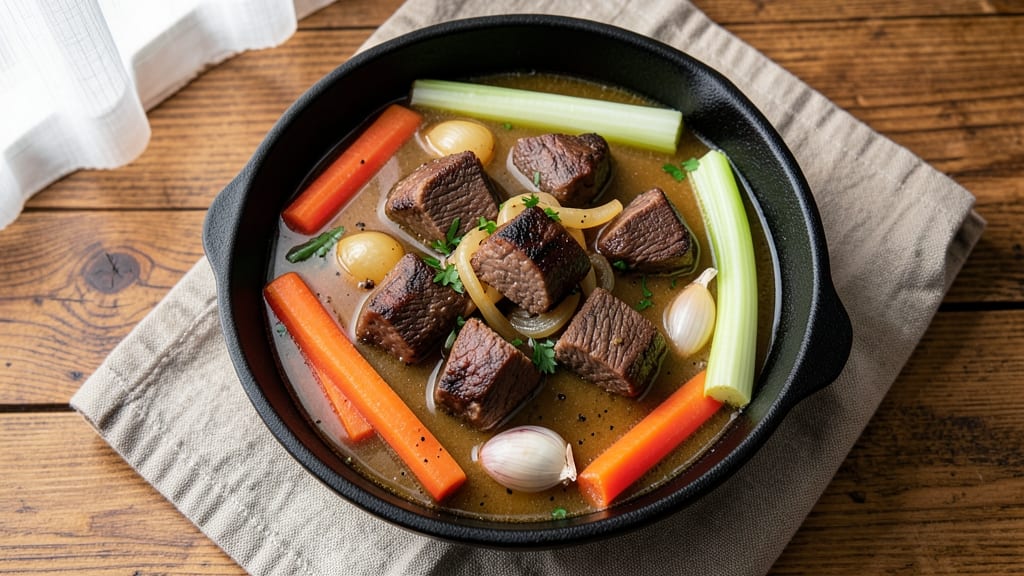
This Black Angus beef soup recipe transforms tough cuts into melt-in-your-mouth chunks swimming in a deep, umami-rich broth. The secret lies in slow-cooking the beef until fork-tender while building layers of flavor through caramelized aromatics and reduced stock.
What sets this apart is the balance of richness from the beef fat and freshness from seasonal vegetables—no processed ingredients needed.
Start by searing the Black Angus beef in batches to develop a flavorful crust, then simmer it low and slow for hours until it practically falls apart. The broth becomes concentrated with beef essence, while onions, carrots, and celery form a classic mirepoix base that infuses every spoonful.
Fresh herbs added at the end brighten the dish without overpowering the beef's natural depth.
By the time you serve this soup, you'll have a restaurant-quality bowl with tender beef chunks, silky broth, and perfectly cooked vegetables. The aroma alone will have everyone gathering at the table, and the first bite delivers that satisfying combination of meaty richness and comforting warmth.
This is the kind of soup that tastes even better the next day.
Perfect for chilly evenings or as a hearty appetizer, this recipe scales easily for crowds while maintaining its depth. The technique ensures your broth stays clear and flavorful, with no need for clarifying agents. Let's get started on creating this soul-warming masterpiece.
Ingredients for black angus beef soup
Sixteen ingredients to create restaurant-quality Black Angus beef soup with melt-in-your-mouth beef chunks.
| Ingredient | Amount | Notes |
|---|---|---|
| Black Angus Chuck Roast 🥩 | 2 ½ lb | Cut into 1.5-inch chunks, trimmed of excess fat |
| Yellow Onions 🧅 | 2 whole | Medium size, cut into 1/2-inch dice |
| Carrots 🥕 | 4 whole | Medium size, peeled and cut into 1/2-inch chunks |
| Celery Stalk 🧄 | 4 whole | Cut into 1/2-inch pieces, including leaves |
| Garlic Cloves 🧄 | 6 cloves | Peeled and smashed, not minced |
| Beef Stock 💧 | 8 cups | Homemade or high-quality store-bought, unsalted |
| Red Wine 🍷 | 1 cup | Dry, bold variety like Cabernet Sauvignon |
| Tomato Paste 🍅 | ½ cup | High-quality, not watered-down |
| Fresh Thyme 🌿 | ¼ cup | Leaves only, stems removed |
| Fresh Parsley 🌿 | 0.15 cup | Flat-leaf, chopped for garnish |
| Bay Leaves 🍃 | 2 whole | Dried, standard size |
| Olive Oil 🫒 | ¼ cup | Extra-virgin for searing |
| Diamond Crystal Kosher Salt 🧂 | 1 ½ tsp | For seasoning, adjust to taste |
| Freshly Ground Black Pepper 🌶️ | 1 tsp | Coarsely ground |
| All-Purpose Flour 🌾 | 1 tbsp | For dusting beef chunks |
The Black Angus chuck roast is non-negotiable for this recipe—its marbling ensures tender, flavorful meat. Look for pre-cut chunks at specialty butchers or your local Costco for convenience, though trimming excess fat yourself yields the best results. Whole roasts from Kroger's or Wegmans are cost-effective if you're comfortable cubing them. Avoid pre-seasoned cuts; we're building flavor from scratch. For the mirepoix (onions, carrots, celery), buy organic if possible to minimize dirt and pesticide residue, or scrub thoroughly. Trader Joe's consistently carries fresh, affordable produce for this base.
No red wine? Dry sherry or additional beef stock works in a pinch, though the depth of flavor will differ. Tomato paste can be substituted with crushed tomatoes (1 cup), but paste provides a more concentrated base. Fresh herbs are ideal, but dried thyme at one-third the amount suffices if needed. For the beef stock, Pacific Foods or Kitchen Basics brands deliver restaurant-quality results without additives. The bay leaves should be light brown, not dark or crumbly. If you're scaling this for a crowd, double the mirepoix and beef stock while keeping the same proportions—this maintains the soup's balance.
Store the raw beef chunks in an airtight container in the fridge for up to 2 days before cooking. Once cooked, this soup reheats beautifully—simmer on the stove for 5-7 minutes or microwave for 2 minutes with a splash of water. For longer storage, portion into glass containers and freeze for up to 3 months. The broth will thicken slightly upon reheating; add 1/4 cup water if desired. Garnish with fresh parsley just before serving to preserve its vibrant color and bright flavor.
Why You'll Love This Recipe
- One-Pot Wonder: I swear by this soup because it’s literally dump-and-go after the initial chop. Slice the onions, carrots, and celery while the chuck roast browns—no fancy techniques, just a heavy pot and 30 minutes of hands-off simmering. The celery stalk’s earthy bite and caramelized onions do all the work.
- Rich Without Effort: That Black Angus chuck roast? It melts into the broth like butter, turning the soup into something dangerously tender. Honestly, the first time I tasted it, I nearly burned the kitchen—it’s that good. The garlic cloves, smashed and simmered low, add a depth that makes it taste like a restaurant dish, not a weeknight meal.
- Leftovers That Beg for More: This soup only gets better the next day. I’ll be real: I often make a double batch because the flavors meld overnight into something even richer. Freeze half for lazy Mondays, and the other half? Gone in two days—my family fights over the last bowl.
- Budget Meal That Feeds: A single chuck roast stretches to feed four (or five if you’re feeding teenagers). Between us, this is my go-to when grocery money’s tight but I refuse to serve anything less than satisfying. The onions and carrots bulk it up, so you’re not just paying for beef—you’re getting a full, hearty meal.
Step-by-step instructions for Black Angus beef soup
The secret to this rich, umami-packed soup lies in proper searing and slow simmering—technique matters more than timing.
Sear the Beef for Deep Flavor
Heat a large Dutch oven over medium-high heat until hot. Add the 2.5 lb Black Angus Chuck Roast cut into 1.5-inch chunks in a single layer, working in batches if needed. Let them sear undisturbed for 3-4 minutes per side until developing a deep mahogany crust.
This initial sear creates the Maillard reaction that forms complex flavors. After the first batch is browned, transfer the beef to a plate. Add the 0.25 cup Olive Oil to the pot and swirl to coat the bottom, scraping up all the browned bits—this is where flavor lives.
Build the Aromatic Base
Return the seared beef to the pot. Add the 2 whole Yellow Onions cut into ½-inch dice, 4 whole Carrots cut into ½-inch chunks, and 4 whole Celery Stalk cut into ½-inch pieces. Stir to combine, then sprinkle with 1 tbsp All-Purpose Flour and toss gently to coat the vegetables.
Cook for 5 minutes until the vegetables soften slightly. Add the 6 cloves Garlic Cloves (peeled and smashed), 0.5 cup Tomato Paste, 1.5 tsp Diamond Crystal Kosher Salt, and 1 tsp Freshly Ground Black Pepper. Stir well to distribute the tomato paste evenly—this will deepen the soup's color and richness.
Deglaze and Simmer the Soup
Pour in the 1 cup Red Wine and scrape the bottom of the pot vigorously with a wooden spoon, ensuring all the browned bits dissolve into the liquid. Let the wine simmer for 3-4 minutes until reduced by half and the alcohol aroma dissipates.
Add the 8 cups Beef Stock, 0.25 cup Fresh Thyme, 2 whole Bay Leaves, and bring to a gentle boil. Once boiling, reduce heat to low and cover partially. Let the soup simmer for 2-2.5 hours, maintaining a gentle bubble—this slow cooking ensures the beef becomes fork-tender while the vegetables break down into a velvety texture.
Finish and Adjust Seasoning
Remove the 2 whole Bay Leaves and discard. Taste the soup and adjust seasoning with additional Diamond Crystal Kosher Salt or Freshly Ground Black Pepper if needed. The soup should be rich but not overly salty—remember, the beef stock already contains salt.
For the final touch, stir in the 0.15 cup Fresh Parsley (chopped) just before serving. This bright herb cuts through the richness and adds a fresh finish. Ladle the soup into bowls, garnishing each serving with a sprinkle of parsley and a drizzle of the cooking liquid if desired.
Pro Tips For Making Black Angus Beef Soup
- Sear the Chuck First: High heat. Seriously, crank it up to medium-high and let that Black Angus chuck roast develop a deep crust before you even think about adding liquid. I used to skip this, and the soup never had that rich, caramelized depth—now it’s the thing that makes the difference between good and unforgettable.
- Mise en Place the Veggies: Dice the onions into even ¼-inch pieces and cut the carrots and celery into matchsticks before you start cooking. Sounds tedious, but I learned this the hard way—half-chopped veggies mean uneven cooking and a soup that’s mushy in spots. (Yes, even if you’re impatient like me.)
- Simmer Low and Slow: After browning the meat and adding broth, drop the heat to a gentle simmer—think tiny bubbles, not a rolling boil. I was skeptical until I tried it: low heat keeps the chuck tender without turning it to shoe leather, and the flavors meld like they’re supposed to.
- Use a Meat Thermometer: Pull the chuck when it hits 203°F—not when it looks done. After burning three batches of overcooked beef, I finally figured out that this is the sweet spot for fork-tender meat. (Your future self will thank you.)
Essential equipment for perfect results
Dutch Oven Essentials
A 5-7 quart Dutch oven is non-negotiable for this recipe—its thick walls and tight lid trap heat perfectly for even simmering. I recommend the Lodge 5.5 Quart Cast Iron Dutch Oven for its durability and heat retention, though All-Clad Stainless Steel is a great alternative if you prefer lighter weight.
Avoid non-stick—it can't handle the high heat needed for searing. 🔥
Precision Thermometer
Monitoring the beef's internal temperature ensures perfect doneness. A meat thermometer like the ThermoWorks Smoke or Thermoworks Thermapen lets you check without opening the lid. Aim for 203°F for tender, pull-apart beef. The instant-read probe saves time and prevents overcooking.
Wooden Spoon & Ladle
Use a wooden spoon (I prefer Oxo Good Grips) to stir without scratching your Dutch oven. For serving, a stainless steel ladle with a long handle keeps your hands away from the hot pot. Avoid metal utensils when adding fresh parsley at the end—they can bruise the leaves.
Mandoline Slicer
For consistent vegetable cuts, a mandoline like the OXO Good Grips makes quick work of onions, carrots, and celery. Set it to ½-inch thickness for even cooking. If you don't own one, a sharp chef's knife and steady hand work just fine—just be patient with the dicing.
Fine-Mesh Strainer
A fine-mesh strainer (I use OXO Good Grips) helps clarify the broth if you prefer a smoother texture. Strain the soup through it after simmering, then press the solids gently with a wooden spoon to extract every last drop of flavor.
This step is optional but elevates the soup's elegance. 💫
Storage Containers
For leftovers, use glass Pyrex containers with airtight lids. They maintain the soup's quality better than plastic and are microwave-safe. Label containers with dates—this soup tastes even better reheated the next day, so plan ahead for seconds!
Nutrition facts
Frequently asked questions
Can I substitute Black Angus beef with another cut?
While Black Angus chuck roast delivers the best marbling and tenderness, you can use other beef cuts like chuck eye roast or short ribs for similar results. Avoid lean cuts like sirloin—they won't become tender enough during simmering. If using short ribs, reduce simmering time to 1.5 hours since they're already more tender.
How do I make this soup vegetarian?
Replace the beef with hearty mushrooms (like portobello or cremini) and use vegetable stock instead of beef stock. Add 1 tbsp soy sauce or 1 tsp miso paste for umami depth. The tomato paste and red wine still work beautifully to build flavor, but simmer the mushrooms for 30-45 minutes longer to achieve similar tenderness.
Why does my soup taste bland?
Blandness usually comes from skipping the searing step or using low-quality stock. Always brown the beef thoroughly to develop flavor, and use homemade or high-quality beef stock—never bouillon cubes. For extra depth, add 1 tsp Worcestershire sauce or ½ cup tomato paste during simmering. Taste as you go and adjust salt gradually.
Can I make this soup in an Instant Pot?
Yes! Sear the beef in a skillet first, then transfer it to the Instant Pot with all ingredients except parsley. Cook on high pressure for 45 minutes, then natural release for 15 minutes. The beef will be tender, but the broth may be less concentrated than stovetop simmering. For richer flavor, reduce the broth on the stove after pressure cooking to intensify the taste.
What's the best way to reheat leftovers?
Reheat gently on the stove over medium-low heat for 5-7 minutes, stirring occasionally, until warmed through. Avoid microwaving—it can make the broth watery. For extra richness, add 1 tbsp heavy cream or a splash of beef stock while reheating. Store leftovers in airtight containers for up to 3 days in the fridge or 3 months in the freezer.