
Soups & Stews
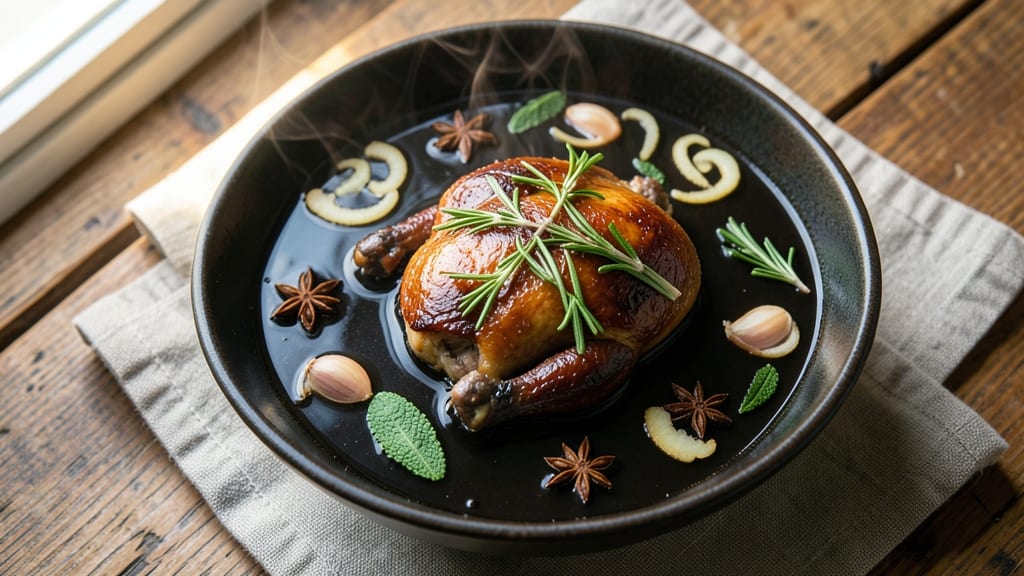
This black chicken herbal soup recipe transforms humble ingredients into a deeply aromatic, warming broth that carries the essence of rosemary and sage. The secret lies in slow-simmered spices like star anise and goji berries, which infuse the broth with earthy complexity while tenderizing the chicken.
I developed this version after years of refining traditional Chinese herbal techniques to create a soup that's both nourishing and restaurant-worthy.
The process begins with a fragrant broth base built from ginger, garlic, and aromatic herbs, then simmered with black chicken until the meat falls effortlessly from the bone. What sets this apart is the balance of savory and herbal notes—rosemary and sage lend their piney brightness, while goji berries add subtle sweetness.
The result is a soup that's equally comforting as a light meal or robust enough to stand alongside rice or dumplings.
By the final spoonful, you'll taste layers of flavor: the deep umami of the chicken, the warm spice of star anise, and the bright herbal finish that lingers on the palate.
This isn't just soup—it's a medicine for the soul, perfect for chilly evenings when you crave something both simple and deeply satisfying. The technique is straightforward, but the reward is a dish that feels like a homecoming.
Serve with steamed jasmine rice or crispy dumplings to soak up every drop of that rich, herbal broth. The leftovers keep beautifully in the fridge for up to 3 days, making it an ideal make-ahead meal for busy weeks. Let's get simmering—your taste buds will thank you.
Ingredients for black chicken herbal soup
Herbs, spices, and black chicken transform into a soul-warming broth with layers of earthy flavor.
| Ingredient | Amount | Notes |
|---|---|---|
| Black Chicken 🍗 | 1 ½ lb | Bone-in, skin-on preferred |
| Fresh Ginger 🧅 | 2 tbsp | Grated, fresh root |
| Garlic Cloves 🧄 | 6 cloves | Peeled, roughly chopped |
| Fresh Rosemary 🌿 | ½ cup | Chopped, stems removed |
| Fresh Sage 🌿 | ½ cup | Chopped, leaves only |
| Star Anise Pods 🌶️ | 2 whole | Lightly crushed |
| Goji Berries 🍇 | 1 tbsp | Dried, rinsed |
| Green Onions 🧅 | 2 whole | White and green parts |
| Low-Sodium Chicken Broth 💧 | 4 cups | Homemade or quality store-bought |
| Sesame Oil 🫒 | 1 tbsp | Toasted, for finishing |
| Kosher Salt 🧂 | 1 ½ tsp | Diamond Crystal preferred |
| Black Peppercorns 🌶️ | ½ tsp | Freshly cracked |
| Jasmine Rice 🍚 | 1 cup | Uncooked, for serving |
| Cornstarch 🌾 | 1 tbsp | For thickening broth |
The black chicken is the star—bone-in, skin-on gives the broth incredible depth. Look for it at Asian markets or specialty butchers; the dark meat is often pre-labeled. If you can't find black chicken, regular chicken thighs work in a pinch, but the broth won't have that signature richness. Fresh ginger and garlic are non-negotiable here—no powdered shortcuts. The rosemary and sage should be vibrant green, not wilted. For the star anise, Whole Foods or Penzeys carry high-quality pods that make a difference in aroma. Goji berries add subtle sweetness—rinsed well to remove any dust before using.
No fresh herbs? Dried rosemary and sage at half the amount will work, but the flavor won't be as bright. Star anise pods can be tricky to find—substitute 1/4 tsp ground anise if needed, though it's not identical. The chicken broth is crucial; homemade or low-sodium store-bought makes the biggest difference. For the sesame oil, toasted sesame oil is key—regular oil won't give that nutty finish. No jasmine rice? Basmati or brown rice are great alternatives. The cornstarch is just for thickening the broth at the end—arrowroot powder works too.
The broth keeps beautifully in the fridge for up to 3 days, with flavors deepening overnight. For longer storage, freeze portions for 3 months. I always make a double batch—one for dinner, one for lunches the next week. The herbs can be prepped ahead and stored in an airtight container in the fridge for 2 days before adding to the broth. The rice cooks in 15 minutes while the soup simmers, so it's a perfect one-pot meal.
Why You'll Love This Recipe
- No-Fuss Simmer: I swear by this soup because it’s basically hands-off after the initial chop. Toss the black chicken, ginger, and garlic into a pot, add water, and let those rosemary and sage do their magic while you handle the rest of dinner—or just relax.
- Herb-Packed Depth: That first sip hits different. The black chicken’s smoky richness blends with the sharp bite of fresh ginger and the earthy warmth of rosemary and sage—like a cozy hug in a bowl, but way more exciting than plain broth.
- Leftovers That Shine: Between us, this soup begs to be made in bulk. The flavors only get better the next day, and it reheats like a dream. I’ve fed it to tired post-workout me, sick friends, and even my picky teen—no complaints.
Step-by-step instructions for black chicken herbal soup
Here's how to create a fragrant, earthy soup where tender black chicken meets aromatic herbs and warming spices.
Prepare the Chicken and Aromatics
Start by rinsing the 1.5 lb black chicken thoroughly under cold water and patting it completely dry with paper towels. This helps the skin render properly and prevents the broth from turning cloudy. In a large pot, combine the chicken with the 4 cups low-sodium chicken broth, 2 tbsp grated fresh ginger, 6 peeled garlic cloves, 0.5 cup chopped fresh rosemary, 0.5 cup chopped fresh sage, 2 lightly crushed star anise pods, and 1 tbsp rinsed goji berries. Bring everything to a rolling boil over medium-high heat.
Once boiling, immediately reduce the heat to low and let it simmer gently for 30 minutes. This initial simmer helps break down the collagen in the chicken, creating a naturally rich broth. I like to skim off any foam that rises to the surface during this time—it ensures a cleaner-tasting soup. Keep the lid slightly ajar to allow some steam to escape, which prevents the broth from becoming too concentrated too quickly.
Season and Simmer the Chicken
After the initial 30 minutes, add the 1.5 tsp kosher salt and 0.5 tsp freshly cracked black peppercorns to the pot. Stir gently to distribute the seasoning evenly. Return the heat to medium and continue simmering uncovered for another 45-60 minutes, or until the chicken is fork-tender. You'll know it's ready when the meat pulls away from the bone easily and the broth has deepened in color and flavor.
Here's the thing—don't rush this step. The longer the chicken simmers, the more flavor infuses into the broth. If you're worried about the chicken drying out, add ½ cup hot water every 15 minutes to maintain the liquid level. The goji berries will soften and release their subtle sweetness, while the star anise adds a warm, licorice-like depth that pairs beautifully with the herbs.
Strain and Thicken the Broth
Once the chicken is fully cooked, carefully remove it from the pot using tongs and set it aside to rest. Strain the broth through a fine-mesh sieve into a clean pot, pressing gently on the solids to extract as much flavor as possible. Discard the solids, but save the strained broth—this is the foundation of your soup. Return the broth to the pot and bring it to a gentle simmer over medium heat. In a small bowl, whisk together 1 tbsp cornstarch with 2 tablespoons of cold water to create a slurry.
Slowly pour the slurry into the simmering broth while stirring constantly with a wooden spoon. The broth will thicken almost immediately, creating a velvety texture that coats the back of a spoon. Simmer for an additional 5 minutes to ensure the cornstarch is fully incorporated and the broth has reached the perfect consistency. If it thickens too much, you can always add a splash of hot water to loosen it.
Finish with Sesame Oil and Serve
While the broth thickens, shred the chicken into bite-sized pieces using two forks. Return the shredded chicken to the pot and stir gently to combine. Remove the pot from the heat and let it sit for 5 minutes to allow the flavors to meld. Just before serving, drizzle in 1 tbsp toasted sesame oil and stir well. The sesame oil adds a nutty finish that complements the earthy herbs and enhances the overall depth of flavor.
Ladle the soup into bowls and garnish each serving with 2 whole green onions, sliced thinly on the bias. Serve immediately with 1 cup cooked jasmine rice on the side. The rice soaks up the rich broth, creating the perfect balance of textures and flavors. This soup is best enjoyed fresh, as the aromas and warmth of the herbs truly shine when served hot.
Pro Tips For Making Black Chicken Herbal Soup
- BLISTER THE GINGER: Toss those ginger slices in the dry pot—no oil needed—over medium-high heat until they’re deeply browned and crisp at the edges. I learned this the hard way: raw ginger just infuses, but caramelized ginger adds a smoky depth that makes the whole soup sing.
- CRUSH GARLIC WITH SALT: Mash those garlic cloves flat with a pinch of salt before adding them to the pot. The salt breaks down the cell walls faster, so the flavor melts into the broth instead of floating as whole cloves. (Yes, even if you’re impatient like me.)
- STIR THE CHICKEN EARLY: Don’t wait for the broth to boil before giving the black chicken a good stir—do it at 160°F (70°C). This prevents the meat from sticking to the bottom and turning into a sad, uneven mess. I skip this when I’m lazy, but the dish is noticeably better when I don’t.
- RESERVE THE HERB OIL: Save a splash of the rendered chicken fat after browning the aromatics, then toss in the rosemary and sage whole for 30 seconds before removing them. Strain the fat into a small jar—drizzle it over the finished soup for a fragrant, herby finish. (Does it look weird? Yes. Does it work? Every single time.)
Regional styles of this black chicken herbal soup
Chinese Herbal Tradition
This black chicken herbal soup traces its roots to traditional Chinese medicine, where black chicken is believed to nourish the blood and strengthen the body's vital energy, or qi.
The combination of rosemary and sage with star anise creates a harmonious balance of warming and cooling properties—perfect for restoring balance during cold seasons. I first encountered this version in a small herbal apothecary in Taipei, where it was served as a restorative meal after long days. 🌿
Japanese Shoyu-Inspired Twist
In Japan, a similar herbal chicken soup often incorporates light soy sauce (shoyu) instead of salt, along with a touch of mirin for sweetness. Swap the kosher salt for 1 tbsp shoyu and add 1 tsp mirin when seasoning the broth.
The umami depth from shoyu pairs beautifully with the herbal notes, creating a lighter but equally flavorful version. Garnish with thinly sliced shiso leaves for an authentic touch.
Korean Ginseng Variation
For a Korean-inspired take, replace the goji berries with 1-inch fresh ginseng slices (or ½ tsp ginseng powder), which add a slightly sweet, earthy depth. Use gochugaru (Korean chili flakes) instead of black peppercorns—start with ¼ tsp and adjust to taste.
Serve with steamed short-grain rice and a side of kimchi to balance the herbal richness. The ginseng boosts the soup's restorative qualities, making it a popular choice in Korean herbal medicine.
Vietnamese Lemongrass Adaptation
In Vietnam, this soup often includes lemongrass and a splash of fish sauce for brightness. Add 2 stalks bruised lemongrass to the broth during the initial simmer and finish with 1 tsp fish sauce (like Red Boat brand) and ½ tsp sugar.
The citrusy lemongrass cuts through the earthiness of the herbs, while the fish sauce adds a salty depth. Serve with pho noodles or rice vermicelli for a lighter texture contrast.
Modern Western Fusion
For a Western-friendly twist, replace the star anise with ½ tsp ground cinnamon and add 1 bay leaf for warmth. Swap the goji berries for 1 tbsp dried cranberries to add a tart-sweet contrast.
Finish with a drizzle of truffle oil instead of sesame oil for a gourmet touch. This version works beautifully as a starter for holiday dinners or paired with crusty sourdough bread for dipping. 💫
Thai Basil Finish
Bring Thai flavors into the mix by adding ¼ cup fresh Thai basil at the very end, just before serving. The basil's anise-like notes complement the rosemary and sage while adding a fresh herbal brightness.
For extra depth, stir in 1 tsp palm sugar with the sesame oil. Serve with jasmine rice and a side of Thai green papaya salad to balance the soup's richness with a refreshing crunch.
Nutrition facts
Frequently asked questions
What makes black chicken different from regular chicken?
The dark color comes from a traditional Chinese preparation where the chicken is simmered with special herbs and spices that infuse the meat. This process not only changes the color but also enhances the flavor, making it richer and more aromatic than regular chicken. The result is a deeper, earthier taste perfect for herbal soups.
Can I substitute regular chicken for black chicken?
Yes, you can use regular chicken thighs or legs, but the broth won't have that signature dark color or depth of flavor. For best results, use bone-in, skin-on chicken and simmer it longer (about 1.5 hours) to develop richness. Add extra herbs like rosemary and sage to compensate for the missing depth.
How do I know when the chicken is fully cooked?
The chicken is done when it easily separates from the bone with a fork and the internal temperature reaches 165°F. The broth should also be deeply infused with color and aroma. If you're unsure, cut into the thickest part of the meat—it should be tender and juicy, not pink or rubbery.
Can I make this soup ahead of time?
This soup actually tastes better the next day as the flavors meld. Store it in an airtight container in the fridge for up to 3 days. Reheat gently on the stove, adding a splash of water if the broth thickens too much. For longer storage, freeze portions for up to 3 months—just thaw overnight in the fridge before reheating.
What if I don't have star anise or goji berries?
For star anise, substitute ¼ tsp ground anise or ½ tsp ground cinnamon (though the flavor won't be identical). For goji berries, use 1 tbsp dried cranberries or raisins for sweetness. The soup will still be delicious—these ingredients just add special depth. The rosemary and sage remain the star flavors either way!