
Soups & Stews
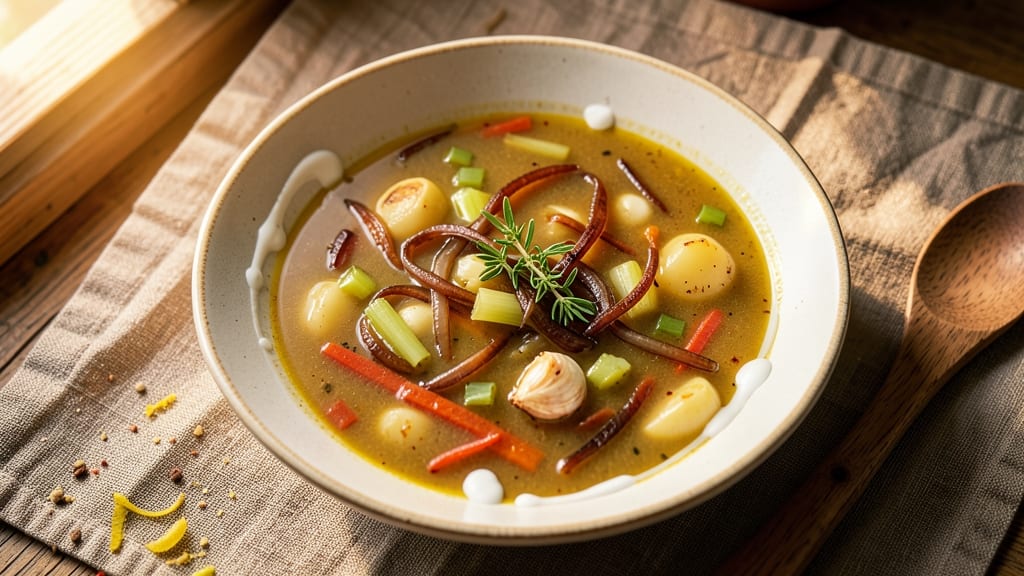
This blended veggie soup recipe transforms humble vegetables into velvety perfection that even veggie skeptics will love. The secret lies in blending cooked vegetables until completely smooth, creating a silky texture that hides every last bite of nutrition.
I developed this recipe during a particularly cold winter when I needed something hearty yet light—something that warmed me up without weighing me down.
The beauty of this soup is in its simplicity: just 10 basic ingredients come together to create a rich, flavorful broth packed with vitamins and minerals. The blending technique is what truly sets it apart—using an immersion blender right in the pot ensures no lumps and minimal cleanup.
This method also allows you to adjust the thickness to your preference, from a light broth to a thick, almost stew-like consistency.
What you'll end up with is a soup so smooth it feels luxurious, yet packed with the goodness of carrots, celery, potatoes, and onions. The garlic and onion powder add depth, while the vegetable broth provides a satisfying, savory base.
Each spoonful delivers a perfect balance of creaminess and subtle vegetable sweetness—without needing any dairy or cream.
Perfect for meal prep or a quick weeknight dinner, this soup reheats beautifully and tastes even better the next day as flavors meld together. Serve with crusty bread or a sprinkle of fresh herbs for extra brightness. Here's how to make it—simple, nourishing, and completely satisfying.
Ingredients for blended veggie soup
Ten simple ingredients blend into velvety perfection—creamy without dairy, packed with veggie goodness.
| Ingredient | Amount | Notes |
|---|---|---|
| Vegetable Broth 💧 | 4 cups | Low-sodium preferred for flavor control |
| Carrots 🥕 | 3 medium | Peeled and roughly chopped |
| Celery Stalks 🧅 | 3 whole | Trimmed and chopped into 1-inch pieces |
| Russet Potatoes 🥔 | 2 medium | Peeled and cubed into 1-inch pieces |
| Yellow Onion 🧅 | 1 whole | Peeled and roughly chopped |
| Garlic Cloves 🧄 | 4 cloves | Peeled and smashed |
| Extra-Virgin Olive Oil 🫒 | 2 tbsp | For sautéing vegetables |
| Onion Powder 🧅 | 1 tsp | For added depth of flavor |
| Garlic Powder 🧄 | ½ tsp | Complements fresh garlic |
| Salt 🧂 | 1 tsp | Diamond Crystal preferred |
| Black Pepper 🌶️ | ½ tsp | Freshly ground for best flavor |
The vegetable broth is the foundation, so choose a quality brand—think Imagine or Pacific Foods for maximum flavor. Fresh vegetables are ideal, but frozen works in a pinch—just thaw and drain well. Carrots and celery should be bright and crisp, not limp or wilted. Potatoes should feel firm with no soft spots. Organic produce reduces pesticide exposure, but conventional is fine if you peel thoroughly. The onion and garlic add depth, so don't skip them—even if you're not a fan, they'll disappear into the blend. For the best flavor, toast the spices in the olive oil for 30 seconds before adding broth.
No vegetable broth? Water plus bouillon cubes works, but you'll need to season more carefully. Swap russet potatoes for Yukon Gold or sweet potatoes—they add natural sweetness. Missing a vegetable? Zucchini or butternut squash blend beautifully. Prefer more creaminess without dairy? Add 1/2 cup silken tofu or coconut milk at the end. For extra richness, roast the vegetables first—they'll have deeper flavor. The immersion blender is key here; if you don't have one, transfer to a regular blender in batches—just watch for splatter.
This soup tastes even better the next day as flavors meld together. Store in airtight containers for up to 5 days in the fridge or freeze for 3 months. For freezing, cool completely first to prevent ice crystals. Reheat gently on the stove or microwave until steaming. Double the batch—it's perfect for meal prep. Leftovers reheat beautifully, making this a true time-saver. The texture changes slightly when reheated, but the flavor only improves. Keep a small amount of broth separate before blending so you can adjust thickness when reheating.
Why You'll Love This Recipe
- No-Chop Night: I swear by this trick—just toss whole carrots, celery, and onion into the pot with the broth. The broth breaks them down while you stir, and by the end, you’ve got that perfect silky texture without the mess. (Yes, even on a Tuesday night when I’d rather be scrolling than chopping.)
- Creamy Without Dairy: That Russet potato is the secret weapon—it blends into a velvety base that’s rich and satisfying, but still light enough to eat a bowl for lunch and dinner. Honestly, it’s the kind of soup that makes me forget I’m not using cream.
- Meal Prep MVP: Make a double batch on Sunday, and you’ve got lunch covered for three days. The flavor actually gets better as it sits—deepens, rounds out—so you’re not stuck with sad, watery leftovers. My freezer’s full of these jars for those "I can’t think" days.
- Pantry Staple Power: You’re probably already looking at these ingredients and thinking, I have all of this. No fancy swaps, no last-minute grocery runs—just broth, a few veggies, and a blender. It’s the kind of recipe that makes me feel like I’m feeding a crowd without breaking the bank.
Step-by-step instructions for blended veggie soup
Transform humble vegetables into velvety, restaurant-quality soup with this foolproof method.
Sauté the Aromatic Vegetable Base
Heat the 2 tablespoons extra-virgin olive oil in a large pot over medium heat until shimmering. Add the chopped yellow onion and cook for 3-4 minutes until softened and translucent, stirring occasionally. This foundational step builds flavor through caramelization.
Add the roughly chopped carrots and chopped celery stalks, stirring to coat in the oil. Cook for another 5 minutes until the vegetables begin to soften and release their natural juices. You'll notice the mixture smells sweeter - that's the Maillard reaction working its magic right in your kitchen.
Add Potatoes and Seasonings
Push the vegetables to one side of the pot and add the smashed garlic cloves to the empty space. Cook for 30 seconds until fragrant - you'll smell that unmistakable garlic aroma. Be careful not to let it burn, as it can turn bitter quickly.
Return the vegetables to even distribution, then add the cubed russet potatoes, onion powder, garlic powder, salt, and black pepper. Stir everything together and cook for 2 minutes to toast the spices slightly. This step ensures all flavors meld together before the broth is added.
Simmer Until Vegetables Are Tender
Pour in the 4 cups vegetable broth and bring the mixture to a gentle boil. Once boiling, reduce heat to medium-low and let it simmer uncovered for 15-20 minutes, stirring occasionally. The potatoes should be fork-tender and the carrots should collapse easily when pierced with a fork.
Real talk: If the soup reduces too much, add a splash of water or broth to maintain the proper consistency. You want enough liquid to create that signature velvety texture after blending. The vegetables should be so tender they practically fall apart at this stage.
Blend Until Silky Smooth
Use an immersion blender to blend the soup directly in the pot. Start at the edge and work your way to the center, blending in 30-second bursts until completely smooth. If you prefer using a countertop blender, carefully transfer the hot soup to the blender (being cautious of steam) and blend until completely smooth.
This blending step is where the magic happens - you're transforming simple vegetables into a luxurious, creamy texture. The result should be completely smooth with no visible chunks. If it's too thick, add a little more broth or water to reach your desired consistency.
Adjust Seasoning and Serve
Return the soup to the pot and taste for seasoning. Adjust with additional salt or black pepper as needed. The soup should be well-seasoned but not overly salty. I like to add a final pinch of pepper right before serving to enhance the flavor.
Ladle the soup into bowls and serve immediately while hot. Garnish with a drizzle of olive oil and a sprinkle of fresh herbs if desired. This soup tastes even better the next day as the flavors continue to meld, but it's best enjoyed fresh from the pot for that restaurant-quality experience.
Pro Tips For Making Blended Veggie Soup
- Sweat the Onion First: I learned this the hard way—tossing raw onion into simmering broth makes the soup taste bitter. Instead, cook the diced onion in a dry pot over medium heat for 5 minutes until soft and translucent. The flavor mellows out, and the soup won’t taste like you just dumped raw onion in there.
- Cut Potatoes Evenly: Russet potatoes vary wildly in size, and uneven chunks mean some parts get mushy while others stay hard. Quarter them into 1-inch cubes—no smaller, or they’ll turn to paste. (Yes, even if you’re impatient like me, resist the urge to rush this.)
- Simmer, Don’t Boil: After adding broth, keep the heat at a gentle simmer, not a rolling boil. Boiling turns carrots and celery into mush and makes the broth cloudy. A steady simmer—small bubbles, occasional swirls—keeps the veggies intact and the soup silky after blending.
- Blend in Stages: Dumping everything into the blender at once clogs the motor and leaves you with a frustrating cleanup. Blend half the soup first, then return it to the pot and repeat. This also lets you adjust the thickness—add a splash of broth if it’s too thick, or a pinch of salt if it’s bland. (Your future self will thank you.)
Best sauces and condiments for this dish
Creamy Dairy-Free Upgrades
Skip the heavy cream and boost richness with ½ cup silken tofu or ¼ cup coconut milk—both blend seamlessly into the soup for a velvety texture without dairy.
I like to add the silken tofu during the final blending step, as it dissolves completely and adds a subtle protein boost. For extra decadence, stir in 1 tablespoon nutritional yeast after blending—it adds a cheesy, umami depth that pairs perfectly with the vegetables. 💛
Herb-Infused Oils
Elevate your soup with a drizzle of herb-infused olive oil right before serving. Heat 2 tablespoons olive oil with 1 tablespoon each of fresh thyme, rosemary, and parsley in a small saucepan for 2 minutes, then strain.
The infused oil adds aromatic complexity and a touch of brightness that cuts through the soup's creaminess. Store any leftover infused oil in the fridge for up to 1 week—it’s perfect for drizzling on salads or bread too.
Spicy Kick Variations
Add heat with ½ teaspoon smoked paprika or ¼ teaspoon cayenne pepper during the simmering stage for a subtle smoky depth. For a more pronounced kick, stir in 1 teaspoon sriracha or ½ teaspoon hot sauce after blending.
If you love fresh chili, finely chop 1 small jalapeño and sauté it with the onions—it’ll disappear into the blend but leave a lingering warmth. Balance the heat with a squeeze of lemon juice before serving. 🌶️
Umami Boosters
Deepening the savory profile is easy with a few simple swaps. Add 1 teaspoon soy sauce or ½ teaspoon miso paste during the simmering stage for a rich, fermented depth. For a meaty texture without meat, stir in 1 tablespoon nutritional yeast or ½ teaspoon liquid smoke after blending.
These umami enhancers make the soup feel heartier and more complex, even without dairy or meat. Trust me, your taste buds will thank you.
Fresh Garnishes
Brighten the soup with fresh toppings that add texture and color. A sprinkle of chopped chives, parsley, or cilantro brings freshness, while toasted pumpkin seeds or crushed red pepper flakes add crunch and heat.
For a pop of acidity, squeeze a little lemon juice or add a few pickled red onion slices on top. These garnishes not only look beautiful but also balance the soup’s flavors with every bite. ✨
Nutrition facts
Frequently asked questions
Can I use frozen vegetables instead of fresh?
Frozen vegetables work perfectly—just thaw and drain them well first. The texture will be slightly different but still blends beautifully. For best results, use frozen carrots, celery, and potatoes that are labeled "cut and ready to cook" to save prep time. Avoid frozen veggies with ice crystals, as they may dilute the soup.
How do I adjust the thickness of the soup?
Start with 4 cups broth for a medium consistency. If it's too thick after blending, add ½ cup water or broth at a time until silky. For a thicker, stew-like texture, simmer longer before blending or reduce the broth slightly. Pro tip: Keep a little broth separate before blending so you can adjust thickness when reheating.
What if I don't have an immersion blender?
No problem! Transfer the hot soup to a countertop blender in batches (watch for steam). Blend until completely smooth, then return to the pot. For extra safety, let the soup cool slightly first to prevent splattering. If you're worried about cleanup, use a regular blender with a splash of water to help it blend more easily.
Can I make this soup ahead of time?
This soup tastes even better the next day! Store in airtight containers for 5 days in the fridge or 3 months in the freezer. Cool completely before freezing to prevent ice crystals. Reheat gently on the stove or microwave until steaming. The texture may thicken slightly when reheated, so add a splash of water or broth if needed.
Why does my blended soup taste bland?
Bland flavor usually means the vegetables weren't cooked long enough or the seasoning needs adjustment. Next time, simmer for 20-25 minutes to deepen flavors, and taste as you go. Add a pinch of salt, black pepper, or a splash of lemon juice to brighten it. For extra depth, try adding 1 teaspoon soy sauce or ½ teaspoon miso paste during simmering.