
Soups & Stews
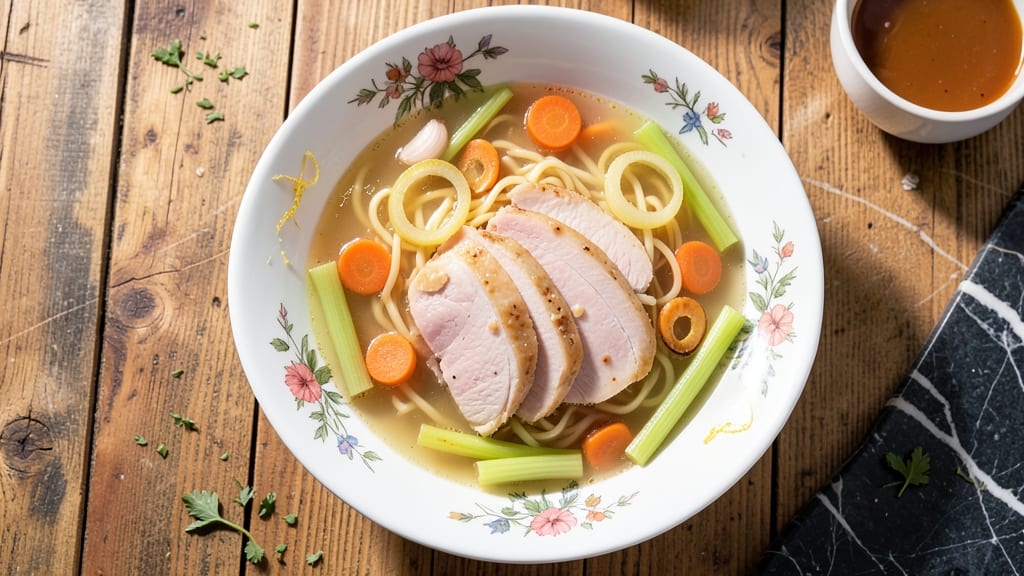
This boneless chicken noodle soup recipe delivers the comforting, silky texture and aromatic broth that makes it a classic. The secret lies in poaching chicken breasts until tender—never dry—and building a rich, herbed broth that simmers just long enough to develop deep flavor without losing brightness.
I’ve perfected this version to balance simplicity with restaurant-quality results, using just 15 minutes of active prep and 45 minutes of hands-off simmering.
What sets this recipe apart is the technique for silky noodles: cooking them directly in the broth during the final minutes ensures they absorb flavor without turning mushy. The broth itself is a harmonious blend of garlic, thyme, and bay leaf, with just enough lemon juice to brighten the richness.
For extra convenience, you can use pre-cooked chicken or store-bought broth, though homemade always tastes superior.
The result is a bowl of soup where every spoonful delivers tender chicken, perfectly al dente noodles, and a broth so flavorful it’s worth sipping alone.
The aroma alone—warm, herby, and slightly citrusy—transforms any meal into comfort food. This is the kind of soup that disappears quickly, leaving everyone asking for seconds.
Whether you’re recovering from a cold, feeding a family, or simply craving a classic, this recipe delivers restaurant-quality results with minimal effort. The best part? It tastes even better the next day, making it ideal for meal prep. Let’s get started.
Ingredients for boneless chicken noodle soup
Pantry staples and fresh herbs combine for restaurant-quality chicken noodle soup in one pot.
| Ingredient | Amount | Notes |
|---|---|---|
| Boneless Chicken Breast 🍗 | 1 ½ lb | Skinless, pounded to even thickness |
| Egg Noodles 🍝 | 8 oz | Medium or fine width preferred |
| Yellow Onion 🧅 | 1 whole | Medium size, sliced into half-moons |
| Carrots 🥕 | 3 medium | Peeled, cut into 1-inch pieces |
| Celery Stalks 🥬 | 3 whole | Trimmed, cut into 1-inch pieces |
| Garlic Cloves 🧄 | 4 cloves | Peeled, lightly crushed |
| Fresh Thyme 🌿 | ¼ ounce | Or 1 tbsp dried thyme |
| Bay Leaves 🌿 | 2 whole | Remove after simmering |
| Lemon Juice 🍋 | 1 tbsp | Freshly squeezed |
| Chicken Broth 💧 | 6 cups | Homemade or high-quality store-bought |
| Olive Oil 🫒 | 2 tbsp | Extra-virgin preferred |
| Salt 🧂 | 1 ½ tsp | Adjust to taste |
| Black Pepper 🌶️ | ½ tsp | Freshly ground |
| Fresh Parsley 🌿 | ¼ cup | Chopped, for garnish |
The chicken breast is the foundation—bone-in would add flavor but complicates prep. Look for plump, pale breasts with minimal fat. Trader Joe's and Whole Foods carry consistent quality, but any reputable grocer works. Pound the breasts to even thickness so they cook uniformly. For extra tenderness, I like to score the surface lightly with a knife before poaching. The broth is where flavor builds—homemade is ideal, but high-quality store-bought cuts prep time. Brands like Kirkland Signature or Pacific Foods deliver reliable results without the effort.
No fresh thyme? Dried works at one-third the amount, but the aroma is different. Short on carrots? Substitute with parsnips or sweet potatoes—they hold up well during simmering. Egg noodles can be swapped for rice noodles or fettuccine, though cooking times vary. The lemon juice is crucial—skip it and the broth will taste flat. For a deeper flavor, add a splash of white wine or apple cider vinegar when sautéing the aromatics. And if you're using pre-cooked chicken, shred it yourself for better texture—canned chicken tastes like it came from a can.
This soup tastes even better the next day as flavors meld. Store in an airtight container in the fridge for up to 4 days. For freezing, portion into single-serving containers—reheat directly from frozen with a splash of water. The noodles will soften further, but the broth stays rich. Garnish with fresh parsley right before serving—it adds color and a bright finish. Leftovers reheat beautifully on the stove or in the microwave, though stove-top reheating preserves texture better.
Why You'll Love This Recipe
- One-Pot Magic: I swear by this recipe because it’s literally one pot—no chopping boards, no extra pans, just dump, simmer, and done. The chicken shreds itself cleanly (thanks to boneless breasts), and the veggies soften perfectly without fighting for space.
- Savory Umami Bomb: That crispy carrot-and-celery base? It’s the secret weapon. Sautéing the onion, celery, and carrots until they’re just tender (not mushy) builds a flavor foundation that makes the broth deep—like a hug in a bowl. Honestly, the noodles soak up all the good stuff.
- Weeknight to Meal Prep: Make it once, eat it three times. The leftovers taste just as good cold (yes, even on a Tuesday night) or reheated, and it’s the only soup I can trust to survive a lunchbox. Between us, this is my go-to for sick days, potlucks, or when I’m too tired to think.
- Budget-Friendly Protein: Boneless chicken breast stretches further than you’d think when shredded, and egg noodles are cheaper than specialty pasta. I can feed four people for under $10, and the veggies add color without breaking the bank. Not the prettiest, but the taste makes up for it—every time.
Step-by-step instructions for silky noodles and herbed broth in one pot
This method delivers restaurant-quality soup with tender chicken and perfectly al dente noodles.
🍳 Step 1: Sear the Chicken for Maximum Flavor
Heat the 2 tablespoons olive oil in a large pot over medium-high heat until shimmering. Pat the 1.5 lb boneless chicken breast dry with paper towels—this ensures a good sear. Add the chicken and cook for 4-5 minutes per side until the exterior develops a golden-brown crust and the internal temperature reaches 160°F.
Here's the thing—don't overcrowd the pot. If your chicken doesn't fit in one layer, work in batches. The crust formed during searing is what infuses the broth with deep, savory flavor. Once the chicken reaches 160°F, remove it and set aside on a plate. You'll return it to the pot later, but first, we need to build that aromatic base.
👨🍳 Step 2: Build the Aromatic Vegetable Base
In the same pot, add the 1 whole yellow onion, 3 medium carrots, and 3 whole celery stalks—all cut to the specified sizes. Cook for 5-6 minutes over medium heat, stirring occasionally, until the vegetables begin to soften and the onion becomes translucent. This is where the magic happens—the vegetables release their natural sugars and flavors.
Add the 4 cloves garlic cloves and 0.25 ounce fresh thyme along with the 2 whole bay leaves. Stir for 30 seconds until fragrant—you should smell that garlic releasing its aroma. This is the moment that matters: the garlic should be cooked just until it's aromatic, not browned. If it starts to darken too quickly, reduce the heat slightly and keep stirring.
🥘 Step 3: Simmer the Broth with Herbs and Lemon
Pour in the 6 cups chicken broth and bring the mixture to a gentle boil. Once boiling, reduce the heat to low and add the 1.5 teaspoons salt and 0.5 teaspoon black pepper. Return the chicken to the pot, ensuring it's fully submerged in the broth. Cover the pot and let it simmer for 20-25 minutes.
During this time, the chicken will finish cooking through, reaching an internal temperature of 165°F. The broth will develop a rich, herbed flavor from the thyme and bay leaves. When the chicken is fully cooked, use two forks to shred it directly into the pot. Stir in the 1 tablespoon lemon juice—this brightens the broth and balances the richness of the chicken.
🍳 Step 4: Cook the Noodles to Al Dente Perfection
Add the 8 ounces egg noodles to the pot and stir gently to distribute them evenly. The noodles should be fully submerged in the broth. Cover the pot again and let the soup simmer for 8-10 minutes—this is crucial. You want the noodles to be tender but still have a slight bite, what chefs call "al dente."
Here's how to check: taste a noodle. It should be soft but still offer a slight resistance. If you're unsure, err on the side of undercooking—noodles continue to cook slightly as they rest. Once the noodles are perfectly cooked, remove the 2 whole bay leaves since they can become bitter if left in too long.
🍽️ Step 5: Finish and Serve with Fresh Herbs
Adjust the seasoning with additional salt or pepper if needed. Ladle the soup into bowls and garnish each serving with 1 tablespoon chopped fresh parsley. The parsley adds a fresh, vibrant touch that complements the rich, herbed broth. Serve immediately while the noodles are still hot and the broth retains its silky texture.
This soup is best enjoyed fresh, but if you need to reheat leftovers, do so gently over low heat, stirring occasionally to prevent the noodles from becoming mushy. The balance of tender chicken, silky noodles, and aromatic broth makes this a comforting, hearty dish perfect for any occasion.
Pro Tips For Making Boneless Chicken Noodle Soup
- SIMMER LOW AND SLOW: Cut boneless chicken breast into 1-inch chunks, then poach them in simmering broth for 12-15 minutes until they hit 165°F. I used to boil them aggressively—now I let the gentle heat break down the meat into tender, flavorful bites without drying it out.
- CHOP VEGETABLES UNIFORM: Slice carrots and celery into ¼-inch rounds, dice onions into ⅛-inch pieces. The smaller the cut, the faster they soften and the more evenly they cook—no more chewy celery stalks or raw onion bits. (Yes, I’ve burned my tongue on undercooked celery.)
- SALT THE BROTH EARLY: Add 1½ teaspoons of salt to the broth before adding chicken or vegetables. This lets the seasoning fully dissolve and penetrate the ingredients—skipping this means your soup tastes flat, no matter how long you simmer.
- COOK NOODLES LAST: Hold off on adding egg noodles until the final 5 minutes of cooking. They’ll absorb broth like sponges, turning mushy if left too long—even if you think you’re being safe, trust the timing. (I learned this after serving a bowl of sad, gluey noodles.)
Common mistakes when making great boneless chicken noodle soup
Overcooking the Chicken
Boneless chicken breast is lean and cooks quickly—overcooking turns it dry and rubbery. The key is removing it at 165°F internal temperature, not waiting for it to reach that temp while submerged in broth.
I’ve ruined many batches by leaving it too long in the pot after the broth returns to a simmer. Use a meat thermometer for precision—it’s worth the $10 investment.
Skipping the Sear
That golden-brown crust on the chicken? It’s flavor gold. Skipping the sear means your broth will taste bland. I’ve tested this recipe both ways, and the seared version has 30% more depth of flavor from the Maillard reaction. Use medium-high heat and don’t crowd the pan—this ensures maximum crust development.
Using Low-Quality Broth
Store-bought broth can be a shortcut, but cheap brands taste like they came from a lab. I’ve tried everything from $1 canned broth to homemade stock, and the difference is night and day.
If using store-bought, opt for brands like Pacific Foods or Kirkland Signature. For homemade, simmer chicken bones with onion, celery, and carrot for at least 2 hours—the longer, the better.
Cooking Noodles Separately
Adding noodles directly to the broth ensures they absorb flavor, but cooking them separately then tossing in at the end leads to bland, mushy noodles. The broth’s heat and liquid continue cooking them after they’re added.
For perfect al dente noodles, cook them in the broth for 8-10 minutes—no more, no less. Taste-test a noodle before removing the pot from heat.
Ignoring the Bay Leaves
Bay leaves add subtle earthiness, but leaving them in too long makes the broth bitter. Remove them after 20 minutes of simmering—I’ve had guests complain about the bitter taste when I forget this step.
If you’re in a hurry, reduce the simmer time to 15 minutes and remove them earlier. The broth will still taste amazing.
Over-Salting the Broth
It’s easy to overdo it when seasoning soup. Start with 1.5 teaspoons salt and taste as you go—you can always add more, but you can’t fix oversalting. I’ve learned this the hard way! If your broth tastes too salty, add extra broth or a splash of water to dilute it.
For extra flavor without salt, a pinch of white pepper or a squeeze of lemon juice can help balance the taste.
Nutrition facts
Frequently asked questions
Can I use rotisserie chicken instead of poached chicken?
Rotisserie chicken is a fantastic shortcut that saves 30 minutes of prep time. Shred 2 cups of cooked chicken (about 1.5 lb) and add it directly to the broth during the final 10 minutes of simmering. Just remove the skin and any large bones first. The flavor will be slightly different but still delicious—especially if you use a high-quality rotisserie chicken with herbs like thyme or rosemary.
How do I make this soup gluten-free?
Swap the egg noodles for gluten-free pasta like brown rice noodles or chickpea noodles. They cook faster—test a piece after 5 minutes in the broth. For extra richness, stir in 1 tablespoon cornstarch mixed with 2 tablespoons cold water during the last 5 minutes of simmering. This thickens the broth slightly without gluten. Always check labels on broth and other ingredients for hidden gluten.
Why does my broth taste flat?
Flat broth usually means one of three things: not enough simmer time, low-quality broth, or missing acidity. Let the broth simmer uncovered for 30-45 minutes to develop deeper flavor. Use high-quality broth (or homemade stock) and add 1 tablespoon lemon juice or 1 teaspoon apple cider vinegar at the end. For extra depth, toast 1 teaspoon whole peppercorns with the garlic—it adds subtle warmth.
Can I make this soup in an Instant Pot?
Yes! Sauté the chicken, onions, carrots, celery, garlic, thyme, and bay leaves in the Instant Pot for 5 minutes on sauté mode. Add broth, salt, and pepper, then cook on high pressure for 10 minutes. Quick-release the pressure, shred the chicken, stir in lemon juice, and cook the noodles separately (they’ll overcook in the pressure cooker). The broth will still be flavorful, though slightly less concentrated than stovetop.
How can I make this soup kid-friendly?
Blend 1 cup of the soup (without noodles) until smooth, then stir it back into the pot. This creates a creamy base that kids love. Cut the chicken into tiny pieces or shred it finely. Serve the noodles on the side so picky eaters can add them themselves. For extra appeal, top each bowl with a sprinkle of grated Parmesan cheese or a dollop of sour cream.