
Soups & Stews
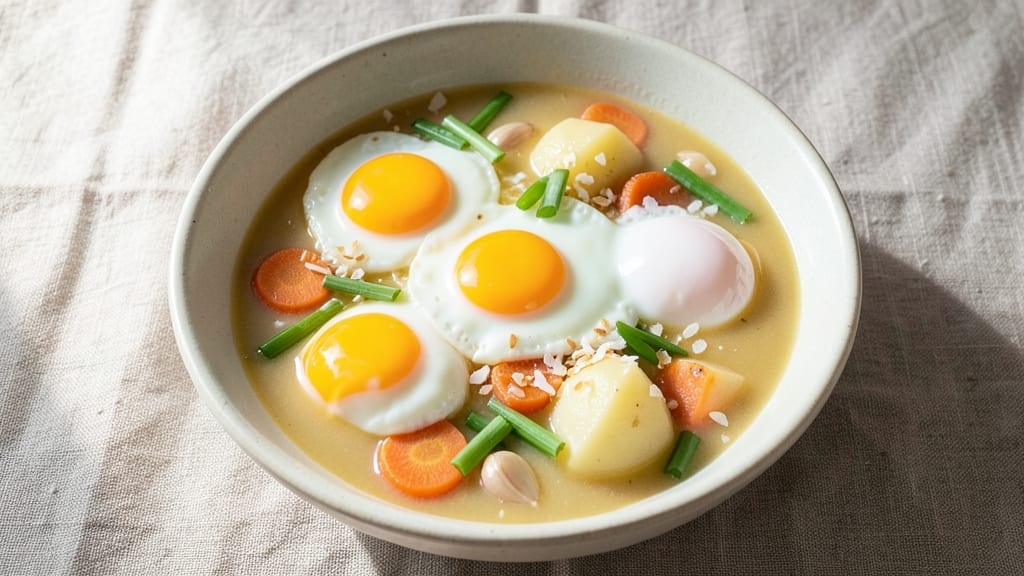
This creamy Bongo Bongo soup recipe brings the rich, comforting flavors of Filipino cuisine to your kitchen—where tender egg ribbons blend seamlessly with aromatic broth and savory spices. 💛 The secret lies in its velvety texture, achieved by whisking cooked egg into a smooth, velvety ribbon that dissolves into the broth, creating an irresistibly creamy finish.
Unlike traditional versions, this recipe balances traditional Filipino flavors with a Thai-inspired twist, using lemongrass and kaffir lime leaves for an extra layer of complexity.
The magic begins with a fragrant broth infused with garlic, ginger, and fish sauce, then simmered with hearty vegetables like potatoes and carrots. The egg ribbon technique—whisking cooked eggs into the hot broth—transforms this soup from ordinary to extraordinary, delivering that signature creamy texture without heavy cream.
This version stays true to its roots while offering a modern, approachable twist that’s perfect for weeknight dinners or special gatherings.
What sets this recipe apart is its ability to deliver restaurant-quality results at home, with a velvety, creamy finish that coats every spoonful. The combination of tender vegetables, aromatic spices, and those delicate egg ribbons creates a harmonious balance of flavors and textures that’s both comforting and sophisticated.
Whether you're serving it as a main dish or a side, this soup promises to impress with its depth and richness.
Best served piping hot with a sprinkle of fresh herbs and a dash of chili flakes, this Bongo Bongo soup is a celebration of Filipino comfort food reimagined.
The recipe is designed to be foolproof, ensuring that even beginners can achieve that signature creamy texture and bold flavor profile. Let’s get cooking!
Ingredients for bongo bongo soup
Six eggs, fragrant Thai-Filipino spices, and tender vegetables create this velvety egg ribbon soup.
| Ingredient | Amount | Notes |
|---|---|---|
| Large Eggs 🥚 | 6 whole | Freshly whisked for ribbon texture |
| Coconut Milk 🥥 | 1 can (13.5 oz) | Full-fat for creaminess |
| Potatoes 🥔 | 1 ½ lb | Yukon gold, cubed evenly |
| Carrots 🥕 | 1 lb | Baby or regular, sliced thin |
| Green Onions 🧅 | ¼ cup | Sliced for garnish |
| Garlic Cloves 🧄 | 6 cloves | Minced for aromatic base |
| Fresh Ginger 🌿 | 2 tbsp | Grated, for zesty kick |
| Fish Sauce 🍶 | 2 tbsp | Red Boat preferred |
| Lemongrass 🌿 | 1 stalk | Bruised, cut into 2-inch pieces |
| Kaffir Lime Leaves 🍋 | 4 whole | Torn into strips |
| Chicken Bouillon 🍲 | 2 cubes | Dissolved in 4 cups hot water |
| Vegetable Oil 🫒 | 2 tbsp | For sautéing aromatics |
| Salt 🧂 | 1 ½ tsp | Adjust to taste |
| Black Pepper 🌶️ | ½ tsp | Freshly ground |
| Sriracha 🔥 | 1 tbsp | Optional for heat |
The eggs are non-negotiable—fresh, room-temperature eggs whisk best for those signature ribbons. Red Boat fish sauce delivers authentic umami, but any good-quality brand works. For lemongrass, look for fresh stalks at Asian markets—dried won't give the same aroma. Kaffir lime leaves? Trader Joe's carries them year-round, or freeze extras for later use. The potatoes should be evenly cubed (1-inch pieces) so they cook uniformly. Yukon golds stay creamier than russets, but any starchy potato works in a pinch.
No fish sauce? Soy sauce at half the amount adds saltiness, though it won't replicate the depth. Subbing coconut milk? Heavy cream works for creaminess, but you'll lose that subtle Thai aroma. Fresh ginger and garlic can be swapped for 1 tbsp each of ginger powder and garlic powder, though fresh is ideal. For the bouillon, vegetable broth keeps it vegetarian—just add an extra pinch of salt. The sriracha is optional, but chili flakes at half the amount work too. Prefer no heat? Skip it entirely.
The broth keeps for 3 days in the fridge, but the egg ribbons are best made fresh. Store cooked vegetables separately and reheat with fresh broth and egg when ready. Freeze the broth base for up to 3 months—just thaw and add fresh egg when serving. For meal prep, cook the veggies ahead and store them in airtight containers. The egg ribbons should only be made when you're ready to eat, as they don't reheat well.
Why You'll Love This Recipe
- Fewer Ingredients, More Magic: I swear by this—just eggs, potatoes, carrots, and coconut milk. That’s it. No fancy pantry items, no last-minute grocery runs. The eggs poach right in the broth, soaking up all that creamy coconut flavor while the veggies soften. Honestly, it’s the kind of recipe where you almost feel guilty for how little effort it takes.
- Creamy Without the Guilt: The coconut milk makes this soup absurdly rich, but it’s light enough to eat in a bowl while standing up. (Yes, I’ve done it.) The potatoes get fork-tender, the carrots melt into the broth, and the poached eggs add that perfect silky bite—no heavy cream, no butter overload. It’s the kind of comfort that doesn’t weigh you down.
- Lunchbox to Dinner Party: Pack it cold for work—those poached eggs stay intact, and the coconut broth keeps it warmish in a thermos. Or serve it warm at a potluck; it’s hearty enough for a crowd but still feels special. Between us, I’ve brought this to book clubs and had people ask for the recipe twice. Not the prettiest, but the taste makes up for it.
- Leftovers That Don’t Suck: Most soups turn to sad mush by day two. Not this one. The eggs reheat like they’re fresh, the broth stays flavorful, and the potatoes? Still perfect. I make a double batch on Sundays—one for dinner, one for lazy nights when I just want to pour a bowl and call it a meal. Budget-friendly? Absolutely. But more importantly, it’s the kind of leftovers I actually look forward to.
Step-by-step instructions for Bongo Bongo soup
This Thai-inspired soup blends silky egg ribbons with aromatic broth and tender vegetables.
🍳 Step 1: Sauté Aromatics for Flavor Foundation
Heat the 2 tablespoons vegetable oil in a large pot over medium heat until shimmering. Add the 6 cloves minced garlic cloves and 2 tablespoons grated fresh ginger, cooking for 1-2 minutes until fragrant—you'll smell that bright, zesty aroma. The ginger should soften slightly but not brown.
Next, add the 1 stalk lemongrass (cut into 2-inch pieces) and 4 whole kaffir lime leaves (torn into strips). Stir for 30 seconds to release their citrusy, herbal notes. This aromatic base will infuse the entire soup with complex Thai flavors. Keep the heat at medium to prevent burning these delicate ingredients.
🥘 Step 2: Build the Broth with Vegetables and Bouillon
Add the 1.5 pounds cubed potatoes and 1 pound sliced carrots to the pot. Stir to coat them in the aromatic oil. Pour in 4 cups hot water (from dissolving the 2 cubes chicken bouillon) and bring to a gentle boil over medium-high heat. Once boiling, reduce heat to medium-low and simmer for 15-20 minutes until the potatoes are fork-tender.
After the vegetables soften, add the 2 tablespoons fish sauce and 1.5 teaspoons salt. Taste the broth—it should balance savory, salty, and umami notes. If needed, adjust with additional fish sauce or salt. This is your flavor foundation before adding the creamy elements. The broth should coat the back of a spoon but remain clear, not too thick.
👨🍳 Step 3: Prepare the Egg Ribbons
In a separate bowl, whisk the 6 whole large eggs until just combined—no need to overbeat, just enough to blend yolks and whites. The eggs should be at room temperature for even cooking. Keep this bowl ready while the broth simmers.
Here's the key technique: slowly drizzle ½ cup of the hot broth into the whisked eggs while whisking constantly. This tempering step prevents the eggs from curdling when they hit the pot. The mixture should thicken slightly but remain pourable. If it looks too stiff, whisk in 1 tablespoon more broth—it should coat the back of a spoon like heavy cream.
🥘 Step 4: Create the Egg Ribbons in the Soup
Return the pot to medium-low heat and let the broth sit just below a simmer—you want gentle movement, not bubbles. Slowly pour the tempered egg mixture into the pot in a thin, steady stream. Use a heatproof spatula to gently stir in a figure-eight motion, creating delicate ribbons as the eggs cook.
Watch carefully as the ribbons form—you'll see silky strands floating in the broth. If the soup starts to thicken too much, whisk in 2-3 tablespoons more hot broth to maintain a creamy but pourable consistency. This step requires patience; rushing will break the ribbons into curds. The eggs should cook in 2-3 minutes—they're done when they're fully set but still glossy.
⏰ Step 5: Finish and Serve with Garnishes
Remove the pot from heat and stir in the 1 can (13.5 oz) full-fat coconut milk. Let it sit for 1 minute to blend smoothly. The soup should now have a velvety texture with ribbons suspended throughout. Taste and adjust seasoning with black pepper or an extra dash of fish sauce if needed.
Ladle the soup into bowls and garnish with ¼ cup sliced green onions and a drizzle of 1 tablespoon sriracha if you like heat. Serve immediately while the egg ribbons maintain their delicate texture. The contrast of creamy coconut, savory broth, and silky eggs makes this soup uniquely satisfying.
Pro Tips For Making Bongo Bongo Soup
- SIMMER GENTlely: After boiling your potatoes and carrots, switch to a low simmer—not a rolling boil—when adding coconut milk. I learned this the hard way: aggressive heat curdles the eggs later and turns the soup grainy. Let the milk melt into the veggies slowly, like a lazy afternoon.
- PEEL POTATOES THIN: Skip the thick peels—cut potatoes into ½-inch slices instead of chunks. They cook faster and absorb the coconut milk’s richness without turning mushy. (Yes, even if you’re impatient like me.) Thin slices also make the soup creamier, not gluey.
- CRACK EGGS LAST: Hold off on adding eggs until the soup is just off the boil. I used to toss them in too early, and they’d turn to scrambled bits. Wait 2 minutes after removing the pot from heat, then stir in eggs—you’ll get silky ribbons, not rubbery lumps.
- STIR COCONUT MILK FIRST: Give that can of coconut milk a good shake before opening—especially if it’s been sitting. The cream settles at the bottom, and if you don’t mix it, your soup will taste uneven. (Trust me, you’ll notice the difference.) Stir it into a smooth paste with a splash of hot broth before adding it to the pot.
Make-ahead tips for this bongo bongo soup
Broth Prep Ahead
Make the aromatic broth base 2 days ahead and store it in an airtight container in the fridge. The flavors deepen over time, with the lemongrass and kaffir lime infusing the liquid beautifully.
Just reheat it gently on the stove before adding the egg ribbons—never microwave, as it can cook the vegetables unevenly. 💛
Egg Ribbon Prep
Whisk the eggs 1 hour before serving and store them in the fridge in a sealed container. This gives the yolks and whites time to chill slightly, preventing curdling when they hit the hot broth.
Bring the eggs to room temperature for 10 minutes before tempering—this ensures silky ribbons every time.
Vegetable Pre-Cook
Parboil the potatoes and carrots for 10 minutes ahead of time, then store them in cold water in the fridge. When ready to cook, drain and add them to the pot with the fresh broth. This cuts your active cooking time by 15 minutes while keeping the veggies tender.
Freezer-Friendly Base
Freeze the broth (without coconut milk or egg) in quart-sized freezer bags for up to 3 months. Thaw overnight in the fridge, then reheat and add fresh egg ribbons when serving. The texture remains smooth, though the egg ribbons are best made fresh for that signature velvety finish.
Garnish Prep
Slice the green onions and measure the sriracha the night before to save time. Store them in separate small containers—this keeps everything organized and ready for quick assembly. A sprinkle of toasted sesame seeds (optional) adds extra crunch and can be prepped ahead too.
Reheating Leftovers
If you have leftovers (without egg ribbons), reheat them on the stove over low heat with a splash of water or broth. Stir in fresh egg ribbons just before serving—never reheat cooked egg ribbons, as they'll turn rubbery. This method keeps the soup creamy and restaurant-worthy. ✨
Nutrition facts
Frequently asked questions
What makes the egg ribbons in this soup so special?
The secret lies in tempering the eggs with hot broth before adding them to the pot. This creates silky, delicate strands that dissolve into the soup for a velvety texture without heavy cream. The key is slow, steady whisking and maintaining medium-low heat while stirring in a figure-eight motion.
Can I make this soup vegetarian?
Yes! Swap the chicken bouillon for vegetable broth and replace fish sauce with 2 tbsp soy sauce + 1 tbsp miso paste for umami depth. Use coconut aminos instead of fish sauce for a lighter option. The egg ribbons will still form beautifully.
Why does my soup turn out too thick or grainy?
This usually happens when the eggs cook too quickly or the broth isn't hot enough during tempering. Keep the broth at a gentle simmer (not boiling) and add the egg mixture slowly while whisking constantly. If it thickens too much, whisk in 2-3 tbsp hot broth to restore creaminess.
What's the best way to reheat leftovers?
Reheat the soup (without egg ribbons) on the stove over low heat with a splash of water or broth. Add fresh egg ribbons just before serving—never reheat cooked egg ribbons, as they'll turn rubbery. For best texture, make the egg ribbons fresh each time.
Can I use dried lemongrass or lime zest instead of fresh?
Fresh is ideal, but if you must substitute: use 1 tsp dried lemongrass powder (not as aromatic) or 1 tbsp lime zest + ½ tsp lime juice for citrus notes. For kaffir lime, ½ tsp lime zest + ¼ tsp lime juice mimics some of the floral aroma, though it won't be identical.