
Soups & Stews
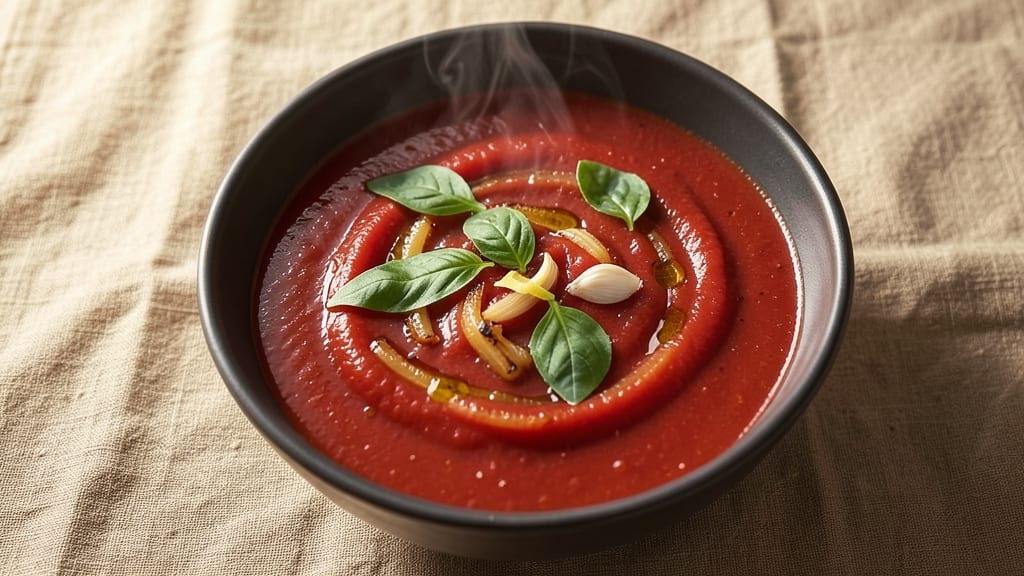
Brian Lagerstrom's tomato soup recipe transforms humble ingredients into a velvety masterpiece with layers of caramelized onion and rich tomato flavor. This isn't just soup—it's a textured, aromatic experience that builds depth through careful technique.
The secret lies in slow-cooked onions and a blend of fresh and canned tomatoes, creating a balance between sweetness and acidity that's impossible to resist. What sets this recipe apart is Lagerstrom's approach to texture—creamy yet bright, with just enough body to coat a spoon.
The onions caramelize until deep amber, their sweetness cutting through the tomato's tang, while fresh herbs add a final layer of brightness. No heavy cream here; the richness comes from proper technique and quality ingredients working in harmony.
By the time you're done, you'll have a soup that's restaurant-quality at home—smooth enough to sip, substantial enough to satisfy, and complex enough to impress. The aroma alone will have everyone gathering around the table, while the first bite delivers that perfect combination of sweet, savory, and herby notes.
Perfect for chilly evenings or as a comforting starter, this tomato soup proves that great food comes from patience and attention to detail. Let's get cooking—your kitchen will thank you.
Ingredients for brian lagerstrom tomato soup
Caramelized onions and San Marzano tomatoes create this velvety tomato soup's signature depth and texture.
| Ingredient | Amount | Notes |
|---|---|---|
| Yellow Onions 🧅 | 3 whole | Thinly sliced for even caramelization |
| Extra-Virgin Olive Oil 🫒 | ½ cup | For slow onion cooking |
| San Marzano Crushed Tomatoes 🍅 | 28 oz | High-quality canned tomatoes |
| Fresh Basil Leaves 🌿 | ½ cup | Packed, stems removed |
| Garlic Cloves 🧄 | 4 cloves | Peeled and minced finely |
| Vegetable Broth 💧 | 4 cups | Low-sodium preferred |
| Fresh Thyme Sprigs 🌿 | 2 whole | Leaves only, stems removed |
| Fresh Parsley Leaves 🌿 | ¼ cup | Chopped for garnish |
| Granulated Sugar 🍚 | 1 tbsp | Balances acidity |
| Salt 🧂 | 1 ½ tsp | Diamond Crystal preferred |
| Black Peppercorns 🌶️ | ½ tsp | Freshly cracked |
| Heavy Cream 🥛 | ½ cup | Optional for richness |
| Balsamic Vinegar 🍶 | 1 tbsp | For finishing touch |
The onions are the foundation—slow-cooked until deep amber and sweet. Yellow onions work best here, with their balanced sweetness and mild bite. For even caramelization, slice them thinly and cook them low and slow. Whole Foods and Trader Joe's carry excellent quality onions, but any yellow onion will do. The key is patience; rushing this step will result in bitter onions that overpower the tomatoes. If you're short on time, you can use onion powder as a partial substitute (1 tbsp), but nothing matches the depth of fresh caramelized onions.
San Marzano tomatoes are non-negotiable for this recipe—their natural sweetness and low acidity create the perfect balance. If you can't find them, whole peeled San Marzano tomatoes in cans work too, but avoid regular crushed tomatoes with added salt or preservatives. Fresh basil and thyme add bright, herbal notes that cut through the richness. Penzeys or your local spice shop are great for high-quality dried herbs if fresh aren't available, but use them at half the quantity. The vegetable broth should be low-sodium to avoid over-salting the soup, and Imagine or Pacific Foods brands are excellent choices. For a vegetarian option, ensure your broth is plant-based.
This soup tastes even better the next day as flavors meld, so make a double batch if you're entertaining. Store in an airtight container in the refrigerator for up to 5 days. For longer storage, freeze portions in 1-cup containers for up to 3 months. Reheat gently on the stove, adding a splash of broth if the soup thickens. The optional heavy cream can be added at the end for extra richness, but the original recipe achieves its velvety texture through proper technique alone. Garnish with fresh parsley and a drizzle of balsamic vinegar just before serving for that restaurant-quality finish.
Why You'll Love This Recipe
- No-Fuss Simplicity: I swear by this recipe because it’s the kind of soup that doesn’t demand your full attention. Sauté onions and garlic in olive oil, toss in crushed San Marzano tomatoes, and let it simmer—no blender, no fuss. Honestly, the hardest part is deciding whether to add the basil at the end or let it steep.
- San Marzano Magic: That jar of crushed tomatoes changes everything. The sweet, meaty depth of San Marzano tomatoes—paired with garlic and a swirl of olive oil—turns a basic soup into something ridiculously good. The basil? Just a handful, but it lifts the whole thing like a secret ingredient.
- Weeknight to Potluck: This soup works everywhere. Slurp it straight from the pot on a Tuesday night, or bring it to a picnic in a thermos—it stays warm and delicious. Between us, I’ve served it at holiday dinners, and no one ever guessed it took less than 30 minutes.
- Budget-Friendly Leftovers: A single batch feeds my family for days, and the flavor only gets better. The onions and garlic mellow out, the tomatoes deepen, and the basil aroma lingers—perfect for reheating with a splash of water. (Yes, even on a Tuesday night.)
Step-by-step instructions for brian Lagerstrom's tomato soup
This method builds rich, layered flavors through precise timing and technique.
Develop Deep Caramelized Onions
Heat the 0.5 cup extra-virgin olive oil in a heavy-bottomed pot over medium-low heat. Add the 3 whole yellow onions, sliced paper-thin, and cook undisturbed for 15 minutes until completely softened. Stir occasionally to prevent burning, but resist the urge to rush—this slow cook time transforms the onions into sweet, golden caramel.
After 15 minutes, reduce heat to low and continue cooking for another 30 minutes, stirring every 5 minutes. The onions should turn deep amber with a jam-like consistency. This patient step creates the soup's velvety foundation. If they darken too quickly, lower the heat immediately to prevent bitterness.
Build the Flavor Base
Add the 4 cloves minced garlic and 2 whole fresh thyme sprigs (leaves only) to the caramelized onions. Cook for 2 minutes until fragrant, stirring constantly. The garlic should sizzle gently—if it browns too quickly, reduce heat. Next, stir in the 28 oz San Marzano crushed tomatoes and 1 tbsp granulated sugar, then bring to a gentle simmer.
Simmer uncovered for 20 minutes, stirring occasionally. This reduces the tomatoes slightly while allowing their natural sweetness to meld with the caramelized onions. Taste at this stage—the acidity should be balanced by the sugar and onion sweetness. If needed, add a pinch more sugar to counteract any tartness.
Develop the Broth and Seasoning
Pour in the 4 cups vegetable broth and bring to a full simmer. Add 1.5 tsp salt and 0.5 tsp freshly cracked black peppercorns, then reduce heat to medium-low. Simmer uncovered for 15 minutes to deepen the flavors. The soup should now have a rich, complex aroma with layers of caramel, tomato, and thyme.
Remove the thyme sprigs and stir in the 0.5 cup packed fresh basil leaves. Simmer for an additional 5 minutes—this infuses the basil's bright, sweet notes without overpowering the base. The soup should now be velvety with a balanced acid-sweet profile. If it's too thick, thin with a splash of warm water; if too thin, simmer uncovered to reduce slightly.
Finish with Cream and Balsamic
Temporarily remove the pot from heat and stir in the 0.5 cup heavy cream. Return to low heat and simmer gently for 3 minutes—this prevents curdling while adding luxurious richness. The cream should blend smoothly without breaking.
Finally, stir in the 1 tbsp balsamic vinegar and taste for balance. The balsamic adds a subtle tang that brightens the soup. For serving, ladle into bowls and garnish with 0.25 cup chopped fresh parsley leaves. The parsley provides a fresh contrast to the deep, caramelized flavors.
Rest and Serve
Let the soup rest for 10 minutes before serving. This allows the flavors to fully meld and the cream to emulsify properly. Serve immediately while warm, as the texture and temperature will continue to improve with each bite.
The result should be a soup with three distinct layers: the deep caramelized onion base, the bright tomato-acid balance, and the creamy finish. Each spoonful delivers complexity—sweet, savory, tangy, and rich—without being overly heavy or one-dimensional. This is the hallmark of Lagerstrom's approach to tomato soup.
Pro Tips For Making Brian Lagerstrom Tomato Soup
- SWEAT THE ONIONS LOW: This isn’t about quick charring—push the onions until they’re translucent and just starting to caramelize, about 12-15 minutes on medium-low. I used to rush this step, but the soup tastes flat without that deep, sweet foundation. (Yes, even if you’re impatient like me.)
- CRUSH GARLIC LIKE A PRO: Don’t mince—smash the cloves with the flat side of your knife first, then chop. This releases more flavor without burning, and it blends into the soup smoothly. I learned this the hard way after tasting bitter, overcooked garlic in my first batch.
- SALT THE TOMATOES FIRST: Sprinkle 1 teaspoon of salt directly over the crushed San Marzano tomatoes before adding liquid. Lets the natural sweetness shine and balances acidity—no need to over-salt later. (Your future self will notice the difference.)
- FINISH WITH COLD BASIL: Toss in the basil leaves at the very end, off the heat, and let them steep for 5 minutes before serving. Hot water kills their brightness, and cold leaves infuse faster than you’d think. (Does it look weird? Yes. Does it work? Every single time.)
Make-ahead tips for brian lagerstrom tomato soup
Prep Ahead Strategy
Start by caramelizing the onions 24 hours ahead—this is the most time-consuming step and benefits from extra attention. Store them in an airtight container in the fridge. The onions will continue developing flavor overnight, resulting in deeper sweetness when you reheat them.
Trust me, this makes the final soup taste like it simmered for hours. 💫
Broth Prep Shortcut
Make your vegetable broth in advance and store it in 1-cup portions in the freezer. Thaw just what you need before adding it to the soup—this saves time without sacrificing flavor.
I keep a stash of Pacific Foods low-sodium broth on hand for quick assembly. The broth should be room temperature when added to prevent shocking the onions.
Herb Prep Efficiency
Wash and chop all your fresh herbs (basil, thyme, parsley) at once and store them in small airtight containers with a paper towel to absorb moisture. This keeps them fresh for up to 3 days in the fridge.
When ready to use, simply grab what you need—no last-minute chopping stress. For thyme, I remove the leaves from the stems and store them separately since they’re used at different stages.
Freezer-Friendly Assembly
Assemble the entire soup (through Step 3) and freeze it in single-serving portions for quick meals. When reheating, thaw in the fridge overnight, then warm on the stove with a splash of water if needed.
The cream and balsamic should be added fresh when serving to maintain their bright flavors. This method works perfectly for busy weeknights—just pull it out, reheat, and garnish.
Garnish Prep Ahead
Chop your fresh parsley and store it in a small container with a splash of water to keep it vibrant. The balsamic vinegar can also be measured out in advance into a tiny jar—just give it a quick shake before drizzling.
I like to pre-portion the cream in 1-tablespoon increments so I can add exactly what I need without overdoing it. This keeps your garnishes ready for a restaurant-worthy finish with minimal effort. ✨
Make-Ahead Timeline
For maximum efficiency, follow this schedule: Day 1 caramelize onions and freeze; Day 2 prep herbs and broth; Day 3 assemble soup and freeze portions. When you're ready to serve, just thaw and reheat—30 minutes of active time tops.
The flavors actually improve with resting, so this method gives you a foolproof, stress-free result every time. 🏆
Nutrition facts
Frequently asked questions
Why does this tomato soup recipe use San Marzano tomatoes?
San Marzano tomatoes are the gold standard for tomato soup because of their natural sweetness and low acidity. Their thick, meaty texture and balanced flavor create the perfect foundation for Lagerstrom's velvety texture without overpowering the caramelized onions. The reduced acidity also means you won't need as much sugar to balance the flavors.
Can I make this soup without heavy cream?
The recipe achieves its velvety texture through proper technique—slow-cooked onions and reduced tomatoes create natural richness. For a dairy-free version, stir in 1/4 cup coconut cream or 2 tablespoons nutritional yeast after simmering to add body. The soup will still be delicious without compromising Lagerstrom's signature balance.
How do I prevent the onions from burning while caramelizing?
Keep the heat at medium-low and stir only every 5 minutes—this prevents burning while allowing even cooking. Use a heavy-bottomed pot to distribute heat evenly, and if onions darken too quickly, immediately reduce to low heat. Patience is key—they need 45 minutes total to develop their deep sweetness.
What's the best way to serve this tomato soup?
This soup shines with crusty bread or grilled cheese sandwiches for dipping. For a complete meal, pair it with a simple arugula salad dressed with lemon vinaigrette. Lagerstrom often serves it with a sprinkle of Parmigiano-Reggiano and extra balsamic drizzle for an elegant touch.
Can I use dried herbs instead of fresh?
Yes, but use half the amount—1/4 tsp dried basil and 1/8 tsp dried thyme for each 1/2 cup fresh. Dried herbs are more concentrated, so add them at the beginning with the onions rather than later in the recipe. Toast them briefly in the oil before adding the onions to release their essential oils and deepen their flavor.